Walnut Jewelry Box Materials: Solid Wood vs Veneer
Compare solid black walnut jewelry box materials against veneers. Discover Janka hardness, tannin risks for silver, and lining tips.

The Allure of Walnut in Jewelry Storage
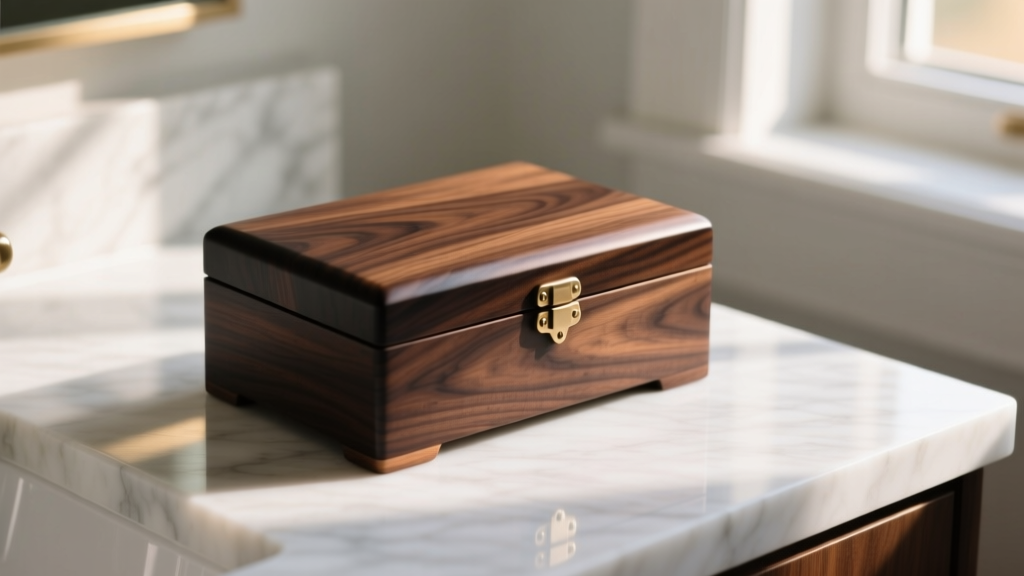
When selecting a permanent home for fine jewelry, the material of the storage vessel is just as critical as the environment it sits in. Among hardwoods, walnut—specifically Black Walnut (Juglans nigra) and European Walnut (Juglans regia)—remains a premier choice for artisan and luxury jewelry boxes. Its rich, chocolate-brown heartwood, striking grain patterns, and exceptional workability make it a favorite among woodworkers. However, not every walnut jewelry box on the market is created equal. The structural integrity, longevity, and chemical safety of your jewelry storage depend heavily on whether the box is crafted from solid hardwood, engineered veneers, or composite materials. Understanding these material properties is essential for collectors who need to protect precious metals and delicate gemstones from environmental damage, physical abrasion, and chemical tarnishing.
Solid Black Walnut vs. Walnut Veneer: A Material Breakdown
The term "walnut jewelry box" is frequently applied to a wide spectrum of products, ranging from heirloom-quality solid wood chests to mass-produced MDF (Medium-Density Fiberboard) boxes wrapped in a micro-thin layer of walnut veneer. Solid Black Walnut boasts a Janka hardness rating of 1,010 lbf, making it highly resistant to denting and structural warping over decades of use. In contrast, veneer boxes rely on their core material for strength. While high-quality plywood-core veneers offer excellent dimensional stability, MDF-core veneers are highly susceptible to moisture swelling and edge chipping, which can compromise the box's seal and expose jewelry to humidity.
| Material Type | Core / Janka Hardness | Average Weight | Price Range (2026) | Longevity & Repairability |
|---|---|---|---|---|
| Solid Black Walnut | Solid Wood / 1,010 lbf | 3.5 - 8 lbs | $150 - $600+ | Generational; can be sanded and refinished |
| Walnut Veneer (Plywood Core) | Baltic Birch Core / N/A | 2.5 - 5 lbs | $80 - $200 | High; veneer can chip but core is stable |
| Walnut Veneer (MDF Core) | MDF Core / N/A | 4 - 10 lbs | $30 - $90 | Low; swells with moisture, unrepairable |
For serious collectors, solid walnut or plywood-core veneers are the only acceptable options. MDF cores absorb ambient moisture, which can become trapped inside the enclosed jewelry compartment, creating a microclimate that accelerates metal oxidation and degrades organic gemstones like pearls.
The Tannin Factor: How Walnut Interacts with Precious Metals
One of the most overlooked material properties in wooden jewelry storage is the presence of tannins. Walnut is a highly tannic wood. While tannins contribute to the wood's natural rot resistance and deep color, they can pose a significant threat to unprotected silver and copper jewelry. When ambient humidity penetrates the wood's finish, tannic acid can off-gas or migrate, reacting with sulfur compounds in the air to accelerate the formation of silver sulfide (tarnish) on sterling silver pieces.
Mitigating Tannin-Induced Tarnish
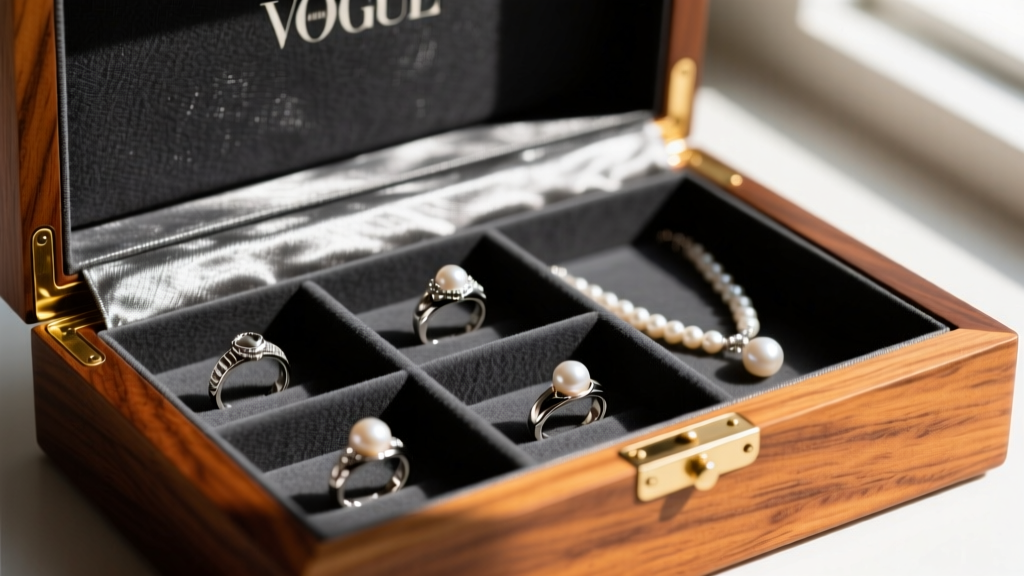
To safely store silver in a walnut jewelry box, the interior wood must be hermetically sealed, or the jewelry must be isolated using archival-grade linings. According to conservation guidelines outlined by The Silver Institute, wooden storage environments must be buffered against acidic off-gassing. If you are purchasing a solid walnut box, ensure the manufacturer has sealed the interior raw wood with a water-based polyurethane or an acrylic lacquer, which locks in the tannins and prevents acidic vapor transmission.
Finish Types: Polyurethane, Lacquer, and Natural Oils
The exterior and interior finishes applied to a walnut jewelry box dictate both its aesthetic aging process and its chemical safety. Woodworkers utilize several finishing systems, each with distinct properties:
- Natural Oils (Tung or Linseed): These penetrate the wood grain, enhancing the chatoyancy (3D depth) of the walnut. However, oil finishes do not create a vapor barrier. They offer zero protection against tannin migration and require annual reapplication. Boxes finished only in oil should never be used for bare silver storage without secondary containment.
- Acid-Catalyzed Lacquers: Frequently used in commercial manufacturing, these provide a hard, durable shell. However, as noted by The Wood Database regarding wood finishing chemistry, improperly cured acid-catalyzed finishes can emit formaldehyde and acidic vapors for months, which will aggressively tarnish metals and damage porous stones like turquoise.
- Water-Based Polyurethane: The gold standard for jewelry box interiors. It cures to a completely inert, non-off-gassing plastic film that traps tannins and blocks moisture transfer, creating a safe microclimate for all precious metals and gemstones.
Expert Tip: If you purchase a vintage or antique solid walnut jewelry box, always perform a "smell test" on the interior. A sharp, acidic, or chemical odor indicates active off-gassing or trapped moisture. Leave the box open in a climate-controlled room for 48 hours and consider retrofitting it with an anti-tarnish lining before introducing sterling silver.
Evaluating Archival Lining Materials for Walnut Boxes
The interior lining is the final defensive barrier between your jewelry and the walnut substrate. Cheap boxes often use polyester-blend flannels treated with optical brighteners or synthetic dyes that can degrade and stain pearls or ivory over time. High-end walnut jewelry boxes utilize specialized archival materials:
1. Pacific Silvercloth
This is a 100% cotton flannel embedded with microscopic silver particles. As sulfur gases attempt to penetrate the box, the embedded silver tarnishes first, sacrificing itself to protect your jewelry. It is the premier lining for walnut boxes intended for heavy silver storage.
2. Luster Loc and Tarnish-Resistant Flannel
These fabrics are chemically treated with zinc or other metal salts to neutralize hydrogen sulfide gas. They are highly effective but have a finite lifespan; once the chemical treatment is exhausted (typically 10 to 15 years), the fabric must be replaced.
3. Archival Polyethylene (PE) Foam
For high-value gemstones and antique pieces, closed-cell PE foam is the safest option. Unlike Polyurethane (PU) foams—which break down over time and emit sulfur compounds that cause severe tarnishing—PE foam is completely chemically inert, acid-free, and will not off-gas, making it perfectly safe to rest directly against the sealed walnut interior.
Pricing Tiers and Craftsmanship Indicators
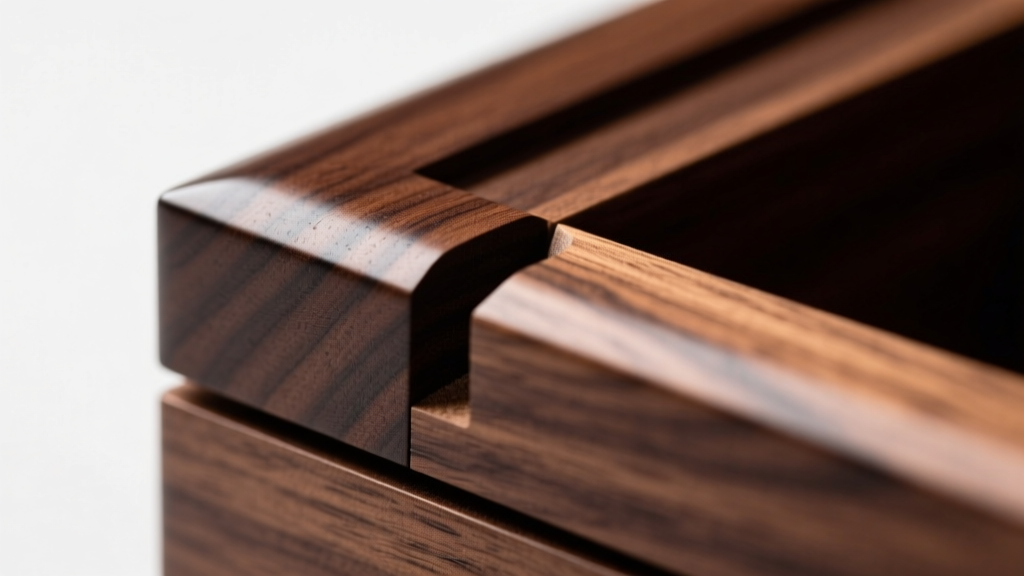
When shopping for a walnut jewelry box in 2026, price is generally a reliable indicator of material quality and joinery techniques. Mass-produced veneer boxes ($30–$90) typically rely on basic butt joints secured with staples and glue, which fail under the stress of heavy lids or frequent drawer use. Mid-tier solid wood boxes ($150–$300) often feature mitered splines or box joints, offering decent structural integrity. True artisan boxes ($400–$800+) are characterized by hand-cut or precision CNC-machined dovetail joints, which mechanically lock the corners together without relying solely on adhesive. Furthermore, premium boxes will feature kiln-dried walnut (moisture content between 6% and 8%), ensuring the wood will not warp, crack, or shrink, which could otherwise cause drawers to stick or lids to misalign.
Final Verdict: Choosing the Right Walnut Box
A walnut jewelry box is an investment in both organization and preservation. If your collection consists primarily of gold, platinum, and diamonds, a beautifully finished natural-oil solid walnut box offers unmatched aesthetic warmth. However, if your collection includes sterling silver, copper, or sensitive organic gems, you must prioritize material science over raw aesthetics. Opt for a solid walnut or plywood-core box sealed with water-based polyurethane, lined with Pacific Silvercloth or inert PE foam, and constructed with traditional dovetail joinery. By understanding the interplay between wood tannins, finish chemistry, and archival linings, you can ensure your walnut storage solution protects your collection for generations.


