How to Identify Antique Jewelry: Style and Era Guide
Learn how to identify antique jewelry by analyzing era-specific styles, construction techniques, and design motifs from Georgian to Art Deco periods.

The 100-Year Rule: Defining Antique in 2026
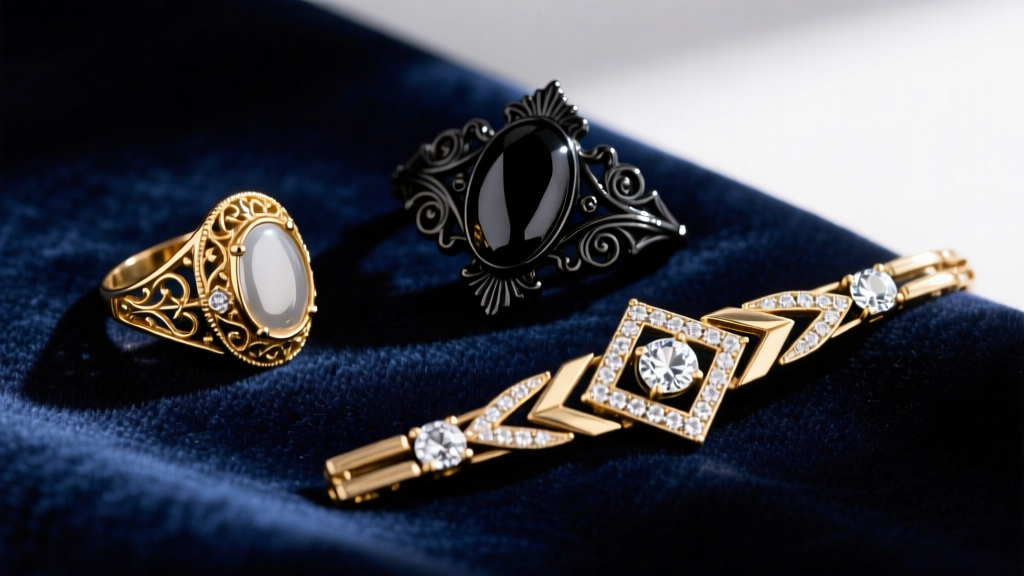
In the jewelry industry, the term 'antique' is not merely a marketing buzzword; it is a strict chronological classification. By definition, an item must be at least 100 years old to be considered antique. As we navigate the estate and vintage markets in 2026, this threshold has officially shifted to 1926. This chronological milestone is significant because it means early Art Deco masterpieces are now crossing the century mark, joining Georgian, Victorian, Art Nouveau, and Edwardian pieces in the true antique category. While hallmarks and acid tests are valuable for verifying metal purity, they are frequently forged, worn away, or absent entirely in older pieces. Therefore, mastering how to identify antique jewelry requires a deep understanding of era-specific stylistic hallmarks, construction techniques, and material preferences. According to the Lang Antiques Antique Jewelry University, analyzing the structural anatomy of a piece is often far more reliable than relying solely on stamps.
Georgian Era (1714–1837): Foil Backs and Repoussé
Georgian jewelry is exceptionally rare, as many pieces were melted down over the centuries to reuse the precious metals. When identifying this era, look for closed-back settings. Gemstones, typically rose-cut or table-cut diamonds, garnets, and topazes, were set in silver over gold to prevent the silver tarnish from transferring to the wearer's skin. Because early cutting techniques lacked the precision to maximize light return, jewelers placed tinted or metallic foil behind the stones to enhance their brilliance. If you examine a ring and see a completely sealed, unbroken metal back behind the gemstone, it is a strong indicator of Georgian origin.
Metalwork techniques are equally diagnostic. Look for cannetille (intricate, tightly coiled gold wire resembling embroidery) and repoussé (metal hammered into raised relief patterns from the reverse side). Additionally, base metals like Pinchbeck (a copper-zinc alloy that mimics gold) were highly popular for travel jewelry. True Georgian pieces will never feature modern prong settings or open-backed galleries.
Victorian Era (1837–1901): Sentiment, Mourning, and the Gold Standard
The Victorian era spans over six decades and is generally divided into three sub-periods: Romantic, Grand, and Aesthetic. The most iconic identifier of the mid-to-late Victorian period is mourning jewelry, popularized after the death of Prince Albert in 1861. Queen Victoria mandated strict mourning attire, leading to a massive surge in black jewelry. To identify authentic Victorian mourning pieces, you must distinguish between genuine Whitby jet, French jet (black glass), gutta-percha (a natural rubber), and bog oak. Genuine Whitby jet is lightweight, warm to the touch, and will leave a brown streak on unglazed porcelain, whereas French jet (glass) is heavy, cold, and will not leave a streak.
Another critical identifier for British Victorian jewelry is the hallmarking shift. According to the Victoria and Albert Museum, the UK Gold Standard Act of 1854 legalized 15k, 12k, and 9k gold. If you find a piece stamped '15K' or '15.60', it is a strong indicator of mid-to-late Victorian British origin, as 15k gold was largely phased out in favor of 14k and 18k by the 1930s. Furthermore, look for sentimentality motifs: acrostic jewelry (where the first letter of each gemstone spells a word like 'DEAREST'), hairwork woven under glass, and serpent motifs symbolizing eternity.
Art Nouveau (1890–1915): Whiplash Curves and Plique-à-Jour
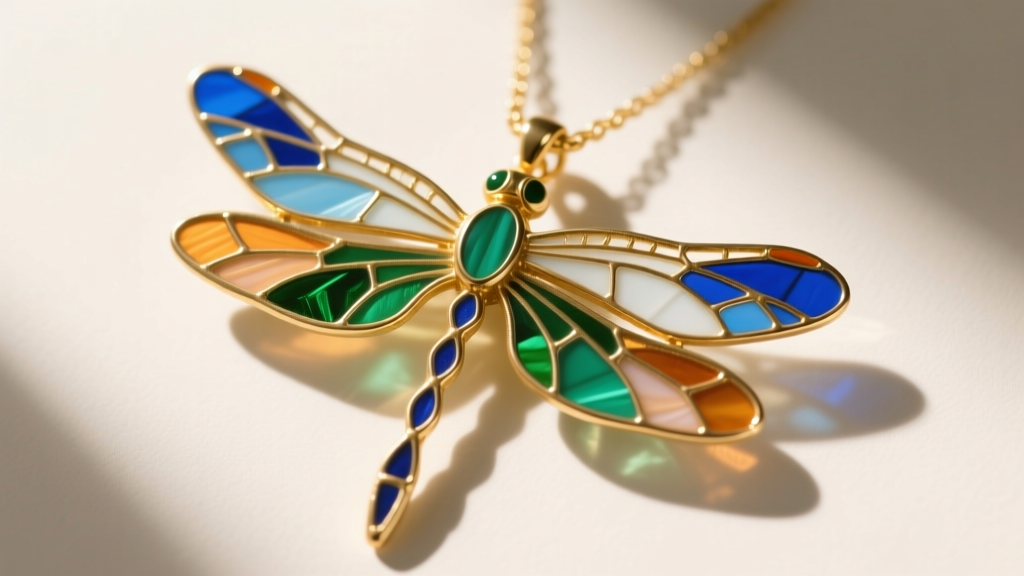
Art Nouveau was a rebellion against the rigid, mass-produced aesthetics of the Industrial Revolution. When learning how to identify antique jewelry from this brief but impactful era, focus on the materials and the fluidity of the design. The 'whiplash' curve—a sinuous, asymmetrical line inspired by plant stems and vines—is the foundational motif. Nature was paramount: dragonflies, peacocks, orchids, and female figures with flowing hair dominate the visual landscape.
The true test of Art Nouveau authenticity lies in the enameling and alternative materials. Master jewelers like René Lalique elevated plique-à-jour enameling to high art. This technique involves suspending translucent enamel within a metal framework without a backing, creating a stained-glass effect when held to the light. Authentic plique-à-jour is incredibly fragile and difficult to produce; modern reproductions often use epoxy resins or have a solid metal backing disguised with paint. Additionally, Art Nouveau jewelers frequently utilized horn, tortoiseshell, opals, and moonstones, favoring their ethereal, mystical glow over the stark brilliance of diamonds.
Edwardian Era (1901–1915): Platinum and Milgrain Elegance
The Edwardian era is defined by extreme elegance, lightness, and the widespread adoption of platinum. Prior to the invention of the oxyhydrogen torch around 1901, platinum's high melting point made it nearly impossible to work with; jewelers had to fuse thin sheets of platinum over gold. The new torch technology allowed for intricate, pierced openwork and delicate filigree that resembled lace. If a piece features incredibly fine, lace-like metalwork with a stark white metal color, it is likely Edwardian platinum.
Look closely at the edges of the metalwork. Edwardian jewelers heavily utilized milgrain—a border of tiny metal beads applied to the edges of settings using a knurling tool. While milgrain is used in modern reproductions, antique milgrain often shows slight irregularities and wear consistent with hand-application. Diamonds were the primary gemstone, usually old European or mine cuts, set in gypsy, bezel, or early prong settings. The Gemological Institute of America (GIA) notes that Edwardian pieces often feature 'knife-edge' wires—metal bands that are thick at the base but taper to a razor-thin edge to maximize the visibility of the diamonds.
Early Art Deco (1920–1926): The New Antique Threshold
As of 2026, the earliest Art Deco pieces have officially achieved antique status. Emerging from the ashes of World War I and the 1925 Exposition Internationale des Arts Décoratifs, this era rejected the flowing curves of Art Nouveau in favor of stark geometry, symmetry, and bold color contrasts. To identify early Art Deco, look for calibré-cut gemstones (stones custom-cut to fit perfectly into a specific geometric channel or mosaic) and the juxtaposition of bright white diamonds against deep black onyx, vivid coral, or lapis lazuli.
Early Art Deco construction still relied heavily on platinum and the hand-applied milgrain of the Edwardian era, but the motifs shifted to sunbursts, ziggurats, and stepped patterns. Note that the famous 'invisible setting' (where no metal prongs are visible) was not patented by Van Cleef & Arpels until 1933, so a piece claiming to be 1920s Art Deco with a true invisible setting is likely a later vintage reproduction or a misdated item.
Era Identification Matrix
| Era | Primary Metals | Dominant Stone Cuts | Key Construction Clues |
|---|---|---|---|
| Georgian | Silver over Gold, Pinchbeck | Rose, Table, Cabochon | Foil-backed, closed settings, cannetille |
| Victorian | Yellow Gold (15k, 12k), Jet | Old Mine, Cabochon | Hairwork, C-clasps, sentiment motifs |
| Art Nouveau | Yellow Gold, Silver, Horn | Cabochon, Custom Glass | Plique-à-jour, whiplash curves |
| Edwardian | Platinum, White Gold | Old European, Mine | Filigree, milgrain, knife-edge wires |
| Early Art Deco | Platinum, White Gold | Calibré, Baguette, Emerald | Geometric channels, bold color contrast |
Hardware and Construction: The Ultimate Authenticity Test
While styles can be copied, the mechanical hardware of antique jewelry is notoriously difficult and expensive for modern forgers to replicate accurately. Examining the clasps, hinges, and solder is the final, definitive step in identifying antique jewelry.
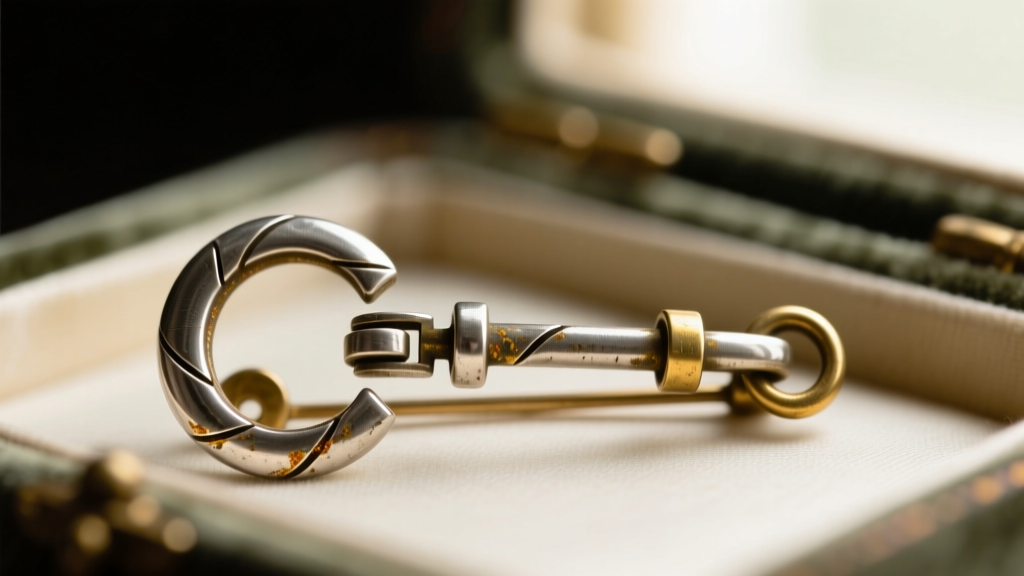
- The C-Clasp: Found primarily on brooches from the 19th century, the C-clasp is a simple, C-shaped hook with no locking mechanism. The pin stem was usually long enough to extend well past the edge of the brooch for security. If a piece features a modern locking safety catch but shows heavy wear on the C-clasp, the catch was likely added later.
- The T-Hinge: Antique brooches typically feature a 'T-hinge' or 'tube hinge,' where the pin stem passes through a simple cylindrical tube. Modern brooches use a 'ball-and-cup' hinge, which allows the pin to sit flush against the back of the piece. A visible tube hinge is a strong indicator of pre-1900 construction.
- The Trombone Clasp: Common on European jewelry from the late 1800s through the 1930s, this mechanism uses a push-pull tube that slides over the end of the pin to lock it in place. It requires two hands to operate and is rarely used in modern commercial jewelry.
- Solder Joints: Examine the joints under a 10x loupe. Antique pieces were hand-soldered, often leaving slight excess solder or a slightly different color at the joint due to the use of lower-karat solder alloys. Modern laser welding leaves incredibly precise, almost invisible joints that lack the organic imperfections of historical craftsmanship.
Conclusion: Synthesizing the Evidence
Learning how to identify antique jewelry is an exercise in historical forensics. No single feature—be it a hallmark, a clasp type, or a gemstone cut—should be used in isolation to authenticate a piece. A genuine antique will exhibit a cohesive alignment of era-appropriate materials, period-accurate construction techniques, and stylistic motifs that reflect the cultural zeitgeist of its time. By combining a rigorous visual analysis of the hardware with a deep understanding of design history, collectors and enthusiasts can confidently navigate the market, separating genuine historical artifacts from mere vintage reproductions.