December Birthstone Jewelry: A 2026 Budget & Value Guide
Discover how to budget for December birthstone jewelry in 2026. Compare tanzanite, zircon, turquoise, and blue topaz values to maximize your investment.

The December Birthstone Landscape: A Quick Value Overview
Navigating the market for december birthstone jewelry requires a nuanced understanding of gemology, market scarcity, and treatment realities. Unlike months with a single dominant stone, December boasts a diverse roster: Tanzanite, Zircon, Turquoise, and Blue Topaz. As we move through 2026, the pricing dynamics for these gems have shifted dramatically due to tightening export regulations in East Africa and the continued depletion of historic turquoise mines in the American Southwest.
For the savvy buyer, this diversity is actually a massive advantage. Whether you are allocating a $5,000 investment budget or looking for a stunning $200 statement piece, December’s birthstones offer a tiered value proposition. This guide breaks down the exact price-per-carat metrics, durability warnings, and treatment disclosures you need to ensure you are paying for genuine value, not marketing hype.
Tanzanite: The Premium Investment (and How to Budget for It)
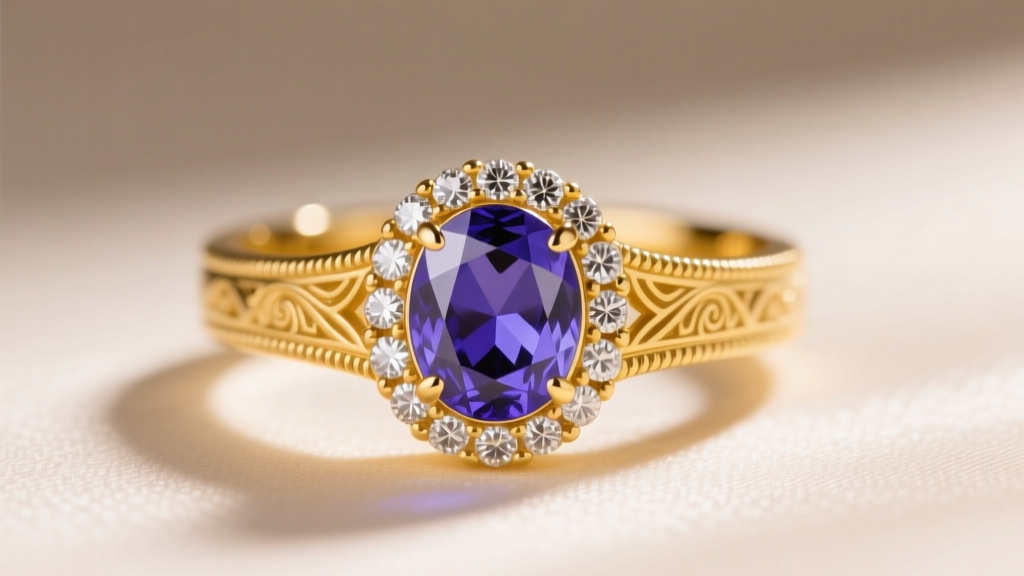
Tanzanite is the undisputed heavyweight of December birthstones in terms of rarity and price. Found only in a five-square-mile mining area near Mount Kilimanjaro, its single-source origin makes it highly sensitive to market disruptions. According to the Gemological Institute of America (GIA), tanzanite exhibits strong pleochroism, meaning it shows different colors (blue, violet, and burgundy) when viewed from different crystal directions.
Grading and 2026 Price Jumps
The value of tanzanite is heavily dictated by color saturation and carat weight. Stones under 1.00 carat often lack the deep, velvety saturation required for top-tier pricing. The real value jumps occur at the 2.00-carat and 3.00-carat thresholds.
- Under 1.00 ct (Commercial Grade): $50 - $150 per carat. Often pale or heavily included.
- 1.00 - 1.99 ct (Fine Grade): $250 - $450 per carat. Good saturation, suitable for everyday pendants.
- 2.00 - 2.99 ct (AAA Grade): $500 - $750 per carat. Deep violet-blue, eye-clean.
- 3.00+ ct (Investment Grade): $800 - $1,200+ per carat. Exceptional rarity, commanding premium auction prices.
Budget Hack: If your budget caps at $1,000, avoid the pursuit of a flawless 2-carat stone. Instead, look for a 1.5-carat stone with a 'violet-dominant' cut. Cutters often orient the stone to maximize violet rather than pure blue to retain carat weight. Violet-dominant stones are visually striking but typically cost 20-30% less than their blue-dominant counterparts.
Zircon vs. Cubic Zirconia: Avoiding the Value Trap
One of the most common and costly mistakes buyers make when shopping for december birthstone jewelry is confusing natural Zircon with synthetic Cubic Zirconia (CZ). Natural zircon (zirconium silicate) is a brilliant, historically significant gemstone with a Mohs hardness of 7.5. CZ is a mass-produced diamond simulant worth fractions of a penny per carat.
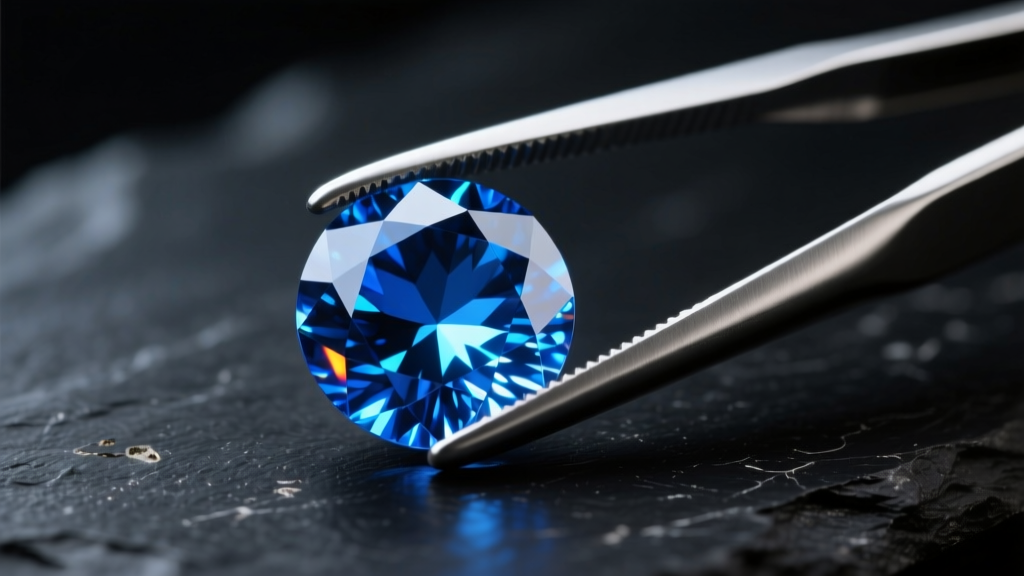
Natural blue zircon is created by heat-treating brown zircon. It possesses a high refractive index (1.92-1.98) and exceptional birefringence. If you look through the table of a natural zircon with a 10x jeweler's loupe, you will see a 'doubling' of the back facet lines—a definitive hallmark of its natural origin that CZ completely lacks. The GIA Zircon Profile notes that this doubling effect is what gives the stone its fiery, almost electric brilliance.
Expert Warning: While zircon is a 7.5 on the Mohs scale, it has brittle tenacity. When setting blue zircon in a ring, ensure the jeweler uses a bezel or a robust six-prong setting with a thick girdle. Prong-set zircons with thin girdles are highly prone to chipping at the edges during daily wear.
Value Metric: High-quality, eye-clean blue zircon typically ranges from $75 to $150 per carat in 2026. It offers a level of optical fire that rivals diamonds at a fraction of the cost, making it the ultimate 'insider' choice for budget-conscious gemologists.
Turquoise: Navigating Treatments and Matrix Pricing
Turquoise is an opaque, porous copper-aluminum phosphate that has been prized for millennia. However, the turquoise market is a minefield of treatments. Because natural, high-grade turquoise is incredibly rare and fragile, over 90% of the turquoise on the market has been stabilized.
The Treatment Hierarchy
Understanding how turquoise is treated is the only way to accurately assess its budget tier. Below is a breakdown of the market classifications and their corresponding value profiles.
| Treatment Type | Description | 2026 Market Value (per carat) | Best Jewelry Application |
|---|---|---|---|
| Natural (Untreated) | Hard enough to be cut and polished without additives. Extremely rare (e.g., Lander Blue). | $50 - $150+ | Pendants, Earrings, Collector Cabochons |
| Stabilized | Infused with clear epoxy or polymer under pressure to harden the stone and lock in color. | $3 - $15 | Rings, Bracelets, Daily Wear |
| Reconstituted | Turquoise dust mixed with resin and dyed. Essentially 'turquoise plastic'. | $0.50 - $2 | Fashion Jewelry (Avoid for fine jewelry) |
According to the GIA Turquoise Guide, stabilization is an accepted industry practice provided it is disclosed. For rings and bracelets, stabilized turquoise is actually the superior choice. Natural turquoise is highly porous and will absorb oils, lotions, and sweat, causing it to turn a muddy green over time. Stabilization locks the vibrant sky-blue color in place permanently.
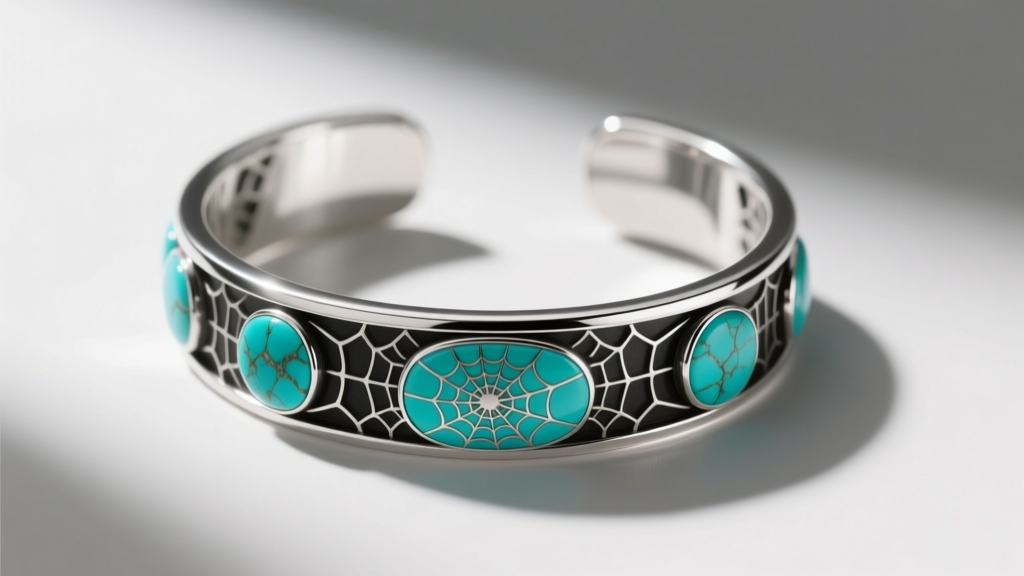
Budget Hack: If you desire the look of expensive 'spiderweb' matrix turquoise but cannot afford natural Number 8 or Lander Blue, look for stabilized turquoise from the Kingman mine. Kingman stabilized stones feature beautiful, distinct black webbing and typically cost under $10 per carat, offering incredible aesthetic value for large cocktail rings.
Blue Topaz: The Ultimate Budget-Friendly Alternative
Rounding out the December options is Blue Topaz. It is vital to understand that virtually all blue topaz on the market begins as colorless topaz and is subjected to neutron or electron irradiation, followed by heat treatment, to achieve its blue hues. Because the raw material is abundant and the treatment is highly scalable, blue topaz is a mass-market stone.
- Sky Blue: Light, pale blue. ($5 - $10 per carat)
- Swiss Blue: Vibrant, medium-dark electric blue. ($10 - $20 per carat)
- London Blue: Deep, inky blue with slight gray/green undertones. ($15 - $30 per carat)
Value Assessment: Blue topaz holds virtually no resale or investment value. However, from a pure aesthetic budget perspective, it is unmatched. If you want a massive, 10-carat emerald-cut blue stone for a statement pendant, a tanzanite of that size would cost upwards of $8,000 and be far too fragile for daily wear. A 10-carat London Blue Topaz will cost around $200, boasts a durable 8 on the Mohs scale, and delivers spectacular brilliance.
Final Verdict: Where Should Your Money Go?
Allocating your budget for december birthstone jewelry depends entirely on your end goal. If you are seeking an heirloom investment, allocate your funds toward a 2+ carat AAA Tanzanite set in a protective bezel. If you want a durable, everyday ring with rich color and historical significance, invest in high-grade stabilized Turquoise set in 14k or 18k gold. For the gemology enthusiast who values optical physics and natural rarity over mainstream recognition, natural Blue Zircon is the undisputed winner. Finally, if your priority is maximum visual impact on a strict budget, London Blue Topaz remains the undisputed champion of affordable luxury.


