Engineering Custom Mom Birthstone Jewelry: Metals & Settings
Discover the metallurgy and gemology behind custom mom birthstone jewelry. Expert insights on setting mixed-hardness gems and choosing the right alloys.

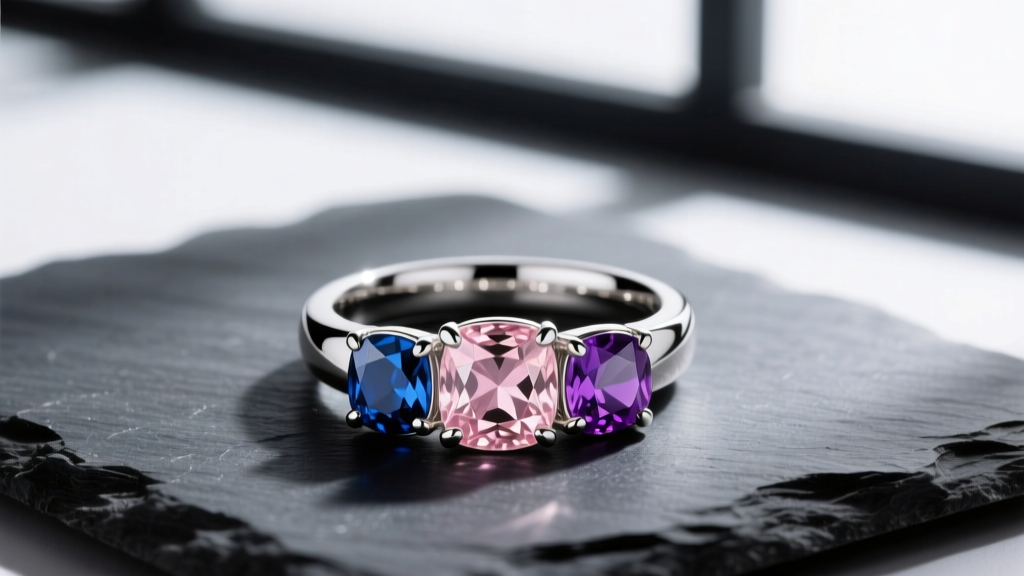
The market for mom birthstone jewelry is heavily saturated with mass-produced, low-karat castings that prioritize quick turnaround over structural integrity. When a single piece combines multiple birthstones—often with vastly different physical properties—the engineering requirements shift dramatically. As of 2026, advanced CAD modeling and precision laser welding allow for unprecedented customization, but the fundamental laws of gemology and metallurgy remain unchanged. Designing a multi-gemstone maternal ring or pendant requires a rigorous understanding of mineral hardness, alloy stiffness, and setting architecture to prevent catastrophic stone loss.
This guide provides a technical deep dive into the metallurgical and gemological considerations required to engineer durable, heirloom-quality mom birthstone jewelry.
The Mohs Scale Dilemma in Multi-Gemstone Rings
The most common failure mode in custom birthstone rings is not metal fatigue, but gemstone-on-gemstone abrasion. The Mohs scale of mineral hardness is logarithmic, meaning a diamond (Mohs 10) is not just twice as hard as an amethyst (Mohs 7); it is exponentially harder. If a diamond is set adjacent to an opal (Mohs 5.5–6.5) in a shared-prong or channel setting, everyday micro-movements will cause the diamond's girdle to act as a lapidary saw, slowly grinding away the softer opal.
When engineering mom birthstone jewelry, jewelers must map the physical properties of every stone in the matrix. Below is a technical breakdown of common birthstones and their structural risks:
| Gemstone | Mohs Hardness | Cleavage / Tenacity | Setting Risk Level |
|---|---|---|---|
| Diamond (April) | 10 | Perfect Cleavage (4 directions) | Moderate (Chipping risk) |
| Sapphire (September) | 9 | No Cleavage, Tough | Low |
| Topaz (November) | 8 | Perfect Basal Cleavage | High (Prong pressure risk) |
| Emerald (May) | 7.5–8 | Distinct Cleavage, Brittle | Very High |
| Opal (October) | 5.5–6.5 | None, but highly fragile | Extreme |
To mitigate these risks, stones with a Mohs differential greater than 2 should never share a bezel wall or channel. They must be separated by metal dividers or placed on different planes within the CAD design.
Metallurgical Analysis: Selecting the Right Alloy
The choice of metal in mom birthstone jewelry is not merely aesthetic; it dictates the structural memory and tensile strength of the prongs. Jewelers measure metal hardness using the Vickers Hardness (HV) scale, which directly impacts how well a setting will retain softer, more fragile gems.
14K vs. 18K Gold Alloys
While 18K gold (75% pure gold) is prized for its rich color and hypoallergenic properties, it is inherently softer than 14K gold (58.3% pure gold). A standard 18K yellow gold alloy measures approximately 120 HV, whereas a 14K yellow gold alloy measures closer to 140 HV. When securing a brittle gemstone like an emerald or a fragile cabochon opal, the stiffer 14K alloy is vastly superior. The prongs will resist bending when the wearer impacts a hard surface, keeping the stone securely locked in its seat.
Platinum 950/Ruthenium
Platinum is the gold standard for high-end custom jewelry, but its behavior under stress is unique. Unlike gold, which can snap when fatigued, platinum exhibits high malleability and tends to bend rather than break. A 950 Platinum/Ruthenium alloy (approx. 135 HV) offers excellent durability. However, because platinum is dense and malleable, prongs must be cut slightly thicker in the CAD phase to match the rigidity of 14K gold. According to the Jewelers of America, platinum's 'work-hardening' properties make it exceptional for securing high-value stones, provided the initial geometry is engineered correctly.
Setting Architecture: Mitigating Stone Loss
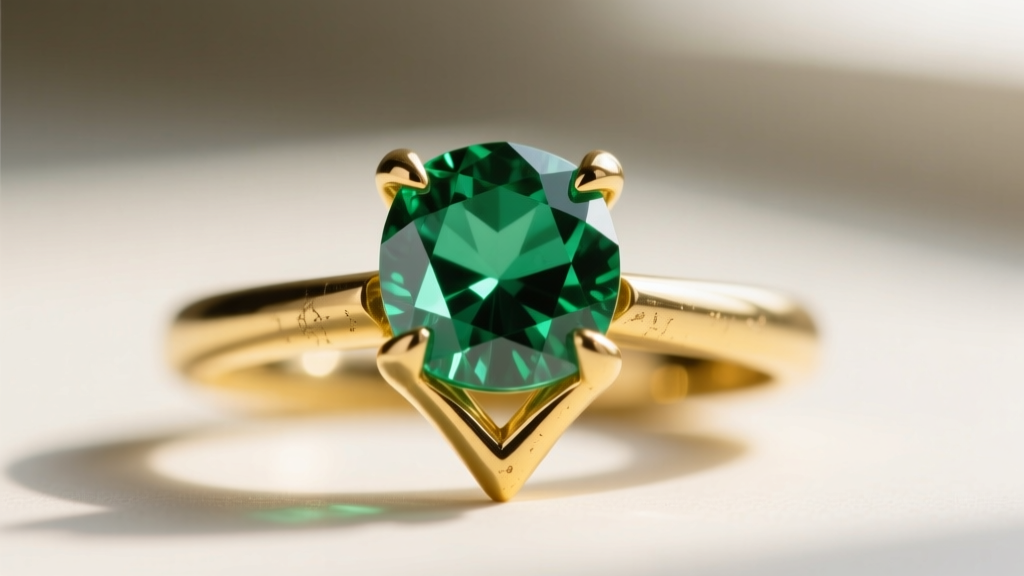
The geometry of the setting must be tailored to the specific birthstone's lapidary cut and internal flaws. Standard round prongs are insufficient for many birthstones commonly used in maternal jewelry.
- V-Prongs for Marquise and Pear Cuts: Stones with acute angles (like marquise-cut sapphires or emeralds) concentrate stress at the tips. V-prongs encapsulate the point entirely, preventing chipping from lateral impacts.
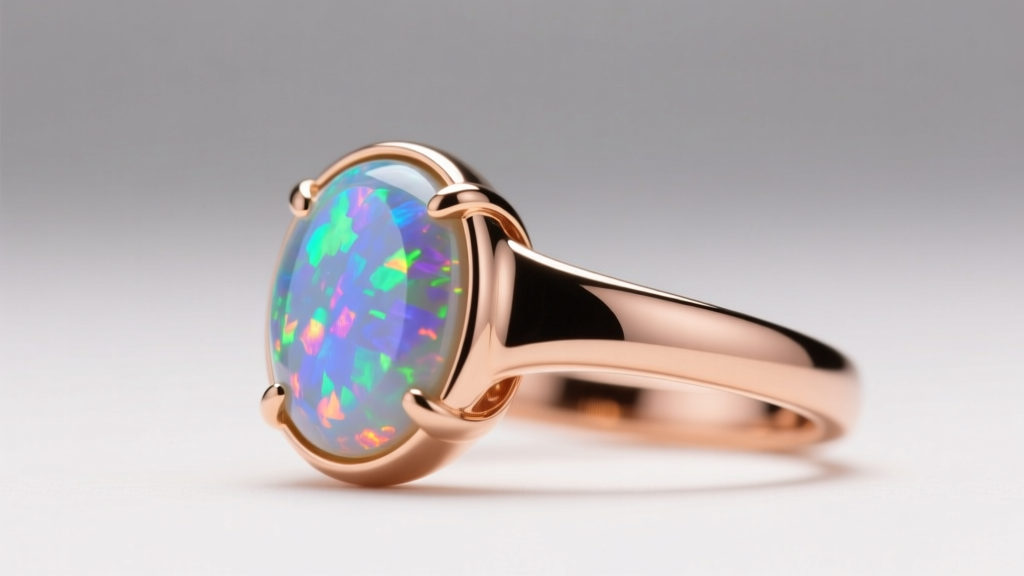
- Full Bezel for Cabochons: Opals and moonstones are almost exclusively cut as cabochons. A full bezel setting, where a continuous rim of metal is burnished over the girdle, provides 360-degree protection. The metal lip should be exactly 0.3mm to 0.5mm thick to ensure adequate coverage without obscuring the stone's play-of-color.
- Flush/Gypsy Settings for Hard Stones: For diamonds and rubies, flush settings (where the stone is embedded directly into the metal shank) offer the lowest profile. This is ideal for 'active mom' rings, as there are no prongs to catch on clothing or baby gear.
Gemological Treatments and Maintenance Protocols
A critical, often overlooked aspect of designing mom birthstone jewelry is understanding how the stones have been treated at the mine or cutting facility. These treatments dictate how the jewelry can be cleaned and maintained over its lifespan.
Expert Warning: Never subject multi-stone birthstone jewelry to ultrasonic cleaning without verifying the treatment of every single gem. The high-frequency vibrations can shatter fracture-filled stones and strip essential oils from porous gems.
The GIA Gem Encyclopedia outlines several common treatments that affect maintenance:
- Emeralds (Oiling): Over 90% of commercial emeralds are treated with cedar oil or synthetic resins to mask surface-reaching fractures. Heat and ultrasonic waves will boil out the oil, turning a vibrant green stone into a cloudy, fractured mess. Emeralds in mom rings must be cleaned only with warm water, mild soap, and a soft brush.
- Rubies and Sapphires (Heat Treatment): Standard heat treatment is stable and permanent. However, 'fracture-filled' rubies (treated with lead-glass to improve clarity) are highly unstable. Even a drop of lemon juice can degrade the glass filler over time.
- Opals (Hydration Sensitivity): Ethiopian Welo opals are hydrophane, meaning they absorb water and chemicals. If a mother wears an opal birthstone ring while applying lotions or washing hands, the stone will temporarily turn yellow or brown and lose its fire. Australian solid opals are far more stable for everyday wear.
Custom CAD vs. Bench Fabrication: A Cost Framework
Creating authentic, custom-engineered mom birthstone jewelry requires a specific budget. Unlike buying a pre-cast mounting and dropping stones into it, true custom work involves 3D modeling, wax printing, casting, and meticulous bench finishing. Here is a realistic 2026 pricing framework for a high-quality, 3-stone custom maternal ring:
- CAD Design & Rendering: $350 – $600 (Includes structural stress-testing in the software to ensure prong thickness is adequate).
- Casting & Metal: $300 – $800 (Depending on alloy choice and gram weight. Platinum will push this to the higher end).
- Stone Setting Labor: $40 – $125 per stone. Setting an opal in a bezel requires a master setter to avoid cracking the dome, commanding a premium over setting a round diamond.
- Finishing & Engraving: $100 – $250 (Includes laser engraving of children's names on the inner shank and final rhodium plating if using white gold).
Consumers should expect to invest between $1,800 and $4,500+ for a structurally sound, custom-cast piece using genuine, ethically sourced birthstones. Pieces priced significantly lower are almost certainly utilizing synthetic stones, thin-walled castings prone to porosity, or stamped sheet metal that will inevitably fail under the rigors of daily maternal life.
Final Engineering Thoughts
Designing mom birthstone jewelry is an exercise in balancing sentimentality with physics. By respecting the Mohs scale, selecting alloys based on Vickers hardness rather than just karat purity, and employing protective setting geometries, jewelers can create maternal heirlooms that survive the beautiful chaos of motherhood and remain pristine for the next generation.