May Birthstone Jewelry: The Ultimate Budget & Value Guide
Discover how to evaluate may birthstone jewelry. Compare natural vs. lab-grown emerald prices, clarity treatments, and budget-friendly settings.

The Gemological Reality of May Birthstone Jewelry
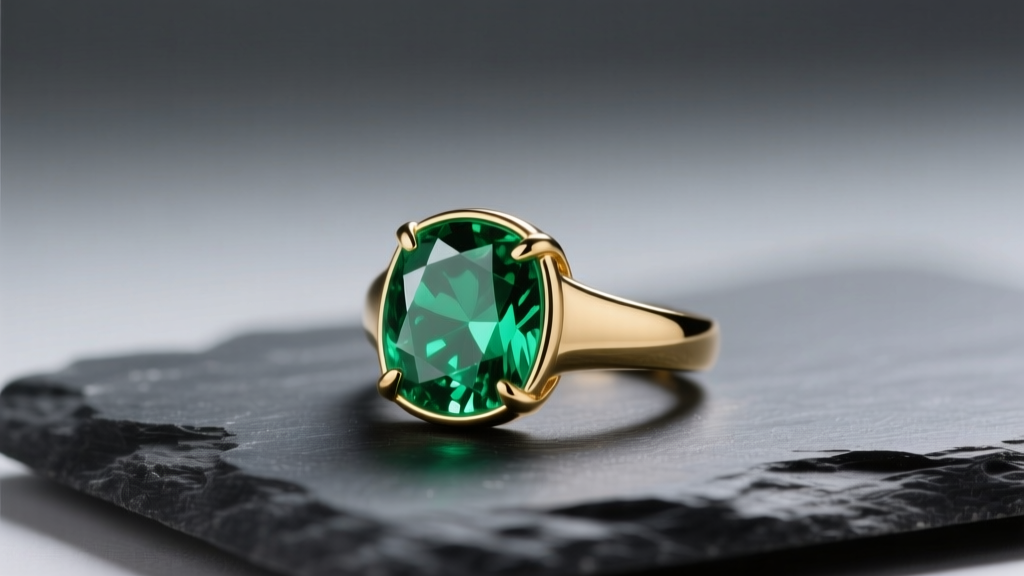
When shopping for may birthstone jewelry, buyers are immediately drawn to the emerald—a gemstone that has captivated royalty, collectors, and jewelers for over four thousand years. However, navigating the emerald market requires a highly nuanced understanding of gemology, market pricing, and structural vulnerabilities. Unlike diamonds, where the grading system is rigid and universally standardized, emeralds demand a more subjective, expertise-driven approach to value assessment. If you are building a collection or purchasing a custom piece on a budget, understanding where to allocate your funds is the difference between a lifelong heirloom and a fragile disappointment.
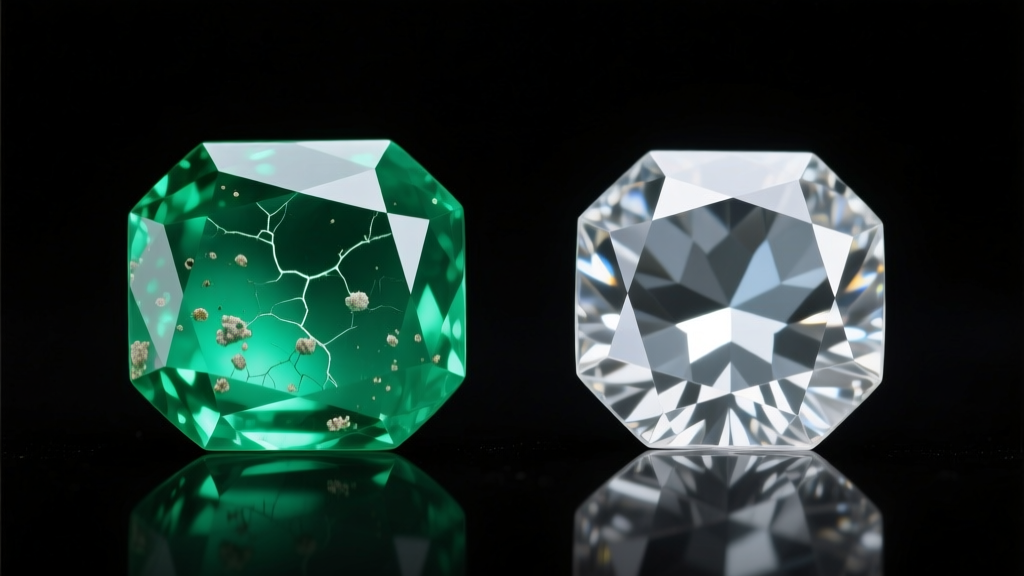
The fundamental rule of emerald valuation is that color is king. While the traditional 4Cs (Color, Clarity, Cut, Carat) apply, their hierarchy shifts dramatically for this specific beryl variety. A heavily included emerald with a vivid, saturated bluish-green hue will command a significantly higher premium than a flawless, pale green stone. In fact, inclusions in emeralds are not just expected; they are celebrated as 'jardin' (French for garden), serving as a natural fingerprint that proves the stone's terrestrial origin.
Evaluating Color: Origin and Saturation
The most prized emeralds exhibit a medium-dark tone with vivid saturation. Historically, Colombian emeralds from the Muzo and Chivor mines have set the global benchmark, characterized by a warm, intensely saturated green. However, Zambian emeralds (primarily from the Kagem mine) have surged in market share, offering a slightly cooler, bluish-green hue with inherently better clarity and lower price points. For budget-conscious buyers, a high-quality Zambian emerald often provides superior visual impact per dollar compared to its Colombian counterpart.
Natural vs. Lab-Grown: A Pricing Breakdown
The most significant shift in the gemstone market over the last decade is the mainstream acceptance of lab-grown emeralds. For buyers seeking the iconic may birthstone without the astronomical markup of natural stones, lab-created alternatives offer identical chemical, physical, and optical properties at a fraction of the cost. There are two primary methods of synthesis: flux-grown and hydrothermal. Hydrothermal emeralds are generally preferred for fine jewelry because they mimic natural growth conditions more closely, often resulting in better clarity and color consistency.
Below is a comparative pricing framework for a 1.00-carat, well-cut emerald with good color saturation, reflecting current wholesale-to-retail market averages.
| Origin / Type | Avg. Price per Carat (1ct) | Clarity Expectations | Value Retention |
|---|---|---|---|
| Natural Colombian (Muzo) | $3,500 - $8,000+ | Heavy Jardin, Oil-Treated | High (Collector Grade) |
| Natural Zambian (Kagem) | $1,200 - $3,000 | Moderate Jardin, Oil-Treated | Moderate to High |
| Lab-Grown (Hydrothermal) | $150 - $350 | Eye-Clean to Slight Jardin | Low (Sentimental Value) |
| Lab-Grown (Flux) | $100 - $250 | Highly Included (Veil-like) | Low |
As the data illustrates, if your primary goal is maximizing carat size and visual perfection on a strict budget, hydrothermal lab-grown emeralds are the undisputed winner. However, if you view your jewelry as an alternative asset class or a generational heirloom, a natural Zambian stone offers the best compromise between affordability and intrinsic geological rarity.
The Truth About Clarity Enhancements
You cannot accurately assess the value of may birthstone jewelry without understanding clarity enhancements. According to the Gemological Institute of America (GIA), it is estimated that over 90% of natural emeralds on the market are fracture-filled. Because emeralds form under extreme tectonic stress, they are riddled with microscopic fissures that reach the surface. To improve transparency and stability, these fissures are filled with various substances.
Not all enhancements are created equal. The type of filler used directly dictates the stone's long-term durability, maintenance requirements, and resale value.
- Cedarwood Oil: The traditional, universally accepted enhancement. It is temporary and can dry out or leach over time, requiring re-oiling by a professional jeweler. Stones treated only with minor oil command the highest premiums.
- Epoxy Resins (e.g., Opticon): A modern, permanent synthetic resin that hardens inside the fissures. While it stabilizes the stone brilliantly, it is heavily frowned upon by high-end collectors and significantly reduces the gem's resale value.
- Colored Oils/Resins: Using green-tinted fillers to artificially enhance the stone's color is considered deceptive and a major red flag for buyers.
The Federal Trade Commission (FTC) mandates that any clarity enhancement that significantly affects the value of a gemstone must be disclosed to the consumer. Always request a gemological report from a reputable lab (such as GIA, AGL, or Gübelin) that explicitly states the type and extent of the enhancement (e.g., 'Minor Oil' vs. 'Prominent Resin').
Budget-Smart Settings for Brittle Gemstones
A critical mistake budget buyers make is spending their entire allocation on the center stone and neglecting the setting. Emeralds rank between 7.5 and 8 on the Mohs scale of hardness, meaning they resist scratching reasonably well. However, hardness is not toughness. Due to their extensive internal inclusions and natural cleavage planes, emeralds are notoriously brittle and prone to chipping or shattering upon impact.
The Case for Bezel Over Prong
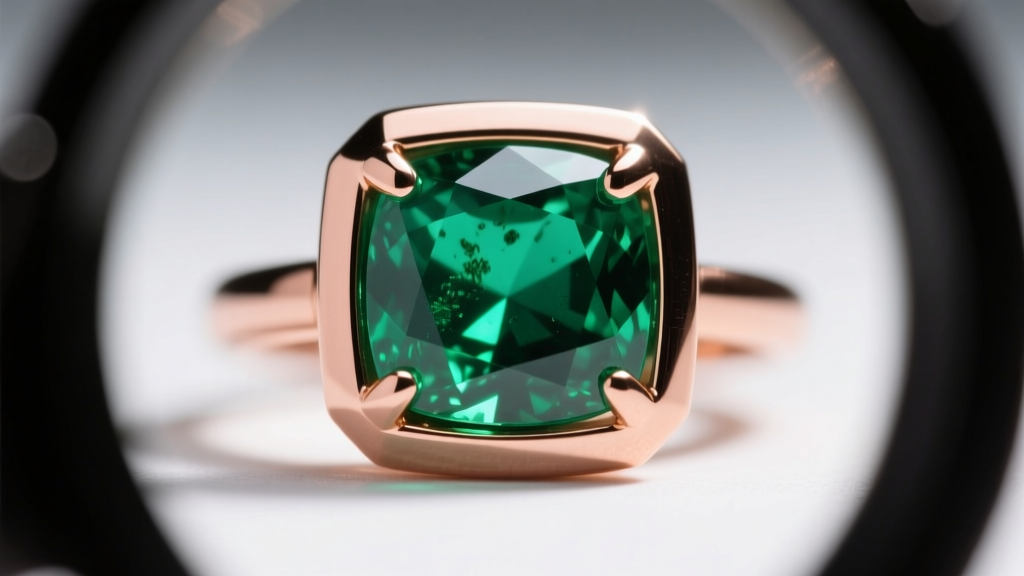
For everyday wear—especially in rings and bracelets—a bezel setting is non-negotiable. A traditional four-prong or six-prong setting leaves the vulnerable corners of an emerald-cut stone completely exposed to accidental knocks against doorframes or desks. A full or partial bezel setting wraps a rim of metal securely around the girdle of the stone, absorbing shock and protecting the edges. While a bezel setting may cost slightly more in gold weight and labor, it prevents catastrophic financial loss from a shattered gemstone.
Metal Allocations: 14k vs. 18k Gold
If you are trying to maximize your budget, opt for 14k gold rather than 18k gold or platinum. 14k gold contains a higher percentage of alloy metals (like copper and zinc), making it significantly harder and more rigid than 18k gold. This added structural rigidity provides a more secure grip on the emerald's girdle, further reducing the risk of the stone slipping out of its mounting over years of daily wear.
Strategic Sourcing: Where to Buy
Legacy luxury brands often mark up emerald jewelry by 300% to 800% to cover retail real estate and marketing overhead. To extract true value, shift your focus to specialized, direct-to-consumer gemstone dealers or custom bench jewelers who source directly from lapidaries in Jaipur or Bogotá. By purchasing a loose, GIA-certified emerald and commissioning a local jeweler to craft a custom bezel setting, you can effectively cut the final retail price in half while achieving a superior, personalized piece of may birthstone jewelry. Always prioritize vivid color saturation over carat weight, demand full disclosure on fracture fillings, and engineer the setting to protect the stone's inherent brittleness.