Antique Pewter Jewelry Box: A Collector's Buying Guide
Discover how to authenticate, appraise, and safely store treasures in an antique pewter jewelry box. Learn about touchmarks, lead risks, and patina.

The Allure of Antique Pewter: More Than Just Storage
When curating a vintage jewelry collection, the vessel you choose for storage is just as critical as the pieces themselves. An antique pewter jewelry box offers a unique intersection of historical craftsmanship, tactile warmth, and metallurgical intrigue. Unlike silver or gold, pewter is a malleable, low-melting-point alloy that has been used for centuries to craft everything from humble tavern tankards to exquisite, highly detailed jewelry caskets. As we navigate the 2026 antique market, the surge in demand for Arts & Crafts and Art Nouveau metalwork has pushed prices for premium, authenticated pieces to record highs, making a discerning eye more important than ever.
However, buying antique pewter requires navigating a minefield of historical reproductions, structural vulnerabilities, and hidden chemical hazards. Whether you are hunting for a Victorian Britannia metal trinket box or a highly coveted Liberty Tudric casket, this guide will equip you with the metallurgical knowledge and appraisal frameworks necessary to buy with absolute confidence.
Decoding the Alloy: Traditional Pewter vs. Britannia Metal
To accurately appraise an antique pewter jewelry box, you must first understand what you are holding. 'Pewter' is not a single element but an alloy. Historically, traditional cast pewter consisted of 85% to 99% tin, with the remainder made up of copper (for hardness) and antimony (for stiffness). However, in the late 18th and 19th centuries, a superior alloy known as Britannia metal emerged.
Britannia metal is a specific type of pewter that contains a higher percentage of antimony and copper, allowing it to be spun on a lathe or rolled into thin, durable sheets rather than just cast in heavy molds. If you pick up a 19th-century jewelry box and it feels surprisingly lightweight with crisp, stamped floral motifs, you are likely holding Britannia metal. According to The Pewter Society, distinguishing between heavy cast Georgian pewter and spun Victorian Britannia metal is the first step in accurately dating and pricing a piece.
Touchmarks and the Holy Grail: Liberty Tudric
Unlike sterling silver, which is governed by strict, legally mandated hallmarks, pewter marks—known as 'touchmarks'—were largely unregulated and applied at the discretion of the maker. This makes authentication both challenging and thrilling.
Identifying the Liberty Tudric Line
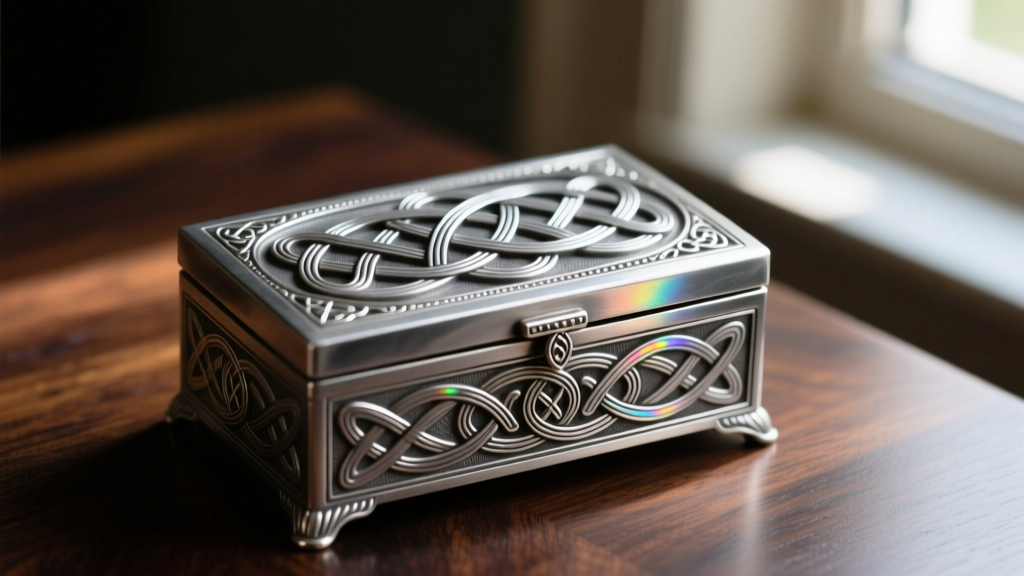
The undisputed pinnacle of the antique pewter jewelry box market is the 'Tudric' line, produced by Liberty & Co. of London between 1899 and the 1930s. Designed largely by the visionary Archibald Knox, these boxes feature stunning Celtic interlacements, enameling, and mother-of-pearl inlays.
- The Stamp: Look for the stamped 'TUDRIC' mark, often accompanied by a model number (e.g., 045) and occasionally the Liberty & Co. maker's mark.
- The Weight: Tudric pieces have a distinct, satisfying heft due to their high tin content and lack of lead.
- Market Premium: An authenticated Tudric jewelry casket in excellent condition can easily command between $800 and $2,500 in today's market, vastly outperforming unmarked Victorian equivalents.
The Lead Conundrum: Safety and XRF Testing
The most critical safety consideration when purchasing an antique pewter jewelry box is lead content. Prior to the late 19th century, many pewterers added lead (sometimes up to 15%) to lower the alloy's melting point and improve castability. While lead makes the metal softer and easier to work, it poses a severe contamination risk for jewelry storage.
Lead dust or surface transfer can contaminate porous gemstones, and handling a leaded box before touching your skin or jewelry is a known hazard. In 2026, serious antique dealers utilize handheld XRF (X-ray fluorescence) scanners to determine the exact elemental breakdown of a piece without damaging it. If you are buying online or at an estate sale where XRF is unavailable, purchase a 3M LeadCheck swab kit. Note: Because lead in pewter is part of the bulk alloy and not just a surface coating, you must lightly score an inconspicuous area on the underside of the box with a needle to expose fresh metal before applying the swab. If the swab turns pink or red, the box contains lead and should be avoided for storing jewelry.
The Hidden Threat: Interior Linings and Gemstone Degradation
A frequently overlooked aspect of buying antique jewelry storage is the interior lining. Many 19th and early 20th-century boxes were lined with dyed velvet, silk, or felt. Over decades, these organic textiles degrade, off-gassing volatile organic compounds (VOCs) and acidic vapors.
According to conservation guidelines referenced by the Gemological Institute of America (GIA), acidic off-gassing is catastrophic for porous and sensitive gemstones. Pearls, opals, turquoise, and coral can suffer from irreversible acid etching, dehydration, and surface crazing if stored in degraded antique velvet. When you acquire an antique pewter jewelry box, carefully inspect the lining. If it is brittle, discolored, or emits a musty, acidic odor, it must be removed. Replace it with archival-grade, acid-free Pacific Silver Cloth or unbleached cotton muslin to ensure your gemstones remain in a chemically neutral microenvironment.
Evaluating Structural Integrity: Hinges and Metal Creep
Pewter is notoriously soft. Over a century of use, the repeated stress of opening and closing a jewelry box lid causes 'metal creep'—a gradual deformation of the alloy. When inspecting a piece, pay close attention to the following structural failure points:
- Hinge Pull-Out: Because pewter cannot hold a tight mechanical thread, hinges were often cast directly into the metal or soldered. Look for micro-fractures or 'wallowing' around the hinge pin holes.
- Solder Repairs: Historical repairs were almost always done with lead-based solder, which appears as a dull, grayish-white bead against the darker pewter. Not only does this introduce lead to the piece, but old solder joints are brittle and prone to sudden failure.
- Latch Alignment: Due to metal creep, the lid of an antique pewter box often warps slightly. Test the clasp to ensure it still engages properly without requiring excessive downward force, which could crack the lid.
Market Value and Condition Matrix
Use the following framework to gauge fair market value based on era, style, and condition. Prices reflect the 2026 collector's market for pieces in 'Good' to 'Excellent' condition.
| Era / Style | Identifying Traits | Avg. Market Price (USD) |
|---|---|---|
| 18th C. Georgian Cast | Heavy, thick walls, simple thumb-latch, unmarked or obscure touchmarks | $150 - $350 |
| 19th C. Victorian Britannia | Spun metal, lightweight, stamped floral motifs, machine-made hinges | $45 - $120 |
| Art Nouveau (Liberty Tudric) | Archibald Knox designs, Celtic motifs, 'TUDRIC' stamp, enamel work | $800 - $2,500+ |
| 1920s Arts & Crafts | Hammered planished finish, copper or brass strap hinges, riveted | $250 - $600 |
The Patina Debate: To Polish or Preserve?
One of the most common mistakes novice buyers make is aggressively polishing an antique pewter jewelry box to a mirror shine. In the antiques trade, a bright, polished surface is often viewed as 'skinned' or damaged, instantly reducing the piece's value by up to 40%.
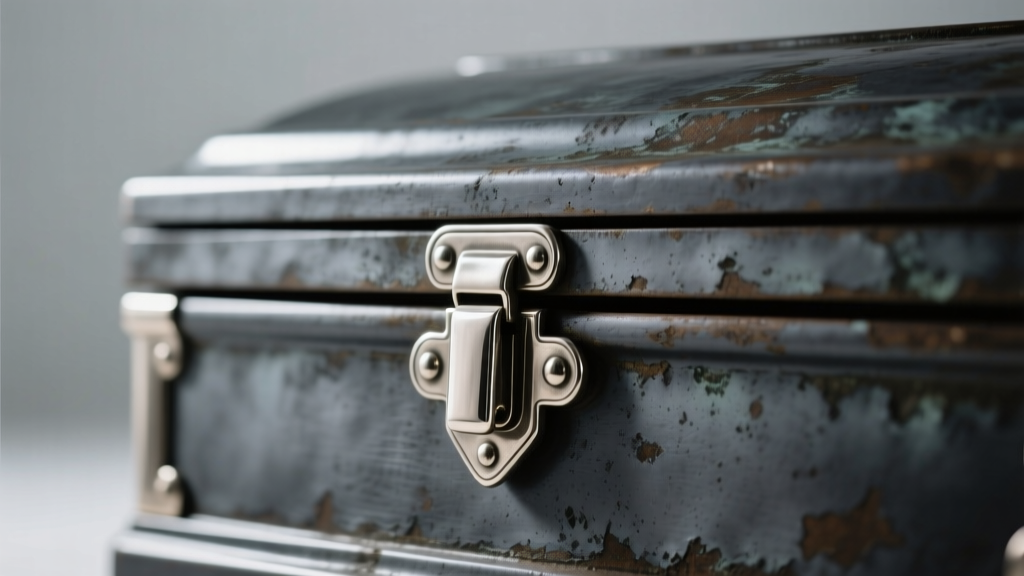
Authentic pewter develops a complex, mottled gray-black patina over decades of oxidation and handling. This 'museum finish' is highly prized by collectors and institutions like the Victoria and Albert Museum. To maintain this patina without allowing destructive grime to build up, simply wash the box with warm water and a mild, phosphate-free dish soap, then dry immediately. For long-term display, apply a microcrystalline wax (such as Renaissance Wax) to seal the surface and protect it from the oils in your hands.
Final Sourcing Checklist
Before finalizing your purchase, verify the following:
1. Is the touchmark consistent with the claimed era and manufacturing technique?
2. Has the piece been tested for lead, especially if the interior is unlined or the alloy feels unusually heavy?
3. Are the hinges original, and is there any evidence of lead-based solder repairs?
4. Has the interior lining been replaced with acid-free archival materials to protect sensitive gemstones?
5. Does the piece retain its original, undisturbed patina?
By approaching your search with a metallurgist's eye and a conservator's respect for history, you will secure an antique pewter jewelry box that not only elevates your collection's aesthetic but actively preserves its legacy for generations to come.


