Is Brass a Good Metal for Jewelry? An Expert Metallurgical Guide
Discover if brass is a good metal for jewelry. We analyze C26000 alloys, skin reactivity, tensile strength, and lead-free compliance for makers.

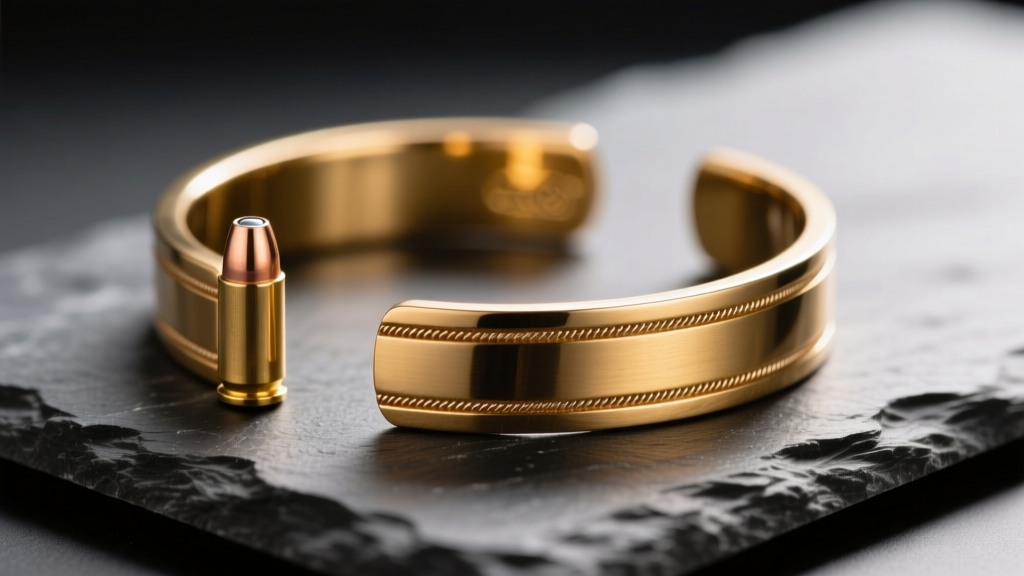
When designers, makers, and collectors ask, 'is brass a good metal for jewelry,' the answer is rarely a simple yes or no. Unlike precious metals such as sterling silver or 14k gold, brass is not a single elemental standard; it is a complex family of copper-zinc alloys. Its suitability for fine and fashion jewelry depends entirely on the specific metallurgical grade, the intended wear environment, and the maker's understanding of its mechanical and chemical behaviors.
In this expert deep dive, we move beyond superficial aesthetics to examine the metallurgy, mechanical properties, skin reactivity, and safety compliance of brass in jewelry manufacturing. Whether you are a bench jeweler selecting stock or a consumer evaluating a purchase, understanding these technical nuances is critical.
The Metallurgy of Brass: Decoding the Alloys
Brass is fundamentally an alloy of copper (Cu) and zinc (Zn). However, the ratio of these elements—and the addition of trace metals—drastically alters the metal's color, malleability, and safety profile. To determine if brass is a good metal for jewelry, we must look at the specific Unified Numbering System (UNS) designations used by suppliers.
C26000 (Cartridge Brass): The Jewelry Standard
Composed of 70% copper and 30% zinc, C26000 is the undisputed workhorse of the jewelry industry. It offers a rich, warm golden hue that closely mimics high-karat gold. More importantly, it possesses exceptional cold-working properties, allowing it to be deeply drawn, stamped, and forged without cracking. According to the Copper Development Association, C26000 offers the best combination of strength and ductility among the copper-zinc alloys.
C36000 (Free-Machining Brass): The Toxic Trap
While C36000 is a dream for CNC machinists due to its added lead (Pb) content (typically 2.5% to 3.7%), it is entirely unsuitable for jewelry. Lead acts as a chip-breaker during machining but poses severe toxicity risks. Jewelry made from C36000 will fail California Proposition 65 and European REACH compliance standards. Always verify that your brass stock is certified lead-free.
C46400 (Naval Brass): The Corrosion Resistant Alternative
Naval brass consists of 60% copper, 39.2% zinc, and 0.8% tin (Sn). The addition of tin drastically improves its resistance to dezincification—a corrosive process where zinc leaches out of the alloy when exposed to saltwater or acidic sweat. While slightly harder and less ductile than C26000, C46400 is an excellent choice for rings and bracelets subjected to high moisture environments.
Skin Reactivity and the 'Green Finger' Phenomenon
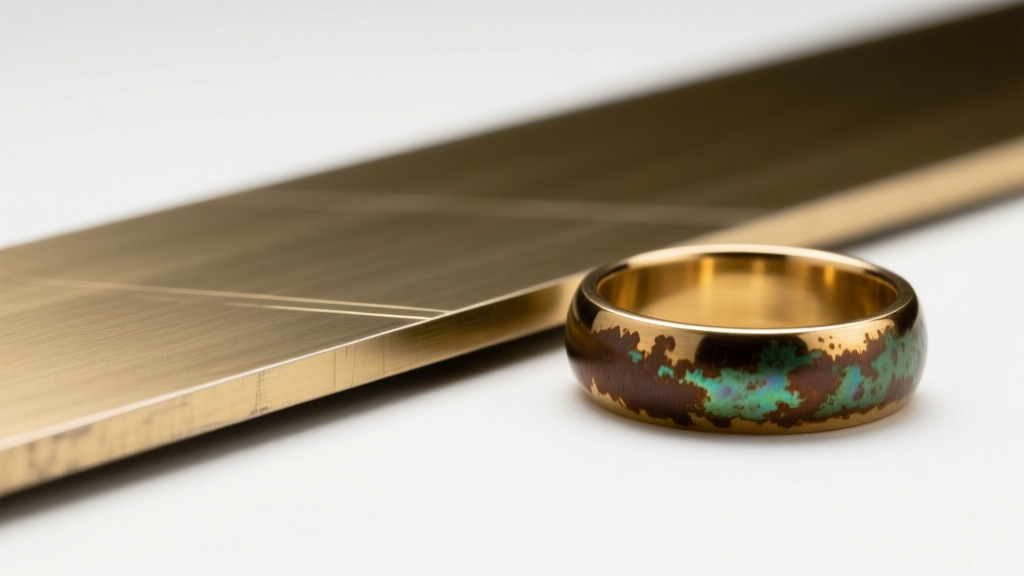
The most common argument against brass in jewelry is its tendency to turn the skin green. This is not an allergic reaction, but a predictable chemical oxidation process. When bare brass interacts with the water, oxygen, carbon dioxide, and sodium chloride (sweat) present on human skin, it forms copper carbonate and copper chloride compounds.
The chemical equation for this patina development in a humid, saline environment generally follows this path:
- Step 1: Copper oxidizes to form cuprous oxide (Cu2O).
- Step 2: Interaction with sweat (NaCl) forms soluble copper chloride complexes.
- Step 3: Reaction with atmospheric CO2 and moisture yields basic copper carbonate (Cu2CO3(OH)2), commonly known as malachite, which transfers to the skin as a harmless green smudge.
Mitigation Strategies for Makers
If you are designing brass jewelry for daily wear, you must address this reactivity. Bench jewelers typically employ one of three methods:
- Nano-Ceramic Coatings: Products like ProtectaClear or Everbrite create an invisible, skin-safe barrier that prevents the copper from interacting with sebum and sweat. These coatings typically last 1 to 3 years before requiring reapplication.
- Electroplating: Flash-plating the brass with rhodium, palladium, or 24k gold eliminates skin contact with the base metal while retaining the structural benefits of brass.
- Design Isolation: Using brass for structural components (like pin stems or clasps) while utilizing titanium or surgical steel for the parts that maintain prolonged, tight contact with the skin.
Mechanical Properties: Work Hardening and Tensile Strength
Is brass a good metal for jewelry from a fabrication standpoint? Absolutely, provided the jeweler respects its work-hardening rate. Brass work-hardens significantly faster than pure copper or fine silver. As you hammer, bend, or draw C26000 brass, the crystal lattice structure deforms, increasing its yield strength but severely reducing its ductility. If pushed too far without annealing, the metal will suffer from stress fractures or catastrophic cleavage.
Below is a comparative data table illustrating the mechanical baseline of common jewelry metals in their annealed (soft) states:
| Metal Alloy | Tensile Strength (MPa) | Vickers Hardness (HV) | Elongation (%) |
|---|---|---|---|
| C26000 Brass (Annealed) | 310 - 340 | 60 - 75 | 50% - 65% |
| 925 Sterling Silver | 260 - 290 | 65 - 75 | 40% - 50% |
| C51000 Phosphor Bronze | 380 - 420 | 90 - 110 | 45% - 55% |
| 14k Yellow Gold (Nickel-free) | 350 - 400 | 110 - 130 | 30% - 40% |
As the data indicates, annealed C26000 brass offers superior elongation compared to 14k gold and sterling silver, making it highly forgiving for complex wire-wrapping and deep-die stamping. However, its tensile strength is relatively low in the soft state, meaning brass rings are prone to bending out of round under heavy impact. For rings, jewelers should use half-hard or hard-temper brass stock, or increase the shank thickness to 2.0mm or greater.
Annealing Protocols
To restore ductility during fabrication, C26000 brass must be annealed at temperatures between 800°F and 1200°F (426°C - 649°C). Unlike sterling silver, which is often quenched in water to maintain softness, brass can be air-cooled or quenched without significantly altering its annealed softness. However, quenching in a mild citric acid or vinegar pickle solution immediately after annealing is recommended to remove the black copper oxide scale that forms on the surface.
Toxicity, Safety, and Industry Compliance
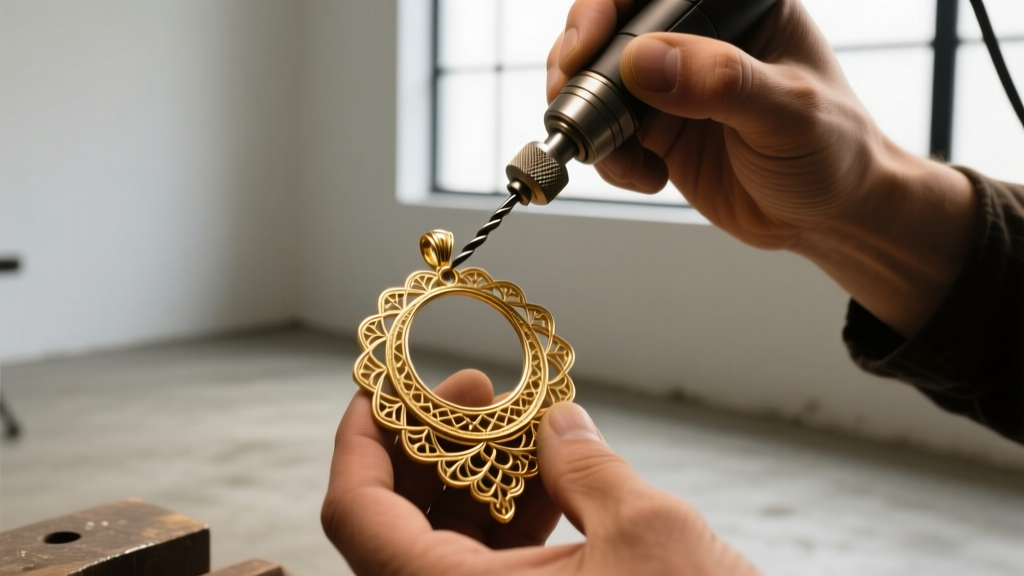
When evaluating if brass is a good metal for jewelry, regulatory compliance cannot be ignored. The jewelry industry is under increasing scrutiny regarding heavy metal exposure. While copper and zinc are essential trace minerals and generally safe for dermal contact, the trace impurities in poorly sourced brass can be hazardous.
Always demand a Mill Test Report (MTR) or a Certificate of Compliance from your metal supplier. Reputable suppliers like Rio Grande guarantee their jewelry-grade brass meets strict limits for lead, cadmium, and nickel.
Nickel Content: Standard C26000 and C46400 brass do not contain nickel. However, some cheap, imported 'white brass' or 'German silver' alloys (which are technically nickel-silvers, not true brasses) contain up to 18% nickel, a known and severe contact allergen. Always verify the exact elemental breakdown if purchasing 'white brass' for jewelry.
Cadmium and Bismuth: Some eco-friendly 'lead-free' machining brasses replace lead with bismuth or selenium. While safer than lead, the dust generated during sanding or polishing these specific alloys requires proper respiratory protection (NIOSH-approved P100 filters) and localized exhaust ventilation in the workshop.
Patina Development: A Feature, Not a Flaw
For many artisan jewelers, the chemical reactivity of brass is its greatest asset. Unlike stainless steel or platinum, brass accepts a wide variety of chemical patinas, allowing for dramatic color contrasts in textured pieces.
- Liver of Sulfur (Potassium Polysulfide): Creates deep browns, bronzes, and eventually a matte black. Excellent for highlighting stamped textures or filigree work.
- Ammonia Fuming: Suspending brass in a sealed container with ammonia vapor yields stunning turquoise, teal, and deep blue verdigris effects. This mimics the natural aging process of copper but accelerates it from decades to hours.
- Cupric Nitrate: When applied with a torch, cupric nitrate solutions create a rich, earthy green-to-black gradient that is highly prized in contemporary art jewelry.
To preserve these delicate chemical patinas, the piece must be sealed with a micro-crystalline wax (like Renaissance Wax) or a specialized jewelry lacquer, as the oils from handling will quickly wear away the top layers of the induced oxidation.
The Final Verdict: Is Brass Right for Your Jewelry?
So, is brass a good metal for jewelry? From a technical and metallurgical perspective, C26000 cartridge brass is an exceptional material. It offers the aesthetic warmth of gold, the malleability of pure copper, and a price point that allows for bold, substantial designs without the prohibitive costs of precious metals.
However, it requires an informed approach. Makers must strictly avoid leaded machining alloys, account for its rapid work-hardening rate during fabrication, and proactively manage skin reactivity through coatings or thoughtful design isolation. When these technical parameters are respected, brass transitions from a mere base metal into a premium, highly versatile medium capable of producing heirloom-quality jewelry.


