Bronze Jewelry Properties: How It Compares to Brass and Copper
Explore the metallurgical properties of bronze jewelry. Compare its patina, hardness, and skin reactivity against brass and copper.

The Metallurgical Reality of Bronze Jewelry
When discussing artisanal metals, bronze jewelry occupies a fascinating middle ground between the extreme malleability of pure copper and the bright, rigid yellowness of brass. However, the term "bronze" is frequently misused in the commercial jewelry market. To truly understand how this metal behaves on the skin and ages over time, we must first look at its metallurgical composition.
True jewelry bronze is typically a tin bronze, most commonly alloy C51000 (Phosphor Bronze), which consists of roughly 94.8% copper, 5% tin, and a trace of phosphorus. The addition of tin fundamentally alters the crystalline structure of the copper, drastically increasing its hardness and lowering its melting point. According to the Copper Development Association, the tin atoms disrupt the copper lattice, creating a metal that is significantly more resistant to abrasion and deformation than its pure counterparts.
Conversely, what many mass-market brands label as "commercial bronze" (alloy C22000) is technically a brass, containing 90% copper and 10% zinc. This distinction is critical for jewelry wearers: true tin bronze develops a deep, rich, dark-brown patina, while zinc-heavy commercial bronze tends to tarnish with a dull, cloudy yellow hue. When investing in high-quality bronze jewelry, always verify that the artisan is using a true tin-bronze or silicon-bronze alloy to ensure the structural and aesthetic properties detailed below.
Bronze vs. Brass vs. Copper: A Wearability Matrix
Choosing between copper, brass, and bronze requires balancing aesthetic preferences with practical wearability. Below is a comparative matrix detailing the physical properties of these three common base metals when used in jewelry fabrication.
| Property | Pure Copper (C11000) | Yellow Brass (C26000) | Tin Bronze (C51000) |
|---|---|---|---|
| Vickers Hardness (HV) | 45 - 60 (Very Soft) | 75 - 110 (Moderate) | 110 - 210 (Hard) |
| Patina Color Profile | Verdigris (Blue-Green) | Cloudy Yellow-Brown | Deep Chocolate Brown |
| Scratch Resistance | Low (Dents easily) | Medium | High (Holds detail well) |
| Casting Porosity Risk | High (Gases absorb easily) | Medium (Zinc fuming) | Low (Excellent flow) |
| Average Price per Oz | $0.35 - $0.50 | $0.40 - $0.60 | $0.80 - $1.20 |
As the data illustrates, bronze jewelry offers superior durability. A 14-gauge bronze wire will hold a structural shape under tension far better than the same gauge in pure copper, making it an excellent choice for heavy chainmaille weaves or tension-set stone bezels.
The Patina Lifecycle: What to Expect in Year One
The most defining characteristic of bronze jewelry is its dynamic surface evolution. Unlike sterling silver, which reacts primarily with sulfur in the air to form black silver sulfide, bronze undergoes a more complex oxidation process driven by moisture, oxygen, and environmental chlorides.
Stage 1: The Initial Darkening (Months 1-3)
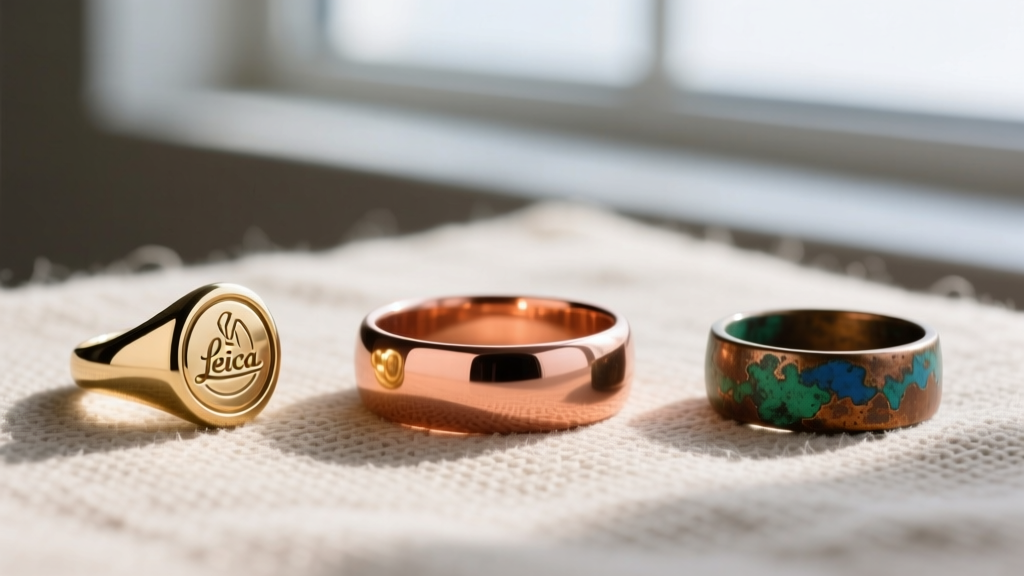
When first polished, true tin bronze exhibits a warm, pinkish-gold luster. Within the first few weeks of daily wear, exposure to the oxygen and natural oils in your skin will cause the surface to shift to a muted, satin-brown finish. This is a stable copper oxide layer forming on the surface.
Stage 2: The Deepening Contrast (Months 3-12)
As the jewelry is subjected to varying environments—humidity, saltwater, and sweat—the patina deepens into a rich, chocolate-brown or almost black finish in the recessed areas, while high-friction contact points (like the inside of a ring band) remain polished from rubbing against the skin. This natural antiquing is highly prized by collectors of artisanal metalwork.
"Forcing a patina on bronze using a liver of sulfur solution yields a much more uniform and stable black-brown finish than on pure copper, due to the tin content acting as a chemical buffer against rapid, flaking oxidation."
Managing the "Green Skin" Phenomenon
The most common concern among buyers of copper-alloy metals is skin discoloration. The infamous "green finger" is not an allergic reaction, nor is it a sign of cheap metal; it is a simple chemical reaction. The copper in the bronze alloy reacts with the acidic chlorides and salts present in human sweat, creating copper chloride, which is easily absorbed into the outermost layer of the epidermis.
Because bronze contains less copper than pure copper jewelry (and lacks the high zinc content of brass that can sometimes cause contact dermatitis), it sits in the middle of the reactivity spectrum. To manage this:
- Barrier Coatings: Applying a microcrystalline wax (like Renaissance Wax) to the interior of a bronze ring creates a breathable, invisible barrier that lasts for weeks.
- pH Management: Highly acidic diets or heavy caffeine intake can lower your skin's pH, accelerating the copper chloride reaction. Washing the jewelry and your skin with mild, alkaline soap daily neutralizes the acids.
- Acclimation: Many wearers report that after a few months of continuous wear, the skin builds a localized tolerance, and the green marking significantly diminishes.
For comprehensive guidelines on metal allergies and skin reactions, the Gemological Institute of America (GIA) notes that true bronze is generally hypoallergenic, provided it is not alloyed with trace amounts of nickel or lead, which are sometimes found in cheap, unregulated overseas castings.
Structural Integrity and Gauge Limitations
While bronze is harder than copper, its increased tin content introduces a degree of brittleness. This metallurgical trade-off dictates how jewelers can work with the material. Pure copper can be repeatedly annealed and work-hardened, making it ideal for intricate wire-wrapping and delicate filigree. Bronze, however, has a lower fatigue limit.
If a jeweler attempts to use 24-gauge or 26-gauge bronze wire for tight, repetitive coiling, the metal will suffer from work-hardening and eventually snap. Therefore, bronze jewelry excels in specific structural formats:
- Lost-Wax Casting: Bronze flows beautifully into detailed molds, capturing textures that brass might miss due to zinc fuming.
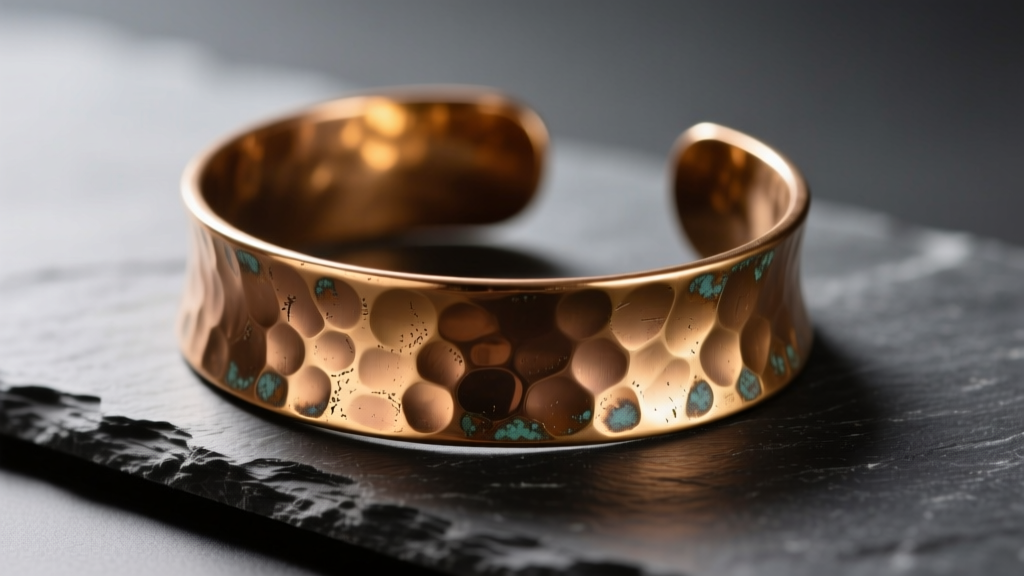
- Heavy Gauge Cuffs: 10-gauge to 6-gauge bronze sheet metal provides a substantial, armor-like feel that resists bending out of shape.
- Riveted Components: Bronze holds a peened rivet head exceptionally well without mushrooming or cracking under the hammer.
Expert Care and Maintenance Protocol
Maintaining bronze jewelry requires a different approach than polishing silver. Commercial silver dips will often strip the desirable tin-rich surface layer of bronze, leaving it looking raw and unnaturally pink. Instead, utilize these targeted maintenance techniques based on your desired aesthetic:
To Restore a Bright, Gold-Like Shine:
Create a paste using equal parts baking soda and lemon juice. The mild citric acid breaks down the copper oxide, while the baking soda provides gentle abrasion. Apply with a soft-bristled toothbrush, rinse thoroughly in warm water, and immediately dry with a microfiber cloth to prevent water spots.
To Enhance and Protect an Existing Patina:
Do not use chemical dips. Instead, use a soft polishing cloth to gently buff only the high-relief areas of the jewelry. This removes the oxidation from the raised textures while leaving the dark, aged patina in the crevices, creating a stunning three-dimensional contrast. Finish by rubbing a thin layer of carnauba-based jewelry wax over the entire piece to seal the surface against moisture.
By understanding the unique metallurgical properties of bronze, you can confidently select, wear, and care for pieces that will not only endure daily wear but evolve into deeply personal artifacts over time.


