How Do You Clean Pewter Jewelry Without Ruining the Patina?
Learn exactly how do you clean pewter jewelry safely. Discover expert troubleshooting tips for removing tarnish, restoring shine, and protecting patina.

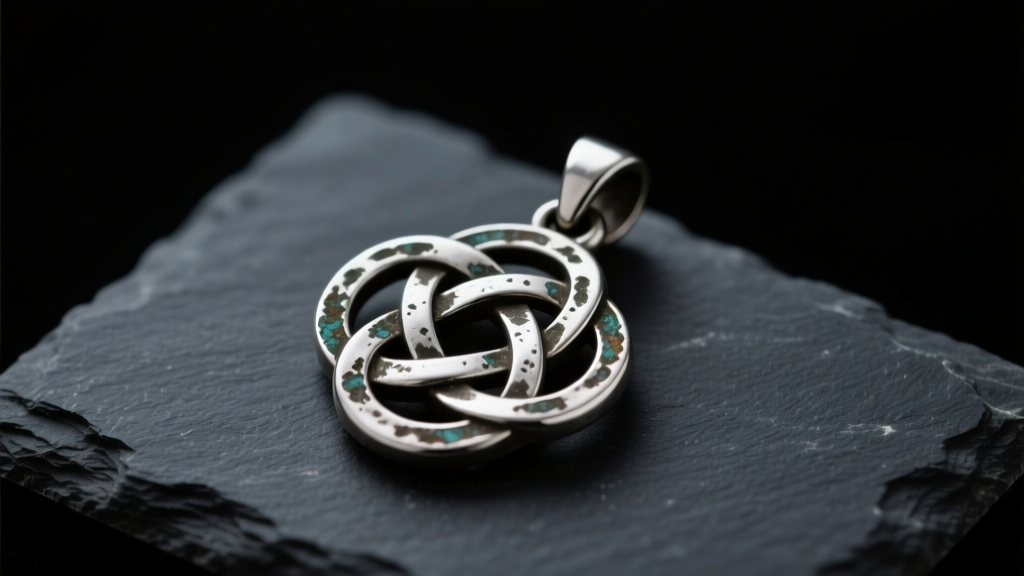
Pewter jewelry offers a distinct, vintage-inspired aesthetic that bridges the gap between bright silver and moody oxidized bronze. However, because of its unique metallurgical profile, maintaining it requires a highly specific approach. If you have ever wondered how do you clean pewter jewelry without stripping its character or damaging the alloy, you are not alone. Many well-meaning owners accidentally ruin their pieces by treating pewter like sterling silver or stainless steel.
This comprehensive troubleshooting guide dives deep into the material science of modern pewter, providing actionable, step-by-step frameworks to remove grime, address oxidation, and preserve the intentional antiquing that gives pewter its visual depth. Whether you are dealing with a heavily worn cast pendant or a delicate filigree ring, these expert techniques will restore your jewelry safely.
The Metallurgy of Modern Pewter: What Are You Actually Cleaning?
Before applying any cleaning agent, you must understand what pewter actually is. Modern jewelry-grade pewter is a malleable alloy composed primarily of tin (Sn), typically making up 91% to 95% of the mixture. The remainder consists of antimony (Sb) for hardness (5% to 8%) and copper (Cu) for structural integrity (1% to 2%).
Unlike vintage or antique pewter, which often contained dangerous levels of lead, modern jewelry pewter is strictly regulated. In the United States, the Consumer Product Safety Commission (CPSC) enforces strict limits, ensuring jewelry contains less than 0.06% lead. This lead-free composition means modern pewter is safe for skin contact, but its high tin content makes it exceptionally soft. On the Mohs hardness scale, pure tin sits at a mere 1.5 to 2.0. Even when alloyed with antimony, pewter is easily scratched by abrasive polishes designed for harder metals like brass or silver.
Furthermore, pewter does not "tarnish" in the way silver does (via sulfur reactions). Instead, it oxidizes slowly, developing a dull, cloudy gray film, and it accumulates sebum, skin acids, and environmental dust in its deep cast crevices.
Troubleshooting Pewter Tarnish: Diagnosis Matrix
Not all dullness is created equal. Use this diagnostic matrix to identify the specific issue affecting your pewter jewelry before selecting a cleaning protocol.
| Symptom | Root Cause | Corrective Action |
|---|---|---|
| Uniform cloudy gray film | Natural surface oxidation and environmental exposure | Mild alkaline wash (baking soda paste) |
| Dark, sticky buildup in crevices | Accumulated sebum, lotions, and dead skin cells | Warm pH-neutral soap bath with soft horsehair brush |
| White, chalky spots or pitting | Acidic chemical damage (e.g., vinegar, lemon juice) | Professional refinishing; cannot be reversed at home |
| Loss of dark contrast in recesses | Over-polishing or use of harsh silver dips | Re-antiquing using liver of sulfur or specialized patina paints |
Step-by-Step: How Do You Clean Pewter Jewelry Safely?
When addressing the question of how do you clean pewter jewelry, the golden rule is to start with the least aggressive method and only escalate if necessary. Never use ultrasonic cleaners, as the high-frequency vibrations can fracture the relatively soft crystalline structure of cast pewter or dislodge epoxy-set stones.
Level 1: Routine Dust and Sebum Removal (The Soap Bath)
For jewelry that is simply dull from daily wear, a gentle surfactant is all you need.
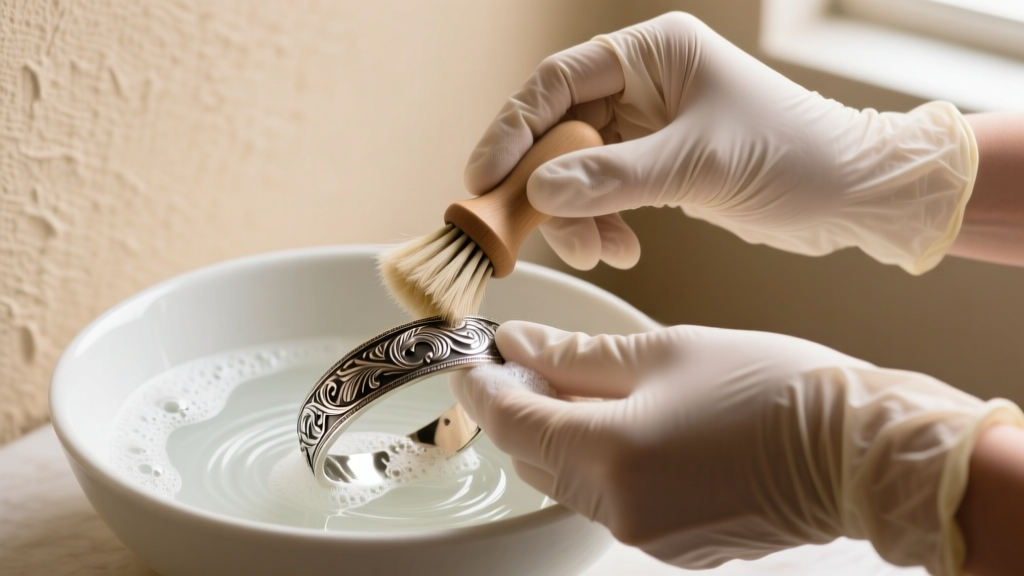
- The Solution: Mix 2 cups of lukewarm water (never hot) with 3 drops of a pH-neutral dish soap, such as Dawn or a dedicated jewelry wash.
- The Process: Submerge the pewter piece for no more than 3 to 5 minutes. Prolonged soaking can weaken the adhesives used in composite jewelry.
- The Agitation: Use a clean, ultra-soft makeup brush or a dedicated horsehair jewelry brush to gently sweep the crevices. Avoid nylon or plastic-bristled toothbrushes, which can leave micro-scratches on the tin surface.
- The Rinse & Dry: Rinse under a gentle stream of distilled water to prevent hard water mineral deposits. Pat dry immediately with a lint-free microfiber cloth. Air-drying will leave water spots that mimic oxidation.
Level 2: Removing Stubborn Oxidation (The Baking Soda Paste)
If the piece has a persistent cloudy gray film that soap cannot remove, you need a very mild, non-acidic abrasive.
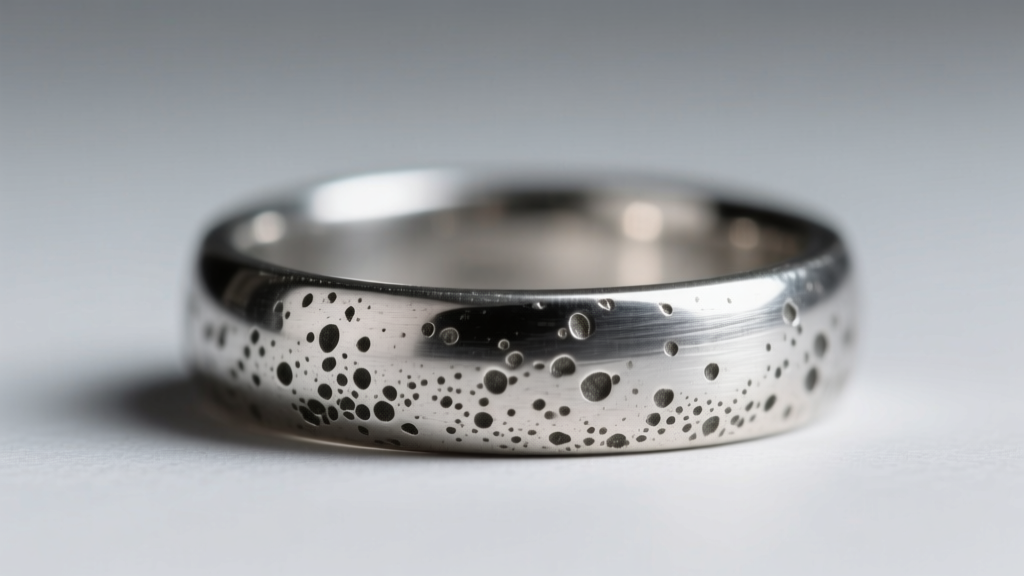
- The Recipe: Create a thick paste using 1 part baking soda (sodium bicarbonate) and 1 part distilled water. Baking soda is alkaline and will not etch the tin, unlike acidic cleaners.
- The Application: Apply the paste using your fingertips, rubbing in the direction of the metal's grain or polishing lines. Do not use circular motions, as this creates visible swirl marks on soft alloys.
- The Removal: Wipe the paste away with a damp microfiber cloth, ensuring no residue is left in the engraved details. Baking soda left to dry in crevices will harden and look like white corrosion.
Level 3: Heavy Grime in Cast Crevices (The Wooden Pick)
For intricate cast pewter pieces where grime has fossilized, metal tools will cause irreversible gouging. Instead, use a wooden toothpick or a bamboo skewer. The hardness of bamboo is lower than that of pewter, allowing you to mechanically scrape out compacted lotion and dirt from deep relief carvings without scratching the metal surface.
The Collector's Dilemma: Polished vs. Antiqued Finishes
Understanding your jewelry's original finish is critical. The Canadian Conservation Institute emphasizes that improper cleaning of historical and artisanal alloys often destroys intentional surface treatments.
Expert Insight: Most modern artisan pewter jewelry features an "antiqued" or "oxidized" finish. This means the jeweler intentionally applied a chemical darkening agent to the recesses to create high contrast. If you aggressively polish an antiqued piece with a silver cloth or abrasive paste, you will strip the dark patina from the crevices, leaving the piece looking flat, washed-out, and cheap.
If your piece is meant to be mirror-polished, you can use a specialized, non-impregnated flannel buffing cloth to bring up the shine. Avoid commercial silver polishing cloths, as they contain tarnish-preventing chemicals and micro-abrasives formulated for silver sulfide, which can react unpredictably with tin and antimony.
What NEVER to Do: Common Pewter Cleaning Disasters
Troubleshooting pewter often involves fixing mistakes made by owners who treated it like other metals. Avoid these catastrophic errors:
- Never use acidic cleaners: Vinegar, lemon juice, and commercial ketchup hacks are highly acidic. Acid attacks the tin in pewter, causing irreversible microscopic pitting and a permanent white, chalky corrosion.
- Never boil pewter: While pewter's melting point is around 230°C (450°F)—well above boiling water—the sudden thermal shock can crack gemstones, melt synthetic pearls, and dissolve the epoxy resins holding components together.
- Never use silver dip liquids: These contain thiourea and strong acids that will instantly strip the surface of pewter, leaving it permanently dull and gray.
- Never put pewter in the dishwasher: The combination of extreme heat, highly alkaline detergents, and forceful water jets will ruin the finish and potentially warp thin castings.
Long-Term Storage and Prevention
Because pewter is soft and prone to surface dulling, proper storage is your best defense against frequent deep cleanings. Store pewter jewelry individually in soft flannel pouches or acid-free tissue paper. Avoid storing it in PVC-based plastics or standard polyethylene bags, which can off-gas and trap humidity, accelerating the dulling process.
For long-term storage, place a silica gel desiccant packet or a piece of anti-tarnish treated cloth in the storage box to control ambient moisture. By keeping the jewelry dry and protected from friction, you will maintain the rich, moody luster of your pewter pieces for decades, ensuring that when you do need to ask how do you clean pewter jewelry, a simple soap bath is all that is required.


