How to Clean and Seal Real Copper Jewelry: A Step-by-Step Guide
Learn how to clean, restore, and seal real copper jewelry with our step-by-step guide. Prevent green skin and tarnish using expert techniques.

Copper is one of the oldest and most revered metals in human history, prized for its warm, earthy tones and natural antimicrobial properties. However, anyone who wears real copper jewelry knows the inevitable drawbacks: rapid oxidation, dark tarnish, and the notorious green skin stain. As jewelry makers and collectors, we often receive questions about how to maintain the brilliant orange-red luster of pure copper without sacrificing its skin-safe wearability.
This comprehensive, step-by-step guide will walk you through the exact metallurgical processes behind copper tarnish, how to deep-clean your pieces using household and professional methods, and how to properly seal them to prevent skin discoloration. Whether you are restoring a vintage 12-gauge copper cuff or maintaining a delicate 24-gauge copper ear wire, these techniques will extend the life and beauty of your collection.
The Science of Copper Tarnish and Skin Discoloration
Before applying any polish or sealant, it is crucial to understand what you are actually removing. Pure copper (often designated as C11000 or ETP copper in metallurgy) is highly reactive. When exposed to oxygen and moisture, it forms cuprous oxide (Cu2O), which gives the metal a dull, brownish-red hue. Over time, or in the presence of sulfides, it develops cupric oxide (CuO) and copper sulfide, turning the metal dark brown or black.
The infamous 'green skin' effect is not a sign of fake metal; ironically, it is proof that your piece is real copper jewelry. Human sweat contains water, salts, urea, and lactic acid. When these acids interact with the copper surface, they create copper chelates (specifically copper chloride and copper carbonate). These compounds are green and easily transfer to the epidermis. According to Britannica's metallurgical profiles, this reaction is entirely harmless, but aesthetically undesirable for most wearers.
Step 1: Assessing the Patina and Damage Level
Not all tarnish requires aggressive stripping. If you possess a piece with a deliberate, artist-applied patina (often achieved using liver of sulfur), deep cleaning will ruin the design.
- Light Oxidation: A slight dulling of the bright orange shine. Requires only gentle polishing.
- Heavy Tarnish: Dark brown or black patches, often found in the crevices of hammered or textured copper. Requires chemical or acidic stripping.
- Verdigris (Green Crust):strong> A powdery green buildup, usually occurring on vintage pieces stored in humid environments. This must be neutralized and carefully removed, as it can be mildly toxic if ingested or rubbed into the eyes.
Step 2: Deep Cleaning Real Copper Jewelry
Once you have determined that your piece needs a full restoration to its raw, bright state, choose one of the following methods based on the jewelry's construction.
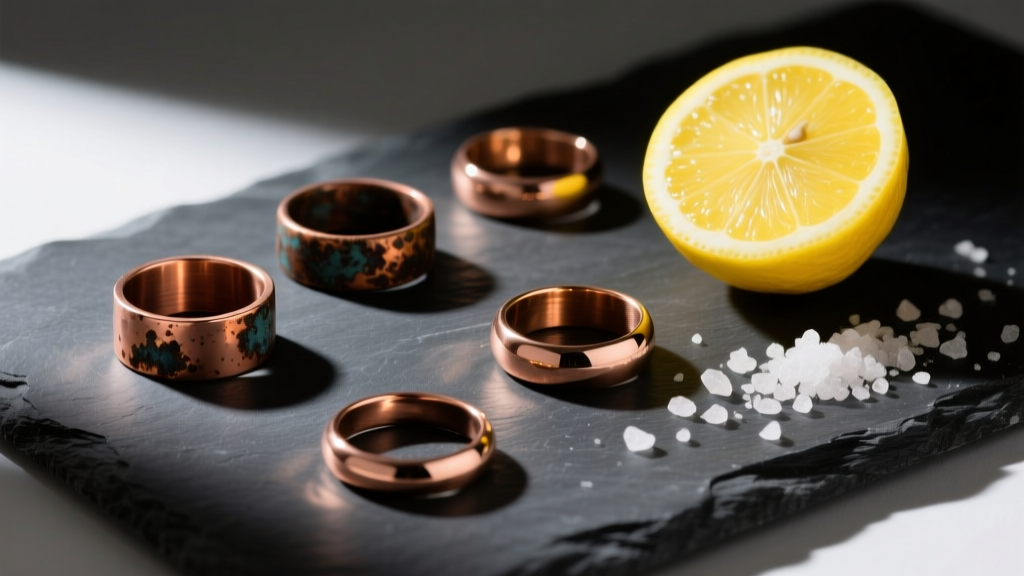
Method A: The Lemon and Salt Scrub (For Heavy Tarnish on Solid Cuffs & Rings)
This method relies on a mild chemical reaction. The citric acid in the lemon juice breaks down the copper oxide, while the sodium chloride (salt) acts as a gentle abrasive and a catalyst to speed up the acid's effectiveness.
- Cut a fresh lemon in half and dip the exposed flesh into coarse kosher salt.
- Scrub the copper vigorously, ensuring the salt dissolves into the juice to create a concentrated acidic paste.
- Let the paste sit on the metal for no more than 3 to 5 minutes. Leaving acid on copper for too long can cause micro-pitting.
- Rinse thoroughly under warm distilled water.
Method B: The White Vinegar Soak (For Intricate Chains & Filigree)
For 22-gauge or finer copper chains where scrubbing is impossible, a liquid soak is required.
- Mix 1 cup of white distilled vinegar (5% acetic acid) with 1 tablespoon of non-iodized salt in a glass bowl.
- Submerge the copper chain entirely. You will see the tarnish dissolve within 10 to 15 minutes.
- Agitate the bowl gently every few minutes to ensure the solution reaches all links.
- Remove with plastic tweezers (metal tweezers can cause galvanic reactions) and rinse immediately.
| Method | Active Agent | Best For | Risk Level |
|---|---|---|---|
| Lemon & Salt | Citric Acid + NaCl | Solid rings, thick cuffs, flat bangles | Low (if rinsed promptly) |
| Vinegar Soak | Acetic Acid | Fine chains, filigree, jump rings | Medium (can weaken thin wire if over-soaked) |
| Commercial Dip | Thiourea / Sulfuric Acid | Mass production, extreme verdigris | High (toxic fumes, strips all patina instantly) |
Step 3: Neutralizing and Polishing
This is the most frequently skipped step by amateur jewelers, leading to 'flash tarnish' where the copper turns brown again within hours. You must neutralize the acid.
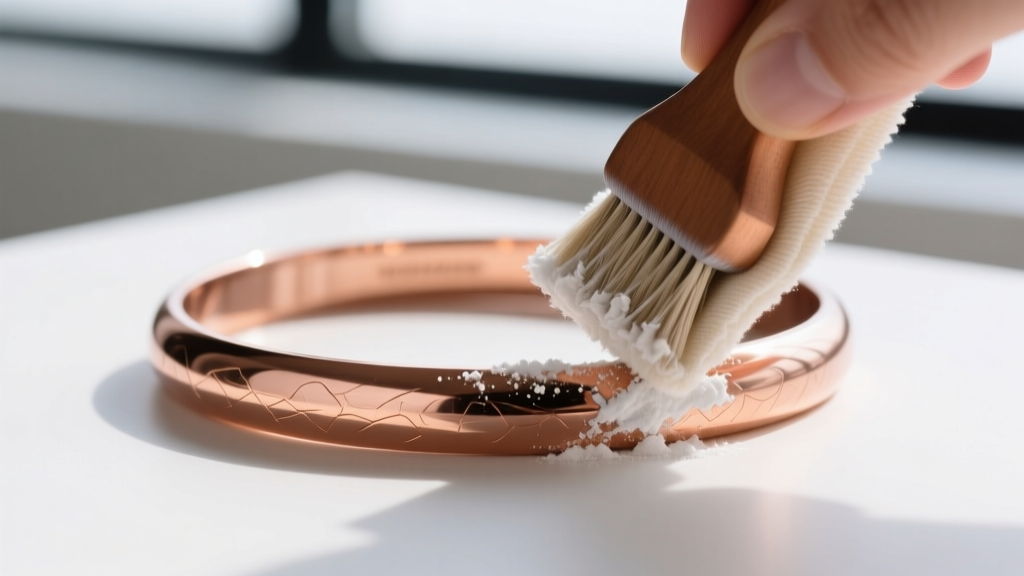
Create a baking soda bath by dissolving 2 tablespoons of sodium bicarbonate in a bowl of warm water. Submerge your freshly cleaned copper jewelry for 3 minutes. The alkaline baking soda completely halts the acidic etching process. Rinse again with distilled water and dry immediately with a lint-free microfiber cloth.
Once dry, the copper will be bright but may lack a mirror shine. For a high-polish finish, use a specialized jeweler's rouge or a commercial copper polish. According to Rio Grande's metal finishing guidelines, using a treated polishing cloth (like a Sunshine cloth) impregnated with micro-abrasives will yield a flawless, mirror-like surface without the need for a rotary Dremel tool.
Step 4: Sealing the Copper to Prevent Green Skin
Cleaning real copper jewelry is only half the battle. To stop the metal from reacting with your skin's pH and turning your fingers or wrists green, you must create an invisible barrier between the copper and the epidermis. As of 2026, modern sealants have evolved significantly, offering longer-lasting protection than older methods.
Expert Warning: Never use standard hardware-store clear nail polish or polyurethane on fine jewelry. These formulations contain solvents that can yellow over time, become brittle, and flake off into the skin's crevices, causing irritation.
Instead, rely on conservation-grade or jewelry-specific sealants:
- Renaissance Wax: A microcrystalline wax originally developed by the British Museum. It is excellent for copper cuffs, pendants, and earrings that do not experience high friction. Apply a microscopically thin layer with a soft cloth, let it dry for 10 minutes, and buff it to a hard shine. It requires reapplication every 4 to 6 weeks. For more on museum-grade coatings, refer to the Conservation Wiki's coating database.
- Everbrite ProtectaClear: A skin-safe, polyurethane-acrylic coating designed specifically for jewelry. It is the gold standard for copper rings and bracelets that endure heavy friction. It cures into a flexible, invisible shell that will not crack or peel. Apply two thin coats, allowing 24 hours of curing time between coats in a low-dust environment.
- Clear Epoxy Resin (UV Cure): Best reserved for the inner bands of heavy 10-gauge or 12-gauge copper rings. A thin layer of UV-cured jewelry resin provides a permanent, glass-like barrier that will never wear through, though it alters the tactile feel of the metal.
Ongoing Maintenance and Wear Guidelines
Even sealed real copper jewelry requires mindful wear to maximize the lifespan of the coating. Follow these operational rules to keep your pieces pristine:
- The 'Last On, First Off' Rule: Always put your copper jewelry on after applying lotions, perfumes, and hairsprays. The alcohols and oils in cosmetics will rapidly degrade both Renaissance Wax and acrylic sealants.
- Avoid Chlorine and Saltwater: Never wear sealed copper in swimming pools or the ocean. Chlorine is highly aggressive and will eat through protective coatings, leading to rapid, localized pitting of the raw copper beneath.
- Proper Storage: Store your pieces in an airtight ziplock bag with an anti-tarnish silica gel packet or 3M anti-tarnish strips. Even sealed copper can experience edge-tarnish if left exposed to high humidity for months.
By understanding the chemistry of C11000 copper and utilizing the correct cleaning and sealing protocols, you can enjoy the rich, historical beauty of real copper jewelry every day without the unwanted side effects. Whether you are a hobbyist crafting wire-wrapped pendants or a collector restoring vintage artifacts, these professional techniques ensure your copper remains as vibrant as the day it was forged.