Does Copper Jewelry Tarnish? A Beginner's Guide to Patina and Care
Discover if copper jewelry tarnishes, why it turns your skin green, and how to clean or embrace the patina. A complete beginner's care guide.

The Short Answer: Yes, But It Is Not Traditional Tarnish
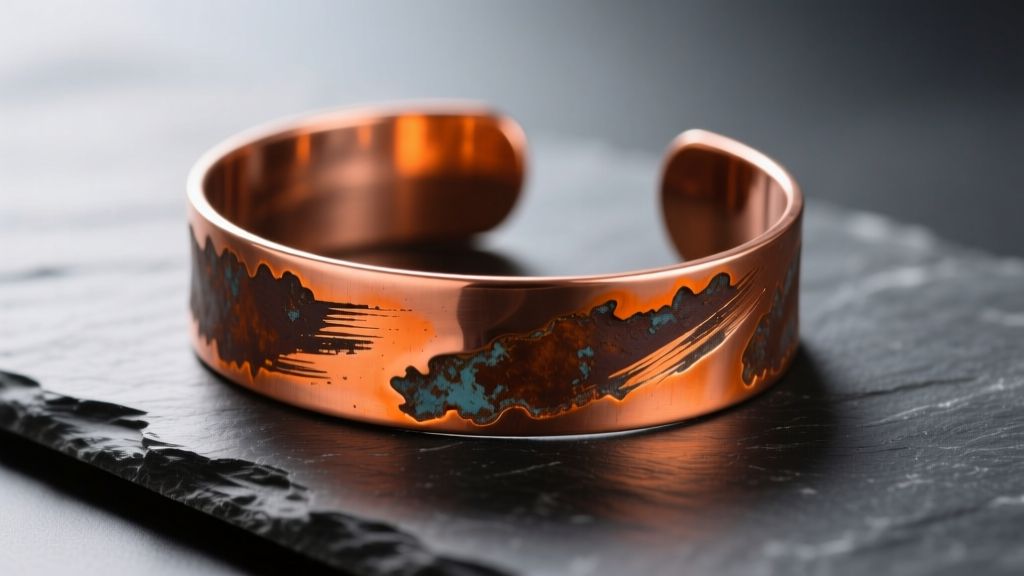
If you are asking, 'does copper jewelry tarnish?', the short answer is yes—but chemically speaking, it is undergoing oxidation and patination, not tarnishing in the way silver does. Silver tarnish is a layer of silver sulfide caused by sulfur in the air. Copper, on the other hand, reacts with oxygen, moisture, and carbon dioxide to form copper oxide and copper carbonate. This reaction creates a layered surface known as a patina.
For beginners exploring the copper, brass, and bronze jewelry category, understanding this distinction is crucial. Tarnish on silver is generally viewed as damage to be polished away. A patina on copper, however, is often a desired, protective layer that adds vintage character and depth to artisan jewelry. Whether you want to maintain a bright, penny-like shine or encourage a rustic, antiqued finish, mastering copper care requires a basic grasp of its chemistry.
The Chemistry of Copper Patina (Why It Happens)
Pure copper (often graded as C110 or ETP copper, which is 99.9% pure) is a highly reactive transition metal. When exposed to the environment, it undergoes a predictable sequence of color changes:
- Cuprite (Copper Oxide): The initial reaction with oxygen creates a dull, reddish-brown or dark brown layer. This happens within days or weeks of wearing raw copper against the skin.
- Tenorite: With prolonged exposure to heat and oxygen, the brown layer can deepen into a dark, almost black oxide.
- Malachite and Azurite (Copper Carbonates): When moisture and carbon dioxide enter the mix, the copper develops the iconic green and blue-green verdigris. This is the same chemical compound that coats the Statue of Liberty.
According to the Conservation Wiki, environmental pollutants, chlorides, and sulfur compounds can also introduce localized pitting or bronze disease (a destructive, powdery green corrosion), though this is rare in standard jewelry wear and more common in archaeological artifacts.
Why Copper Turns Your Skin Green (And Why It Is Safe)
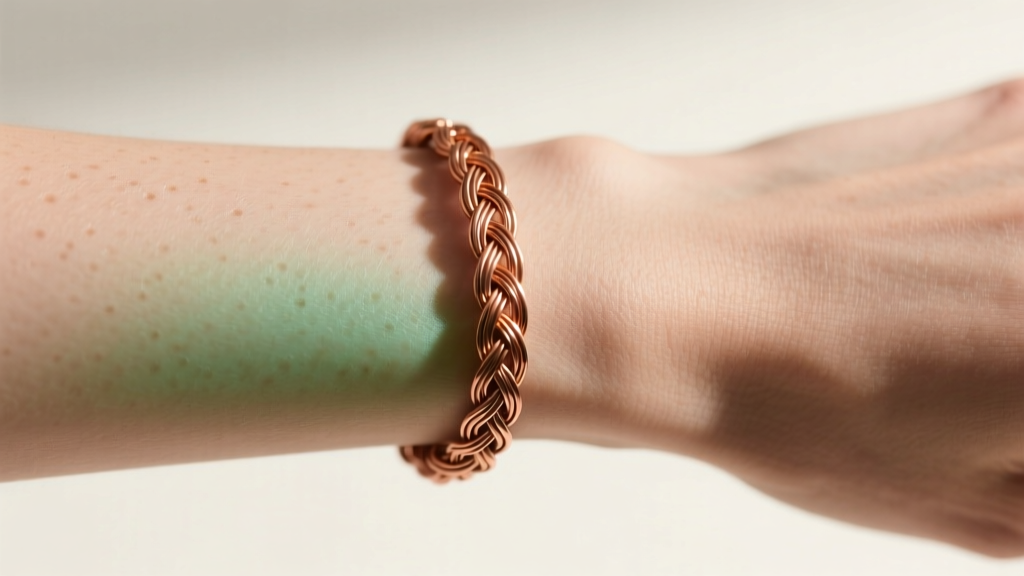
The most common complaint from beginners is the green stain left on the skin. This is entirely harmless and is a simple chemical reaction, not an allergic response or a sign of toxic heavy metals. When the natural acids in your sweat (which typically have a pH between 4.5 and 5.5) mix with the copper and the oxygen in the air, they form copper chloride and copper chelates. These compounds are easily absorbed into the outermost layer of dead skin cells, turning them green.
Factors That Accelerate the Green Effect
- High Acidity: Individuals with a lower skin pH (more acidic sweat) will experience faster and darker green staining.
- Cosmetics and Lotions: Chemicals in sunscreens, perfumes, and moisturizers can act as catalysts, accelerating the breakdown of copper ions.
- Humidity and Sweat: Wearing copper rings or cuffs during workouts or in high-humidity climates guarantees a rapid transfer of copper salts to the skin.
- Diet: Diets high in acidic foods or certain medications can subtly alter your sweat's pH, increasing the reaction.
As noted by Smithsonian Magazine, this green stain is temporary. It can be easily washed away with standard soap and warm water, or wiped off with a cotton pad soaked in rubbing alcohol.
Copper vs. Brass vs. Bronze: Oxidation Comparison
While pure copper is the baseline, many jewelry pieces are made from its alloys. Understanding how they compare helps you predict how your jewelry will age.
| Material | Composition | Oxidation Behavior | Skin Staining |
|---|---|---|---|
| Pure Copper (C110) | 99.9% Copper | Rapid dark brown to green patina. Very reactive. | High likelihood of green skin. |
| Brass (C260) | Copper + Zinc (approx. 70/30) | Slower oxidation. Tends to darken to a muddy brown rather than vibrant green. | Moderate. Zinc slows the copper reaction. |
| Bronze (C510) | Copper + Tin (approx. 90/10) | Very stable. Develops a rich, dark golden-brown patina over years. | Low to Moderate. Highly durable surface. |
| Pewter | Tin + Antimony/Copper | Does not rust or turn green. Dulls to a matte gray over time. | None. Hypoallergenic and skin-safe. |
How to Clean Tarnished Copper Jewelry (Step-by-Step)
If you prefer the bright, salmon-pink shine of new copper, you must actively remove the oxide layers. Avoid commercial silver polishes, as they often contain abrasives that are too harsh for softer copper (which ranks just 2.5 to 3 on the Mohs hardness scale). Instead, use mild, food-safe acids.
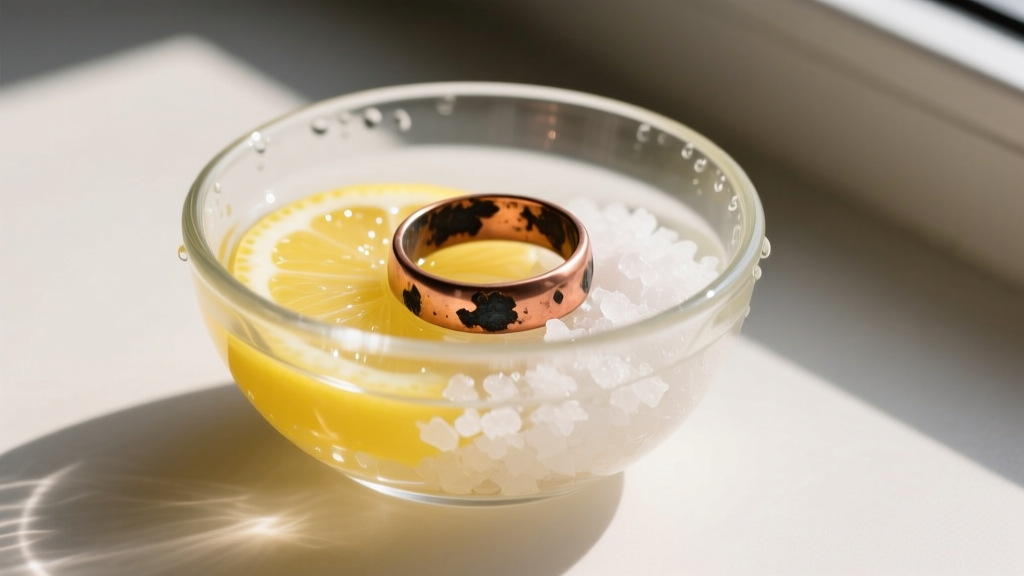
Method 1: The Lemon and Salt Bath (Best for Heavy Patina)
- Squeeze half a lemon into a small glass bowl.
- Add one tablespoon of coarse kosher salt and stir until partially dissolved.
- Submerge your copper jewelry for 5 to 10 minutes. The citric acid dissolves the copper oxide, while the salt acts as a mild catalyst.
- Remove the piece, gently scrub with a soft-bristled toothbrush, rinse thoroughly with distilled water, and dry immediately with a microfiber cloth.
Method 2: The Ketchup Trick (Best for Spot Cleaning)
Ketchup contains both acetic acid (from vinegar) and tomatoes (citric and malic acids), plus salt. Apply a thick layer of ketchup to the tarnished areas of a copper cuff or ring. Let it sit for 15 minutes, then wipe away with a damp cloth. This is highly effective for intricate wire-wrapped jewelry where submerging might loosen glued gemstones.
Crucial Warning: Avoid Baking Soda
Many DIY guides suggest baking soda paste for copper. Do not use baking soda on pure copper. Baking soda is alkaline and can cause micro-pitting on the copper surface if left too long. Furthermore, if your jewelry contains brass or bronze accents, baking soda can trigger a galvanic corrosion reaction, permanently damaging the metal finish.
How to Prevent Copper from Tarnishing (Sealants & Coatings)
If you want to wear raw copper without the maintenance or the green skin, you must create a physical barrier between the metal and the environment. Clear nail polish is a common beginner hack, but it yellows, chips, and peels within weeks. For professional, long-lasting results, use jewelry-grade sealants:
- Microcrystalline Wax (e.g., Renaissance Wax): Developed by the British Museum, this wax is pH-neutral and provides a hard, moisture-resistant barrier. Apply a thin layer with a lint-free cloth, let it dry for 10 minutes, and buff to a shine. Reapply every 3 to 6 months depending on wear.
- Acrylic/Polyurethane Coatings (e.g., Everbrite ProtectaClear): As recommended by Everbrite Coatings, these specialized jewelry sealants are self-leveling, invisible, and highly resistant to skin acids. A single dip or brush-on application can protect a copper ring from tarnishing for years, even with daily wear.
Note: Never apply sealants to the threads of copper body jewelry (like 14-gauge or 12-gauge copper septum clickers or barbells). The friction of screwing the components together will strip the coating and create sharp burrs that can tear delicate fistula tissue.
Embracing the Patina: When to Leave It Alone
In the artisan jewelry community, a well-worn patina is a badge of honor. Many metalsmiths use liver of sulfur to force an immediate dark brown or black oxidation, then polish the high spots to create striking contrast in stamped or textured designs. If your copper jewelry features deep engravings, hammer marks, or wire-weaving, allowing the natural dark patina to form in the recesses will dramatically enhance the visual depth of the piece. To maintain an antiqued look without the green skin transfer, simply seal the darkened piece with Renaissance Wax.
Expert Tips for Buying Copper Jewelry
When shopping for copper, brass, or bronze pieces, always check the product descriptions for material transparency. Look for terms like 'solid C110 copper' or 'unsealed raw copper' if you want to develop your own patina. If a piece is labeled 'lacquered' or 'sealed,' understand that you are buying a static finish that will eventually require re-coating once the sealant wears through. Finally, be wary of 'copper-plated' jewelry; these are usually base metals (like steel or zinc alloy) with a microscopic layer of copper that will eventually flake away, leaving you with irreversible tarnish and potential nickel allergies.


