How to Clean Brass Jewelry: Material Properties & Tarnish Care
Learn how to clean brass jewelry by understanding its copper-zinc properties. Compare tarnish removal methods for brass, bronze, and copper.

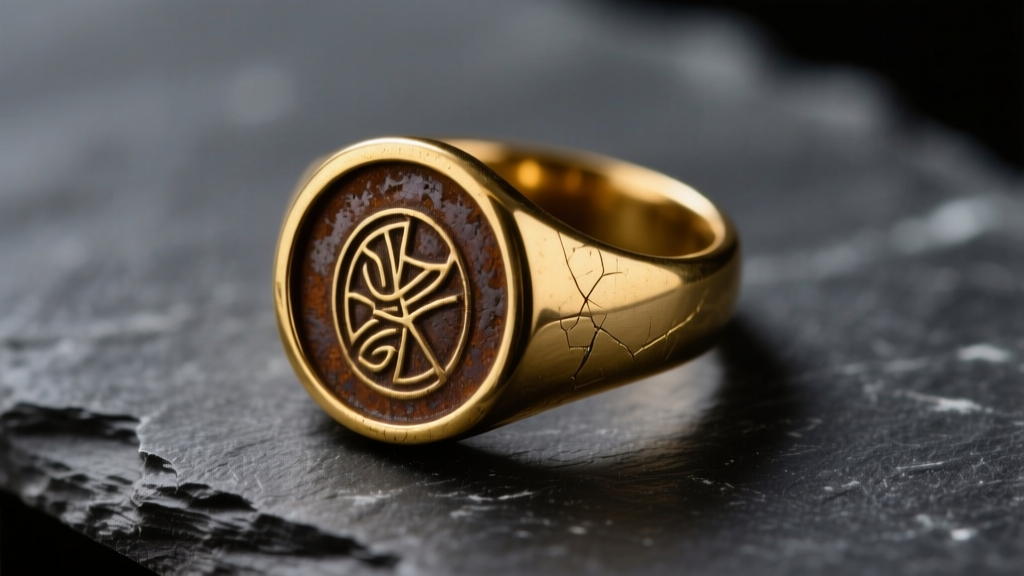
Brass is one of the most dynamic and historically significant alloys used in jewelry making, prized for its warm, golden hue and accessibility. However, its unique metallurgical composition also makes it highly reactive to environmental factors. If you are wondering how to clean brass jewelry without damaging its structural integrity or stripping its finish, you must first understand the material science behind its tarnish. Unlike pure gold or platinum, brass is an alloy primarily composed of copper and zinc, meaning its oxidation process is a complex chemical reaction rather than simple surface dirt accumulation.
In this comprehensive guide, we will explore the metallurgical properties of brass, compare its tarnish profile to copper and bronze, and provide exact, science-backed methodologies for restoring your jewelry to its original luster.
The Metallurgy of Tarnish: Why Brass Oxidizes
To effectively clean brass, you must understand what you are actually cleaning. Brass is not a single uniform metal; it is a family of copper-zinc alloys. The most common variants used in jewelry are Yellow Brass (C26000), which contains roughly 70% copper and 30% zinc, and Red Brass (C23000), which contains 85% copper and 15% zinc. According to the Copper Development Association, the ratio of these elements dictates both the color of the alloy and its oxidation behavior.
When brass is exposed to oxygen, moisture, and sulfur compounds in the air (or on human skin), two distinct reactions occur simultaneously:
- Copper Oxidation: The copper content reacts with sulfur and oxygen to form copper sulfide and copper oxide, presenting as a dark brown or black layer.
- Zinc Oxidation: The zinc content reacts with oxygen and carbon dioxide to form zinc oxide and zinc carbonate, which appears as a dull, chalky white or gray film.
The mottled, muddy brown appearance of heavily tarnished brass is the visual result of these two oxides layering over one another. Furthermore, human sweat contains lactic acid and chloride ions, which accelerate this corrosion process, which is why brass rings often leave a green or black mark on the skin.

Brass vs. Copper vs. Bronze: Tarnish Profiles Compared
Because brass is often grouped with copper and bronze in the 'base metal' jewelry category, many consumers mistakenly use the same cleaning protocols for all three. This is a critical error. The Gemological Institute of America (GIA) notes that treating distinct alloys with identical chemical strippers can lead to pitting or surface etching. Below is a metallurgical comparison of their tarnish behaviors.
| Alloy | Primary Composition | Oxidation Color | Patina Speed | Cleaning Difficulty |
|---|---|---|---|---|
| Yellow Brass | 70% Cu / 30% Zn | Muddy brown / chalky white | Moderate | Moderate (Requires acid to strip zinc oxide) |
| Red Brass | 85% Cu / 15% Zn | Deep mahogany / dark brown | Slow | Easy (Responds well to mild copper cleaners) |
| Copper | 99.9% Cu | Verdigris (green/blue) / black | Fast | Easy (Highly responsive to weak acids) |
| Bronze | 88% Cu / 12% Sn | Olive green / dark brown | Very Slow | Hard (Tin oxide is highly resistant to mild acids) |
Expert Insight: If your 'brass' jewelry turns pink or copper-colored after aggressive polishing, you are likely dealing with brass-plated copper, or you have triggered dezincification—a corrosion process where the zinc is selectively leached out of the surface alloy, leaving behind a porous, pure copper sponge.
How to Clean Brass Jewelry: Chemical vs. Mechanical Methods
When determining how to clean brass jewelry, you must choose between chemical dissolution (using acids to dissolve the oxide layer) and mechanical abrasion (physically scrubbing the oxide away). For delicate jewelry with stamped hallmarks or intricate filigree, chemical methods are vastly superior as they do not erode the base metal details.
The Acidic Approach: Citric and Acetic Acids
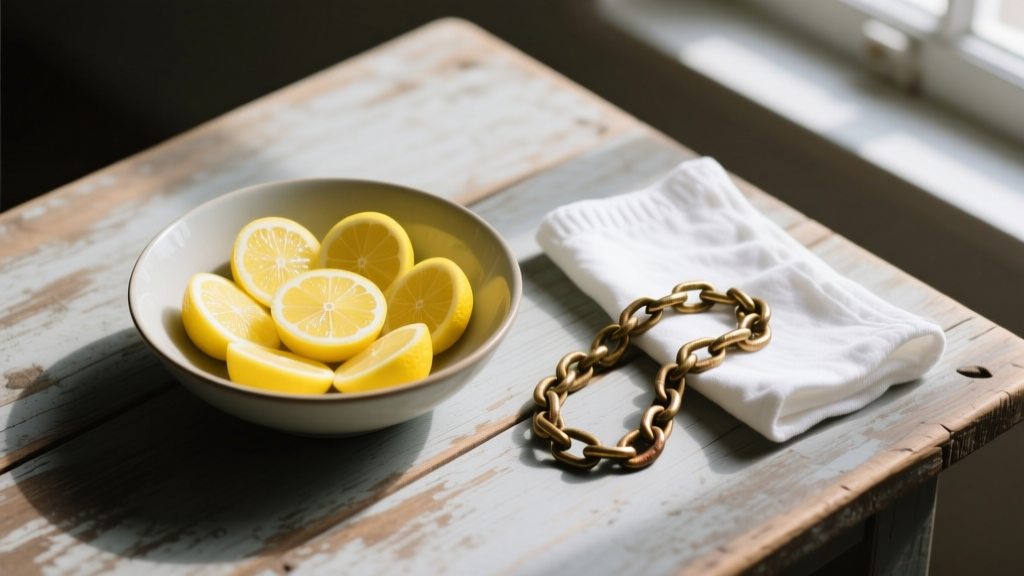
Weak organic acids are highly effective at breaking down copper sulfide and zinc oxide without damaging the underlying unoxidized brass. A highly effective, jewelry-safe DIY solution involves creating a paste from equal parts lemon juice (citric acid) and baking soda, or using a 1:1 mixture of white vinegar (acetic acid) and table salt. The chloride ions from the salt act as a catalyst, significantly accelerating the acid's ability to strip the tarnish. Submerge the jewelry for no more than 3 to 5 minutes, then neutralize the acid by rinsing thoroughly in a baking soda and water bath. Failure to neutralize the acid will result in 'flash tarnishing,' where the piece turns dark brown within hours of cleaning.
The Chelation Approach: Commercial Cleaners
Commercial liquid dip cleaners (such as Tarn-X) rely on thiourea, a powerful sulfur-based chelating agent. While thiourea strips tarnish in seconds, it is highly toxic and microscopically etches the brass surface with every use. Over time, thiourea-based dips will leave your brass jewelry porous, making it tarnish significantly faster in the future. Use these only as an absolute last resort for solid, ungemmed pieces, and never use them on brass-plated items.
Mechanical Polishing: Jeweler's Rouge and Micro-Abrasives
For heavy, localized tarnish or for achieving a mirror finish on flat brass surfaces (like a signet ring face), mechanical polishing is required. Use a soft flannel cloth impregnated with Jeweler's Rouge (Iron Oxide) or a specialized brass polishing paste like Wright's Brass Polish. Avoid toothpaste, which contains hydrated silica; silica is harder than brass on the Mohs scale and will leave micro-scratches that trap dirt and moisture, accelerating future oxidation.
Critical Warning: Solid Brass vs. Brass Plating
The most common mistake consumers make when learning how to clean brass jewelry is applying solid-brass cleaning methods to brass-plated items. Most affordable fashion jewelry is not solid brass; it is a zinc alloy (pewter or pot metal) or steel core electroplated with a microscopically thin layer of brass.
How to identify brass plating:
- The Magnet Test: If a magnet sticks to the piece, the core is steel, meaning it is plated.
- The Weight Test: Solid brass is dense. If a large cuff bracelet feels unusually light, it is likely hollow or plated aluminum.
- Visual Inspection: Look for flaking, or areas where a silver/grey metal is showing through at the high-friction contact points.
Cleaning Protocol for Plated Brass: Never use acids, salt, or commercial dips on plated brass. The acid will eat through the microscopic brass layer and expose the base metal, causing irreversible blistering and rust. Clean plated brass using only a few drops of mild dish soap (like Dawn), warm water, and a microfiber cloth. Dry immediately to prevent water spotting.
Sealing and Preventative Care for Brass Alloys
Once you have successfully restored your solid brass jewelry, the final step is passivation—sealing the metal to prevent oxygen and sulfur from reaching the surface. While many online guides suggest clear nail polish, this is a poor choice for jewelry; nail polish yellows under UV exposure, becomes brittle, and flakes off unevenly, trapping moisture against the brass and causing severe localized pitting.
Instead, utilize a microcrystalline wax, such as Renaissance Wax. Originally developed by the British Museum for conserving metal antiquities, this wax forms a hard, moisture-proof barrier that does not yellow or crack. Apply a microscopic layer with a soft cloth, let it dry for ten minutes, and buff it to a gentle sheen. For jewelry subjected to heavy daily wear and friction (like rings or bracelets), a specialized polyurethane coating like ProtectaClear will provide a durable, skin-safe barrier that can last for years before requiring reapplication.
Expert Troubleshooting: Stubborn Spots and Red Rot
If you have followed the acidic cleaning protocols and your brass jewelry still exhibits dark, pitted spots or a spongy red texture, you are likely dealing with bronze disease (if copper chlorides are present) or advanced dezincification. Copper chlorides react with ambient humidity to create hydrochloric acid, which continuously eats into the metal, creating powdery green spots. To halt this destructive cycle, the piece must be soaked in a 5% solution of sodium sesquicarbonate for several weeks to draw out the chloride ions, followed by a thorough rinse in distilled water and immediate sealing with a lacquer. If the damage is purely cosmetic dezincification, a professional jeweler can lightly sandblast the surface and re-polish it to remove the compromised copper sponge layer.


