Copper Jewelry Trends 2026: Brutalist Cuffs & Intentional Patina
Discover 2026 copper jewelry trends, from brutalist heavy-gauge cuffs to intentional patina finishes. Learn styling, care, and skin reaction tips.

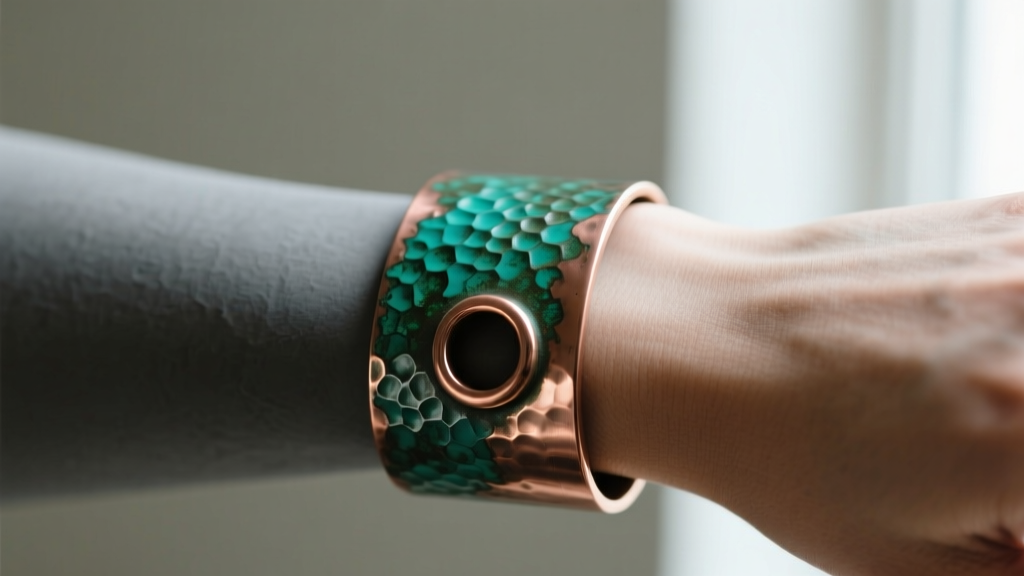
The 2026 jewelry landscape is experiencing a seismic shift away from the hyper-polished, delicate precious metals that dominated the early 2020s. In their place, a raw, unapologetic aesthetic has taken root. Copper jewelry has emerged as the definitive medium for this movement, prized not for its monetary value, but for its sculptural weight, thermal conductivity, and dynamic surface chemistry. This year, the focus is entirely on architectural brutalism and the celebration of intentional patina. Designers and collectors alike are embracing the organic decay and heavy-gauge structures that only copper can provide, transforming a historically utilitarian metal into a high-fashion statement.
The Shift to Architectural Brutalism in Copper
Brutalism in jewelry design prioritizes raw texture, geometric mass, and the visible evidence of the maker's hand. In 2026, copper jewelry is the primary vehicle for this style due to its unique metallurgical properties. Unlike silver or gold, copper work-hardens rapidly but can be easily annealed, allowing artisans to manipulate massive gauges of wire and sheet metal without the prohibitive material costs associated with precious metals.
The current trend heavily favors 6-gauge (4.11mm) and 8-gauge (3.26mm) copper wire for cuff bracelets and collar necklaces. These thick dimensions provide a structural rigidity that feels substantial on the body. Artisans are intentionally leaving hammer marks, file grooves, and even the firescale from the annealing process (heating the copper to a cherry-red 700°F to relieve internal stresses) visible on the final pieces. This rejection of the mirror polish is a direct response to the mass-produced, CAD-milled perfection that floods the commercial market. When shopping for brutalist copper cuffs, look for pieces that have been properly annealed and quenched; if the metal is brittle and snaps under slight pressure, it was not properly heat-treated during the forging process.

Intentional Patina: The New Living Finish
Perhaps the most significant evolution in copper jewelry this year is the mainstream acceptance of intentional patina. Historically, jewelers used harsh polishes to strip copper back to its bright, salmon-pink state. Today, the oxidation process is viewed as a collaborative art form between the maker, the wearer, and the environment. According to conservation data from the Getty Conservation Institute, the corrosion products of copper—ranging from cupric oxide to copper carbonates—create complex, stable layers that protect the underlying metal while providing a rich visual history.
Designers are now pre-oxidizing their pieces using controlled chemical triggers to achieve specific colorways before the jewelry ever reaches the consumer. This ensures the piece has immediate depth and character, rather than looking flat and overly manufactured.
Patina Chemical Triggers and Color Profiles
| Chemical Agent | Application Method | Resulting Patina Color | Best Used For |
|---|---|---|---|
| Liver of Sulfur (Potassium Sulfide) | Dissolved in warm water, dipped | Deep bronze to matte black | Highlighting hammered textures and recessed areas |
| Ammonia Fuming | Suspended over ammonia vapor in a sealed container | Vibrant turquoise and deep blue | Organic, mottled verdigris effects on sculptural cuffs |
| Cupric Nitrate | Applied with a brush or sprayed, then torched | Rusty red to dark earthy brown | Creating an aged, archaeological artifact appearance |
| Hard Boiled Egg Yolk (Sulfur gas) | Sealed in a bag with crushed, warm eggs | Subtle antique brown to dark copper | Mild, natural-looking antiquing for delicate chains |
Styling Heavy-Gauge Copper in 2026
Styling brutalist copper jewelry requires a deliberate approach to balance the visual weight of the metal. Because an 8-gauge copper cuff commands immediate attention, the surrounding wardrobe must act as a negative-space canvas.
The One Hero Piece Framework
The most effective way to style heavy copper in 2026 is the 'One Hero Piece' rule. If you are wearing a massive, patinated copper collar necklace, your ears and wrists should remain entirely bare, or feature only microscopic, flush-set stud earrings. The high thermal conductivity of copper means it will quickly warm to your exact body temperature, making a heavy cuff feel like a natural extension of your anatomy rather than an accessory. Pair these structural pieces with matte fabrics like raw silk, heavy linen, or fine-gauge merino wool to avoid competing reflections.
Mixed Metal Stacking: The 80/20 Rule
While head-to-toe copper can sometimes look costumey, mixing it with other metals grounds the look in contemporary fashion. The 80/20 rule is currently dominating editorial styling: 80% of the stacked metals should be a neutral tone (like matte titanium, brushed platinum, or oxidized silver), with 20% being the vibrant, warm tones of raw or patinated copper. This creates a striking contrast that highlights the copper without overwhelming the eye.
The Green Skin Debate: Chelation and Modern Sealants
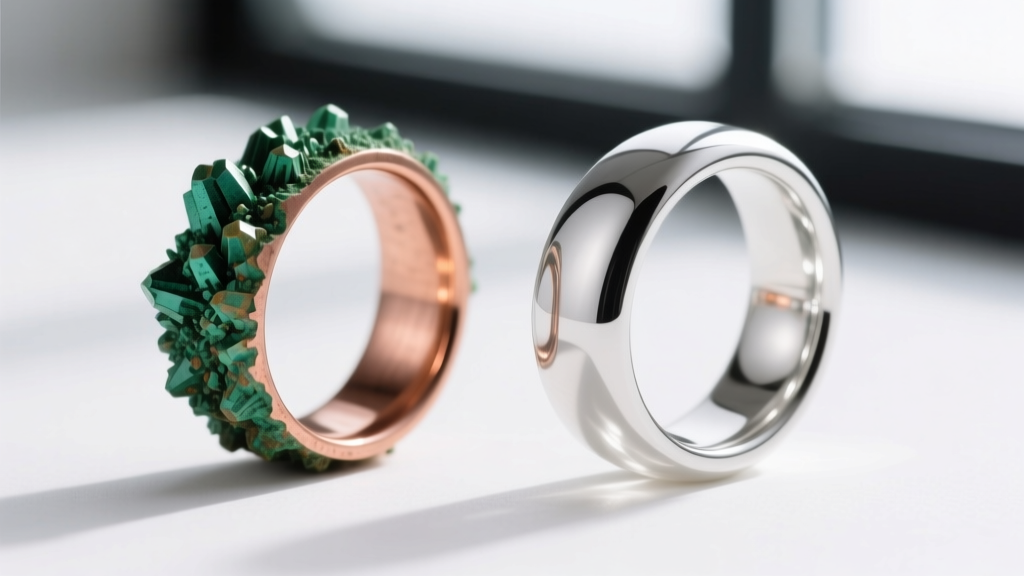
No discussion of copper jewelry is complete without addressing the infamous 'green skin' reaction. This is not an allergy, nor is it a sign of cheap metal. As detailed in materials science literature via ScienceDirect, the green discoloration is caused by copper chelation. When the slightly acidic pH of human sweat interacts with the copper surface, it forms copper chloride and copper carbonate complexes, which transfer to the skin.
In 2026, the jewelry community is split into two distinct camps regarding this phenomenon:
- The Purists: This group embraces the green mark as a temporary, harmless body modification and a sign that the copper is raw and unsealed. They view the chelation as proof of the metal's antimicrobial properties and its direct interaction with the wearer's unique body chemistry.
- The Preservationists: For those who prefer their skin unstained and their patina locked in place, modern polymer sealants have revolutionized copper care. Products like ProtectaClear (a polyurethane-based coating) and Everbrite Coatings provide a microscopically thin, flexible barrier that prevents sweat from reaching the metal. Unlike traditional lacquers that chip and peel, these modern coatings stretch with the metal as the copper expands and contracts with temperature changes.
If you choose to seal your copper jewelry, avoid using Renaissance Wax on pieces that experience high friction (like the inside of a ring or cuff), as the microcrystalline wax will wear away within days, requiring constant reapplication.
Market Pricing and Artisan Makers
The pricing structure for copper jewelry in 2026 reflects a massive divide between commercial casting and artisan forging. Mass-produced, cast copper rings and pendants typically range from $25 to $60. However, cast copper is inherently more porous and brittle than forged copper.
True brutalist, hand-forged copper jewelry created by independent metalsmiths commands a premium based on labor, not material cost. Expect to pay between $140 and $350 for a heavy-gauge, hand-hammered cuff featuring complex, multi-stage chemical patinas. When investing in these pieces, always verify the maker's annealing process and ask whether the patina has been sealed, as this drastically alters the long-term maintenance and wearability of the garment.
Ultimately, the 2026 copper jewelry movement is about embracing impermanence and weight. It is a rejection of the disposable, the delicate, and the pristine, offering instead a heavy, living artifact that ages alongside the wearer.

