Is Brass Good for Jewelry? An Expert Metallurgical Deep Dive
Is brass good for jewelry? We analyze C26000 cartridge brass, nickel allergies, patina oxidation, and structural durability for daily wear.

The Metallurgical Reality: What Exactly is Jewelry Brass?
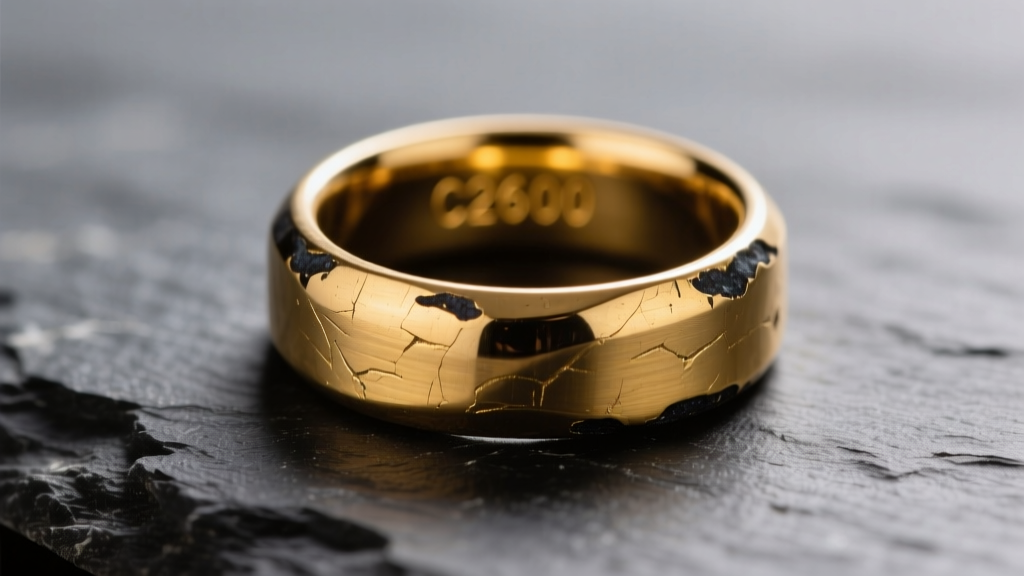
The question 'is brass good for jewelry' requires a nuanced metallurgical answer. Brass is not a single elemental metal; it is a substitutional alloy composed primarily of copper and zinc. The suitability of brass for fine or fashion jewelry depends entirely on the specific ratio of these elements and the presence of trace additives. In professional jewelry fabrication, the gold standard is C26000 (Cartridge Brass), which consists of 70% copper and 30% zinc. This specific ratio provides an optimal balance of ductility, tensile strength, and a warm, golden hue that closely mimics 14k or 18k yellow gold.
Conversely, cheap mass-market jewelry often utilizes C36000 (Free-Machining Brass). This alloy contains up to 3% lead to improve machinability for automated lathe work. From a jewelry design perspective, C36000 is highly problematic: it is brittle, difficult to solder without toxic off-gassing, and poses significant health risks due to lead exposure. When evaluating brass jewelry, verifying the alloy grade is the first critical step in determining its longevity and safety.
The 'Green Skin' Phenomenon: Copper Oxidation and Chelation
The most common complaint regarding brass jewelry is the green or black discoloration it leaves on the skin. This is not an allergic reaction, but rather a predictable chemical process known as chelation. When the copper in the brass alloy comes into contact with the lactic acid, sebum, and moisture present in human sweat, it oxidizes to form copper chloride and copper chelates. These compounds are easily absorbed into the superficial layers of the stratum corneum, resulting in a harmless but aesthetically displeasing green stain.
The rate of this reaction is heavily influenced by the wearer's individual body chemistry and environment. High-acidity sweat, humid climates, and the frequent application of lotions or perfumes will accelerate the oxidation process. To mitigate this, expert jewelers employ barrier methods. Applying a microcrystalline wax, such as Renaissance Wax, creates a microscopic, breathable seal over the metal. Unlike polyurethane clear coats—which eventually chip and peel, creating sharp edges and trapping moisture—microcrystalline wax can be easily reapplied and buffed to a high luster without compromising the metal's integrity.
Structural Integrity: Tensile Strength and Wearability
When asking if brass good for jewelry is a structural reality, we must examine its mechanical properties. In its fully annealed (soft) state, C26000 brass has a Vickers Hardness (HV) of approximately 55 and a tensile strength of around 300 MPa. This makes it far too soft for rings or structural clasps, as it will easily bend and deform under daily mechanical stress.
However, brass responds exceptionally well to work-hardening. Through cold-rolling or mechanical tumbling, the crystalline structure of the metal is compressed, drastically increasing its yield strength. An 'extra-hard' temper of C26000 can achieve an HV of 180 and a tensile strength exceeding 650 MPa, making it structurally comparable to work-hardened sterling silver. Below is a comparative analysis of common jewelry metals in their work-hardened states:
| Material (Work-Hardened) | Vickers Hardness (HV) | Tensile Strength (MPa) | Optimal Jewelry Application |
|---|---|---|---|
| C26000 Cartridge Brass | 140 - 180 | 550 - 690 | Cuffs, heavy bangles, signet rings |
| Sterling Silver (925) | 110 - 130 | 350 - 450 | Intricate castings, delicate chains |
| Silicon Bronze (C65500) | 180 - 220 | 600 - 750 | Spring clasps, structural armatures |
| Pure Copper (C11000) | 80 - 100 | 250 - 320 | Enameling bases, woven wirework |
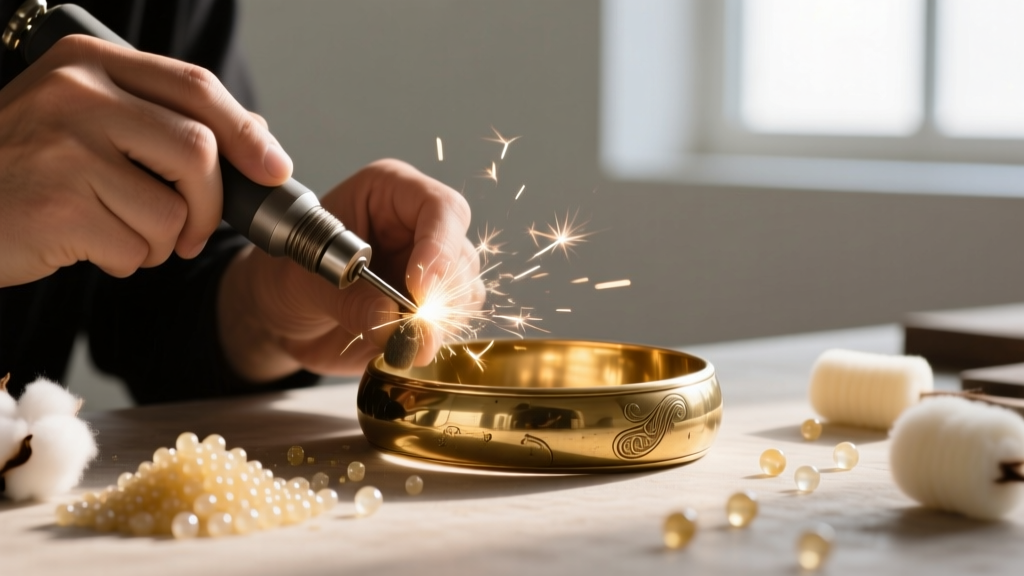
For fabrication, gauge selection is paramount. A brass band ring should be milled to a minimum of 14-gauge (1.6mm) and work-hardened via a rotary tumbler with stainless steel shot. For bangles and cuffs, 10-gauge (2.5mm) or 8-gauge (3.2mm) wire provides the necessary rigidity to maintain its shape when slipped over the hand.
Nickel, Lead, and Toxicity: Navigating Allergen Risks
A major advantage of high-quality C26000 brass is that it is inherently nickel-free. Nickel is the most common contact allergen in jewelry, responsible for widespread allergic contact dermatitis. Under the EU REACH regulation and the Nickel Directive, jewelry intended for prolonged skin contact must release less than 0.5 µg/cm²/week of nickel. Pure cartridge brass easily passes this standard, making it a safe alternative for individuals with severe nickel sensitivities who cannot wear white gold or surgical stainless steel.
However, the danger lies in unregulated, mass-produced imports. Some manufacturers add trace amounts of nickel to brass to alter its color or improve casting flow, while others use leaded brass (C36000) for cheap die-casting. Consumers and independent jewelers must source their brass sheet, wire, and casting grain from reputable metallurgical suppliers who provide certified mill test reports (MTRs) guaranteeing compliance with California Proposition 65 and EU heavy metal restrictions.
Patina Management: Embracing or Erasing Oxidation
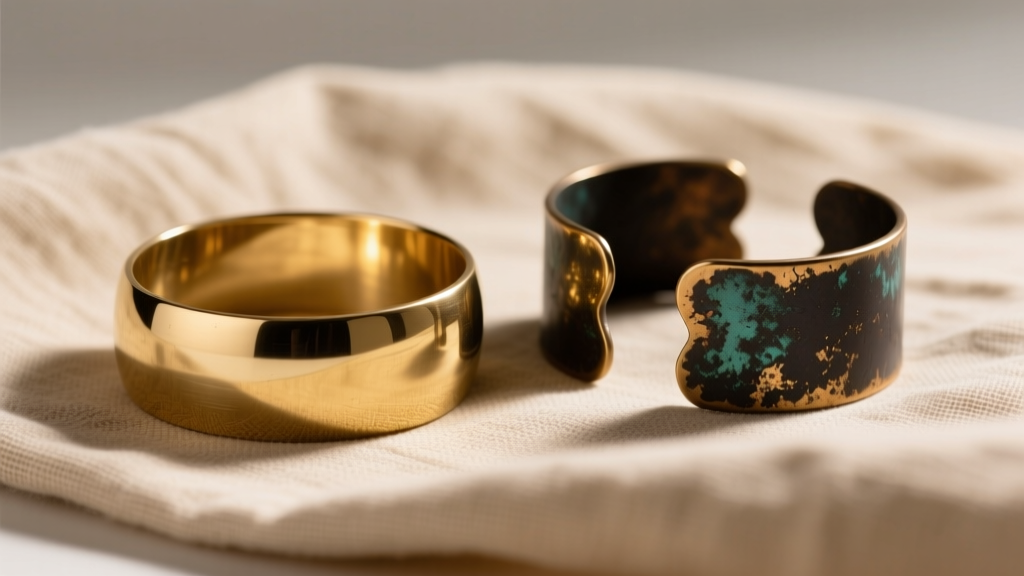
Unlike precious metals that resist tarnish, brass is highly reactive to atmospheric sulfur and oxygen. Over time, it develops a complex patina ranging from deep amber to rich mahogany and eventually to a mottled bronze-brown. In the context of artisanal and heritage-style jewelry, this patina is often intentionally cultivated using liver of sulfur or ammonium sulfide to highlight textures and recessed engraving.
If a high-polish, gold-like finish is desired, maintenance is required. Harsh chemical dips (like Tarn-X) should be strictly avoided, as they strip the zinc from the surface layer, leaving behind a porous, copper-rich surface that will oxidize even faster—a phenomenon known as dezincification. Instead, expert maintenance involves mechanical polishing. Using a mild abrasive like calcium carbonate powder mixed with water, or a dedicated brass polishing cloth, removes the tarnished layer without altering the underlying alloy composition. For heavily textured pieces, ultrasonic cleaning with a mild, non-ammoniated detergent followed by immediate drying in a warm oven prevents water-spot oxidation.
Final Verdict: When to Choose Brass and When to Avoid It
So, is brass good for jewelry? The definitive answer is yes, provided it is the correct alloy (C26000) and engineered with structural realities in mind. Brass is an exceptional choice for statement cuffs, heavy signet rings, and architectural ear cuffs where its rigidity, warm color, and cost-effectiveness shine. It allows designers to create substantial, high-volume pieces that would be prohibitively expensive in solid gold.
However, brass is a poor choice for fine, delicate chains, permanent body jewelry (like initial piercings), or heirloom engagement rings. Its susceptibility to surface oxidation and the necessity for periodic maintenance make it a metal for conscious, engaged wearers rather than those seeking 'wear-and-forget' convenience. By understanding its metallurgical boundaries, jewelers can harness the striking beauty of brass while ensuring structural longevity and wearer comfort.


