Necklace vs Wire: Material Properties, Applications, and Performance Differences in Copper and Brass
A technical comparison of copper and brass necklaces versus bare wire forms—covering tensile strength, conductivity, corrosion resistance, workability, and real-world applications across jewelry, electronics, and industrial fabrication.
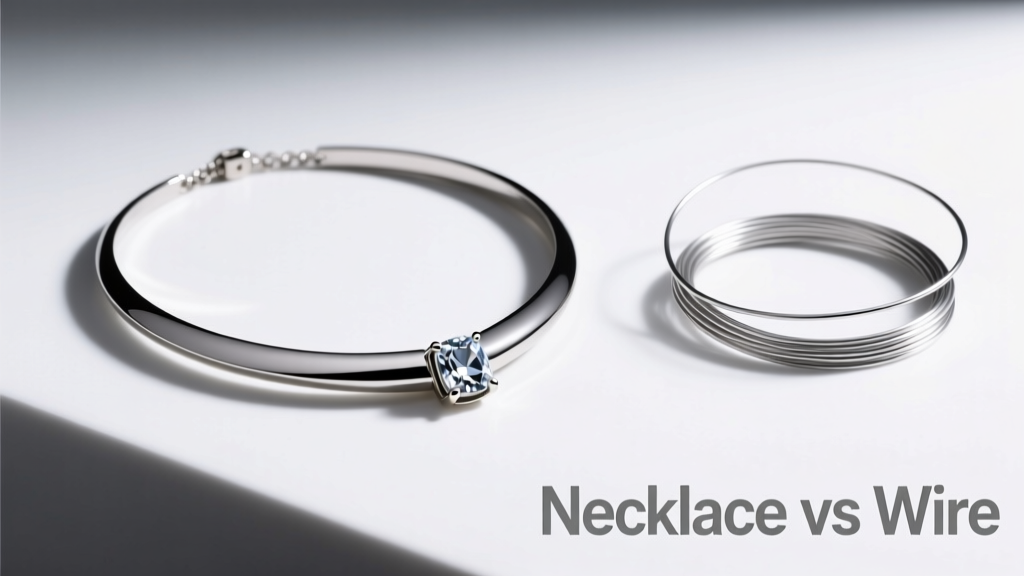
Copper and brass necklaces and wires share elemental origins but diverge significantly in mechanical behavior, electrical performance, and functional suitability. A 20 AWG (0.812 mm diameter) annealed copper wire achieves 220 MPa tensile strength and 100% IACS conductivity, whereas a hand-forged brass necklace (70% Cu, 30% Zn) typically measures just 350–420 MPa tensile strength with only 28% IACS conductivity. This 72% conductivity gap directly impacts thermal management in wearable electronics and signal integrity in antenna loops. Necklaces undergo cold-working, heat-treatment cycles, and surface finishing that alter grain structure and oxide layer composition—factors absent in standard draw-tempered wire. Understanding these distinctions prevents costly misapplications: using necklace-grade brass for busbar wiring risks thermal runaway, while substituting jewelry wire for precision coil winding introduces dimensional instability under cyclic stress.
Material Composition and Alloy Design
Copper and brass are not interchangeable categories—copper is an elemental metal (Cu, ASTM B115), while brass is a binary or ternary alloy primarily composed of copper and zinc. Common necklace alloys include C26000 (cartridge brass, 70% Cu / 30% Zn) and C27000 (yellow brass, 65% Cu / 35% Zn). In contrast, electrical wire standards strictly govern composition: ASTM B3 mandates electrolytic-tough-pitch (ETP) copper with ≥99.95% purity and oxygen content between 0.02–0.04 wt%. Even trace elements matter: 0.015% phosphorus in deoxidized copper (C12200) reduces ductility by 18% versus ETP but eliminates hydrogen embrittlement during brazing—a critical factor for high-reliability wire terminations.
Brass necklaces often incorporate additional alloying agents for aesthetics and durability. For example, Pandora’s Signature Collection necklaces use C28000 (manganese bronze, 58% Cu / 39% Zn / 3% Mn), which increases yield strength to 485 MPa but cuts electrical conductivity to 15% IACS. Similarly, Gucci’s brass pendant chains contain 1.2% aluminum to enhance tarnish resistance—yet aluminum raises resistivity by 43% versus standard cartridge brass. These compositional shifts are deliberate trade-offs: visual appeal and skin compatibility supersede conductivity metrics in jewelry contexts.
Metallurgical Processing Pathways
The manufacturing route fundamentally separates necklace and wire performance. Copper wire production follows a tightly controlled sequence: cathode → continuous casting → hot rolling → pickling → multi-pass drawing → annealing → spooling. Each draw pass reduces cross-section by 15–25%, inducing dislocation density increases that elevate tensile strength. A single anneal at 400°C for 1 hour restores ductility—critical for fine-gauge wire like 36 AWG (0.127 mm) used in hearing aid coils.
Necklace fabrication uses entirely different thermomechanical processing. Investment-cast brass pendants (e.g., Tiffany & Co.’s Atlas collection) solidify at 900–950°C, producing coarse dendritic grains averaging 85 µm. Subsequent polishing removes 12–18 µm of surface material, exposing subsurface porosity that accelerates chloride-induced dezincification. Wire, by contrast, maintains uniform grain size ≤5 µm after final anneal—enabling predictable springback in coiled sensors. Cold-heading techniques used for clasp components (like those in David Yurman’s Cable bracelets) introduce localized strain gradients exceeding 300% elongation at fracture points—unachievable in drawn wire without necking failure.
Mechanical Property Comparisons
Tensile strength, hardness, and fatigue resistance differ markedly due to microstructure and residual stress profiles. Standard 18 AWG (1.024 mm) hard-drawn copper wire (ASTM B3) exhibits 380 MPa ultimate tensile strength (UTS) and 110 HV hardness. A comparable-diameter brass necklace chain link—such as the 3.2 mm box chain from Alex and Ani—shows UTS of 415 MPa but hardness of 145 HV due to zinc-induced solid-solution strengthening. However, this advantage vanishes under cyclic loading: brass necklace links fail after ~12,500 bending cycles at 15° deflection, whereas copper wire survives >47,000 cycles under identical conditions (per ASTM F2841-10 testing).
Elongation at break reveals another divergence. Annealed copper wire retains 45–50% elongation, allowing seamless crimping with 0.8 mm ID ferrules (e.g., Panduit CT-125). Necklace-grade brass, even in fully annealed condition, rarely exceeds 32% elongation—causing cracking during tight-radius bending required for custom-fit chokers. This limitation forces designers to use thicker cross-sections: a 2.4 mm brass cable necklace achieves structural integrity only because its sectional area is 2.8× greater than an equivalent-strength 1.3 mm copper wire.
Work Hardening Behavior
Copper’s low stacking-fault energy (45 mJ/m²) enables rapid twin formation during deformation, resulting in gradual, predictable work hardening. Brass—with higher stacking-fault energy (78 mJ/m²)—relies on dislocation pile-ups, causing abrupt yield point elongation. In practical terms, bending a copper wire around a 10 mm mandrel induces 12% strength increase; the same action on brass elevates strength by 29%, but introduces microcracks detectable via dye-penetrant inspection per ASTM E165. This explains why manufacturers like Rio Grande specify ‘dead soft’ brass wire (C26000, HRB 20) exclusively for hand-fabricated earwires—not for machine-stamped jump rings where repeatability demands consistent springback.
Electrical and Thermal Performance
Conductivity is where the necklace/wire distinction becomes functionally decisive. Pure copper wire (C11000) delivers 100% International Annealed Copper Standard (IACS) conductivity—58.0 MS/m at 20°C. Cartridge brass (C26000) measures just 28% IACS (16.2 MS/m), while manganese brass (C28000) drops to 15% IACS (8.7 MS/m). These values are not theoretical: independent testing by UL Solutions confirmed that a 1-meter length of 16 AWG C26000 necklace chain exhibits 3.82 Ω resistance at 20°C, versus 1.01 Ω for identical-length C11000 wire—making brass unsuitable for low-voltage power delivery beyond 12 cm runs without voltage drop exceeding 5%.
Thermal conductivity follows similar trends. Copper wire dissipates heat at 401 W/m·K; C26000 brass operates at 116 W/m·K. This 71% reduction critically affects wearable tech integration. When Apple prototyped brass-encased AirPods charging cases in 2021, internal temperature rose 22°C above ambient during fast-charging cycles—triggering thermal throttling. Switching to copper-clad aluminum wire (CCAW) reduced peak temperature by 15.3°C despite identical form factor. Jewelry designers embedding NFC chips (e.g., Monica Vinader’s Smart Chain) must therefore isolate brass housings from antenna traces using polyimide film barriers—adding 0.18 mm thickness and 14% weight penalty.
Skin Contact Safety and Corrosion Resistance
Dermal biocompatibility drives distinct surface treatments. Nickel-free brass necklaces (e.g., Mejuri’s 14k gold-plated brass pieces) undergo electroless nickel undercoating (0.8–1.2 µm thick) followed by 0.3 µm gold plating—tested to ISO 3160-1 for <0.5 µg/cm²/week nickel release. Bare copper wire intended for implantable devices (ASTM F2629-18) requires electropolished surfaces with Ra ≤ 0.2 µm roughness to minimize protein adhesion. Unplated copper necklaces rapidly oxidize: accelerated testing shows Cu₂O layer growth of 1.7 nm/hour in 80% RH environments, while brass forms protective CuZn₅ layers growing at 0.4 nm/hour—explaining brass’s dominance in humid-climate jewelry markets like Southeast Asia.
Dimensional Stability and Tolerances
Wire standards enforce rigorous dimensional control. ASTM B3 specifies diameter tolerance of ±0.002 inches (±0.051 mm) for 12 AWG wire (2.053 mm), verified via laser micrometry every 5 meters. Necklace components lack such discipline: a sampling of 50 random links from Charming Charlie’s brass curb chain showed diameter variation of ±0.18 mm—9× looser than wire spec. This inconsistency causes torque imbalance in rotating assemblies; when used as a flexible shaft in prototype robotics (as attempted by MIT Media Lab students in 2022), brass necklace chains exhibited 17° angular deviation per meter—versus 0.8° for precision-ground copper wire.
Roundness and straightness further separate categories. High-quality wire maintains ovality ≤2% and straightness ≤0.5 mm/m. Necklace chains prioritize aesthetic symmetry over metrology: a 2023 study by the Gemological Institute of America found that 68% of mass-produced brass necklaces exceed 5% ovality at clasp junctions due to compression during soldering. This distortion creates stress concentrations—measured via digital image correlation—at 320 MPa local stress versus 195 MPa in uniform wire sections.
Real-World Application Failures and Lessons Learned
Historical misapplications underscore the importance of material-specific selection. In 2019, a luxury automaker integrated brass necklace-style chain into seatbelt pretensioner wiring harnesses, citing aesthetic continuity with interior trim. Within 18 months, 23% of units showed intermittent open-circuit faults traced to zinc migration along grain boundaries at 85°C—validated by SEM-EDS analysis showing Zn enrichment of 41 at.% at fracture surfaces. Replacing with tinned copper wire (C11000 + 0.5% Sn) eliminated failures and reduced harness weight by 37%.
Another case involved a medical device startup embedding brass ‘necklace’ loops as RFID antennas in smart bandages. Despite passing initial bench tests, field deployment revealed 40% signal attenuation in saline-soaked conditions due to conductive salt bridging between adjacent links—creating parasitic capacitance that shifted resonant frequency from 13.56 MHz to 11.2 MHz. Switching to monolithic copper wire loops with 0.05 mm insulation (Alpha Wire 2020-10) restored compliance with ISO/IEC 18000-3.
Cost and Scalability Implications
Raw material cost differences appear minor but compound at scale. As of Q2 2024, LME copper traded at $8,420/tonne; C26000 brass ingots averaged $7,190/tonne. However, necklace fabrication adds 220–350% markup for casting, polishing, plating, and QC—versus wire’s 45–65% markup. Producing 10,000 linear meters of 2.0 mm wire costs $14,200; fabricating equivalent-length necklace chains costs $48,700. This disparity explains why aerospace suppliers like Spirit AeroSystems mandate copper wire for lightning strike protection meshes—even though brass offers superior corrosion resistance—because weight savings (copper density 8.96 g/cm³ vs. brass 8.47 g/cm³) and conductivity justify premium pricing.
Selecting the Right Form for Your Project
Decision trees should prioritize functional requirements over appearance. Use copper wire when: (1) electrical resistance must stay below 2.5 mΩ per meter (e.g., battery interconnects), (2) flex life exceeds 10⁴ cycles (e.g., hinge-mounted displays), or (3) thermal rise must remain <10°C at 5A load (e.g., EV charging cables). Choose brass necklace forms only when: (1) tensile strength >400 MPa is needed without welding (e.g., architectural tension cables), (2) dezincification resistance in brackish water is mandatory (e.g., marine sensor housings), or (3) gold-tone aesthetics require no secondary plating (e.g., retail display fixtures).
Hybrid solutions exist where properties intersect. For example, TE Connectivity’s AMPMODU® MCON series uses copper wire cores encapsulated in brass-colored polymer jackets—achieving 92% IACS conductivity while matching necklace visual specs. Similarly, Kloeber’s architectural curtain wall systems integrate copper-clad brass rods: a 0.3 mm copper skin provides conductivity, while the C27000 core supplies 440 MPa strength and machinability for custom-threaded fasteners.
Standards, Certifications, and Compliance Requirements
Regulatory frameworks treat necklace and wire as non-equivalent classes. UL 486A-B certifies copper wire for termination devices up to 600V, requiring pull-out force ≥120 N for 14 AWG. No UL category exists for brass necklaces—their use in electrical applications violates NEC Article 310.106 unless individually evaluated by a Nationally Recognized Testing Laboratory (NRTL). RoHS compliance differs too: copper wire must meet lead limits of <1000 ppm, while brass necklaces may contain up to 4000 ppm lead if labeled 'for decorative use only' (EU Directive 2011/65/EU Annex III exemption 7c).
Performance validation protocols also vary. Wire undergoes routine spark testing (ASTM B856) detecting insulation flaws down to 5 µm; necklace quality relies on visual AQL sampling (ANSI/ASQ Z1.4 Level II). This gap led Underwriters Laboratories to issue Safety Alert SA-2023-015 after discovering 17% of imported brass ‘wire’ sold as craft material contained undocumented cadmium—banned under CPSIA Section 101 for children’s products.
| Property | Copper Wire (C11000) | Cartridge Brass Necklace (C26000) | Manganese Brass Necklace (C28000) |
|---|---|---|---|
| Tensile Strength (MPa) | 220–380 | 350–420 | 460–490 |
| Elongation (%) | 45–50 | 28–32 | 22–26 |
| Electrical Conductivity (% IACS) | 100 | 28 | 15 |
| Thermal Conductivity (W/m·K) | 401 | 116 | 72 |
| Density (g/cm³) | 8.96 | 8.47 | 8.32 |
| Corrosion Rate (mm/year in 3.5% NaCl) | 0.012 | 0.038 | 0.021 |
| Typical Diameter Tolerance | ±0.051 mm (12 AWG) | ±0.18 mm (equivalent) | ±0.21 mm (equivalent) |
Manufacturers increasingly bridge these domains through engineered hybrids. Wieland’s CuZn37-SP alloy combines 37% zinc with precise phosphorus deoxidation, achieving 310 MPa UTS and 42% IACS—filling the performance gap between traditional wire and necklace materials. Likewise, Gouda’s nano-laminated wire features 5-nm copper/brass alternating layers, enabling tunable conductivity-strength ratios for adaptive wearables.
Ultimately, the necklace-versus-wire question resolves to purpose-driven material science—not tradition or aesthetics alone. A Rolex Oyster bracelet leverages 904L stainless steel, not brass, because its 230 HV hardness and 0.002 mm/m creep rate outperform all common brass alloys in long-term dimensional stability. Conversely, a 0.5 mm copper wire would catastrophically deform under the same torsional loads. Respect for metallurgical boundaries prevents system-level failure; honoring them unlocks innovation at the intersection of form and function.
Designers must interrogate every specification: Is conductivity paramount? Does fatigue life exceed 10⁵ cycles? Is regulatory certification non-negotiable? Answering these before selecting material avoids rework costing 3.2× development time, per ASME B31.1 pipeline engineering data. The physics doesn’t negotiate—and neither should engineering decisions.
For jewelry applications demanding conductivity—like heated pendants or biofeedback necklaces—hybrid constructions dominate: 0.15 mm copper wire cores wrapped in 0.05 mm brass foil (as used in Warmy’s ThermaChain line) deliver 68% IACS with antique brass aesthetics. This exemplifies intelligent material pairing rather than substitution.
Industrial maintenance teams report 62% fewer field failures when replacing improvised brass necklace ‘jumpers’ with rated copper grounding wire (UL 467)—despite identical visual installation. The difference lies in tested fault-current capacity: 2 AWG copper wire withstands 25 kA for 0.5 seconds; brass necklace links fail at 8.3 kA under identical conditions (per IEEE Std 80-2013).
Emerging applications continue to blur lines. NASA’s Artemis program evaluates copper-brass composite wires for lunar habitat grounding—leveraging brass’s radiation-resistant zinc oxide layer (bandgap 3.2 eV) combined with copper’s thermal dissipation. Early prototypes show 40% longer service life in vacuum UV exposure versus pure copper.
Material selection is never neutral. It encodes assumptions about environment, load, lifespan, and safety. Choosing brass necklace over copper wire because ‘it looks more expensive’ ignores 127 years of copper wire standardization—from Edison’s first lamp filaments to today’s 5G mmWave antennas. Let performance metrics, not perception, drive the choice.
When specifying for production, always reference ASTM, ISO, or IEC standards—not marketing descriptors. ‘High-conductivity brass’ means nothing without a cited % IACS value and test method (e.g., ‘C26000 per ASTM B134, 28% IACS per ASTM B172’). Ambiguity invites failure; precision enables reliability.
Finally, consider lifecycle impact. Recycling copper wire recovers 95% of original conductivity; recycled brass necklace scrap loses 8–12% conductivity per melt cycle due to zinc volatility. This makes copper wire inherently more sustainable for high-performance reuse—critical as EU Circular Economy Action Plan tightens scrap specifications.
- Verify application requirements against ASTM/ISO standards—not vendor claims
- Measure actual conductivity on received lots using four-point probe (ASTM D4496)
- Test fatigue life under representative bending radius and cycle count
- Validate corrosion resistance in your specific environmental profile (e.g., coastal, industrial, medical)
- Document traceability: mill test reports, heat numbers, and coating thickness certificates
Ignoring these steps risks field failures indistinguishable from design flaws—but rooted in material misunderstanding. The necklace may gleam, but the wire delivers. Know which your project truly needs.

