How to Clean Pewter Jewelry: Expert Care and Maintenance Tips
Discover expert techniques to clean, polish, and store pewter jewelry. Learn safe DIY methods, alloy specifics, and how to preserve its patina.

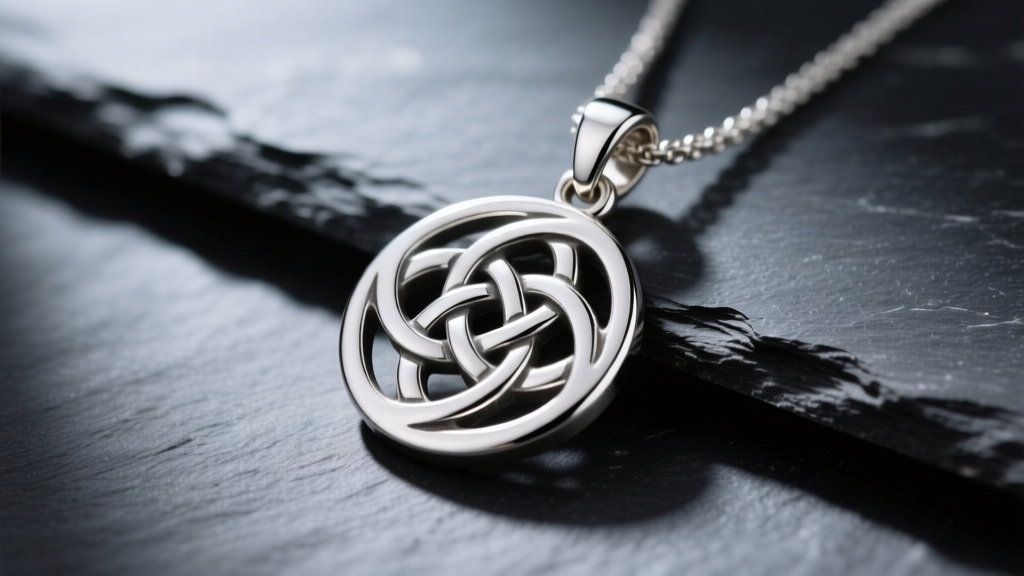
Pewter jewelry offers a distinct, muted elegance that sets it apart from the high-shine brilliance of silver or the warm glow of copper. However, its unique metallurgical composition requires a specialized approach to cleaning and maintenance. Unlike sterling silver, which tarnishes due to sulfur reactions, pewter oxidizes slowly, developing a soft, dark gray patina over time. While this antique look is highly prized by collectors, improper cleaning can easily strip this finish, scratch the soft metal, or cause irreversible pitting.
In this comprehensive guide, we break down the exact metallurgical properties of modern pewter, outline safe cleaning protocols, and provide expert troubleshooting techniques to keep your jewelry in pristine condition for decades.
Understanding Modern vs. Antique Pewter Alloys
Before applying any cleaning agent to your jewelry, it is critical to understand what pewter actually is. Historically, pewter was an alloy of tin and lead. However, modern jewelry-grade pewter—often referred to as Britannia metal—is strictly lead-free to meet international safety standards. According to Encyclopedia Britannica, modern pewter typically consists of 85% to 99% tin, with the remainder made up of antimony (5% to 10%) and copper (1% to 2%).
- Tin: Provides the base mass and the characteristic silvery-gray hue, but is exceptionally soft.
- Antimony: Acts as a hardening agent, preventing the tin from bending or warping under normal stress.
- Copper: Adds ductility and tensile strength, allowing the alloy to be cast or stamped into intricate jewelry designs.
Because tin dominates the alloy, pewter ranks very low on the Mohs scale of mineral hardness—typically between 1.5 and 3. This means it can be scratched by a copper penny, a fingernail, or even a coarse microfiber cloth. Understanding this inherent softness is the foundation of proper pewter care.
The Golden Rules of Daily Pewter Jewelry Care
Acknowledging the Mohs Hardness Scale
The most common failure mode for pewter rings and bracelets is micro-scratching and impact denting. You should always remove pewter rings before engaging in manual labor, weightlifting, or gardening. Unlike titanium or tungsten, which will shatter or resist impact, pewter will simply gouge and deform.
Environmental Threats and Chemical Sensitivities
Pewter is highly susceptible to acidic environments. Human sweat has an average pH of 4.5 to 7.0, but during intense exercise, it can become highly acidic, leading to microscopic pitting on the surface of the metal. Furthermore, chlorinated water in swimming pools or hot tubs will aggressively attack the antimony and copper bonds in the alloy, causing rapid, irreversible discoloration and structural weakening.
Step-by-Step Cleaning Protocols
When it comes to cleaning pewter, less is more. The goal is to remove sebum, dead skin cells, and environmental grime without disturbing the intentional patina or scratching the surface.
Level 1: Routine Maintenance (The Mild Wash)
For weekly or bi-weekly cleaning, a simple surfactant wash is all that is required.
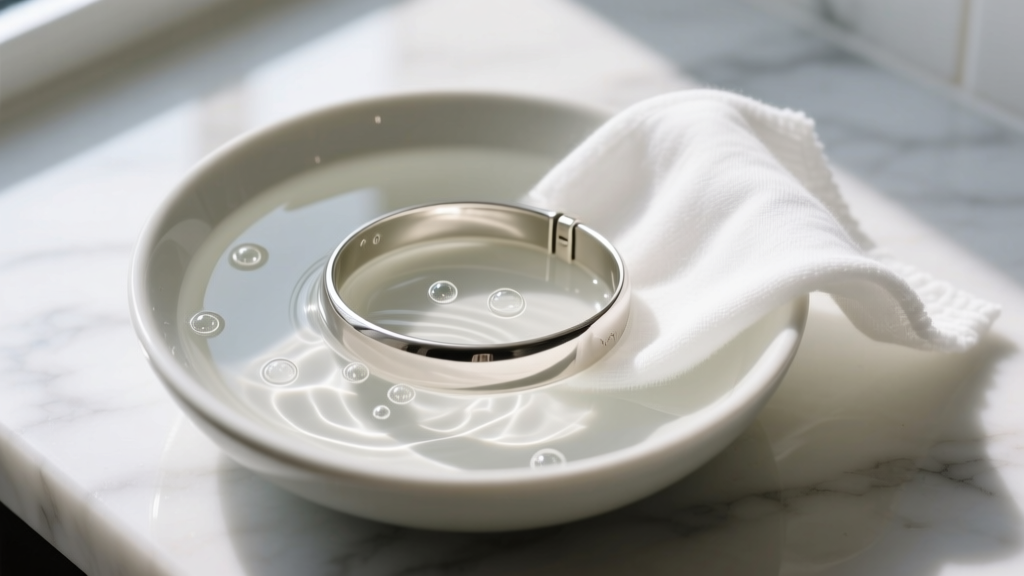
- Prepare the Solution: Mix a few drops of pH-neutral dish soap (like Dawn or Seventh Generation) into a bowl of lukewarm water. Avoid hot water, which can expand the metal and loosen gemstone settings.
- Soak Briefly: Submerge the pewter jewelry for no more than 3 to 5 minutes. Prolonged water exposure can lead to water spots, especially if your tap water is hard (high in calcium and magnesium).
- Gentle Agitation: Use a baby-hair toothbrush (extra soft) to lightly sweep the crevices of the design. Do not apply downward pressure.
- The Distilled Rinse: Rinse the piece under distilled water. This is a crucial expert step; distilled water lacks the dissolved minerals found in tap water, ensuring a spot-free finish.
- Dry Immediately: Pat dry with a lint-free cotton cloth. Never air-dry pewter.
Level 2: Deep Cleaning & Oxidation Removal
If your pewter jewelry has accumulated stubborn grime or uneven oxidation, you need a slightly more aggressive approach. The Canadian Conservation Institute (CCI) recommends using a mild paste of precipitated chalk (calcium carbonate) and distilled water for historical and delicate pewter items. For modern jewelry, a paste made of baking soda and water can be used sparingly.
Expert Warning: Never use baking soda on pewter jewelry featuring a matte or satin finish. The mild abrasiveness of the baking soda will burnish the matte surface, creating unintentional shiny patches that ruin the designer's intended aesthetic.
Cleaning Agents and Their Effects on Pewter
Not all jewelry cleaners are created equal. Below is a diagnostic chart to help you avoid catastrophic damage to your pewter pieces.
| Cleaning Agent | Chemical Action | Safety for Pewter |
|---|---|---|
| Mild Dish Soap | Surfactant (lifts oils) | Safe (Ideal for daily use) |
| Baking Soda Paste | Mild alkali / abrasive | Caution (Mirror finishes only) |
| Ultrasonic Cleaners | Acoustic cavitation | Unsafe (Causes micro-pitting) |
| Silver Dip / Ammonia | Harsh chemical reduction | Unsafe (Strips patina instantly) |
| Commercial Pewter Polish | Specialized mild abrasive | Safe (Use 1-2 times a year) |
Polishing Techniques for Satin vs. Mirror Finishes
The polishing technique you employ must match the surface finish of the jewelry. Using the wrong method will permanently alter the texture of the piece.
Restoring a Mirror Finish
For highly polished, mirror-finish pewter, use a dedicated commercial polish such as Hagerty Pewter Polish. Apply a dime-sized amount to a soft cotton flannel cloth. Rub the metal using small, overlapping circular motions. The mild solvents and ultra-fine abrasives in the polish will lift oxidation without gouging the tin. Buff off the residue with a clean section of the cloth until the surface reflects light clearly.
Maintaining a Satin or Matte Finish
Satin finishes are created by wire-brushing or sandblasting the pewter to create microscopic grooves that scatter light. Never use liquid polishes on satin pewter. Instead, if the piece needs revitalization, use a single pass with a piece of 0000-grade (super fine) steel wool, rubbing strictly in the direction of the original grain. This removes surface dirt while preserving the matte texture.
Proper Storage to Prevent Pitting and Warping
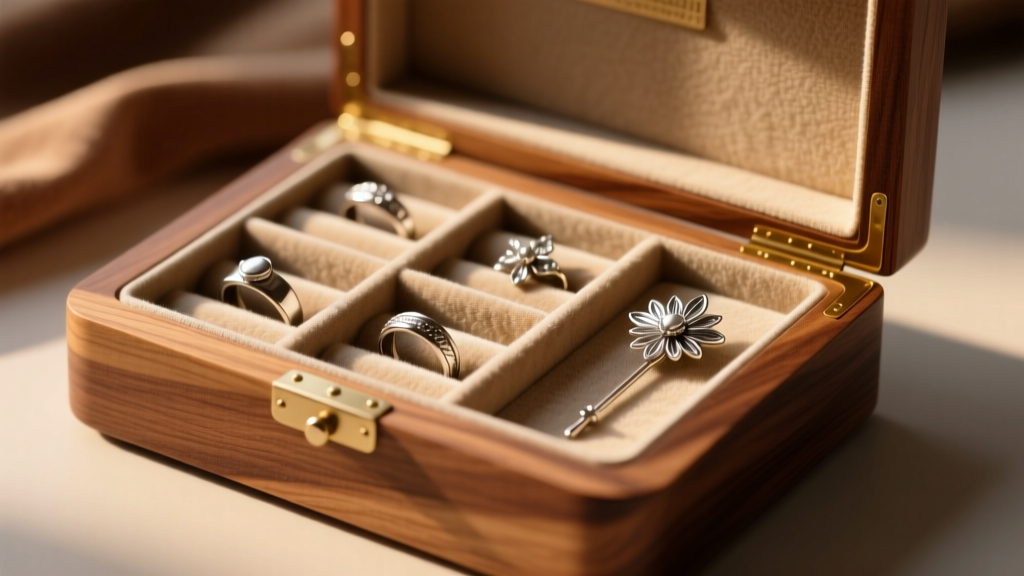
How you store your pewter jewelry when it is not being worn is just as important as how you clean it. The Victoria and Albert Museum (V&A) emphasizes that fluctuating humidity and exposure to sulfur-rich materials are the primary enemies of preserved metalwork.
- Use Anti-Tarnish Cloth: Line your jewelry box drawers with Pacific Silvercloth or a similar zinc-impregnated anti-tarnish fabric. These fabrics absorb airborne sulfur compounds before they can react with the trace copper in the pewter alloy.
- Control Humidity: Store pewter in an environment with a relative humidity (RH) below 65%. High humidity accelerates oxidation and can lead to "pewter plague"—a rare but destructive form of tin pest where the metal literally crumbles into gray powder.
- Avoid Cardboard and Raw Wood: Cardboard boxes and certain unsealed woods (like oak) emit volatile organic compounds (VOCs) and acidic vapors that will etch and pit the surface of pewter over time. Always use acid-free tissue paper or sealed plastic bags with silica gel packets for long-term storage.
Expert Troubleshooting: Fixing Scratches and Dents
Because of its low Mohs hardness, accidental damage to pewter jewelry is common. Here is how professionals address specific failure modes:
Removing Deep Scratches
If your pewter ring has acquired a deep scratch, do not attempt to sand it out with standard sandpaper, which will leave deep, visible gouges. Instead, use wet/dry automotive sandpaper, starting at 800 grit and working your way up to 2000 grit. Keep the paper wet with distilled water to act as a lubricant. Once the scratch is leveled, finish with a jeweler's rouge on a muslin buffing wheel to restore the shine.
Addressing Minor Dents
Pewter is highly malleable. If a thin pewter bangle or ring band becomes slightly misshapen, it can often be cold-formed back into shape. Wrap a rawhide mallet or a wooden dowel in a soft leather cloth, and gently tap the interior of the band against a steel mandrel. Never use a steel hammer directly on pewter, as it will instantly bruise and flatten the metal, leaving permanent tool marks.
By respecting the unique metallurgical properties of pewter and adhering to these specialized care protocols, you can ensure that your jewelry retains its structural integrity and its beautiful, muted luster for a lifetime.


