Copper Jewelry Womens Guide: Alloys, Patina & Skin Reactivity
Explore the metallurgy of copper jewelry. This expert guide covers C110 vs C145 alloys, patina chemistry, gauge tolerances, and skin reactivity.

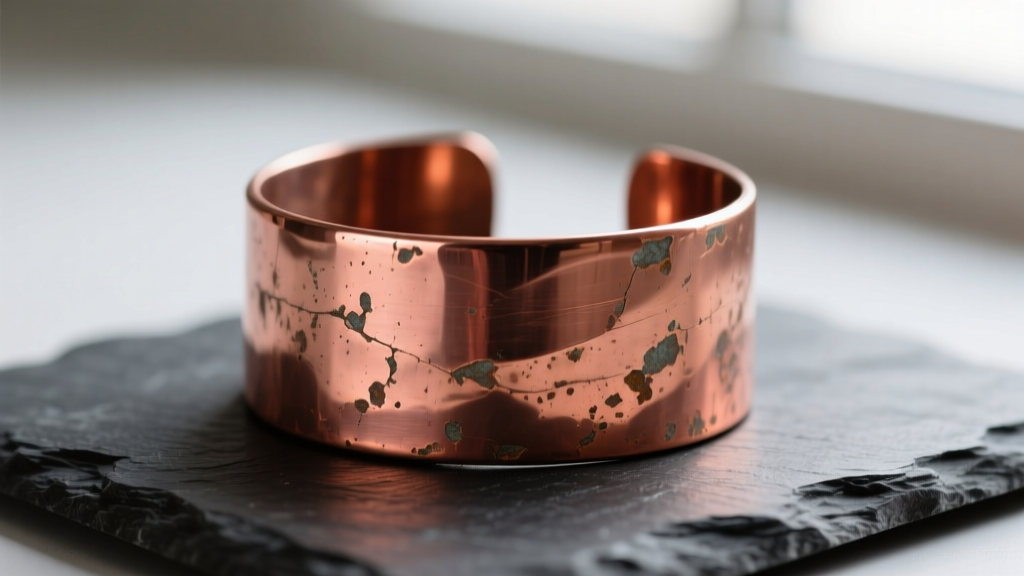
The market for artisan copper jewelry womens consumers wear daily demands a rigorous understanding of metallurgy, skin chemistry, and structural engineering. While copper has been utilized for adornment since the Neolithic era, modern jewelry design requires a precise grasp of its material limitations and chemical behaviors. Unlike gold or platinum, copper is a highly reactive, relatively soft transition metal that interacts dynamically with its environment and the wearer’s biology. This expert deep dive explores the technical specifications, alloy grades, and chemical protocols necessary for designing, wearing, and maintaining high-performance copper jewelry.
The Metallurgical Reality: C110 vs. C145 Copper Alloys
Not all copper is created equal. In jewelry manufacturing, the distinction between pure copper and machinable copper alloys dictates the longevity and structural integrity of the final piece. The most common grade used by artisan metalsmiths is C11000, also known as Electrolytic Tough Pitch (ETP) copper. C110 is 99.9% pure copper, offering exceptional malleability and a rich, warm salmon-pink hue when freshly polished. However, its Vickers hardness in an annealed state is a mere 40-50 HV, making it highly susceptible to warping, scratching, and deformation under daily mechanical stress.
For rings and structural components that require higher durability, metallurgists and advanced jewelers often turn to C14500 (Tellurium Copper). By introducing a microscopic amount of tellurium (0.4% - 0.7%), the alloy retains the electrical and thermal conductivity of pure copper while vastly improving its machinability. While C145 does not significantly increase the Vickers hardness compared to work-hardened C110, it prevents the 'galling' and tearing that occurs when pure copper is subjected to lathe work or heavy filing. According to the Copper Development Association, work-hardening (hammering or rolling) C110 can increase its hardness to over 100 HV, but this introduces internal stresses that must be carefully managed to prevent stress-corrosion cracking.
Comparative Alloy Data for Jewelry Applications
| Alloy Designation | Composition | Vickers Hardness (HV) | Best Jewelry Application |
|---|---|---|---|
| C11000 (ETP) | 99.9% Cu | 40 - 110 (Worked) | Cuffs, pendants, ear wires |
| C14500 (Tellurium) | 99.5% Cu, 0.5% Te | 45 - 115 (Worked) | Machined rings, threaded components |
| C17200 (Beryllium) | 98% Cu, 2% Be | Up to 400 (Heat Treated) | Spring clasps, high-stress findings |
Note: Beryllium copper (C17200) is rarely used for the main body of jewelry due to the severe toxicity of beryllium dust during the manufacturing and polishing phases, though it remains the industry standard for internal spring mechanisms in clasps.
The Chemistry of the 'Green Skin' Phenomenon
The most pervasive deterrent for consumers exploring copper jewelry womens styles is the fear of skin discoloration. The 'green skin' effect is not an allergic reaction, nor is it a sign of low-quality metal; it is a predictable chemical process known as copper chelation. Human sweat is a complex electrolyte solution containing water, sodium chloride (salt), lactic acid, and urea, with a pH typically ranging from 4.5 to 7.0.
When bare copper rests against the skin, the acidic environment and chloride ions catalyze the oxidation of the metal, forming copper chloride and copper carbonate compounds (such as malachite and azurite). These compounds are easily transferred to the epidermis, creating a temporary green or black stain. The rate of this reaction is heavily dependent on the wearer's individual skin pH and diet. A study published in the National Center for Biotechnology Information (NCBI) highlights that trace copper absorption through the skin is generally harmless and can even contribute to daily micronutrient intake, but the aesthetic staining remains a primary concern for buyers.
Expert Mitigation Strategy: To prevent chelation staining without sacrificing the antimicrobial properties of bare copper on the exterior, jewelers should apply a micro-crystalline wax barrier to the interior band. Products like Renaissance Wax create a moisture-resistant seal that withstands skin friction far longer than standard lacquers, which tend to peel and trap moisture against the metal.
Accelerated Patination: Liver of Sulfur vs. Natural Oxidation
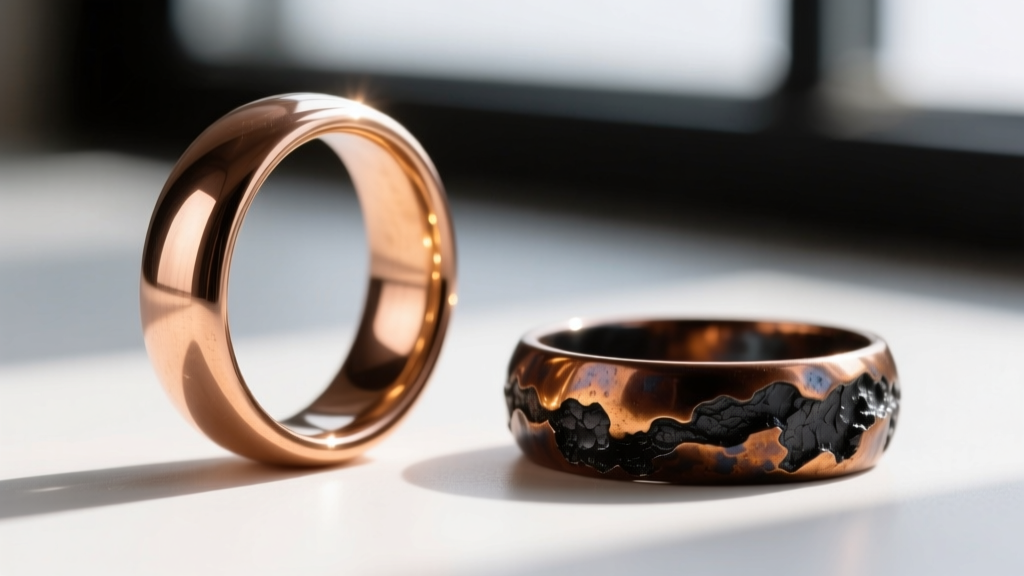
While natural oxidation yields a complex layer of cuprite (red) and tenorite (black) over months of wear, professional jewelers utilize accelerated chemical patination to achieve immediate, controlled contrast. The industry standard for darkening copper is Liver of Sulfur (LOS), a misnomer for a mixture of potassium sulfide, potassium polysulfide, and potassium thiosulfate.
When dissolved in warm water, LOS releases hydrogen sulfide gas, which reacts with the copper surface to form copper(II) sulfide (CuS). The depth of the patina is governed by three variables: solution temperature, concentration, and immersion time.
Step-by-Step Antiquing Protocol for High Contrast
- Preparation: The copper piece must be completely free of oils, fingerprints, and polishing compounds. Clean in an ultrasonic bath with a mild alkaline degreaser, followed by a distilled water rinse.
- Solution Mixing: Dissolve a pea-sized amount of LOS gel in 250ml of distilled water heated to exactly 50°C (122°F). Tap water contains chlorine and heavy metals that will cause uneven, muddy patinas.
- Immersion: Submerge the copper for 10 to 30 seconds. The metal will transition from salmon-pink to iridescent purple, then to bronze, and finally to a deep charcoal black.
- Neutralization: Immediately plunge the piece into a baking soda and water bath (pH 9.0) to halt the chemical reaction and neutralize residual acids.
- Selective Polishing: Once dry, use 0000 steel wool or a high-grit micromesh pad to ablate the black sulfide layer from the high points of the design, leaving the dark patina locked in the recesses to highlight texture and engraving.
Structural Engineering: Gauges and Tolerances
Because copper lacks the tensile strength of stainless steel or titanium, structural dimensions must be over-engineered to compensate for its ductility. When designing ear wires, jump rings, and ring shanks, specific gauge thresholds must be respected to prevent catastrophic failure or permanent deformation.
Critical Gauge Specifications
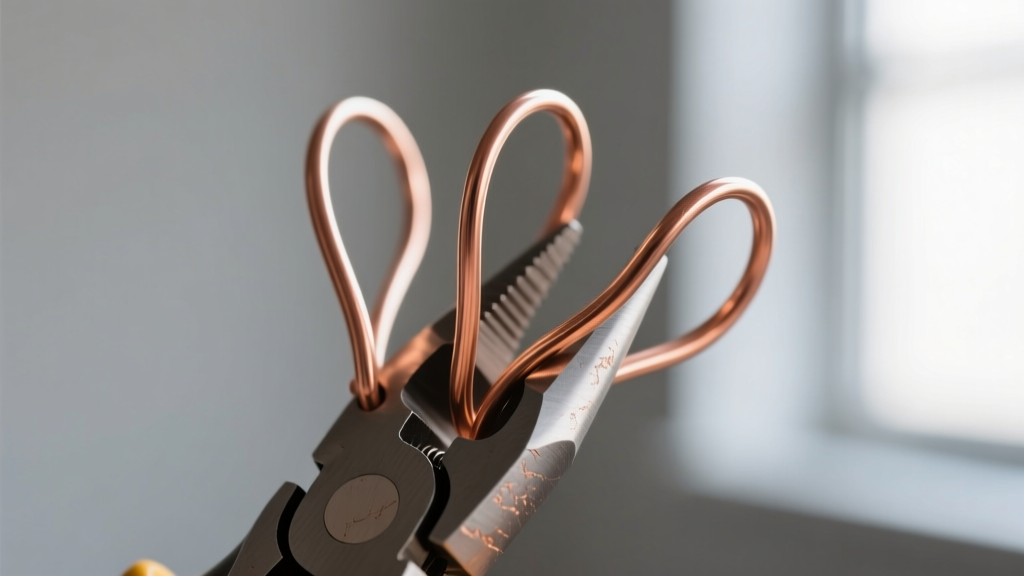
For ear wires, 22-gauge (0.64mm) is entirely unsuitable for copper; the wire will bend under the weight of even a lightweight stone. The absolute minimum for copper ear wires is 20-gauge (0.81mm), though 18-gauge (1.02mm) is the professional standard, providing enough rigidity to maintain the fishhook curve while remaining comfortable for the ear piercing. All ear wires must be work-hardened by tumbling in stainless steel shot for a minimum of 45 minutes post-forming to increase surface hardness.
For ring bands, a flat wire or sheet stock thickness of less than 1.2mm will result in a ring that warps into an oval shape within weeks of daily wear. Expert metalsmiths recommend a minimum cross-section of 1.5mm width by 1.5mm thickness for unalloyed copper rings. Furthermore, because copper has a high coefficient of thermal expansion compared to precious metals, sizing a copper ring requires careful annealing to prevent the metal from splitting at the solder joint during the resizing process.
Barrier Coatings and Long-Term Maintenance
For consumers who prefer the bright, polished look of new copper and wish to halt the patina process entirely, advanced barrier coatings are required. Traditional spray lacquers are prone to UV degradation and micro-fracturing, which allows moisture to penetrate and causes localized, aggressive pitting beneath the clear coat.
The modern standard for museum-quality copper preservation is Paraloid B-72, an ethyl methacrylate copolymer dissolved in acetone or ethanol. When applied via dip-coating, it forms a flexible, non-yellowing acrylic layer that is completely reversible with solvents. For consumer-grade protection that can be applied at home, ProtectaClear (a polyurethane-based coating specifically formulated for jewelry) offers superior abrasion resistance. According to conservation guidelines from the Gemological Institute of America (GIA), any coating applied to reactive metals must be reapplied periodically, as no permanent, flexible, and completely impervious clear coat currently exists for high-friction wearable items like rings and bracelets.
Ultimately, mastering copper jewelry requires embracing its dynamic nature. By selecting the correct alloy grade, engineering appropriate gauge tolerances, and understanding the electrochemical realities of skin contact, jewelers can create enduring, technically sound pieces that celebrate the living, breathing nature of this ancient metal.