The Ultimate Care Guide for Copper and Enamel Jewelry
Discover expert methods to safely clean copper and enamel jewelry. Learn how to remove tarnish without damaging delicate vitreous or cold enamel finishes.

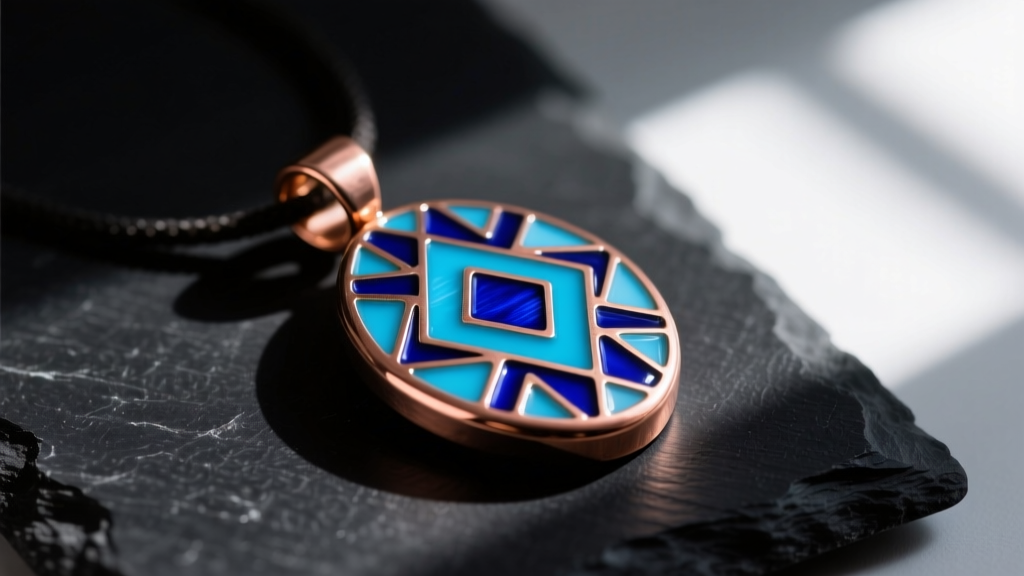
The Dual-Material Dilemma: Why Standard Copper Cleaners Fail
Cleaning copper and enamel jewelry requires navigating a complex chemical and physical minefield. Copper is a highly reactive transition metal that rapidly oxidizes when exposed to moisture, oxygen, and sulfur, forming a dark layer of cuprite and tenorite. To restore its bright, salmon-pink luster, jewelers typically rely on acidic dips, abrasive pastes, or ultrasonic vibrations. However, when copper is paired with enamel—whether vitreous glass or cold resin—these standard restoration methods become actively destructive.
The core challenge lies in the juxtaposition of material tolerances. Enamel acts as a protective, decorative coating, but in techniques like champlevé or cloisonné, exposed copper borders and bezels remain vulnerable to tarnish. If you submerge a copper and enamel piece in a commercial tarnish remover, the harsh chemicals (often thiourea-based) will permanently cloud cold enamel, strip the luster from vitreous glass, and seep into micro-fissures, eventually lifting the enamel from the copper base. According to conservation guidelines from the Victoria and Albert Museum, multi-material decorative arts require segmented, localized cleaning protocols to preserve the integrity of both the substrate and the overlay.
Identifying Your Enamel Type: Vitreous vs. Cold Enamel
Before applying any cleaning agent to your copper and enamel jewelry, you must accurately identify the type of enamel used. The cleaning tolerance of kiln-fired glass is vastly different from that of modern synthetic resins.
| Property | Vitreous Enamel (Kiln-Fired) | Cold Enamel (Epoxy/Resin) |
|---|---|---|
| Composition | Fused silica glass powder | Two-part synthetic polymer/epoxy |
| Hardness (Mohs) | 5.0 - 6.0 | 2.0 - 3.0 |
| Heat Tolerance | Extremely High (up to 1400°F) | Very Low (softens at 150°F) |
| Chemical Vulnerability | Hydrofluoric acid, prolonged alkaline exposure | Acetone, alcohol, ammonia, acidic citrus |
| Primary Cleaning Risk | Thermal shock, micro-cracking from ultrasonic waves | Melting, clouding, surface etching, discoloration |
As noted by the Gemological Institute of America (GIA), vitreous enamel is essentially glass, meaning it is highly durable against scratching but susceptible to shattering from thermal shock or high-frequency vibrations. Cold enamel, widely used in contemporary and artisan copper jewelry, is essentially a hardened plastic that will permanently haze if exposed to the wrong solvent.
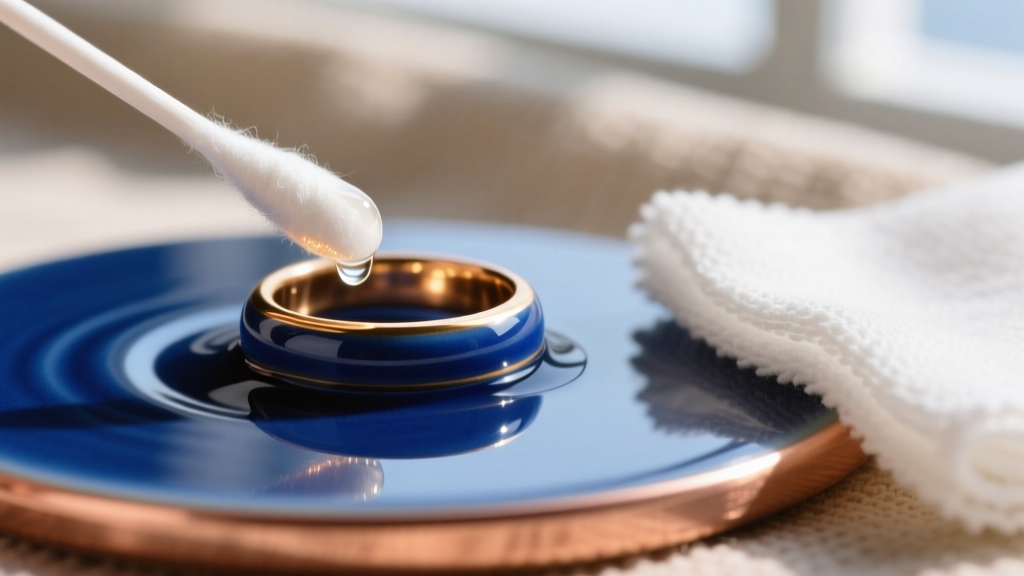
Step-by-Step Cleaning Protocol for Copper and Enamel Jewelry
To safely clean copper and enamel jewelry without causing cross-contamination of chemicals, you must employ a two-phase, localized approach. This method ensures the enamel is protected while the copper is restored.
Phase 1: Gentle Degreasing (Safe for Both Materials)
Skin oils, lotions, and environmental dust accumulate on both the enamel and the copper, creating a barrier that accelerates tarnish.
- Prepare the Solution: Mix a few drops of pH-neutral, phosphate-free dish soap (like Dawn or Seventh Generation) into a bowl of lukewarm distilled water. Avoid tap water, as dissolved minerals and chlorine can leave spots on the enamel.
- Agitate Gently: Dip an extra-soft baby hair toothbrush into the solution. Gently brush the enamel surfaces and the copper borders. Do not scrub aggressively, as trapped dirt particles can act as an abrasive against cold enamel.
- Rinse and Dry: Rinse the piece under a slow stream of distilled water. Immediately pat dry with a lint-free microfiber cloth, followed by a blast of compressed air to remove moisture trapped in the crevices between the copper and the enamel.
Phase 2: Targeted Copper Tarnish Removal (The Masking Method)
Once the piece is degreased and completely dry, you can address the oxidized copper borders. Never submerge the piece.
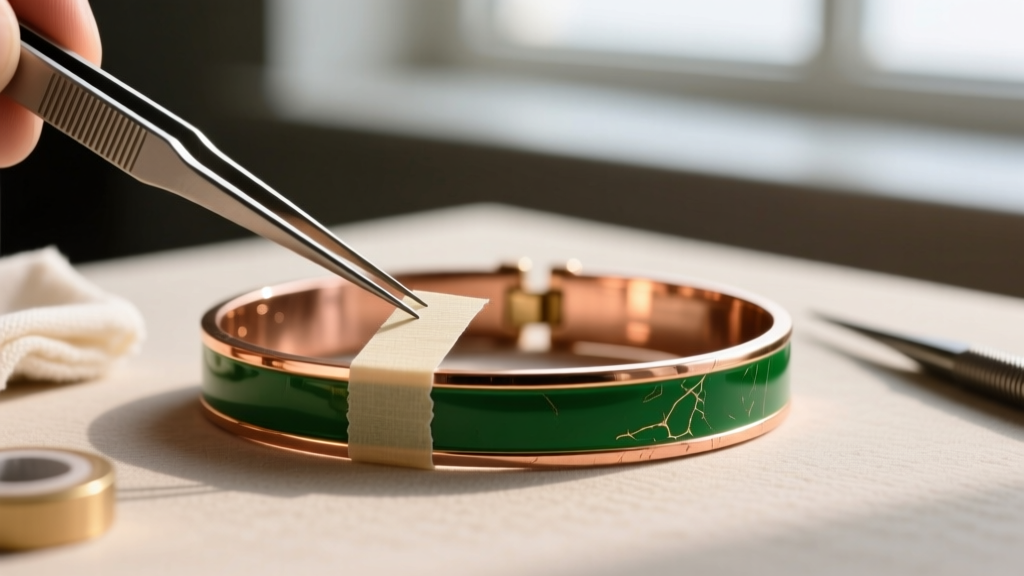
- Mask the Enamel: Apply a thin, protective barrier over the enamel. For flat surfaces, use delicate painter's tape. For curved or guilloché surfaces, apply a light coating of petroleum jelly (Vaseline) using a cotton swab. This prevents accidental chemical crossover.
- Prepare the Copper Polish: For vitreous enamel pieces, create a mild paste of baking soda and fresh lemon juice. For cold enamel pieces, use only baking soda and distilled water (the acid in lemon juice can eat into resin if the mask fails).
- Apply Locally: Dip a wooden cotton swab or a pointed felt polishing stick into the paste. Carefully rub the exposed copper borders. The mild abrasive action of the baking soda will lift the cuprite tarnish without scratching the copper.
- Neutralize and Reveal: Wipe away the paste and the masking agent with a damp microfiber cloth. Buff the copper to a high shine with a dry, untreated jeweler's rouge cloth.
What to Absolutely Avoid: The Enamel Killers
When caring for copper and enamel jewelry, avoiding destructive practices is just as critical as knowing the correct cleaning methods. Keep your pieces far away from the following:
- Ultrasonic Cleaners: The high-frequency cavitation bubbles can shatter vitreous enamel and literally shake cold enamel out of its copper bezel.
- Commercial Silver/Copper Dips (e.g., Tarn-X): These contain thiourea and strong acids that will permanently etch cold enamel and leave a white, cloudy film on vitreous glass.
- Brasso or Heavy Metal Polishes: These contain harsh abrasives and ammonia. Ammonia will rapidly degrade the chemical bonds in cold epoxy resins, turning them yellow and brittle.
- Steam Cleaners: The sudden, intense heat can cause thermal shock, leading to 'crazing' (a network of fine cracks) in vitreous enamel, and will melt cold enamel instantly.
Long-Term Storage and Patina Management
Copper is notoriously prone to tarnishing, but you can drastically slow this process through proper storage. The enemy of copper is sulfur and moisture. Never store copper and enamel jewelry in cardboard boxes, wrapped in rubber bands, or near wool fabrics, as all of these emit sulfur compounds that trigger rapid blackening.
Expert Tip: Store your copper and enamel pieces in individual, airtight polyethylene ziplock bags alongside a 3M Anti-Tarnish strip and a small silica gel desiccant packet. This creates a micro-climate that neutralizes airborne sulfur and absorbs ambient moisture, keeping the copper borders bright for months without the need for polishing.
Expert Troubleshooting: Fixing Cloudy Enamel and Stubborn Tarnish
Even with careful maintenance, accidents happen. Here is how to troubleshoot common issues specific to copper and enamel jewelry:
Cloudy or Scratched Cold Enamel
If your cold enamel has lost its glass-like shine due to micro-scratches or chemical haze, do not use metal polish. Instead, use a specialized plastic polish like Novus 2 (Fine Scratch Remover). Apply a tiny drop to a soft cotton pad and buff the enamel in tight, circular circles. This will re-level the polymer surface and restore optical clarity without harming the adjacent copper.
Enamel Lifting or Flaking at the Edges
If you notice the enamel lifting away from the copper bezel, stop cleaning immediately. This is usually caused by 'creep'—copper oxide forming underneath the enamel lip due to trapped moisture, which expands and pushes the enamel upward. This cannot be fixed at home. The piece must be sent to a professional enamelist who will carefully remove the compromised enamel, pickle the copper base in a mild citric acid bath to remove the sub-surface oxidation, and re-fire or re-pour the enamel.
By respecting the distinct physical and chemical properties of both materials, you can ensure your copper and enamel jewelry remains vibrant, structurally sound, and visually striking for generations.


