Wire Copper Jewelry: 2026 Pricing, Value & Buying Guide
Discover the true value of wire copper jewelry in 2026. We break down pricing tiers, wire gauges, artisan labor costs, and quality markers.

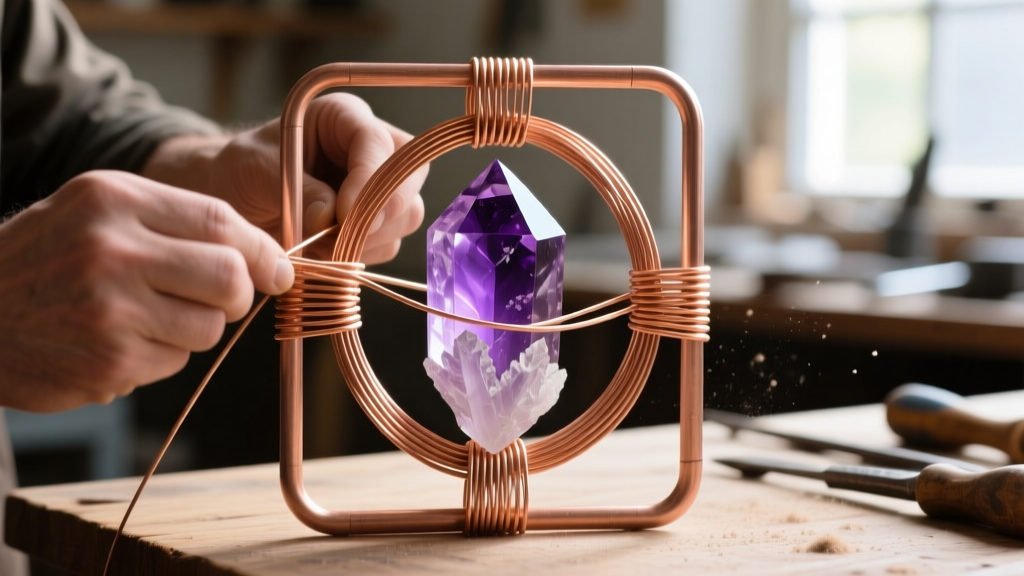
The Real Cost of Wire Copper Jewelry: Material vs. Labor
When evaluating wire copper jewelry, buyers often experience a moment of sticker shock. Copper, as a raw commodity, is relatively inexpensive. In 2026, jewelry-grade C110 (Electrolytic Tough Pitch) copper wire costs roughly $4 to $6 per ounce. So why does a hand-woven copper pendant cost $120, while a stamped brass pendant costs $15? The answer lies in the profound difference between material costs and artisan labor. Unlike cast jewelry, which can be mass-produced in molds, authentic wire-woven copper jewelry is an exercise in structural engineering and manual dexterity. Every loop, coil, and weave is manipulated by hand, requiring specialized tools, deep metallurgical knowledge, and dozens of hours of focused labor.
According to industry suppliers like Rio Grande, copper wire used in jewelry is typically 99.9% pure. However, the value of the finished piece is rarely in the metal itself. It is in the temper manipulation, the precision of the flush cuts, and the architectural integrity of the weave. Understanding this distinction is the first step in accurately assessing the budget and long-term value of handcrafted copper wire art.
Decoding Wire Gauges: What You Are Actually Paying For
The American Wire Gauge (AWG) system dictates the thickness of the wire, which directly impacts both the durability of the piece and the time required to craft it. A master weaver uses a combination of thick base wires and micro-thin weaving wires. The thinner the wire, the more passes required to create a secure, aesthetically pleasing weave, exponentially increasing the labor time.
| AWG Size | Millimeter | Primary Usage | Impact on Value & Cost |
|---|---|---|---|
| 12 - 14 AWG | 2.05 - 1.62mm | Heavy frames, bangles, clasps | Requires heavy-duty tools; provides structural longevity. |
| 16 - 18 AWG | 1.29 - 1.02mm | Pendant bails, jump rings, links | Standard structural wire; balances strength and malleability. |
| 20 - 22 AWG | 0.81 - 0.64mm | Base wires for weaving, prongs | Versatile; requires precise tension control to avoid kinking. |
| 24 - 28 AWG | 0.51 - 0.32mm | Intricate coiling, micro-weaving | High labor cost; breaks easily if work-hardened too quickly. |
When you purchase a piece utilizing 26-gauge or 28-gauge weaving wire, you are paying for the artisan's patience. Weaving with micro-gauge wire over a 14-gauge frame can take four to six hours for a single pendant, as the weaver must constantly anneal (soften) the wire or risk it snapping from work-hardening.
2026 Market Pricing Tiers for Wire-Woven Copper
To accurately budget for wire copper jewelry, it is essential to recognize the three distinct market tiers currently dominating the landscape. Each tier offers a different value proposition based on finishing techniques and structural integrity.
Tier 1: Mass-Produced & Hobbyist ($15 - $40)
Pieces in this range are often imported or made by beginners. While the copper may be genuine, the finishing is usually lacking. You will frequently find sharp, protruding wire ends that snag on clothing, uneven tension in the weaves, and a lack of protective sealing. The value here is purely aesthetic and temporary; these pieces tend to lose their shape and tarnish rapidly.
Tier 2: Skilled Artisan ($60 - $150)
This is the sweet spot for genuine value. Artisans in this tier understand wire temper (using dead-soft for weaving and half-hard for frames). They use flush cutters and burr cups to ensure every wire end is tucked, filed, and burnished smooth against the frame. The stones are secured using mechanical tension and prongs, never glue. The pricing reflects a fair hourly wage for 3 to 6 hours of meticulous bench work.
Tier 3: Master Weaver & Sculptural ($180 - $400+)
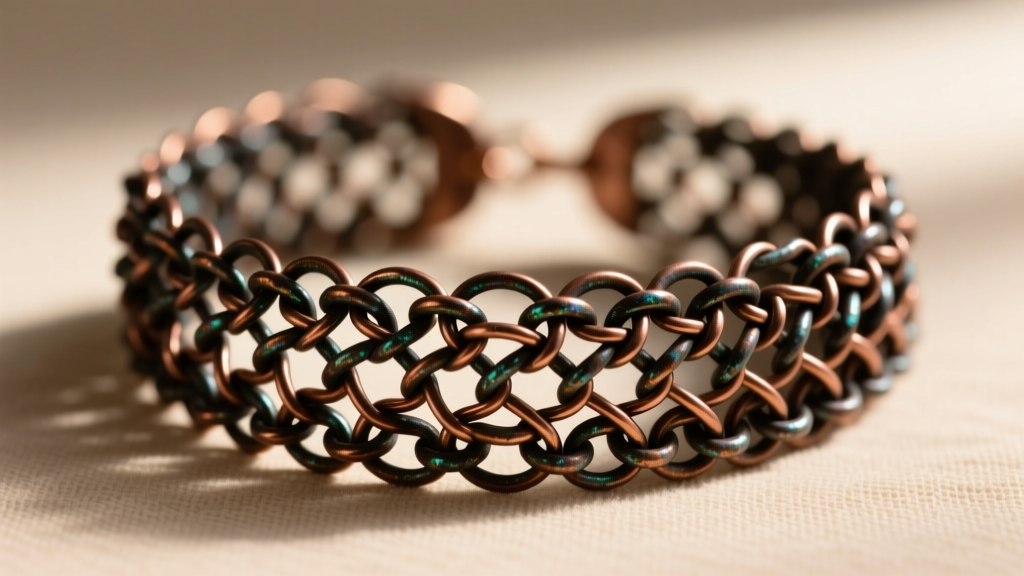
At the master level, wire copper jewelry transcends accessory status and becomes wearable sculpture. These pieces feature complex, multi-layered weaves (such as Persian or Dragonscale maille integrated with woven elements), custom-forged copper elements, and advanced patina work. The value is driven by the artisan's decades of experience and the sheer volume of labor, often exceeding 15 hours per piece.
Expert Insight: Never judge the price of hand-woven copper by the weight of the metal. You are purchasing a textile made of metal, where every single thread is placed by human hands.
The 'Hourly Rate' Math: Assessing Fair Value
To demystify the pricing of handcrafted wire copper jewelry, let us break down the actual cost to produce a high-quality, medium-sized woven pendant in 2026:
- Materials: 1.5 oz of C110 copper wire + 1 cabochon stone = $12.00
- Labor (Weaving & Shaping): 4 hours at a modest $25/hr artisan rate = $100.00
- Finishing (Tumbling, Patina, Polishing): 1 hour = $25.00
- Sealing & Packaging: ProtectaClear coating + eco-box = $6.00
- Overhead (Tools, workspace, marketing): 15% markup = $21.45
Total Fair Retail Price: $164.45
When you see a masterfully woven copper pendant priced around $150, you are looking at a highly ethical price point where the artisan is barely making a living wage. Anything significantly cheaper usually indicates compromised finishing, glued stones, or exploited overseas labor.
Long-Term Value: Tarnish, Patina, and Sealing
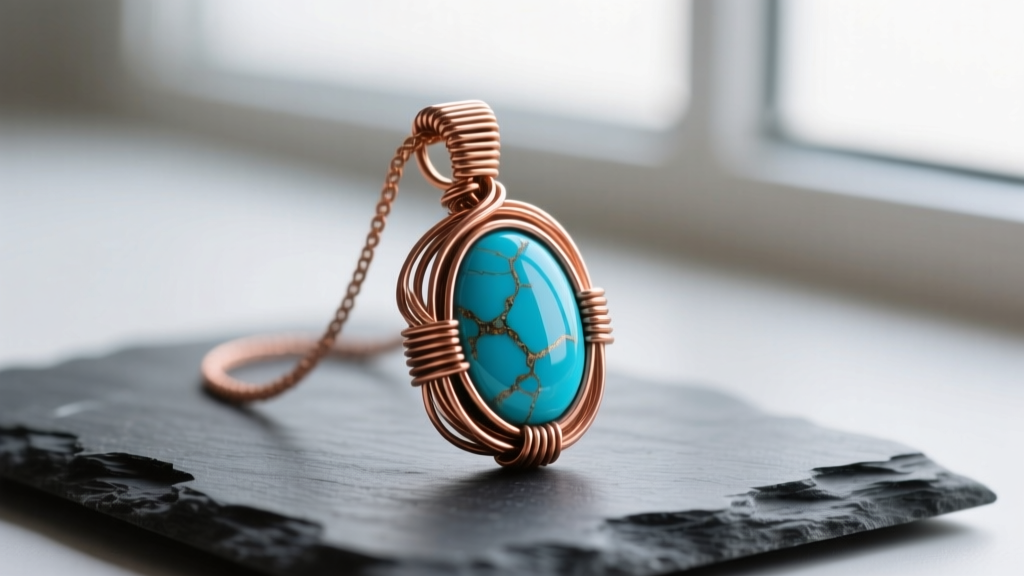
The greatest detractor from the long-term value of copper jewelry is its reactivity. Bare copper oxidizes rapidly when exposed to the salts and acids in human skin, often leaving a harmless but undesirable green residue. How an artisan handles this oxidation dictates the piece's longevity and maintenance requirements.
According to metallurgical resources like Ganoksin, controlled oxidation using Liver of Sulfur creates a stable, dark patina that highlights the texture of the wire weave. However, this patina must be sealed. High-value wire copper jewelry will always feature a professional sealant. Look for pieces treated with ProtectaClear, Everbrite, or multiple coats of Renaissance Wax. These sealants add a micro-thin, invisible barrier that prevents skin discoloration and preserves the polished high-points of the copper for years. If a seller cannot tell you how their copper jewelry is sealed, it is a major red flag for long-term value retention.
How to Verify Artisan Pricing (Red Flags & Green Lights)
When budgeting for your next wire copper jewelry acquisition, use this quick diagnostic checklist to ensure your money is going toward quality craftsmanship rather than inflated brand names or sloppy work.
Red Flags (Walk Away)
- Visible Glue: Wire wrapping is a mechanical art. If you see epoxy or glue securing the stone, the structural integrity is compromised.
- Snag-Test Failure: Run a piece of silk or thin cotton over the weave. If it catches on microscopic wire burrs, the artisan skipped the burnishing and tumbling stages.
- Uniform Machine Weaves: If the weave looks perfectly, mathematically uniform without the slight, organic tension variations of handwork, it may be machine-stamped and falsely marketed as handcrafted.
Green Lights (Worth the Investment)
- Tucked and Burnished Ends: All terminal wire ends should be filed flush and hammered or burnished seamlessly into the base wire.
- Work-Hardened Frames: The structural loops and bails should feel rigid and spring back slightly if gently pressured, indicating proper work-hardening or half-hard wire usage.
- Documented Sealing: The artisan provides care instructions detailing the specific sealant used and how to reapply wax or polish the piece over time.
Final Verdict: Budgeting for Copper Wire Art
Wire copper jewelry offers an unparalleled intersection of warmth, intricate design, and accessibility. While it will never hold the intrinsic melt-value of gold or platinum, its value as a medium of wearable, handcrafted art is immense. By shifting your budget assessment away from the raw commodity cost and toward the gauge complexity, finishing quality, and artisan labor hours, you can confidently invest in pieces that will remain structurally sound and visually breathtaking for decades.