How to Safely Clean and Inspect Diamond Studded Jewelry
Learn how to safely clean and inspect diamond studded jewelry at home. Follow our expert step-by-step guide to restore brilliance and prevent stone loss.

The Hidden Risks of Diamond Studded Jewelry
Diamond studded jewelry—whether it features intricate pavé, channel-set baguettes, or micro-prong halos—represents a significant financial and emotional investment. Over time, the natural brilliance of these stones is compromised not by the diamond itself, but by environmental buildup. Diamonds are inherently lipophilic, meaning they readily attract and hold onto sebum, lotions, and cosmetic residues. This microscopic film lowers the stone's effective refractive index, making a once-fiery diamond look dull and lifeless. Furthermore, the complex metalwork required to secure dozens of tiny stones in studded designs creates numerous crevices where debris accumulates, potentially leading to skin irritation and accelerated metal wear.
Unlike solitaire settings, where a single large stone is held by four to six robust prongs, diamond studded jewelry relies on micro-beads, shared prongs, or tension channels. These delicate structural elements require a meticulous, step-by-step approach to cleaning and inspection. Using the wrong tools or harsh chemicals can lead to catastrophic failures, including lifted beads, lost stones, and stress corrosion cracking in gold alloys. This comprehensive guide will walk you through the professional methodology for maintaining your pieces at home, ensuring they remain secure and brilliant for decades.
Essential Tools for Home Maintenance
Before you begin the cleaning process, you must assemble the correct tools. Professional jewelers and gemologists at the Gemological Institute of America (GIA) emphasize that improper tools are the leading cause of accidental damage during home cleaning.
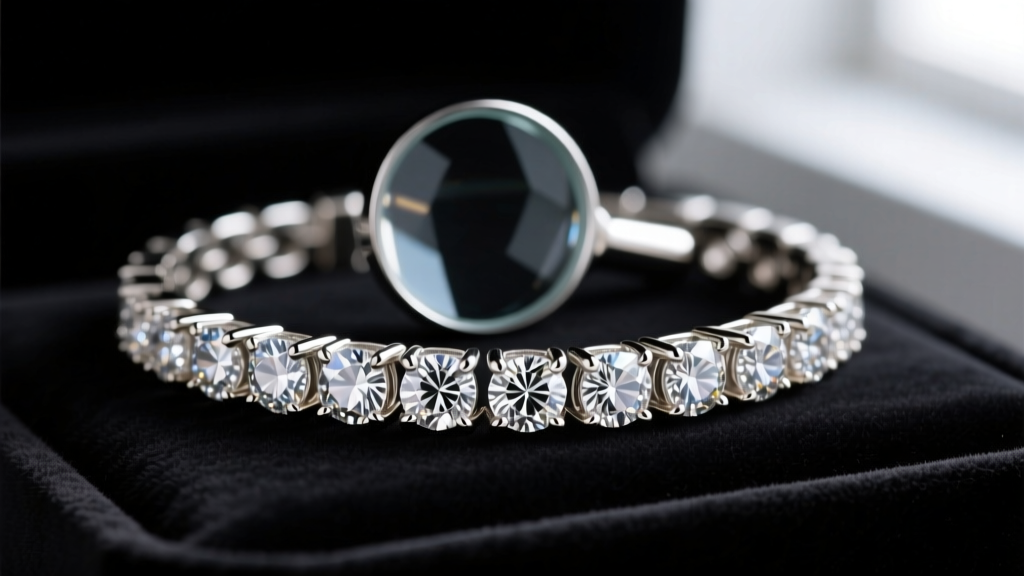
- 10x Triplet Loupe: A high-quality, aplanatic and achromatic loupe is non-negotiable. It corrects edge distortion and color fringing, allowing you to accurately inspect micro-prongs and pavé beads for structural integrity.
- Soft-Bristled Baby Toothbrush: Adult toothbrushes, even those labeled 'soft', possess bristles that are too rigid and can leave microscopic scratches on high-polish gold or platinum settings. A baby toothbrush provides the necessary flexibility to navigate tight under-galleries.
- Mild Degreasing Dish Soap: A simple, clear dish soap (like Dawn) is ideal. Avoid soaps with added moisturizers or heavy fragrances, which leave a secondary film on the stones.
- Distilled Water: Tap water contains dissolved minerals like calcium and magnesium that can leave hard water spots on your diamonds as they dry.
- Mesh Strainer or Bowl Stopper: A critical safety measure to prevent accidental loss down the drain during the rinsing phase.
- Lint-Free Microfiber Cloth: Standard tissues or paper towels contain wood fibers that can snag on micro-prongs and leave lint trapped beneath the stones.
The Pre-Cleaning Inspection Protocol
Never submerge diamond studded jewelry in any liquid without first conducting a thorough structural inspection. If a stone is already loose, the surface tension of the water and the subsequent brushing can dislodge it entirely, leading to a lost diamond.
Step 1: Visual Tactile Test
Gently run a wooden toothpick or a specialized wax-tipped gemologist tool across the surface of the pavé or channel-set stones. Do not use metal tweezers, as they can scratch the diamonds or bend the precious metal beads. If you feel any 'clicking', catching, or notice a stone that shifts even a fraction of a millimeter, the piece is structurally compromised. Stop immediately and take it to a professional bench jeweler.
Step 2: Loupe Examination
Using your 10x triplet loupe, examine the metal beads or micro-prongs holding each stone. Look for 'lifted beads' where the metal has worn thin and no longer overlaps the girdle of the diamond. In channel settings, check for 'galloping'—a term used when stones are no longer perfectly aligned and are putting uneven pressure on their neighbors. Inspect the under-gallery (the basket beneath the stones) for packed, hardened debris that might be pushing the stones upward from below.
Step-by-Step Cleaning Process
Once you have confirmed that all stones are secure and the metalwork is intact, you can proceed with the degreasing and cleaning process. This method is safe for untreated, natural, and lab-grown diamonds set in platinum, white gold, yellow gold, or rose gold.
Step 1: The Degreasing Soak
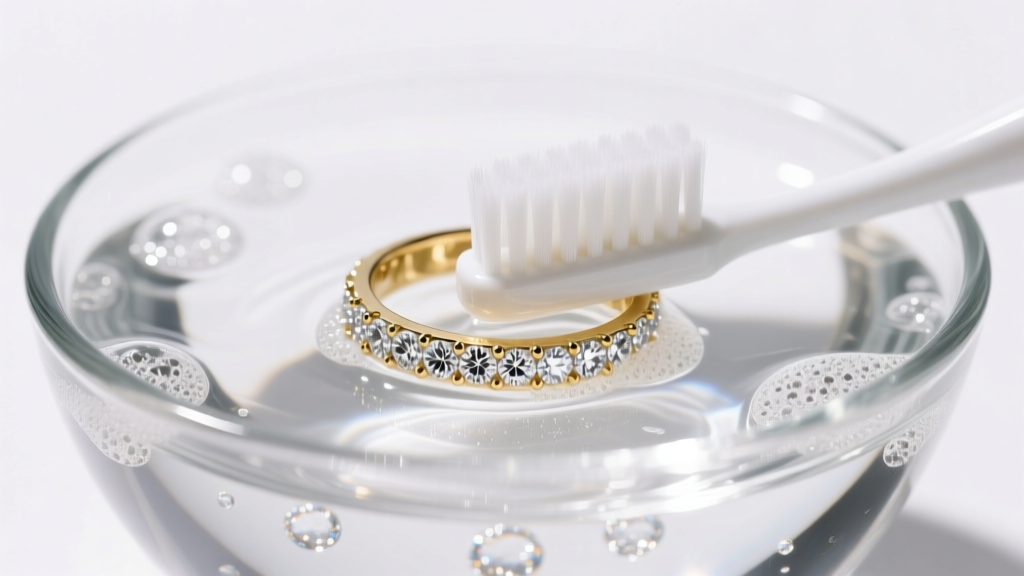
Fill a small glass or ceramic bowl with warm—not hot—distilled water. Add three to four drops of mild dish soap and agitate to create suds. Submerge your diamond studded jewelry and let it soak for 30 to 45 minutes. This extended soak is crucial for studded pieces, as it allows the surfactants in the soap to break down the hardened sebum and cosmetic oils trapped in the microscopic gaps between the diamonds and the metal setting. Avoid using hot water, as sudden thermal shocks can fracture diamonds with heavy internal inclusions.
Step 2: Targeted Agitation
Remove the piece from the soak and use your baby toothbrush to gently agitate the surface. The technique here is vital: hold the brush at a 45-degree angle and use short, flicking motions directed away from the setting. You want to push debris out from under the girdle of the stone, not pack it deeper into the setting. Pay special attention to the under-gallery, brushing from the back of the piece to push dirt out through the top. For intricate pavé work, use the very tip of the bristles to gently sweep between the metal beads.
Step 3: The Safe Rinse and Dry
Place a mesh strainer in the bottom of your sink or use a dedicated jewelry rinsing bowl. Rinse the piece thoroughly under a gentle stream of lukewarm distilled water to remove all soap residue. Pat the piece dry with a lint-free microfiber cloth. Avoid rubbing the cloth directly against pavé settings; instead, use a blotting motion to absorb moisture. Finally, use a hair dryer on the 'cool' setting to blow out any remaining water droplets trapped beneath the stones.
Ultrasonic and Steam Cleaners: A Risk Matrix
Many consumers assume that ultrasonic and steam cleaners are the ultimate solution for diamond studded jewelry. While they are highly effective for certain pieces, they pose severe risks to specific treatments and setting styles. The high-frequency vibrations of an ultrasonic cleaner can shake loose stones from worn pavé beads, while the intense heat and pressure of a steam cleaner can shatter fracture-filled diamonds. Below is a risk matrix to help you determine if mechanical cleaning is appropriate for your specific piece.
| Setting Type / Treatment | Ultrasonic Safe? | Steam Safe? | Expert Notes |
|---|---|---|---|
| Standard Prong (Untreated) | Yes | Yes | Ensure prongs are verified tight before use. |
| Pavé / Micro-Prong | No | No | Vibrations easily loosen micro-beads; use manual cleaning. |
| Channel-Set | Caution | Yes | Only if channels are new; vibrations can misalign stones. |
| Fracture-Filled | No | No | Acids and vibrations will cloud or destroy the glass filler. |
| Laser-Drilled | Yes | Yes | Ensure no residual chemicals are trapped in the drill channels. |
| White Gold (Unplated) | Yes | Caution | Repeated steam cleaning can accelerate rhodium wear. |
For a deeper understanding of how clarity enhancements affect diamond durability, refer to the GIA Diamond Treatments Guide. When in doubt, manual cleaning with a soft brush and mild soap is always the safest route for complex studded designs.
When to See a Professional Bench Jeweler
While home maintenance is excellent for removing daily oils and superficial dirt, it cannot replace professional bench work. Diamond studded jewelry worn daily, such as engagement rings or tennis bracelets, should be professionally inspected and cleaned every six months.
'A professional jeweler doesn't just clean the piece; they use high-magnification microscopes to check for metal fatigue, stress fractures in the shank, and microscopic wear on the pavé beads that the naked eye cannot detect.' — Master Bench Jeweler Protocol
During a professional visit, the jeweler will also check the integrity of the ring's shank (the band itself), which can become dangerously thin over years of wear. If your piece is set in white gold, this is also the time to discuss rhodium re-plating, as the friction of daily wear will inevitably wear away the bright white surface layer, revealing the naturally yellowish alloy beneath. Proper storage is equally critical; always store diamond studded jewelry in individual soft-lined compartments to prevent the diamonds—which rank a 10 on the Mohs hardness scale—from scratching adjacent metal or softer gemstones.