Verify John Paradiso Diamond Jewelry: Appraisal Troubleshooting
Troubleshoot John Paradiso diamond jewelry appraisals and authenticity issues. Learn to verify hallmarks, resolve insurance gaps, and secure your investment.

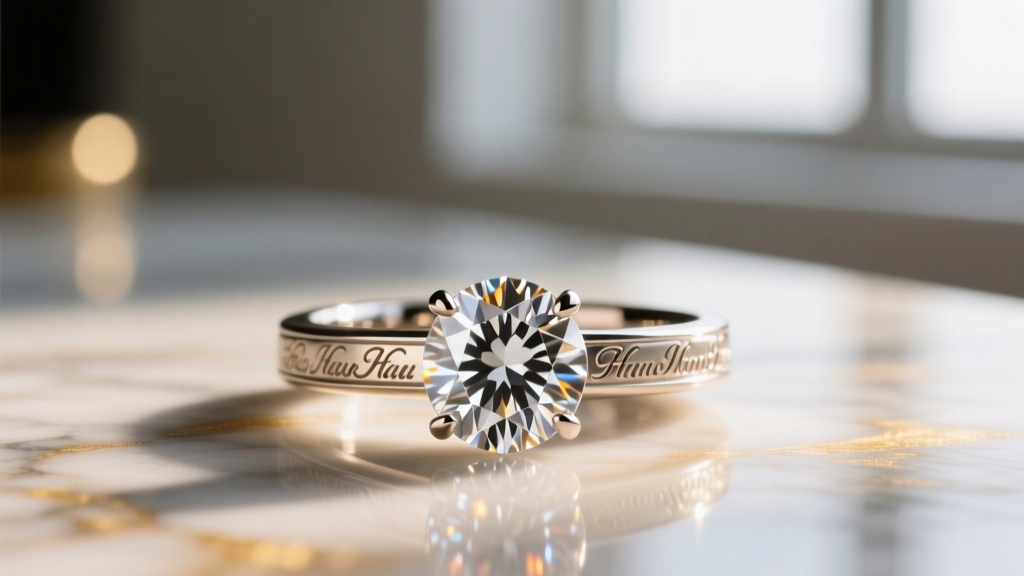
The Allure and Complexity of Bespoke Paradiso Pieces
Owning a piece of John Paradiso diamond jewelry is a distinct privilege. Renowned for meticulous craftsmanship, vintage-inspired millgrain detailing, and an uncompromising approach to diamond selection, Paradiso’s creations occupy a unique space in the luxury market. However, when it comes time to insure, resell, or authenticate these bespoke pieces, owners frequently encounter significant roadblocks. Standard retail appraisal methods often fail to capture the true replacement cost or nuanced provenance of custom high-end jewelry.
As of 2026, the secondary market for bespoke luxury jewelry has surged, and insurance companies have tightened their underwriting requirements. If you have inherited, purchased secondhand, or are simply updating the insurance policy on your John Paradiso diamond jewelry, you must approach the process with a troubleshooting mindset. This guide will help you navigate appraisal discrepancies, authenticate hidden hallmarks, and resolve certification mismatches without compromising the integrity of your piece.
Troubleshooting Appraisal Discrepancies
The most common issue owners face is a severe undervaluation by local retail jewelers. A standard mall jeweler may appraise a hand-forged Paradiso platinum setting using cast-setting replacement metrics, resulting in an insurance valuation that falls tens of thousands of dollars short of the actual cost to recreate the piece from scratch.
The 'Replacement Value' vs. 'Fair Market Value' Trap
When troubleshooting a low appraisal, the first step is to verify the valuation methodology. Insurance requires an 'Insurance Replacement Value' (IRV), which calculates the cost to recreate the exact item in the current retail market. Conversely, estate appraisers often default to 'Fair Market Value' (FMV), which reflects what a willing buyer would pay a willing seller in a secondary market—often 40% to 60% lower than IRV.

| Appraisal Type | Primary Use Case | Typical Paradiso Valuation Metric | Troubleshooting Red Flag |
|---|---|---|---|
| Insurance Replacement (IRV) | Homeowner's insurance riders | Custom bench-jeweler labor + premium diamond sourcing | Appraiser uses generic CAD/cast labor rates |
| Fair Market Value (FMV) | Estate tax, divorce settlements | Secondary auction market averages | Used for insurance submissions (will cause underinsurance) |
| Liquidation Value | Bankruptcy, immediate cash sale | Scrap metal + wholesale diamond melee pricing | Presented as a standard retail appraisal |
To fix this, you must explicitly instruct your appraiser to use IRV and require them to itemize the bench-jeweler labor hours required for hand-engraving and millgrain application, which are hallmarks of Paradiso's style. According to the Jewelers of America, a qualified appraiser must possess specific gemological credentials and adhere to strict uniform standards to accurately price bespoke labor.
Authenticating the Maker's Mark and Provenance
Authentication is a critical troubleshooting step, especially for estate pieces lacking original receipts. High-end bespoke jewelers do not always stamp their marks in obvious locations. While mass-market brands stamp the inner shank, custom artisans sometimes place their hallmarks on the gallery wire, beneath the basket, or along the outer edge of the shank to preserve the comfort-fit interior.
Identifying the Paradiso Hallmark
When verifying John Paradiso diamond jewelry, look for a distinct maker's mark, often a stylized 'JP' or the full 'Paradiso' stamp, alongside a precious metal purity mark (e.g., '950Pt' or '18K'). If the inner shank is worn smooth from decades of use, the stamp may have been polished away during previous refinishing.
Expert Troubleshooting Tip: If the primary hallmark is missing, request a microscopic inspection of the solder joints and the interior of the diamond gallery. Master jewelers often leave microscopic tool marks or secondary serial stamps in these hidden areas that can be cross-referenced with the artisan's archive records.
Resolving Certification Mismatches
A frequent point of friction occurs when the diamond grading report provided with the jewelry does not align with modern grading standards, or when the certificate number cannot be verified. Older Paradiso estate pieces may be accompanied by legacy EGL, AGS, or in-house appraisal documents rather than modern GIA dossiers.

If your insurance provider demands a modern Gemological Institute of America (GIA) report for a center stone currently set in a complex Paradiso bezel or tension setting, you face a physical troubleshooting dilemma. Sending a mounted stone to a lab limits the grading scope, as the setting obscures the pavilion and exact carat weight.
- Step 1: Check the Girdle. Use a 30x loupe or microscope to scan the diamond's girdle for a laser-inscribed GIA report number. If present, you can match it to the GIA online database without unmounting the stone.
- Step 2: Evaluate the Setting Risk. If the stone must be unmounted for an exact carat weight and clarity grade, consult a master bench jeweler. Hand-forged platinum prongs can often be carefully lifted and re-tipped, but cast white gold prongs on vintage-style halos may snap and require complete reconstruction.
- Step 3: Accept a 'Mounted' Grading. If unmounting poses too high a risk to the custom setting, request a GIA 'Mounted Diamond Grading Report.' While it provides a slightly broader clarity and color range (e.g., 'VVS1-VVS2' instead of a single grade), it is usually sufficient for high-value insurance riders.
Maintenance Troubleshooting: Prong Wear and Metal Fatigue
Bespoke settings age differently than mass-produced jewelry. John Paradiso frequently utilizes 950 platinum alloyed with ruthenium or cobalt for superior durability and a bright white finish. However, the intricate hand-cut prongs used to secure melee diamonds in halos and pavé bands are susceptible to localized wear.
If you notice a melee diamond spinning or sitting crooked, do not attempt to push the prong back with household tools. The troubleshooting protocol for custom pavé requires a jeweler to use a microscope and a specialized beading tool to re-seat the stone and re-burnish the platinum bead over the girdle. Standard 'prong tightening' pliers will crush the delicate millgrain detailing adjacent to the prong, permanently destroying the vintage aesthetic of the piece.
Final Checklist for Insurance Submission
Before submitting your documentation to your insurance underwriter, run through this final troubleshooting checklist to prevent claim denials:
- Ensure the appraisal explicitly states 'Insurance Replacement Value' and is dated within the last 24 months.
- Verify that the center stone's exact measurements (to the hundredth of a millimeter) and carat weight are listed.
- Confirm that high-resolution macro photographs of the piece, showing the unique gallery and any hidden hallmarks, are attached to the appraisal document.
- Check that the appraiser's gemological credentials (e.g., GIA GG, ASA) are clearly printed and signed.
By understanding the specific construction, hallmarking, and valuation nuances of custom luxury pieces, you can effectively troubleshoot any appraisal or authentication issue, ensuring your investment remains fully protected and accurately documented for generations to come.