What Is Moissanite Jewelry? Identifying and Troubleshooting Your Stone
Asking what is moissanite jewelry? Learn how to identify moissanite, troubleshoot cloudiness, fix the disco ball effect, and maintain your stone.

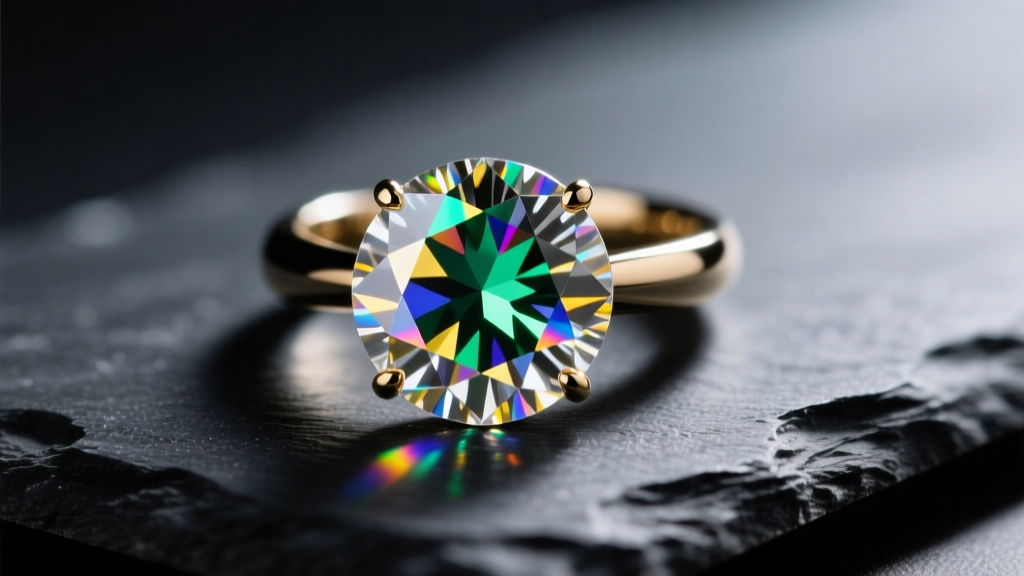
When consumers first ask, 'what is moissanite jewelry?', they are usually holding a stunning, fiery gemstone and trying to figure out its origins, or they are experiencing a specific visual quirk that diamonds simply do not exhibit. Moissanite is not a diamond simulant meant to deceive; it is a premium, lab-created gemstone with its own unique optical and physical properties. However, because it is frequently set in engagement rings and fine jewelry, owners often run into troubleshooting scenarios ranging from identification confusion to maintenance challenges.
If you are trying to identify a mystery stone, or if your known moissanite ring is exhibiting excessive rainbow flashes, surface cloudiness, or setting wear, this comprehensive troubleshooting guide will provide the gemological data and actionable solutions you need.
The Core Science: What is Moissanite Jewelry Exactly?
To troubleshoot moissanite, you must first understand its chemical makeup. Moissanite is composed of silicon carbide (SiC). Originally discovered in 1893 by French chemist Henri Moissan in a meteorite crater, natural moissanite is incredibly rare. Therefore, virtually all moissanite jewelry on the market today is lab-created. According to the Gemological Institute of America (GIA), lab-grown silicon carbide is synthesized using the Lely process, which involves sublimating SiC powder at extreme temperatures to form large, facetable crystals.
Unlike cubic zirconia (ZrO2), which is a soft, porous material that degrades over time, silicon carbide is exceptionally hard and durable. This fundamental difference in crystal structure dictates how the stone interacts with light, heat, and everyday chemicals.
Troubleshooting Identification: Is It Moissanite, Diamond, or CZ?
The most common problem jewelers face is a client bringing in a stone they believe is a diamond, only to discover it is moissanite. Basic thermal diamond testers are notoriously unreliable here because both diamond and moissanite possess exceptional thermal conductivity. To accurately identify the stone, you must look at optical and electrical properties.
The Doubling Effect (Birefringence)
Diamonds are singly refractive (isotropic), meaning light passes through them uniformly. Moissanite is doubly refractive (anisotropic). If you use a 10x jeweler's loupe and look through the table (top facet) down toward the pavilion (bottom facets), you will see a 'doubling' of the facet junction lines in moissanite. This is a dead giveaway that the stone is not a diamond.
Electrical Conductivity Testing
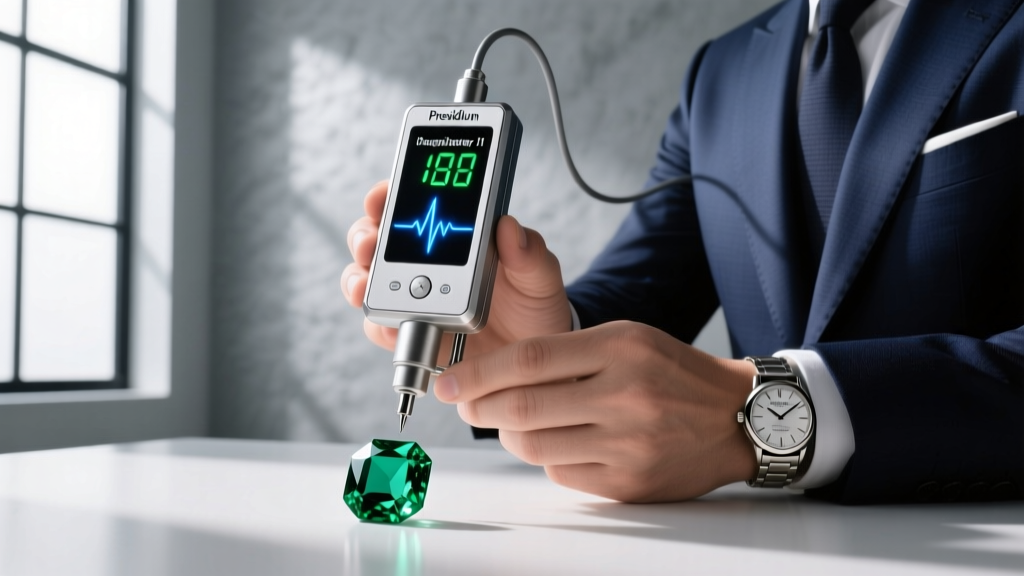
Because thermal testers fail, you must use a multi-tester, such as the Presidium DuoTester II. Moissanite is a semiconductor due to trace impurities introduced during lab growth, meaning it conducts electricity. Diamond (with the rare exception of natural blue boron-doped diamonds) is an electrical insulator. If the tester registers electrical conductivity, the stone is moissanite.
Gemological Comparison Matrix
| Property | Moissanite (SiC) | Natural/Lab Diamond | Cubic Zirconia (CZ) |
|---|---|---|---|
| Mohs Hardness | 9.25 | 10.0 | 8.0 - 8.5 |
| Refractive Index | 2.65 - 2.69 | 2.42 | 2.15 - 2.18 |
| Dispersion (Fire) | 0.104 | 0.044 | 0.058 - 0.066 |
| Electrical Conductivity | Yes (Semiconductor) | No (Insulator) | No (Insulator) |
Common Moissanite Problems and Actionable Fixes
Once you have definitively answered the question of what is moissanite jewelry and confirmed your stone's identity, you may need to address visual or structural issues that arise during daily wear.
Problem 1: The 'Disco Ball' Rainbow Flash
The Issue: Moissanite has a dispersion rate of 0.104, which is more than double that of a diamond (0.044). In larger stones (over 1.5 carats) with a traditional 'Hearts and Arrows' round brilliant cut, this high dispersion creates intense, colorful rainbow flashes in direct sunlight. Many wearers find this 'disco ball effect' distracting or feel it makes the stone look artificial.
The Solution: If you are purchasing a new stone and want to minimize rainbow fire, avoid standard round brilliant cuts. Instead, opt for a Crushed Ice faceting pattern or an Antique/Old European Cut. These facet arrangements scatter light internally, breaking up the rainbow flashes and creating a softer, more diamond-like white light return. Alternatively, step-cuts like the Emerald or Asscher cut naturally mask dispersion due to their long, linear facet planes.
Problem 2: Surface Cloudiness and Grease Attraction
The Issue: Unlike cubic zirconia, which clouds internally over time due to UV exposure and heat, moissanite does not degrade internally. If your moissanite looks cloudy or hazy, the problem is entirely on the surface. Silicon carbide is highly oleophilic (oil-attracting). It clings to skin oils, lotions, and cooking grease much more aggressively than diamond does, creating a cloudy film that blocks light.
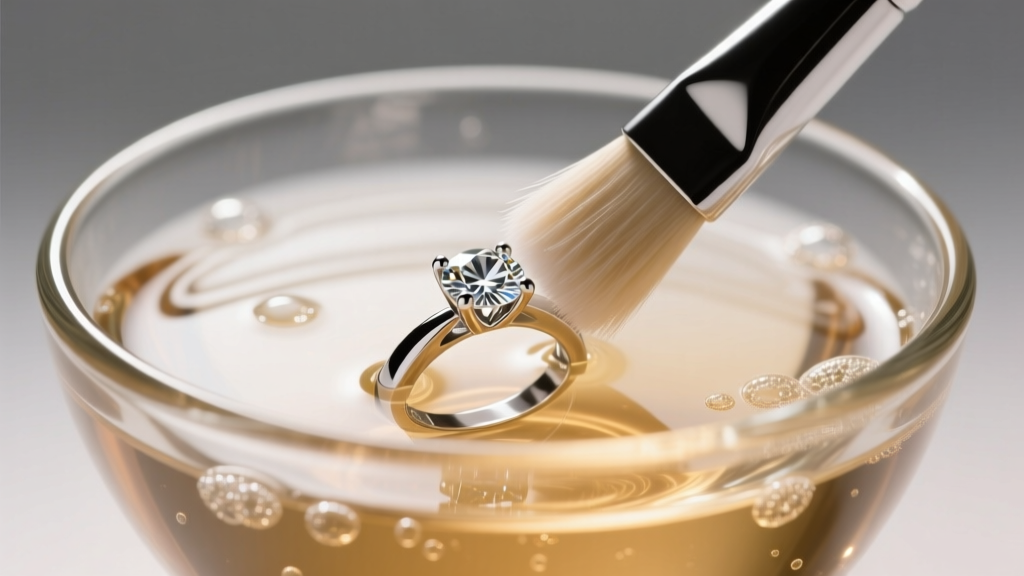
The Solution: Standard mild dish soap is often insufficient to break down the heavy grease film on moissanite. You need an ammonia-based cleaner. Mix a solution of one part household ammonia to three parts warm water. Soak the ring for 15 minutes, then use a soft-bristled baby toothbrush to gently scrub the pavilion (underside) of the stone, where oil accumulates thickest. Rinse thoroughly and dry with a lint-free microfiber cloth.
Problem 3: Girdle Chipping and Prong Wear
The Issue: While moissanite ranks at 9.25 on the Mohs scale, making it highly resistant to scratching, hardness is not the same as toughness. Moissanite has distinct cleavage planes. If the stone is cut with an extremely thin girdle (the outer edge where the setting grips the stone), a hard knock against a granite countertop can cause the edge to chip.
The Solution: When selecting a loose moissanite stone, always verify the girdle thickness on the grading report. Reject stones with 'Very Thin' or 'Extremely Thin' girdles. Insist on a 'Medium' to 'Slightly Thick' girdle. Furthermore, if you lead an active lifestyle, avoid delicate 4-prong cathedral settings. Upgrade to a 6-prong setting or a bezel setting, which completely encircles the vulnerable girdle edge in metal.
Long-Term Maintenance Framework
Keeping moissanite jewelry pristine requires a different approach than diamond care. Because of its high refractive index, even a microscopic layer of dust or fingerprint oil will drastically reduce the stone's brilliance. Implement this routine:
- Weekly: Wipe the stone with a clean, untreated jeweler's polishing cloth. Do not use chemically treated silver cloths, as the abrasives can micro-scratch the metal setting.
- Monthly: Perform the ammonia soak detailed above. Ultrasonic cleaners are perfectly safe for solid moissanite stones (as long as there are no internal fractures or fracture-filled treatments, which are rare but possible in low-grade stones).
- Annually: Take the jewelry to a professional bench jeweler for a prong check. While the moissanite will not scratch, the gold or platinum prongs holding it will wear down over time due to friction against clothing and other surfaces.
When to Seek Professional Gemological Help
If your stone has suffered a physical chip, do not attempt to polish it yourself. Moissanite requires specialized diamond-impregnated polishing laps and specific angles to maintain its optical symmetry. Take the piece to a lapidary who specializes in alternative gemstones. Additionally, if you are trying to insure your jewelry and the original documentation is lost, a certified gemologist can perform a definitive Raman spectroscopy test to confirm the silicon carbide signature, providing the exact data your insurance underwriter requires.
Understanding what is moissanite jewelry goes far beyond a simple definition. By respecting its unique optical physics and chemical properties, you can troubleshoot common issues, optimize its visual performance, and ensure it remains a brilliant, lifelong accessory.

