Decoding the Diamond Stamp on Jewelry: Trends & Value
Discover what a diamond stamp on jewelry means. Explore hallmark trends, authenticity markers, and how lab-grown diamonds change stamps.

The Anatomy of a Diamond Stamp on Jewelry
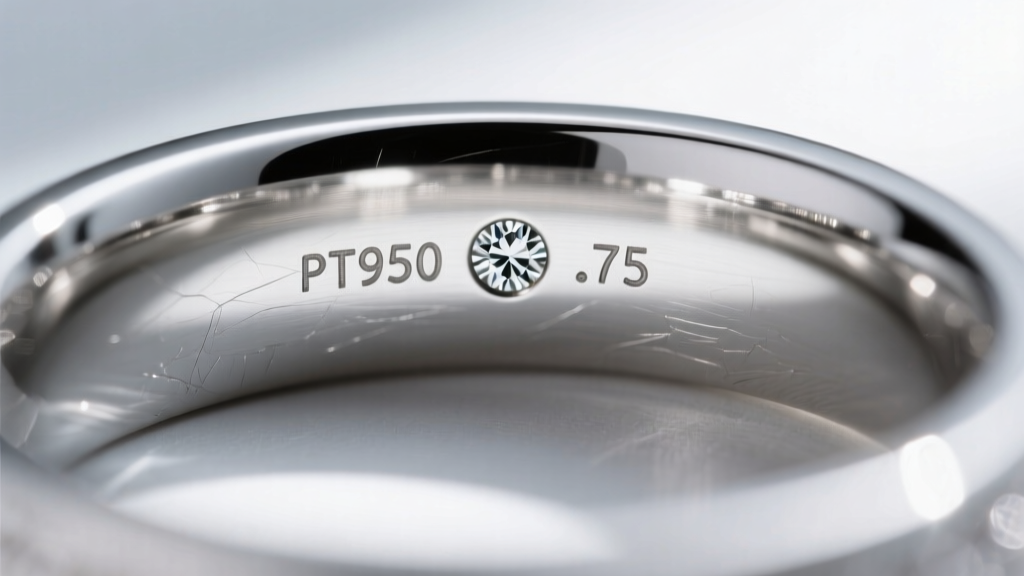
When you turn over a fine jewelry piece and squint at the inner shank, you are looking at a microscopic ledger of the item's identity, origin, and value. But what exactly does a diamond stamp on jewelry mean? Contrary to popular belief, there is no single universal 'diamond stamp' that guarantees a stone's authenticity. Instead, what consumers refer to as a diamond stamp is usually a combination of metal purity hallmarks, maker's marks, and carat weight engravings.
Understanding these microscopic engravings is critical for any jewelry collector or buyer. A standard stamp like '14K' or 'PT950' refers exclusively to the metal alloy, not the gemstone. However, you will often see secondary stamps adjacent to the metal hallmark. These might include 'SOL' (indicating a solitaire setting), 'TDW' (Total Diamond Weight), or a specific decimal carat weight like '.50' or '.75'. According to the Gemological Institute of America (GIA), these weight stamps are applied by the manufacturer or setter, not an independent gemological lab, meaning they represent the approximate weight of the stone at the time of setting rather than a certified, graded metric.
Vintage vs. Modern: Stamping Trends in 2026
The aesthetic and placement of jewelry stamps have evolved significantly, reflecting broader shifts in luxury fashion. In the mid-20th century, maker's marks and metal stamps were often placed prominently on the exterior lower shank or the gallery of a ring, serving as a badge of pride for the manufacturing house. Vintage European pieces, in particular, feature elaborate assay marks—such as the French eagle's head for 18k gold or the dog's head for platinum—stamped on the outside of the band.
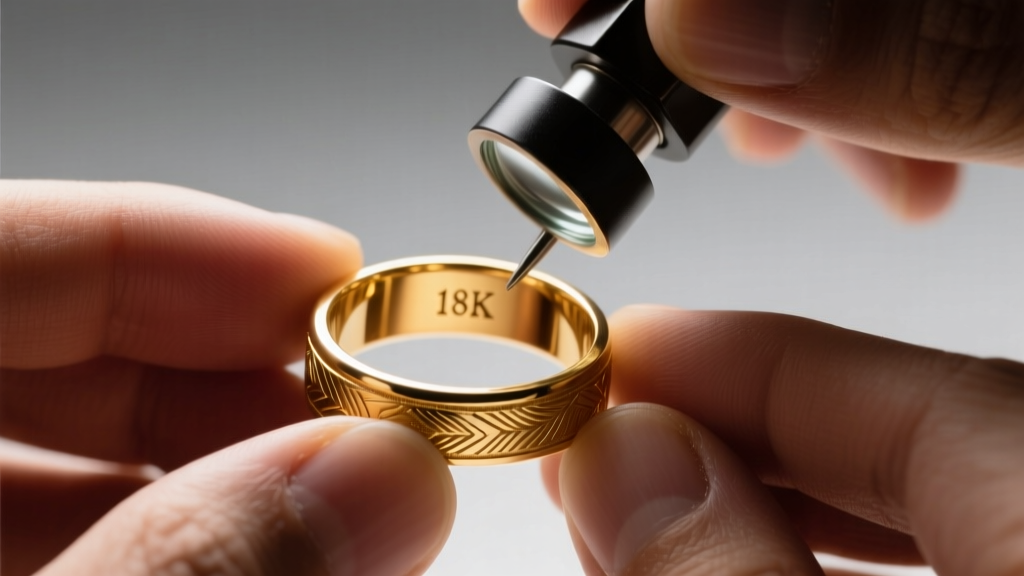
Fast forward to 2026, and the prevailing trend in high-end jewelry is 'stealth luxury.' Contemporary designers are increasingly moving all stamps, including diamond weight indicators and serial numbers, to the inner shank or hidden beneath the setting's gallery. This creates a clean, uninterrupted exterior silhouette. Furthermore, bespoke jewelers are now using micro-laser engraving to place intricate, custom maker's marks that are only visible under 10x magnification, turning the humble hallmark into an exclusive, hidden signature for the wearer.
The Lab-Grown Disruption: New Stamp Standards
The explosion of lab-grown diamonds (CVD and HPHT) has fundamentally disrupted how diamond jewelry is marked and identified. Because lab-grown diamonds possess the exact same physical and chemical properties as mined diamonds, a standard metal stamp on the ring shank cannot differentiate between the two. This has led to strict regulatory interventions and new stamping protocols.
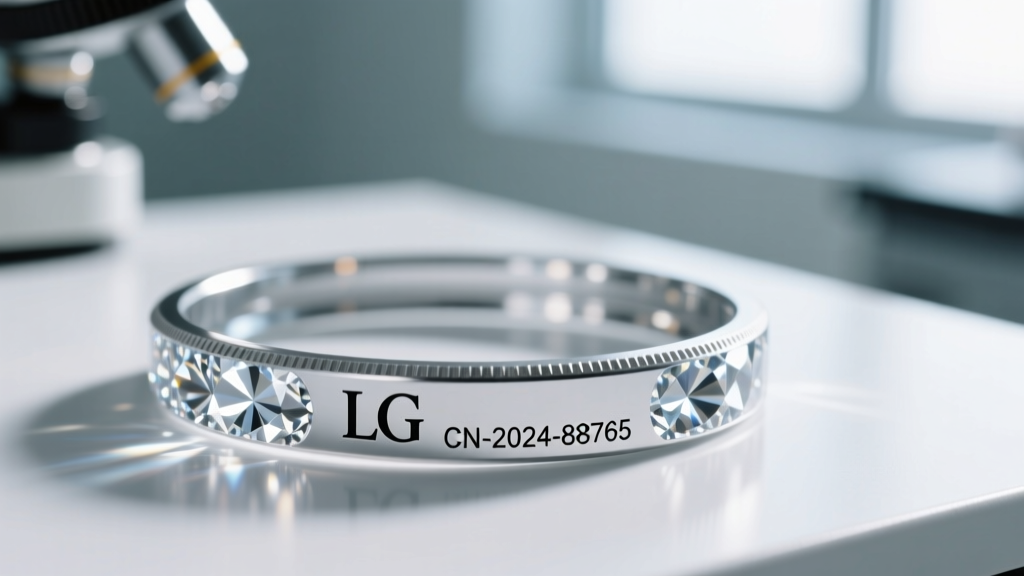
The Federal Trade Commission (FTC) mandates that lab-grown diamonds must be clearly disclosed to prevent consumer deception. While the metal shank might still read '18K' or 'PLAT', the true 'stamp' for a lab-grown diamond is found on the stone itself. Gemological laboratories like the IGI and GIA use microscopic laser inscriptions on the diamond's girdle (the narrow outer edge) to denote its origin. These inscriptions typically include the words 'LAB GROWN' or the prefix 'LG' alongside the certificate number.
| Feature | Natural Diamond Jewelry | Lab-Grown Diamond Jewelry |
|---|---|---|
| Metal Shank Stamp | 10K, 14K, 18K, PT950 | 10K, 14K, 18K, PT950 |
| Girdle Inscription | GIA/AGS Cert Number (Optional) | 'LG' or 'Lab Grown' + Cert Number (Mandatory) |
| Weight Stamp (.50, .75) | Common in commercial jewelry | Common, but must not imply natural origin |
| Resale Value Impact | Retains intrinsic commodity value | Lower resale; stamp prevents misrepresentation |
Spotting Fakes: When the Diamond Stamp Lies
One of the most common pitfalls for novice buyers is trusting a stamp blindly. The most notorious example in the industry is the '925' stamp paired with a diamond symbol or the word 'DIAMOND'. A '925' stamp indicates sterling silver. In the realm of fine jewelry, genuine, high-value diamonds are almost never set in sterling silver. Silver is too soft to securely hold a valuable diamond over decades of wear, and the economic logic fails: a jeweler would not risk a $2,000 diamond in a $30 silver mounting.
If you see a '925' stamp alongside a 'SOL' or a diamond icon, you are almost certainly looking at Cubic Zirconia (CZ), moissanite, or white sapphire. Unscrupulous manufacturers sometimes use deceptive stamps like 'DIA' or 'DIAM' on silver jewelry to imply the presence of real diamonds. Always remember that a stamp is merely a claim made by the manufacturer; it is not an independent certification. To verify a diamond's authenticity, you must look beyond the metal stamp and evaluate the stone's optical properties, or better yet, request a grading report from a reputable laboratory.
Actionable Guide: Verifying Your Jewelry Stamps
To properly analyze a diamond stamp on jewelry, you need the right tools and a systematic approach. Follow this professional verification framework:
- Use a 10x Triplet Loupe: Do not rely on the naked eye. A high-quality 10x Hastings triplet loupe eliminates edge distortion and allows you to see the crispness of the stamp.
- Check for Cast vs. Struck Marks: Authentic, high-quality jewelry features stamps that are 'struck' into the metal with a steel punch, resulting in sharp, clean, and deep letters. If the stamp looks mushy, rounded, or has tiny bubbles inside the letters, it was likely cast into the mold—a common trait of mass-produced, lower-quality, or counterfeit jewelry.
- Inspect the Girdle: Use a gemological microscope or a high-powered digital jeweler's loupe (40x-60x) to scan the diamond's girdle for laser inscriptions. This is the only definitive way to link a stone to a GIA or IGI laboratory report.
- Cross-Reference the Maker's Mark: Look for a secondary symbol or initials next to the metal purity stamp. This is the maker's mark. You can often trace this mark back to a specific manufacturing house or designer using online hallmark databases, adding provenance and value to your piece.
Ultimately, while a diamond stamp on jewelry provides valuable clues about a piece's composition and origin, it should only be the starting point of your authentication journey. In an era of advanced synthetics and sophisticated manufacturing, combining hallmark analysis with professional gemological testing is the only way to ensure your jewelry is exactly what it claims to be.