2026 Diamond Simulant Jewelry Trends & Styling Guide
Discover 2026 diamond simulant jewelry trends. Expert styling tips, material comparisons, and optical data for moissanite and advanced CZ.

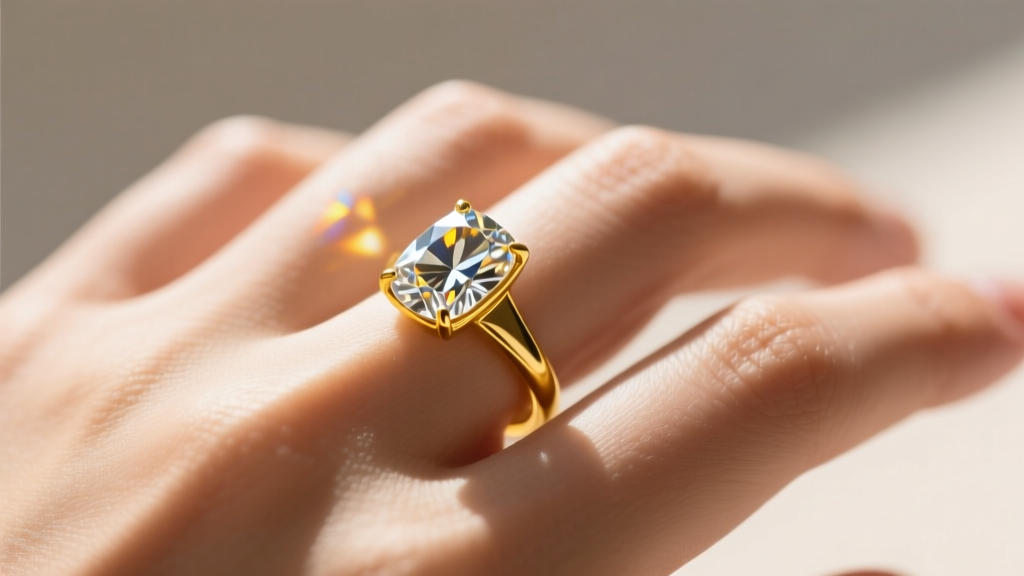
The narrative surrounding diamond alternatives has fundamentally fractured. In 2026, wearing diamond simulant jewelry is no longer about passing off a stone as something it is not; it is a deliberate, style-forward choice driven by optical physics, sustainable capital allocation, and advanced material science. As lab-grown diamonds have saturated the mid-market, high-end simulants like moissanite and precision-cut cubic zirconia have carved out their own distinct luxury niches. According to recent market analyses by Bain & Company, the divergence in consumer intent means buyers are now specifically seeking the unique fire of simulants rather than just a lower price point.
This guide breaks down the 2026 styling trends, material specifications, and structural frameworks you need to master the art of diamond simulant jewelry.
The 2026 Paradigm Shift: Intentional Simulant Styling
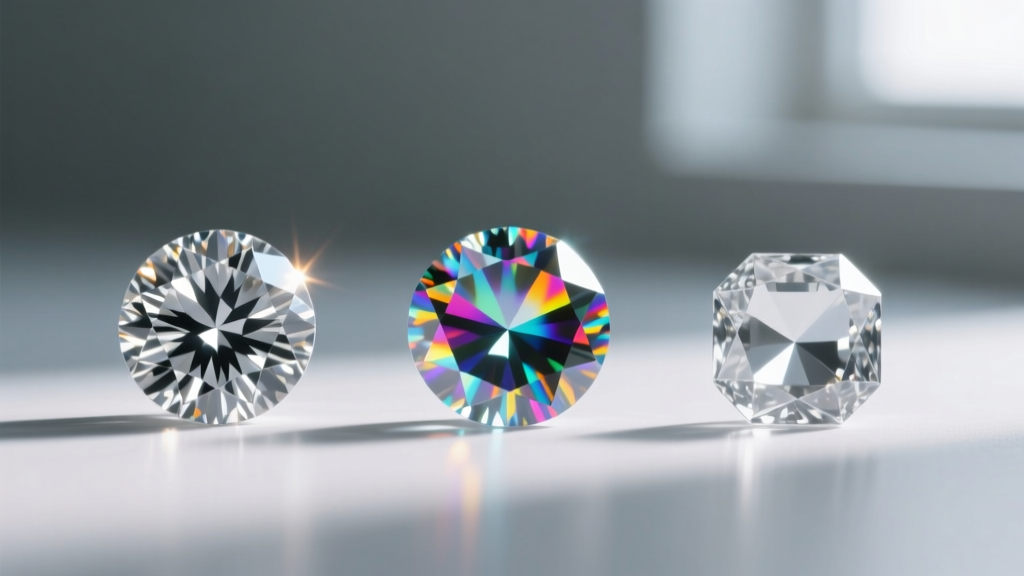
Historically, the goal of a simulant was deception. Today, the goal is distinction. The Gemological Institute of America (GIA) notes that simulants possess distinct optical properties that separate them from natural and lab-grown diamonds. In 2026, top jewelry designers are leaning into these differences rather than hiding them. Moissanite, with its fiery rainbow dispersion, is being set in designs that maximize its "disco ball" effect under ambient lighting, while advanced cubic zirconia (CZ) is being cut with extreme precision to mimic the icy, glassy transparency of a D-color diamond.
Styling diamond simulant jewelry this year means matching the stone's inherent optical personality to the wearer's aesthetic. We are seeing a massive departure from the traditional round brilliant solitaire, moving toward complex, architectural settings that celebrate the unique light return of simulants.
Material Breakdown: Optics, Durability, and 2026 Pricing
To style effectively, you must understand the physics of your canvas. Not all simulants behave the same way under light or pressure. Below is the definitive 2026 spec sheet for the top three simulant categories.
| Material | Refractive Index (RI) | Mohs Hardness | 2026 Avg. Price (Per Carat) | Best Styling Application |
|---|---|---|---|---|
| Moissanite (DEF/VVS) | 2.65 - 2.69 | 9.25 | $300 - $600 | Engagement rings, high-impact statement pieces |
| Advanced CZ (Russian Formula) | 2.15 - 2.18 | 8.0 - 8.5 | $20 - $50 | Fashion-forward stacking rings, tennis bracelets |
| Proprietary Coated Simulants | 2.20 | 8.5 | $100 - $250 | Occasion wear, intricate halo designs |
Moissanite's RI of 2.65 makes it significantly more brilliant than a diamond (RI 2.42). However, it is also doubly refractive, meaning light splits into two rays as it passes through. Advanced CZ, conversely, is singly refractive but lacks the dispersion of moissanite, giving it a cleaner, more "icy" look that closely mimics high-clarity natural diamonds.
Trending Cuts and Settings for Simulants
The cut of a simulant dictates its success. A cut that flatters a diamond might expose the weaknesses of a CZ or the double-refraction of moissanite.
The Crushed Ice Oval for Moissanite
In 2026, the crushed ice oval is the undisputed champion for moissanite. By utilizing a multitude of small, fractured facets on the pavilion, the crushed ice cut scatters light in a way that masks moissanite's double refraction. It eliminates the "fuzzy" or "doubled" facet lines that can sometimes be seen in traditional brilliant-cut moissanite, resulting in a scintillating, chaotic sparkle that rivals high-end natural diamonds.
Step Cuts and Emerald Cuts for Advanced CZ
Because CZ lacks the intense fire of moissanite, cutting it into a step-cut (like an Emerald or Asscher) maximizes its glassy clarity. The broad, open facets of an emerald cut allow light to pass straight through, highlighting the flawless, inclusion-free nature of high-grade CZ. When set in a sleek, minimalist bezel, an emerald-cut CZ ring offers an ultra-modern, architectural aesthetic that is dominating 2026 fashion runways.
Tension and Floating Settings
With the money saved on the center stone, 2026 trends heavily favor investing in complex metalwork. Tension settings, where the stone appears to float between two bands of metal, are highly popular for moissanite. Because moissanite is incredibly hard (9.25 on the Mohs scale), it can withstand the immense pressure required for a true tension setting, unlike softer CZ which would crack under the stress.
The Metal-to-Stone Value Ratio Framework
One of the most critical styling mistakes consumers make is mismatching the value of the metal to the value of the simulant. As a stylistic and financial framework, you should adhere to the Metal-to-Stone Value Ratio.
- For Advanced CZ ($20-$50/ct): Set in 10k or 14k solid gold, or high-quality gold vermeil over sterling silver. Setting a $30 CZ in a $2,500 platinum setting creates a severe imbalance in asset value and limits the wearer's ability to rotate pieces in a modern jewelry wardrobe.
- For Moissanite ($300-$600/ct): Set in 14k or 18k solid gold, or platinum. Moissanite is a permanent, heirloom-quality stone. It deserves the structural integrity and prestige of fine precious metals.
- For Proprietary Coated Stones: Set in 14k gold or platinum, but avoid prong settings that require frequent tightening, as the maintenance can wear down the proprietary diamond-like carbon (DLC) coatings over time.
Styling Simulants in the Layered 2026 Aesthetic
The "quiet luxury" movement has evolved into "curated maximalism" in 2026. Diamond simulant jewelry is uniquely positioned for this trend because the lower cost per carat allows for voluminous layering without the anxiety associated with wearing millions of dollars in natural diamonds.
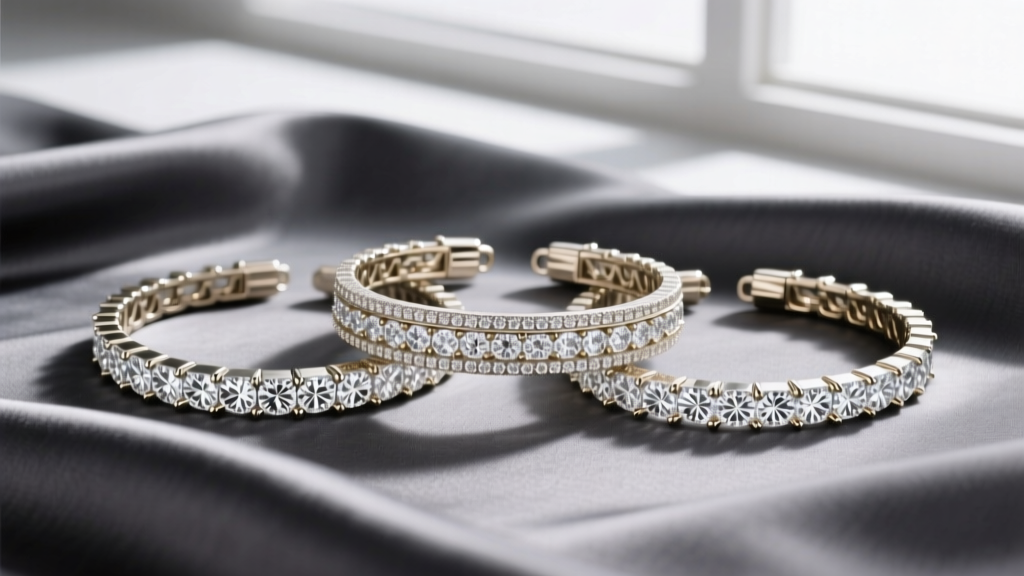
The definitive 2026 styling technique is the Graduated Simulant Stack. This involves wearing three to five tennis bracelets or eternity bands of varying widths and simulant types. For example, pairing a 5mm moissanite tennis bracelet (for intense fire) with two 2mm advanced CZ eternity bands (for icy, white light return) creates a dynamic, multi-dimensional sparkle on the wrist. Mixing white gold and yellow gold within the same stack is no longer a faux pas; it is the hallmark of a sophisticated, contemporary jewelry collector.
Care Protocols: Avoiding the Simulant Pitfalls
While simulants are beautiful, their chemical compositions require specific care protocols that differ from natural diamonds.
- Ultrasonic Cleaners: Safe for uncoated moissanite and high-grade CZ. Never use ultrasonic cleaners on proprietary coated simulants, as the high-frequency vibrations and heat can cause the microscopic diamond-like coating to peel or cloud.
- Hardness and Scratching: While moissanite at 9.25 Mohs will not scratch easily, CZ at 8.5 Mohs is susceptible to scratching by household dust (which contains quartz, at 7 Mohs) over years of wear. CZ jewelry should be stored in individual soft microfiber pouches, never tossed loosely into a communal jewelry box.
- Chemical Exposure: Simulants, particularly CZ, are more oleophilic (oil-attracting) than diamonds. They will cloud faster from lotions and skin oils. A weekly soak in a mild, ammonia-free dish soap solution is required to maintain the crisp light return of diamond simulant jewelry.
Final Thoughts on the Simulant Revolution
Diamond simulant jewelry in 2026 is an exercise in smart luxury. By understanding the refractive indices, matching the correct cut to the specific material, and applying the metal-to-stone value ratio, you can build a jewelry wardrobe that is visually stunning, financially astute, and entirely on-trend. The future of jewelry isn't about what the stone was mined from; it's about how masterfully it captures the light.


