The Complete Care Guide for Herkimer Diamond Jewelry
Learn how to safely clean, store, and maintain your Herkimer diamond jewelry. Expert tips on ultrasonic risks, setting care, and restoring clarity.

Understanding the Gemology of Herkimer Diamonds
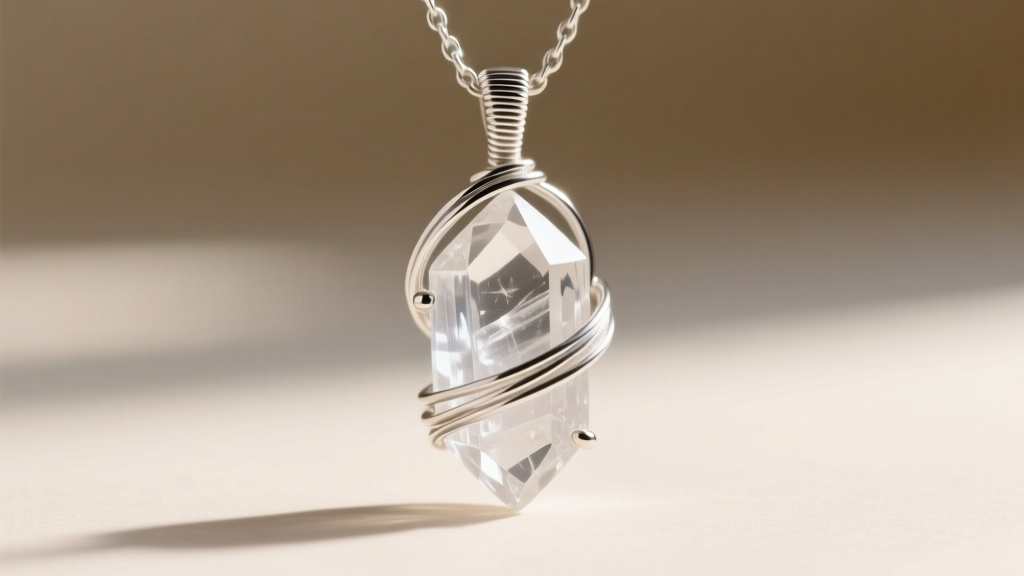
Despite their name, Herkimer diamonds are not actual diamonds; they are exceptionally pure, double-terminated quartz crystals mined primarily from the dolostone pockets of Herkimer County, New York. With a Mohs hardness of 7, they are durable enough for everyday wear, but they possess unique geological characteristics that demand specialized care. Unlike faceted carbon diamonds, these natural quartz crystals often contain unique inclusions, such as black carbon (anthraxite) and trapped hydrothermal fluids known as enhydro inclusions. Understanding these internal structures is the first step in properly maintaining your Herkimer diamond jewelry.
According to Mindat.org, the formation of these crystals occurred in vugs (cavities) within Cambrian-age dolostone, resulting in their signature 18 facets and natural terminations. Because they are naturally formed and often left uncut or minimally polished to preserve their raw geometry, the crevices near the termination points can easily trap skin oils, lotions, and environmental dust. Furthermore, while quartz lacks true cleavage, it is susceptible to conchoidal fracturing if subjected to sharp impacts or extreme temperature fluctuations.
The Hidden Dangers of Ultrasonic and Steam Cleaning
One of the most common mistakes jewelry owners make is treating Herkimer quartz exactly like a traditional diamond. Commercial jewelers frequently use ultrasonic cleaners and high-pressure steamers to restore brilliance to diamond rings. However, applying these methods to Herkimer diamond jewelry can be catastrophic.
Why Ultrasonic Cleaners are Risky
Ultrasonic cleaners work by generating high-frequency sound waves that create microscopic cavitation bubbles in a liquid solution. When these bubbles collapse, they produce intense localized shockwaves. If your Herkimer diamond contains enhydro inclusions (trapped ancient water) or micro-fissures, these shockwaves can cause the fluid pockets to expand or vibrate violently, leading to internal fracturing or complete shattering of the crystal. Additionally, the intense vibration can loosen the custom prongs or wire wraps typically used to secure these irregularly shaped stones.
The Threat of Thermal Shock
Steam cleaners expose gemstones to sudden, extreme heat. Quartz is sensitive to thermal shock. Rapid temperature changes can cause the crystal lattice to expand unevenly, resulting in surface crazing or deep internal fractures. Always avoid boiling water, steam, or even wearing your jewelry in a sauna or hot tub.
Step-by-Step Manual Cleaning Routine
To safely remove accumulated grime, sebum, and cosmetic residues without risking structural damage, a gentle manual cleaning approach is required. The Gemological Institute of America (GIA) recommends mild, non-abrasive cleaning methods for all quartz varieties to preserve their natural luster and protect delicate inclusions.
Materials You Will Need
- Phosphate-free mild dish soap: Avoid harsh detergents, bleach, or ammonia-based cleaners, which can degrade the polish of the quartz and tarnish metal settings.
- Lukewarm distilled water: Tap water can contain chlorine and hard minerals that leave spots on the crystal's facets.
- Extra-soft baby toothbrush: The bristles must be extremely soft to avoid scratching any softer metal accents or pushing abrasive dirt into the crystal's natural grooves.
- Lint-free microfiber cloth: Essential for drying and buffing without leaving fibers caught in the setting.
The Cleaning Process
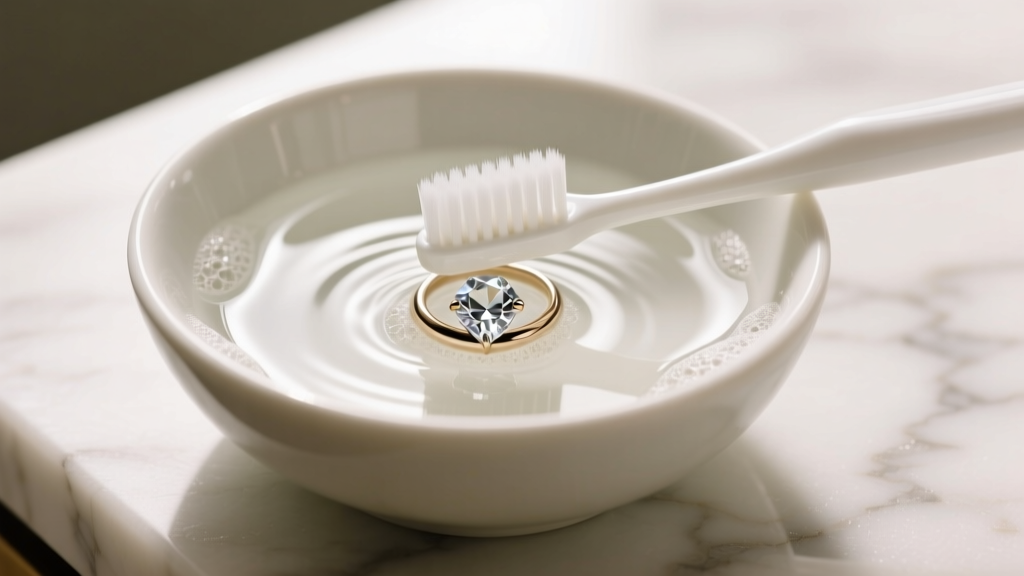
- Prepare the Solution: Mix a few drops of mild dish soap into a small ceramic bowl of lukewarm distilled water. Ensure the water is room temperature or slightly warm—never hot.
- Soak Briefly: Submerge your Herkimer diamond jewelry in the solution for 3 to 5 minutes. This allows the soap to break down the surface tension of body oils trapped in the crevices of the double terminations.
- Gentle Agitation: Using the baby toothbrush, gently brush the stone. Use light, circular motions, paying special attention to the culet (the pointed ends) and the pavilion where dirt accumulates. Do not apply heavy pressure.
- Rinse Thoroughly: Rinse the piece under a gentle stream of lukewarm distilled water. Ensure the drain is plugged to prevent accidental loss.
- Dry and Buff: Pat the jewelry dry with a microfiber cloth. Gently buff the flat, natural facets of the Herkimer diamond to restore its vitreous luster.
Comparison Chart: Safe vs. Unsafe Cleaning Methods
Use the table below as a quick reference guide to ensure you never accidentally damage your Herkimer quartz pieces during routine maintenance.
| Cleaning Method | Safety Level | Reasoning & Risks |
|---|---|---|
| Mild Soap & Lukewarm Water | Highly Safe | Gently removes oils without risking thermal shock or structural damage to inclusions. |
| Ultrasonic Cleaners | Unsafe | High-frequency vibrations can shatter enhydro inclusions and loosen custom wire wraps. |
| Steam Cleaning | Unsafe | Sudden heat exposure causes thermal shock, leading to conchoidal fractures or crazing. |
| Commercial Silver Dip | Unsafe | Harsh chemicals (thiourea) can etch the quartz surface and degrade porous stone matrices. |
| Isopropyl Alcohol | Conditionally Safe | Safe for quick spot-cleaning of the quartz, but can dry out or damage certain treated metal alloys or porous matrix stones. |
Setting Maintenance: Wire Wraps vs. Cast Prongs
Because Herkimer diamonds are prized for their natural, uncut geometric shapes, they are rarely set in traditional cast prong settings. Instead, they are frequently secured via artisan wire wrapping or custom-fabricated bezels. The metal used in these settings requires its own maintenance protocol.
Caring for Wire-Wrapped Settings
Wire wrapping often utilizes sterling silver, copper, or gold-filled wires. Sterling silver is prone to oxidation (tarnish) when exposed to sulfur in the air and skin acids. To clean tarnished silver wire without harming the Herkimer diamond, use a treated silver polishing cloth. Gently rub the cloth along the wire, being careful not to snag the cloth on the sharp termination points of the quartz. Never use liquid silver dips, as the harsh chemicals can seep into the micro-crevices of the quartz and cause permanent clouding.
Maintaining Custom Prongs and Bezels
If your Herkimer diamond is set in a cast gold or platinum setting with custom prongs, you must routinely check the prong tension. Because natural quartz crystals are not perfectly symmetrical, the prongs are often shaped by hand to fit the specific contours of the stone. Over time, everyday wear can cause these custom prongs to lift slightly. Have a professional jeweler inspect the prong tension every 12 months to prevent the stone from slipping out of its asymmetric cradle.
Proper Storage to Prevent Scratches and Fractures
Proper storage is just as critical as cleaning. On the Mohs scale of mineral hardness, Herkimer quartz sits at a 7. This means it is harder than most metals and can easily scratch the inside of a jewelry box or the metal settings of neighboring pieces. However, it is softer than sapphires (Mohs 9), moissanite (Mohs 9.25), and traditional diamonds (Mohs 10).
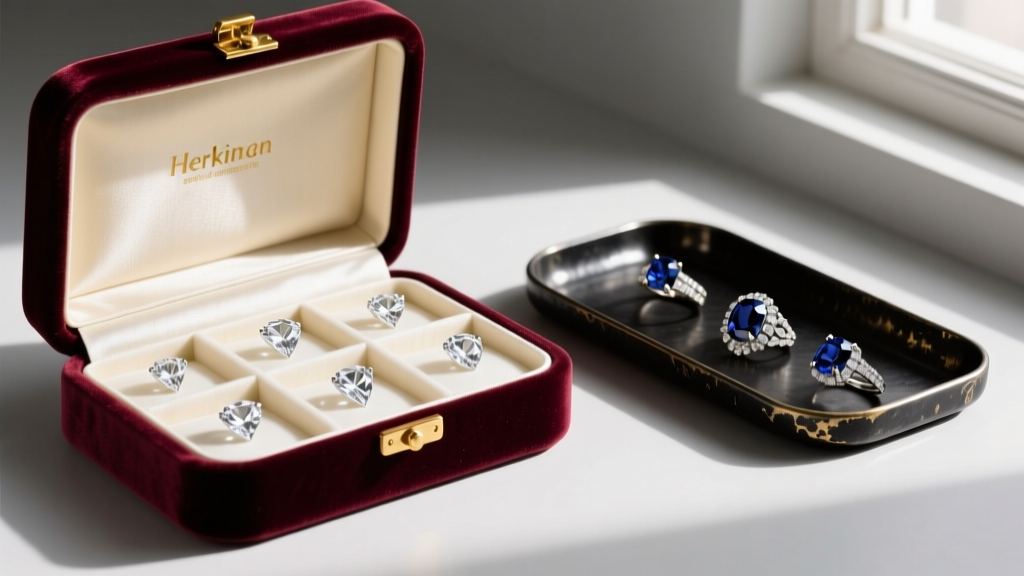
If you toss your Herkimer diamond jewelry into a communal jewelry box alongside diamond eternity bands or sapphire rings, the harder gems will scratch the surface of your quartz, permanently dulling its natural facets and vitreous luster. Always store Herkimer diamond pieces individually in soft velvet pouches or separate, fabric-lined compartments. Additionally, keep them away from extreme environmental fluctuations; storing them in a climate-controlled environment prevents the metal settings from expanding and contracting, which could compromise the grip on the stone.
Final Thoughts on Longevity
Herkimer diamond jewelry offers a beautiful, earthy, and ethical alternative to traditional mined diamonds. By respecting the gemological properties of quartz and avoiding the aggressive cleaning methods designed for carbon diamonds, you can ensure your pieces remain brilliant and structurally sound for a lifetime. Stick to gentle, manual cleaning routines, protect your stones from thermal shock, and store them with the same care you would afford any fine gemstone.


