Pre-Owned Diamonds: Lessons from Triple Diamond Pawn and Jewelry
Discover how to buy pre-owned diamonds safely. Learn valuation, testing, and negotiation tactics inspired by top hybrid shops like Triple Diamond Pawn.

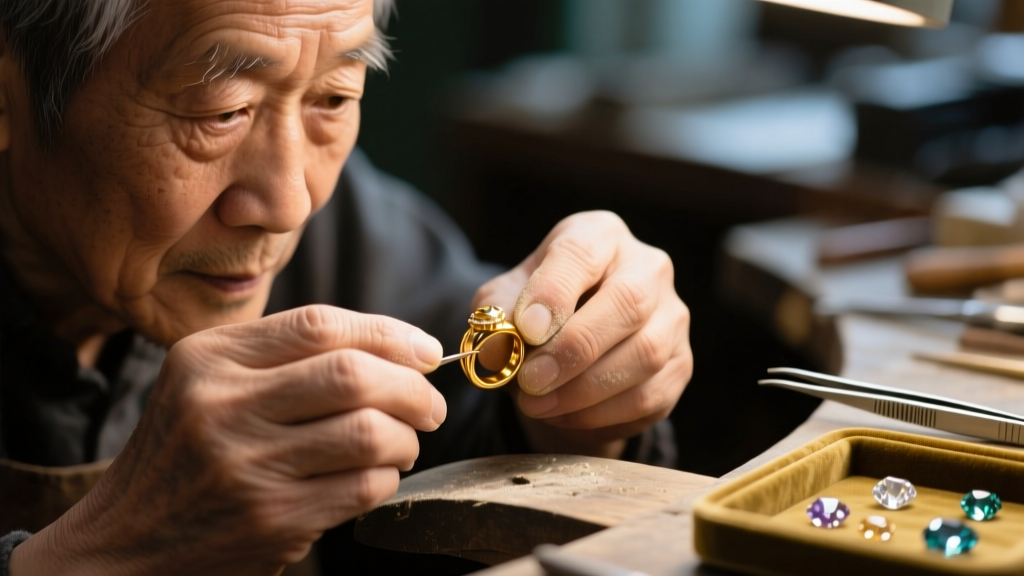
The secondary diamond market is one of the best-kept secrets in fine jewelry. While retail buyers often absorb a 100% to 300% markup the moment a diamond leaves a traditional showroom, savvy consumers are turning to hybrid establishments to secure exceptional stones at a fraction of the cost. Navigating this space requires a shift in mindset, a solid grasp of gemology, and an understanding of how reputable secondary dealers operate. By examining the business model of established hybrid stores like Triple Diamond Pawn and Jewelry, we can uncover a masterclass in how to evaluate, authenticate, and negotiate for pre-owned diamonds.
The Appeal of the Secondary Diamond Market
Diamonds do not appreciate in value the way fine art or rare timepieces do. When a consumer purchases a new diamond engagement ring, they are paying for retail overhead, marketing, and brand prestige. The moment that ring is resold, it enters the secondary market, where its value is recalculated based strictly on its intrinsic material worth and the wholesale Rapaport Price List.
This depreciation curve is the buyer's greatest advantage. A diamond that retailed for $10,000 in a mall jeweler can frequently be sourced in the secondary market for $3,500 to $5,000, depending on its exact specifications and the venue of sale. Pawn shops, estate liquidators, and specialized second-hand jewelers acquire these stones through defaulted loans, estate buyouts, and direct consumer purchases, passing the wholesale pricing on to the next buyer.
The Hybrid Model: Lessons from Triple Diamond Pawn and Jewelry
Historically, pawn shops were viewed as dimly lit, high-pressure environments. Today, the industry has evolved. Establishments that bridge the gap between traditional pawn lending and high-end retail—such as Triple Diamond Pawn and Jewelry—represent the gold standard for secondary market acquisitions.
What separates a premium hybrid shop from a standard pawn broker?
- In-House Gemological Expertise: Top-tier shops employ GIA-trained gemologists who can accurately grade stones on-site, rather than relying on guesswork or outdated appraisal documents.
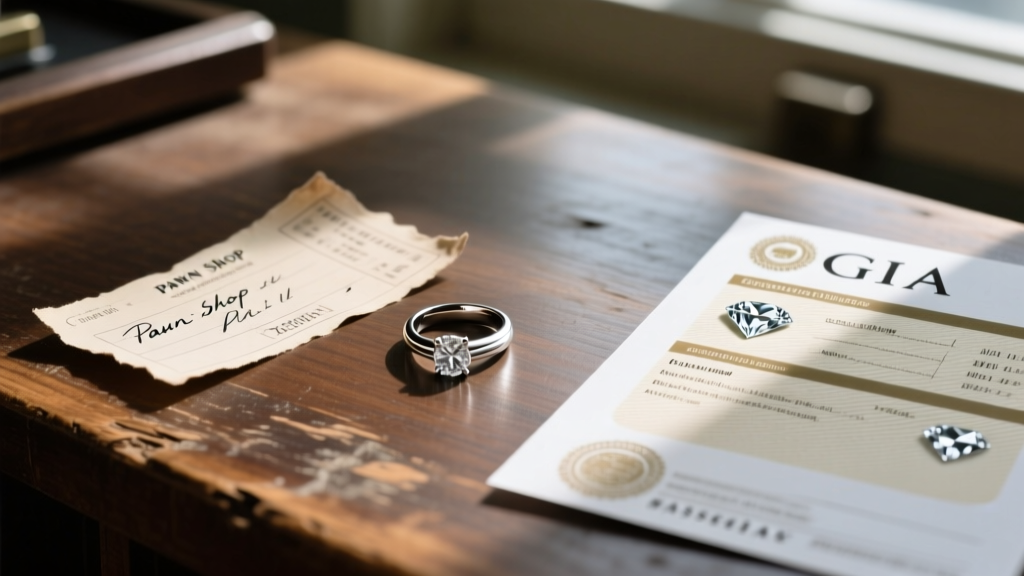
- Certification Transparency: Reputable dealers prioritize stocking GIA or AGS-certified diamonds, understanding that a laser-inscribed girdle and a verifiable dossier protect both the buyer and the seller.
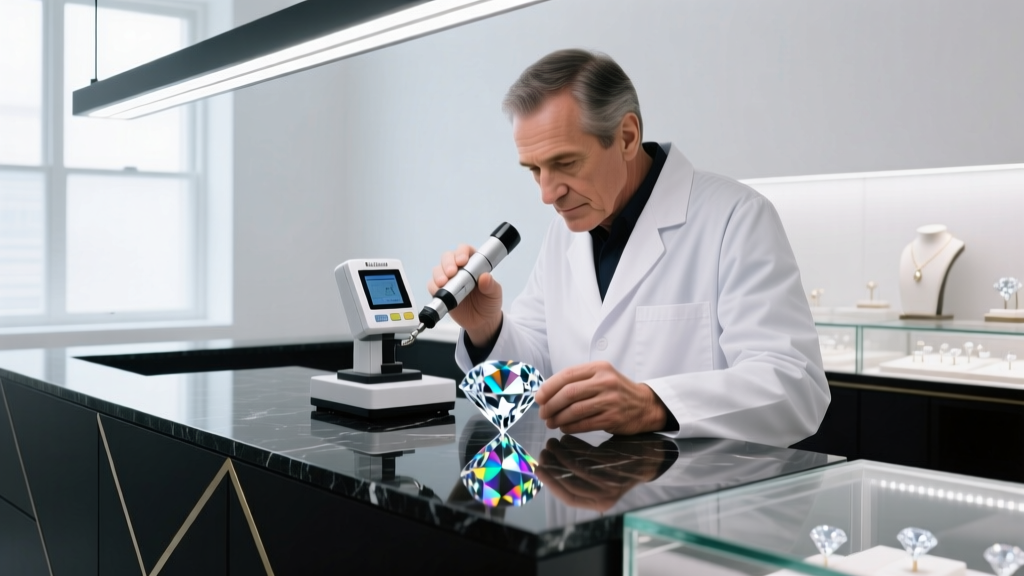
- Modern Testing Equipment: Advanced multi-testers are standard issue, ensuring that lab-grown diamonds, moissanite, and cubic zirconia are correctly identified and priced accordingly.
Re-Evaluating the 4Cs for Pre-Owned Stones
When buying second-hand, your priorities across the 4Cs (Cut, Color, Clarity, Carat) should shift slightly from retail shopping. You are hunting for value and optical performance, not just a certificate.
| The 4C | Retail Priority | Secondary Market Priority | Expert Pro-Tip |
|---|---|---|---|
| Cut | Brand-specific 'Ideal' | GIA Excellent / AGS Ideal | Check the pavilion angle (40.6° - 41.0°) for maximum light return. Avoid steep or shallow cuts entirely. |
| Color | D-F (Colorless) | G-I (Near-Colorless) | G-H-I stones face up white once set in metal, saving you up to 30% compared to D-F stones. |
| Clarity | VVS1-VS1 | VS2-SI1 | Ensure SI1 inclusions are not black carbon spots located directly under the center table facet. |
| Carat | Magic Sizes (1.0, 1.5, 2.0) | Undersized (0.90 - 0.99) | A 0.95ct stone looks identical to a 1.00ct stone but avoids the 'magic size' wholesale price premium. |
Authenticity Testing: Beyond the Basic Diamond Tester
If you are evaluating diamonds in a pawn or estate setting, you must understand the limitations of basic testing tools. The classic 'beeping' diamond tester measures thermal conductivity. Diamonds disperse heat incredibly fast, which triggers the positive beep. However, moissanite (silicon carbide) shares nearly identical thermal conductivity properties and will fool a basic thermal tester.
The Electrical Conductivity Check
To confidently separate diamond from moissanite, you need a multi-tester that also checks electrical conductivity. Moissanite conducts electricity; natural diamonds do not.
The Rare Exception: Type IIb natural blue diamonds contain trace amounts of boron, making them electrically conductive. If a tester flags a blue stone as moissanite, verify its origin via a GIA report before walking away from a potentially priceless gem.
Furthermore, be aware of lab-grown diamonds (CVD and HPHT). They share the exact chemical, physical, and optical properties of mined diamonds. They will pass both thermal and electrical tests. According to the FTC Jewelry Guides, sellers must disclose lab-grown origins. In a pawn shop setting, always ask for a UV fluorescence check and look for phosphorescence, which can sometimes indicate CVD lab-grown origins, though definitive testing requires advanced spectroscopy.
Pricing Realities and Negotiation Tactics
Walking into a hybrid pawn and jewelry store requires a different negotiation strategy than walking into a corporate mall jeweler. The margins in the secondary market are tighter, but there is still room for maneuvering if you are educated.
Understanding the Spread
A pawn shop typically acquires diamond jewelry at 30% to 50% of the Rapaport wholesale value (plus the scrap melt value of the gold or platinum setting). They will generally list the piece for sale at 60% to 80% of Rapaport. Your goal as a buyer is to negotiate the final price closer to the 55% to 65% range.
Tactics for the Counter
- Cash is King: Offering immediate, physical cash (or a direct wire transfer) eliminates credit card processing fees (which can eat 3-4% of the shop's margin) and provides instant liquidity. Use this as leverage to ask for a 5-10% discount.
- Point Out Flaws Objectively: Use a 10x triplet loupe. If you spot a surface-reaching feather near the girdle or a noticeable scratch on the metal shank, politely point it out. These are objective deductions from the stone's wholesale value.
- Bundle for Leverage: If you are buying a diamond ring and a pair of diamond stud earrings, negotiate a package deal. Shops prefer moving multiple units of inventory in a single transaction.
Your Pre-Purchase Checklist
Before finalizing any diamond purchase in the secondary market, run through this mandatory checklist to ensure your investment is secure:
- Verify the Inscription: Use a 20x loupe to check the diamond's girdle for a laser inscription matching the provided GIA or AGS report number.
- Inspect the Prongs: Pre-owned rings often have worn prongs. Factor in the cost of a re-tipping (usually $50-$150) into your negotiation.
- Request a Contingency: Ask the shop for a 48-hour independent appraisal contingency. A reputable dealer like Triple Diamond Pawn and Jewelry will allow you to take the stone to an independent, unaffiliated appraiser to verify the grading, provided you leave a fully refundable deposit or the item remains in their secure custody.
- Check for Treatments: Ensure the report explicitly states 'No indications of heating' or 'No clarity enhancement.' Fracture-filled diamonds are worth a fraction of their untreated counterparts and are highly unstable.
By approaching the secondary market with a gemologist's eye and a negotiator's patience, you can secure extraordinary diamonds at unparalleled prices. The key is to seek out established, transparent hybrid dealers who respect the science of gemology as much as the art of the deal.


