Lab Created Diamond Jewelry: A Technical Deep Dive
Explore the science of lab created diamond jewelry. We analyze CVD vs HPHT growth, Type IIa purity, strain patterns, and 2026 pricing metrics.

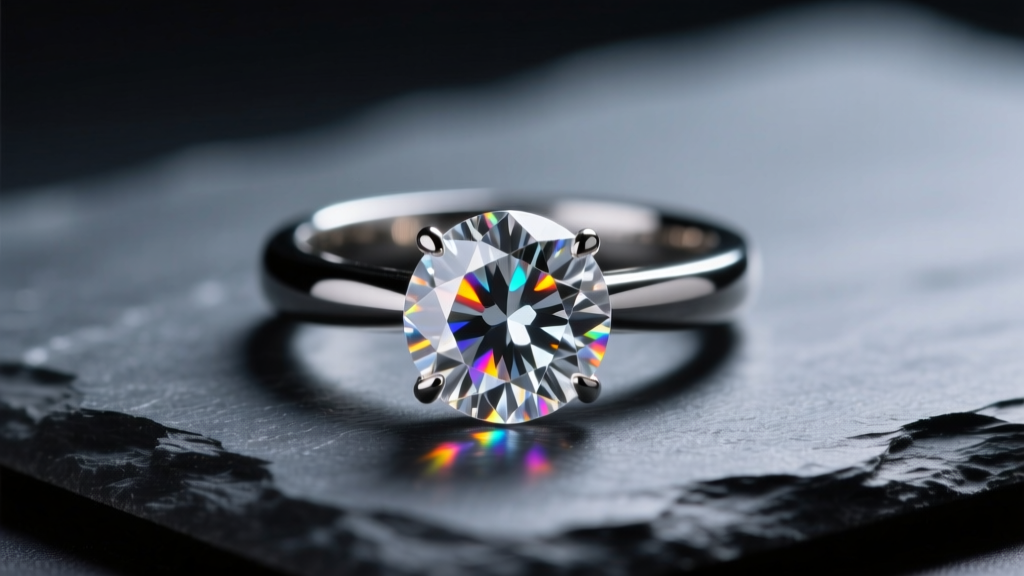
When evaluating lab created diamond jewelry, most consumers focus on the standard 4Cs. However, as a gemologist analyzing the 2026 market, the real differentiators lie in the crystallographic growth methods, atomic-level purity, and optical strain patterns. This technical deep dive bypasses marketing fluff to examine the exact physics, synthesis methodologies, and market economics defining modern synthetic diamonds.
The Crystallography of Synthesis: CVD vs. HPHT
Understanding lab created diamond jewelry requires distinguishing between the two primary synthesis methods: Chemical Vapor Deposition (CVD) and High Pressure High Temperature (HPHT). Both produce 100% carbon-crystallized diamonds, but their atomic growth structures differ vastly.
Chemical Vapor Deposition (CVD)
CVD growth occurs in a vacuum chamber filled with a carbon-rich gas mixture, typically methane and hydrogen. A 2.45 GHz microwave plasma reactor heats the gas to approximately 800°C to 1000°C, breaking the molecular bonds and allowing carbon atoms to precipitate onto a diamond seed plate layer by layer. CVD diamonds grow in a cubic crystal habit. Because the process operates at relatively low pressures, CVD stones often require post-growth HPHT annealing to correct brownish tints caused by crystal lattice vacancies.
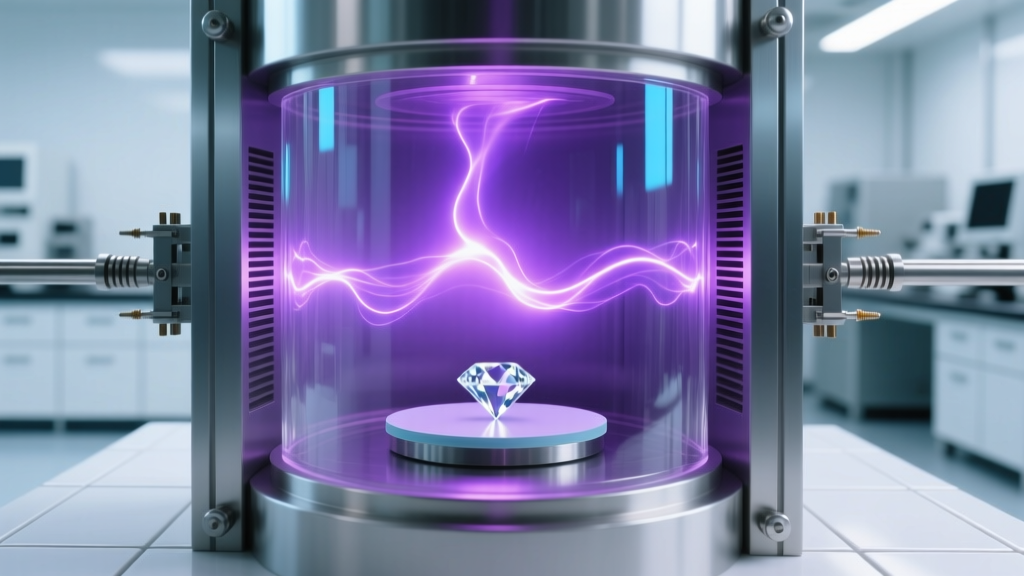
High Pressure High Temperature (HPHT)
HPHT mimics the Earth's mantle conditions using massive cubic or belt presses. A diamond seed is placed in a growth cell containing a metal catalyst (usually iron, nickel, or cobalt) and high-purity graphite. The press applies roughly 5 to 6 Gigapascals (GPa) of pressure while heating the cell to 1500°C. The metal catalyst dissolves the carbon and transports it to the cooler seed, where it crystallizes. HPHT diamonds typically exhibit a cuboctahedral growth habit. The presence of metallic flux inclusions is a primary gemological identifier for HPHT stones, occasionally making them magnetic under strong neodymium magnets.
Purity and Optical Physics: The Type IIa Advantage
In gemology, diamonds are classified by their atomic impurities. Type Ia diamonds contain nitrogen aggregates (comprising 95% of natural diamonds). Type IIa diamonds, however, contain virtually no measurable nitrogen or boron impurities, resulting in exceptional optical transparency and thermal conductivity.
While Type IIa natural diamonds are extraordinarily rare (less than 2% of global yield), nearly 100% of CVD lab created diamond jewelry falls into the Type IIa category. This atomic purity allows light to pass through the crystal lattice with minimal interference, often yielding a crisper visual appearance compared to nitrogen-heavy natural stones of the same color grade.
| Metric | Natural Type Ia | Lab Created Type IIa (CVD) |
|---|---|---|
| Nitrogen Content | 10 - 100+ ppm | < 1 ppm |
| Thermal Conductivity | Standard | Exceptionally High |
| UV Fluorescence | Often Blue (N3 centers) | Typically Inert or Orange/Red |
| Market Rarity | ~95% of Naturals | ~100% of CVD Labs |
Cut Precision and Light Performance Optimization
One of the most significant technical advantages of lab created diamond jewelry is the economic freedom it grants master cutters. When faceting a natural diamond crystal, the cutter faces immense financial pressure to maximize carat weight retention, often sacrificing optical symmetry to avoid polishing away expensive rough. This results in steep-deep or spready proportions that leak light.
Conversely, the lower cost per carat of lab-grown rough allows cutters to prioritize optical performance over sheer mass. This has led to a proliferation of Super Ideal Hearts and Arrows (H&A) diamonds in the lab market. These stones are cut to exacting tolerances—such as a pavilion angle of 40.6° to 40.9° and a crown angle of 34° to 35°—ensuring maximum light return. When viewed through an Angular Spectrum Evaluation Tool (ASET) or Ideal-Scope, top-tier lab diamonds exhibit uniform red light return and perfect eight-fold symmetry, a level of precision that commands a massive premium in the natural market but is readily accessible in lab created diamond jewelry.
Identifying Lab Created Diamond Jewelry: Strain and Fluorescence
Gemological laboratories like the Gemological Institute of America (GIA) utilize advanced spectroscopy to definitively separate lab created diamond jewelry from natural equivalents. Advanced gemological laboratories utilize instruments like the DiamondView, which exposes the stone to short-wave ultraviolet light to map its fluorescence and phosphorescence growth sectors. Natural diamonds display distinct octahedral growth zoning. In contrast, HPHT lab diamonds reveal geometric, cross-shaped growth sectors, while CVD stones show linear, layered striations.
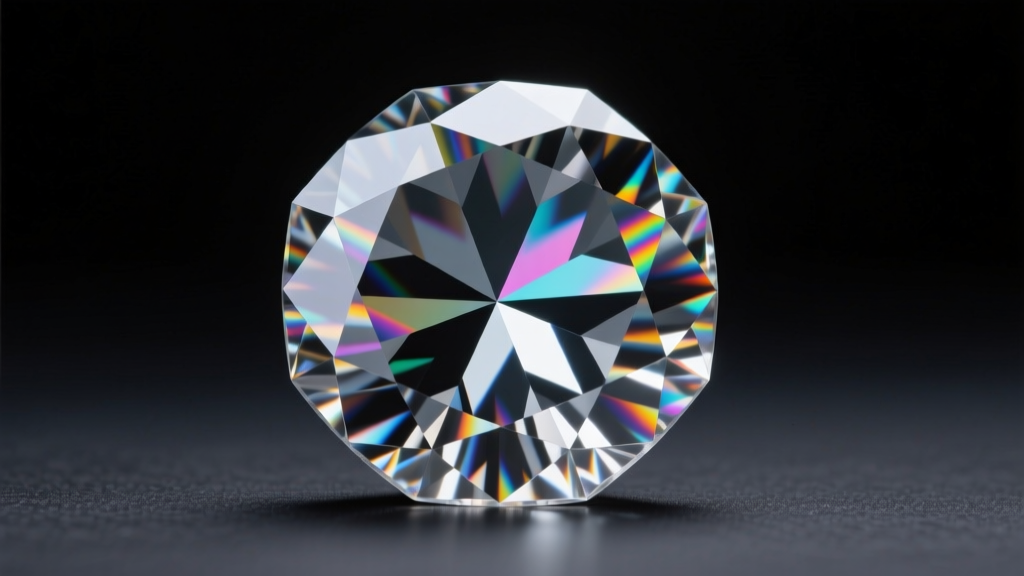
Furthermore, spectroscopic analysis often detects the Silicon-Vacancy (Si-V) defect center in CVD diamonds, emitting a sharp absorption line at 737 nanometers, a definitive fingerprint of the plasma reactor environment. For basic appraisal, placing a stone between crossed polarizing filters will reveal a distinct cross-hatched or tatami strain pattern in CVD stones, caused by the stress of layer-by-layer deposition.
Market Economics: 2026 Pricing Realities
The economic landscape for lab created diamond jewelry has shifted dramatically. Due to exponential increases in reactor efficiency and yield, wholesale prices have decoupled from natural diamond markets. In 2026, the price differential is no longer a simple percentage discount; it is an entirely separate pricing matrix based on production costs rather than geological scarcity.
According to market data tracked by the International Gemological Institute (IGI), the production cost of a 1-carat CVD diamond has plummeted, allowing retail prices to stabilize at highly accessible tiers without sacrificing cut quality.
The price divergence becomes even more pronounced at higher carat weights. In the natural market, the price-per-carat curve is exponential; a 3-carat natural diamond is exponentially rarer than three 1-carat stones, driving prices into the tens of thousands per carat. Because lab reactors can grow larger crystals with marginal increases in time and energy, the price-per-carat curve for lab created diamond jewelry remains remarkably linear. A 3.00-carat lab diamond does not carry a scarcity multiplier, allowing consumers to acquire substantial, high-clarity statement pieces for a fraction of the historical cost.
Certification Protocols and Laser Inscriptions
Never purchase lab created diamond jewelry without a rigorous grading report. The GIA and IGI remain the gold standards. Beyond the laser inscription, modern grading reports now include comprehensive light performance maps and origin disclosures. The Federal Trade Commission (FTC) strictly regulates terminology, requiring that retailers avoid ambiguous terms without substantiation, and mandating clear use of lab-grown or synthetic.
Always verify the stone using the following protocol:
- Inspect the girdle with a 30x jeweler's loupe for the microscopic LG identifier.
- Cross-reference the report number with the issuing laboratory's secure digital database.
- Confirm the light performance map matches the physical stone's optical symmetry.
Reputable manufacturers laser-inscribe the girdle of the stone with a microscopic report number and an LG identifier. Verifying this inscription is a critical step for insurance appraisal and future resale, ensuring the physical stone perfectly matches the digital certificate.


