Advanced Diamond Jewelry Care: Ultrasonic, Steam & Prong Mechanics
Master advanced diamond jewelry care with our technical guide on ultrasonic risks, steam parameters, and prong wear mechanics for lasting gem preservation.

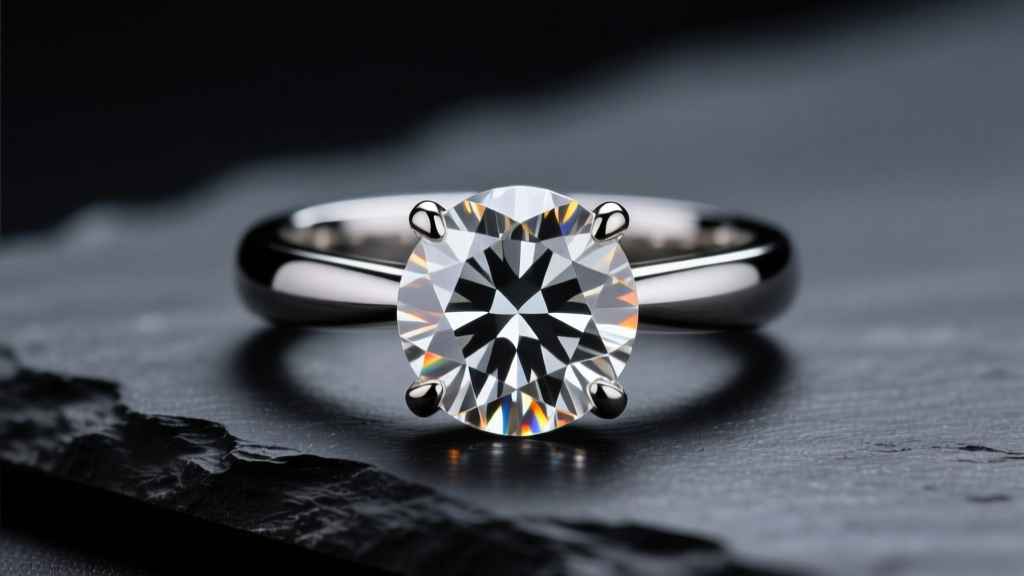
When consumers research diamond jewelry care, the advice usually stops at 'use warm water and mild dish soap.' While this baseline method is safe, it fails to address the complex physics of gemology and metallurgy that dictate long-term preservation. Diamonds are renowned for their unparalleled hardness, but this singular focus often masks their hidden vulnerabilities—specifically regarding cleavage planes, thermal shock, and setting fatigue.
In this expert deep dive, we move beyond basic cleaning routines to examine the micro-mechanical and chemical realities of diamond maintenance. Whether you are managing a high-value investment piece or a daily-wear engagement ring, understanding the technical parameters of ultrasonic cavitation, steam thermal dynamics, and prong work-hardening is essential for preventing catastrophic failure.
The Physics of Diamond Cleavage vs. Hardness
The fundamental misunderstanding in diamond jewelry care stems from conflating hardness with toughness. On the Mohs scale of mineral hardness, diamond sits at an absolute 10, meaning it is virtually immune to scratching from everyday environmental abrasives. However, hardness only measures scratch resistance. Toughness measures a material's ability to resist fracture and chipping under impact.
Diamonds possess perfect octahedral cleavage in four distinct directions. These are atomic planes of weakness where the carbon bonds are spaced slightly further apart. A sharp, localized impact parallel to one of these cleavage planes can split a flawless diamond cleanly in two. Therefore, advanced care requires strict avoidance of hard, angular impacts—such as striking a diamond ring against a granite countertop or dropping it onto ceramic tile—which can transmit kinetic energy directly along these microscopic fault lines.
Ultrasonic Cleaners: Cavitation Mechanics and Fracture Risks
Ultrasonic cleaners are a staple in professional jewelry maintenance, utilizing high-frequency sound waves (typically 40 kHz to 45 kHz) to agitate a solvent. This process creates microscopic vacuum bubbles that violently implode against the jewelry—a phenomenon known as cavitation. The localized pressure from these collapsing micro-jets can exceed 1,000 atmospheres, effectively blasting away microscopic sebum and silica dust from beneath the pavilion facets.
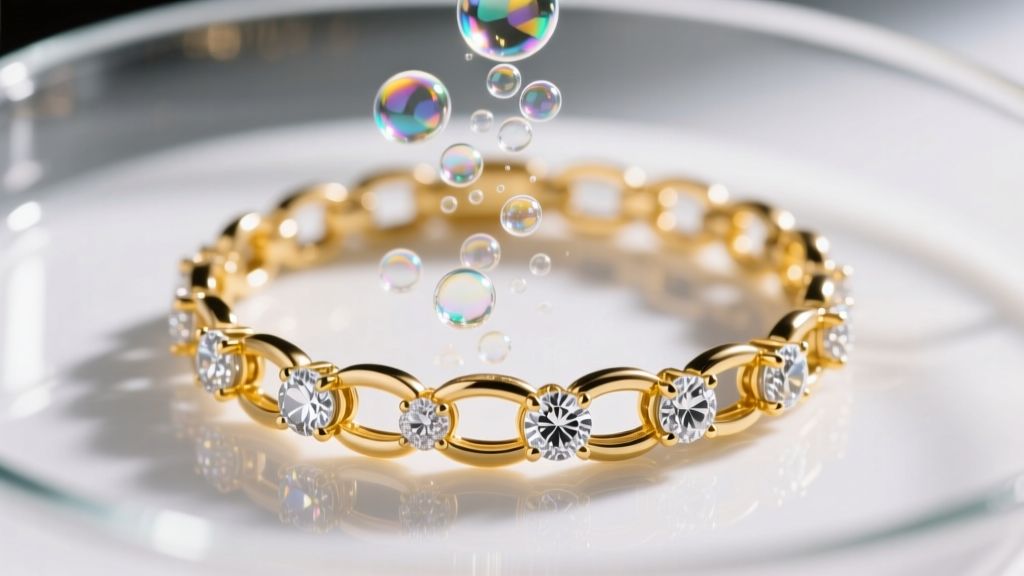
However, according to GIA research on ultrasonic cleaners, this immense localized pressure poses severe risks to specific diamond categories. If a diamond contains surface-reaching feathers, large included crystals, or has undergone fracture-filling treatments (such as the Yehuda process), the shockwaves from cavitation can widen internal fissures or shatter the stone entirely. Furthermore, the high-frequency vibrations can loosen diamonds from their settings if the prong tension is already compromised by micro-wear.
Comparative Risk Matrix for Cleaning Methods
| Cleaning Method | Mechanism of Action | Risk to FL/VVS Diamonds | Risk to SI/I1 or Treated Diamonds | Setting Fatigue Risk |
|---|---|---|---|---|
| Mild Surfactant (Soap) | Chemical emulsification | Zero | Zero | Zero |
| Ultrasonic (40kHz) | Acoustic cavitation | Low | High (Fracture expansion) | Moderate (Vibration loosening) |
| Steam (100°C+) | Thermal & kinetic force | Low | Moderate (Inclusion shock) | Low |
| Chemical Dip (Acid) | Oxidation reduction | Zero | High (Laser drill damage) | High (Alloy degradation) |
Steam Cleaning: Thermal Shock and Inclusion Expansion
Steam cleaning provides unmatched optical restoration by instantly vaporizing oils and blowing away debris. Diamond possesses extraordinary thermal conductivity (up to 2,000 W/m·K), meaning it absorbs and transfers heat almost instantaneously. When a 100°C to 120°C jet of steam hits a diamond, the stone's temperature spikes in milliseconds.
For flawless stones, this is irrelevant. But for diamonds with internal strain—often visible under crossed polarizers as anomalous double refraction—rapid thermal expansion can trigger internal fracturing. Additionally, if a diamond has been laser-drilled to remove a dark carbon inclusion, the microscopic tunnel can trap steam and chemical residues, leading to a cloudy appearance that requires professional vacuum extraction to resolve. Always consult GIA's official care guidelines before applying steam to stones graded SI2 or lower.
Chemical Interactions: Setting Degradation vs. Stone Immunity
Because diamonds are pure crystalline carbon, they are entirely inert to most household acids and alkalis. The true vulnerability in diamond jewelry care lies in the metallic alloy holding the stone. Exposure to sodium hypochlorite (chlorine bleach) or harsh pool chemicals initiates stress corrosion cracking in karat gold alloys. The chlorine reacts with the copper and zinc elements in 14k and 18k gold, creating microscopic intergranular fractures that cause prongs to snap without warning.
Prong Wear Mechanics and Micro-Structural Fatigue
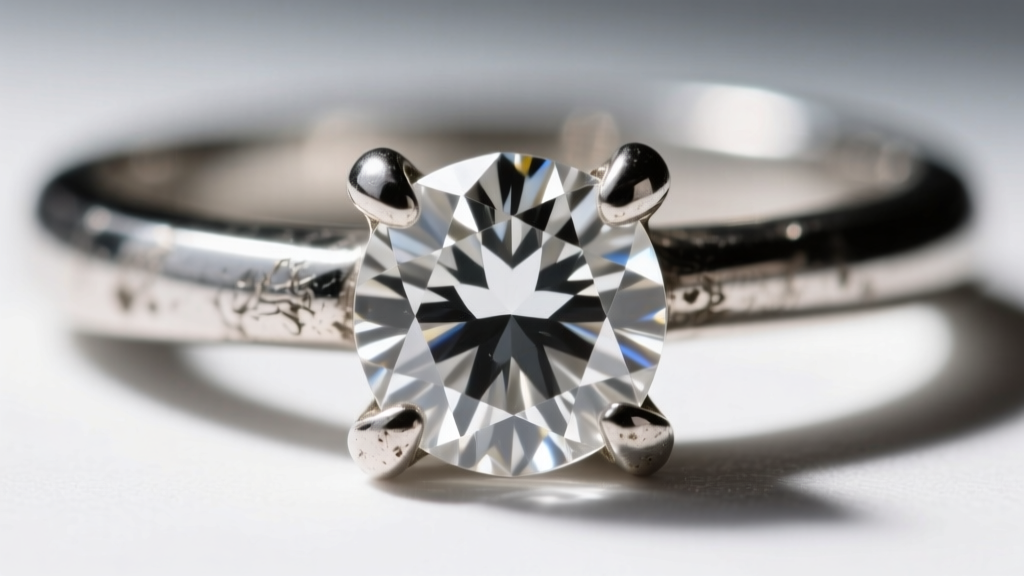
A critical, often overlooked aspect of diamond jewelry care is monitoring the micro-structural fatigue of the setting. Prongs are subjected to continuous shear stress, micro-abrasion from clothing, and cyclical loading as the wearer's hands move. The metallurgical choice of the setting dictates its failure mode:
- Platinum (950/50 Ruthenium): Platinum is dense and malleable. When subjected to stress, it work-hardens and bends, displacing metal rather than losing it. A worn platinum prong will typically thin out and fold over the diamond's girdle, providing a visual warning before failure.
- 14k / 18k White Gold: Gold alloys are inherently more brittle. Instead of bending, a fatigued gold prong will develop microscopic stress fractures at the base, eventually snapping off cleanly and dropping the diamond. White gold also requires periodic rhodium plating, and the electroplating process can occasionally mask underlying structural porosity.
For optimal security, gemological bench standards dictate that platinum prongs should never be worn below 0.8mm in thickness, while gold prongs require a minimum of 1.1mm due to their lower Vickers hardness and higher brittleness.
The Professional Maintenance Framework
To mitigate these physical and chemical risks, we recommend a strict, data-driven maintenance schedule rather than relying on reactive repairs. According to the American Gem Society, professional inspection is non-negotiable for high-value pieces.
- Weekly (At-Home): Clean using a 10% solution of mild, phosphate-free dish soap and distilled water. Use a soft-bristled, non-shedding brush to clean the pavilion. Avoid ultrasonic machines entirely for daily maintenance.
- Bi-Annually (Professional): Have a certified gemologist inspect the prongs under 10x magnification to check for metal thinning, porosity, and lifting. The jeweler should perform a low-amplitude ultrasonic clean only after verifying the stone's clarity grade and inclusion map.
- Every 3-5 Years (Re-tipping): Proactively re-tip or rebuild prongs before they reach the critical wear threshold (0.8mm for Pt, 1.1mm for Au). This preventative metallurgy is vastly cheaper than replacing a lost center stone.
True diamond jewelry care is an exercise in applied physics and metallurgy. By respecting the stone's cleavage planes, understanding the violent mechanics of cavitation, and monitoring the fatigue limits of precious metal alloys, you ensure that your jewelry survives not just as a beautiful accessory, but as a structurally sound heirloom.


