Navigating The Diamond Jim's Pineforest Jewelry Experience
Discover what to expect from the Diamond Jim's Pineforest jewelry experience. A beginner's guide to local diamond shopping, 4Cs, and pricing.

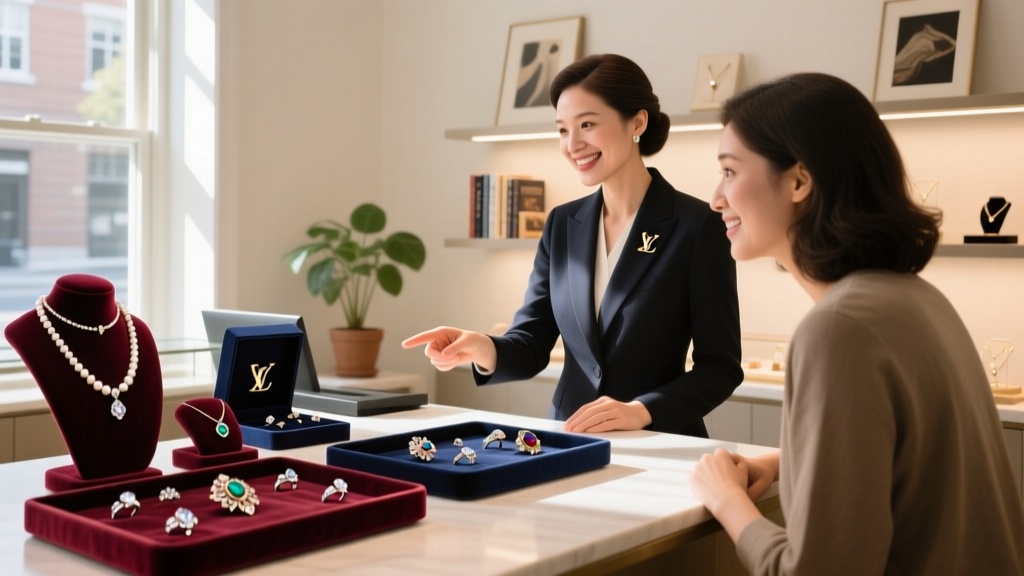
For many first-time buyers stepping into the world of fine gemstones, the Diamond Jim's Pineforest jewelry experience represents the gold standard of personalized, boutique retail. Unlike the sterile, high-pressure environment of big-box mall jewelers or the overwhelming, impersonal nature of online mega-retailers, a dedicated local jeweler offers a tactile, educational approach to diamond buying. Whether you are shopping for an engagement ring, an anniversary upgrade, or a custom heirloom piece, understanding how to navigate a high-end local jewelry consultation is critical to making a confident, informed purchase.
This beginner-friendly explainer will break down exactly what you should expect, look for, and demand when engaging with a premium local jeweler, using the hallmark traits of the Diamond Jim's Pineforest jewelry experience as our guiding framework.
What Defines a Premium Local Jewelry Consultation?
The cornerstone of any reputable local jeweler is the consultation environment. When you sit down at the desk, the physical setting is designed to help you evaluate the stone accurately. However, as a beginner, you must understand how store lighting impacts a diamond's appearance.
Decoding Store Lighting
High-end jewelers typically use specialized LED lighting in the 4000K to 5000K color temperature range. This balanced, daylight-equivalent spectrum maximizes a diamond's scintillation (sparkle) and fire (color dispersion). While this makes every stone look spectacular, it can also mask subtle tints in lower color grades (like K or L).
Pro Tip: Always ask your jeweler to view the loose diamond under natural, indirect window light or take it to a dimmer corner of the store. A truly well-cut diamond will retain its brilliance even in suboptimal lighting conditions.
Evaluating the 4Cs in a Physical Boutique Setting
The GIA 4Cs (Cut, Color, Clarity, and Carat) are the universal language of diamonds. In a physical store, you have the distinct advantage of verifying these metrics with your own eyes, rather than relying solely on a digital rendering or a certificate PDF.
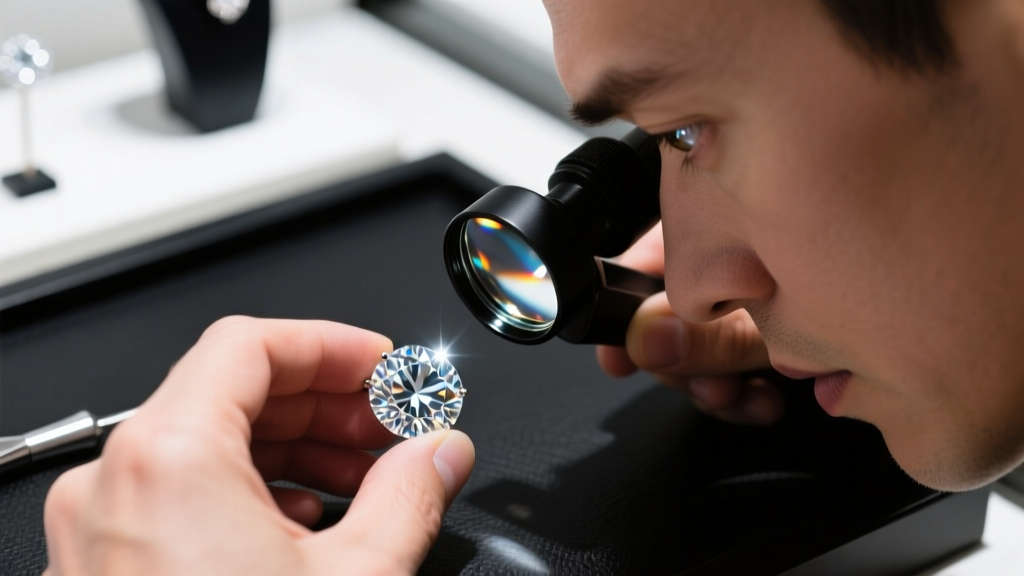
Inspecting Clarity and Color In-Person
When evaluating Color, ask the jeweler to place the loose diamond face-down in a white paper grading trough. Viewing the stone from the side profile against a stark white background neutralizes the distraction of sparkle and allows you to detect the subtle yellow or brown undertones characteristic of grades below 'G'.
For Clarity, the jeweler should hand you a 10x triplet loupe. Do not settle for a quick glance. Take your time to locate the inclusions mapped on the GIA or AGS certificate. If you are looking at an SI1 (Slightly Included) diamond, challenge yourself to see if the inclusion is 'eye-clean' from a normal viewing distance of 6 to 12 inches without magnification.
Verifying Cut Quality with Optical Tools
Cut is the most crucial 'C' for brilliance. A premium jeweler will have an Idealscope or a Hearts and Arrows (H&A) viewer on hand. These simple optical tools reveal the diamond's light return. A perfectly proportioned round brilliant will display a symmetrical pattern of eight red arrows from the top and eight hearts from the bottom. If a jeweler cannot provide these tools, consider it a red flag regarding their inventory quality.
Comparing In-Store Value vs. Online Mega-Retailers
A common hesitation for beginners is the perceived price difference between local boutiques and online diamond databases. While online retailers may boast lower base prices per carat, the holistic value of the Diamond Jim's Pineforest jewelry experience often balances the scales when factoring in long-term ownership costs and services.
| Feature | Local Boutique Jeweler | Online Mega-Retailer |
|---|---|---|
| Base Price Per Carat | 10% - 20% higher markup | Aggressively discounted |
| Custom Design Consultation | Included, highly collaborative, wax molds provided | Limited to preset CAD templates |
| Sizing and Prong Maintenance | Often complimentary for the life of the ring | Pay-per-service, shipping required |
| Stone Upgrades | Frequent 100% trade-in value toward a larger stone | Rarely offered, or heavily depreciated |
| Return Window | Flexible, relationship-based | Strict 15-30 day automated window |
When you factor in the cost of annual prong tightening, rhodium plating for white gold settings, and the potential for future upgrades, the lifetime value of purchasing from a dedicated local professional frequently outweighs the initial online discount.
Understanding Ethical Sourcing and Certifications
Modern consumers are increasingly concerned with the ethical origins of their gemstones. The FTC Jewelry Guides mandate strict transparency regarding gemstone treatments and origins, but premium local jewelers go far beyond basic legal compliance.
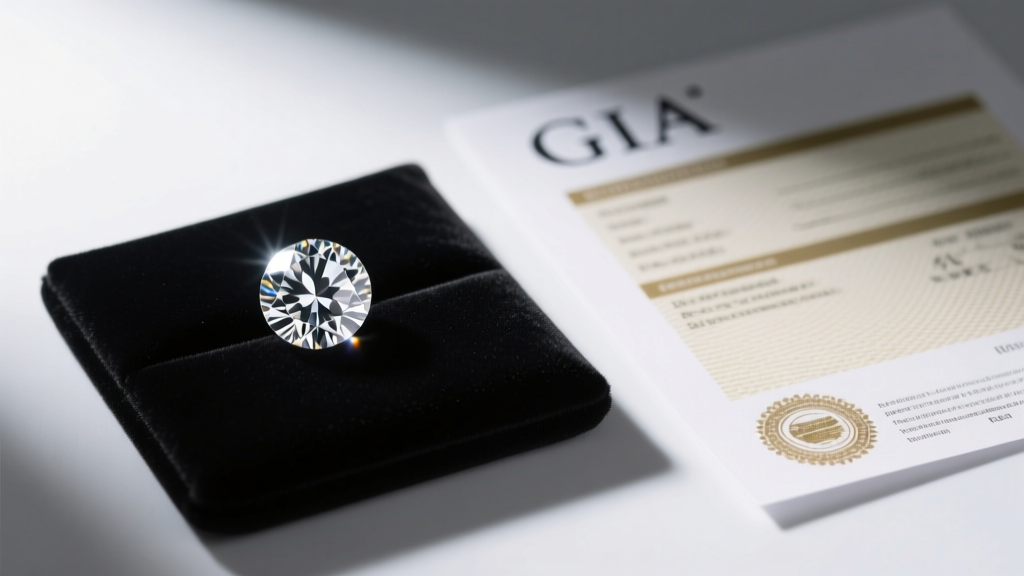
Beyond the Kimberley Process
While the Kimberley Process certifies that a diamond is not a 'conflict diamond' funding rebel movements, it does not guarantee fair labor practices or environmental stewardship. During your consultation, ask about origin-specific diamonds. Brands like CanadaMark provide serial-numbered diamonds that are laser-inscribed and fully traceable to specific mines in the Canadian Arctic, ensuring stringent environmental and labor standards.
Lab-Grown vs. Natural Inventory
A comprehensive local jeweler will transparently stock both natural and lab-grown diamonds (LGDs). They should clearly explain that while LGDs are chemically, physically, and optically identical to mined diamonds, their secondary market resale value is currently negligible. A trusted jeweler will help you weigh the immediate budget benefits of an LGD against the long-term heirloom value of a natural stone, without pushing you toward the higher margin option.
Essential Questions to Ask Before Purchasing
To ensure you are receiving the highest level of expertise, conclude your consultation by asking these specific, expert-level questions:
- "Can I see the diamond's Sarine or OGI light performance report?" This goes beyond the basic GIA certificate and provides a computerized map of the stone's actual light return and symmetry.
- "Is the girdle of this diamond laser-inscribed with the certificate number?" This ensures the stone in the setting matches the paper you are holding, a crucial step for insurance appraisals.
- "Does this stone exhibit strong fluorescence?" While faint fluorescence is harmless, strong or very strong blue fluorescence can cause a diamond to appear milky or oily in direct sunlight, significantly impacting its value and beauty.
- "What specific alloy is used in the white gold setting?" Standard white gold is alloyed with nickel, which causes allergic reactions in many wearers and requires frequent rhodium plating. Ask if they offer palladium-alloyed white gold, which is naturally whiter, hypoallergenic, and requires less maintenance.
Final Thoughts on the Local Advantage
Ultimately, the Diamond Jim's Pineforest jewelry experience is about forging a relationship with a gemological expert who will service your jewelry for decades to come. By understanding store lighting, demanding optical cut verification, and asking pointed questions about sourcing and alloys, you transition from a vulnerable beginner to an empowered buyer. Take your time, trust your eyes over the certificate, and leverage the expertise of your local jeweler to find a stone that truly speaks to you.


