Inside the Diamond and Jewelry Gallery Studio City: Technical Guide
An expert technical deep dive into the Diamond and Jewelry Gallery Studio City, covering 2026 optical standards, metallurgy, and diamond pricing.

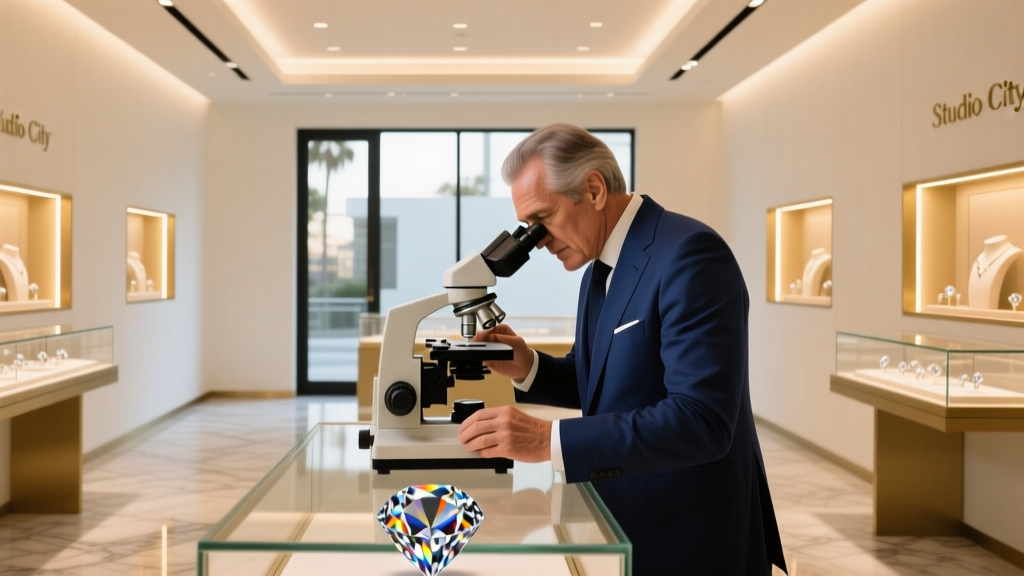
When navigating the high-end retail landscape of Los Angeles, finding a premier diamond and jewelry gallery studio city requires looking far beyond the traditional 4Cs. In 2026, the luxury jewelry market has evolved significantly. Buyers are no longer satisfied with a basic grading report; they demand verifiable optical precision, advanced metallurgical standards, and absolute transparency regarding post-growth treatments in lab-grown alternatives. This technical deep dive explores the exact specifications, benchmark metrics, and verification protocols you must demand when investing in fine jewelry in the competitive Studio City market.
Optical Precision: Moving Beyond the Basic 4Cs
The hallmark of an elite gallery is its inventory of super-ideal cut diamonds. While the GIA's cut grading system provides a baseline, it is notoriously broad. An 'Excellent' cut grade can still encompass stones with significant light leakage or poor contrast. When evaluating inventory at a top-tier Studio City gallery, you must request optical symmetry imagery—specifically ASET (Angular Spectrum Evaluation Tool) and Ideal-Scope photographs.
The Metrics of Super-Ideal Light Return
To achieve maximum scintillation and fire, a round brilliant diamond must adhere to strict proportional tolerances. Look for the following parameters:
- Table Percentage: 54% to 57%
- Total Depth: 61.0% to 62.5%
- Crown Angle: 34.0° to 35.0°
- Pavilion Angle: 40.6° to 40.8°
- Lower Girdle Half (LGH): 75% to 77% (crucial for pin-fire scintillation vs. chunky flash)
- Star Facet Length: 45% to 50% (optimizes the contrast pattern in the table center)
If a gallery cannot provide an ASET map showing dominant red light return (indicating optimal brilliance) with minimal blue contrast and zero white light leakage, the stone is not cut to super-ideal standards, regardless of its paper grade. The interplay between the LGH and star facets dictates whether the stone exhibits sharp, splintery pin-fire flashes or broader, slower chunky flashes.

The Lab-Grown vs. Natural Paradigm in 2026
The market share of lab-grown diamonds (LGDs) has surged, but technical quality varies wildly depending on the growth method. A reputable gallery will clearly delineate between HPHT (High Pressure High Temperature) and CVD (Chemical Vapor Deposition) stones, and more importantly, disclose any post-growth treatments. Furthermore, elite galleries now address the energy consumption realities of LGD production, favoring suppliers who utilize renewable energy grids for their microwave plasma reactors.
Identifying CVD Strain and Post-Growth Annealing
Many CVD diamonds are grown rapidly, resulting in internal strain and a brownish tint. To correct this, manufacturers subject the stones to LPHT (Low Pressure High Temperature) annealing. While this improves color, it can alter the stone's optical properties and durability profile. According to IGI's comprehensive lab-grown reports, buyers should always check the comments section for phrases like 'post-growth treatment.' For untreated, optically pure LGDs, demand a GCAL 8X Certificate, which guarantees optical symmetry and color stability without reliance on artificial enhancements.
Metallurgy and Setting Architecture
The structural integrity of fine jewelry relies heavily on the alloys used by the gallery's master bench jewelers. In 2026, the standard for high-end custom settings is Platinum 950, but the specific alloy mix dictates the piece's longevity and resistance to daily wear.
Platinum 950/Ruthenium vs. 950/Iridium
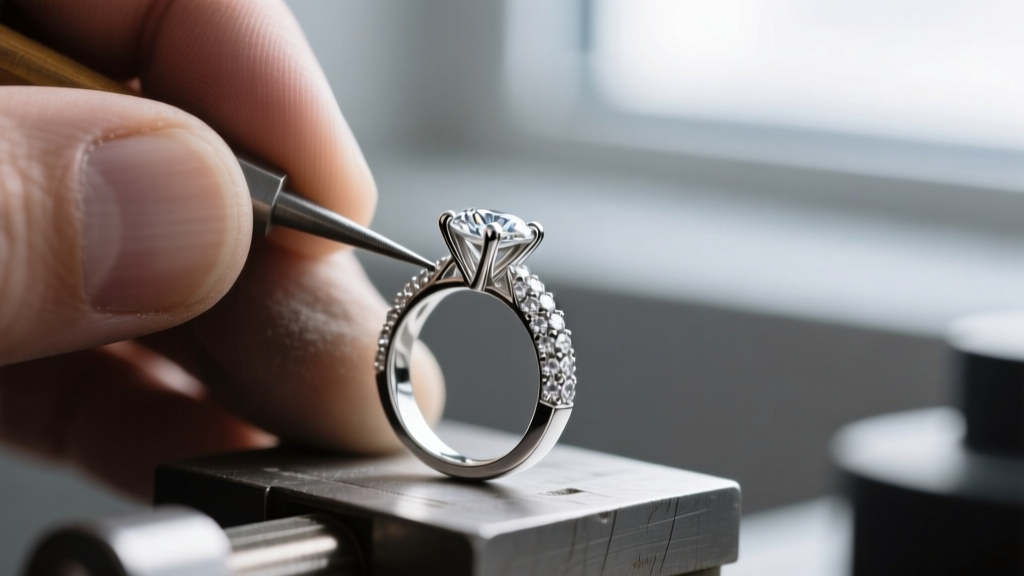
Most commercial jewelry uses Platinum 950/Iridium because it is easier to cast and requires lower melting temperatures. However, it is relatively soft and prone to prong wear over decades. Elite galleries utilize Platinum 950/Ruthenium. Ruthenium increases the Vickers hardness of the alloy, providing superior tensile strength for micro-pave settings and delicate prongs. While it requires higher casting temperatures and advanced polishing techniques, the result is a setting that resists deformation.
Eliminating Casting Porosity
Top-tier galleries also employ Hot Isostatic Pressing (HIP) on their platinum castings. This process subjects the metal to extreme heat and argon gas pressure, collapsing internal microscopic voids and porosity. This ensures the metal grain is completely dense, preventing prongs from snapping under lateral stress.
2026 Valuation Matrix: Studio City Market Pricing
Understanding the current wholesale-to-retail markup is critical when negotiating at a boutique gallery. Below is a comparative pricing matrix for a 1.50-carat Round Brilliant (G Color, VS1 Clarity, Ideal Cut) in the current Los Angeles market.
| Diamond Origin | Certification Standard | Approx. Retail Price (2026) | Resale Liquidity |
|---|---|---|---|
| Natural Earth-Mined | GIA / AGS | $11,500 - $13,200 | Moderate (30-40% retention) |
| HPHT Lab-Grown | IGI / GCAL | $2,800 - $3,400 | Low (Minimal retention) |
| CVD Lab-Grown (Untreated) | GIA / GCAL | $3,100 - $3,800 | Low (Minimal retention) |
Note: Prices reflect super-ideal optical precision. Premium branded cuts (e.g., Hearts and Arrows) will command a 15-20% premium over standard ideal cuts.
Verification Protocols Before You Buy
Never finalize a purchase at a diamond and jewelry gallery without conducting your own physical verification. Request a 10x Hastings triplet loupe and follow this technical protocol:
- Girdle Inscription Verification: Locate the laser-inscribed report number on the girdle. Ensure it matches the digital twin of the certificate on the grading lab's portal.
- Inclusion Mapping: Cross-reference the inclusions visible under 10x magnification with the clarity plot. In VS1 stones, look for isolated pinpoints or small feathers, avoiding large, opaque clouds that kill transparency and cause a milky appearance.
- Strain Analysis: Use a polariscope to check for anomalous double refraction (ADR). Severe internal strain patterns in CVD stones can make them susceptible to cleaving during the setting process.
- Fluorescence Check: Expose the stone to UV light. While faint blue fluorescence is generally harmless, strong blue fluorescence in lower color grades (H-J) can cause an oily appearance in direct sunlight.
- Prong Tension Test: Gently tap the setting with a wooden peg. Listen for any rattling, which indicates improper seat cutting or inadequate prong tension.
Final Thoughts on Gallery Selection
The difference between a standard retail jeweler and a true technical gallery lies in their willingness to embrace scrutiny. By demanding optical maps, understanding metallurgical alloys like HIP-treated Pt950/Ru, and verifying growth methods, you ensure that your investment meets the highest standards of modern gemology. The Studio City market offers exceptional bespoke craftsmanship, provided you know exactly which technical metrics to demand and verify.


