The Physics of Colorless Moissanite Jewelry: Cut & Optics
Explore the technical optics, birefringence, and precision cuts that define premium colorless moissanite jewelry for discerning buyers.

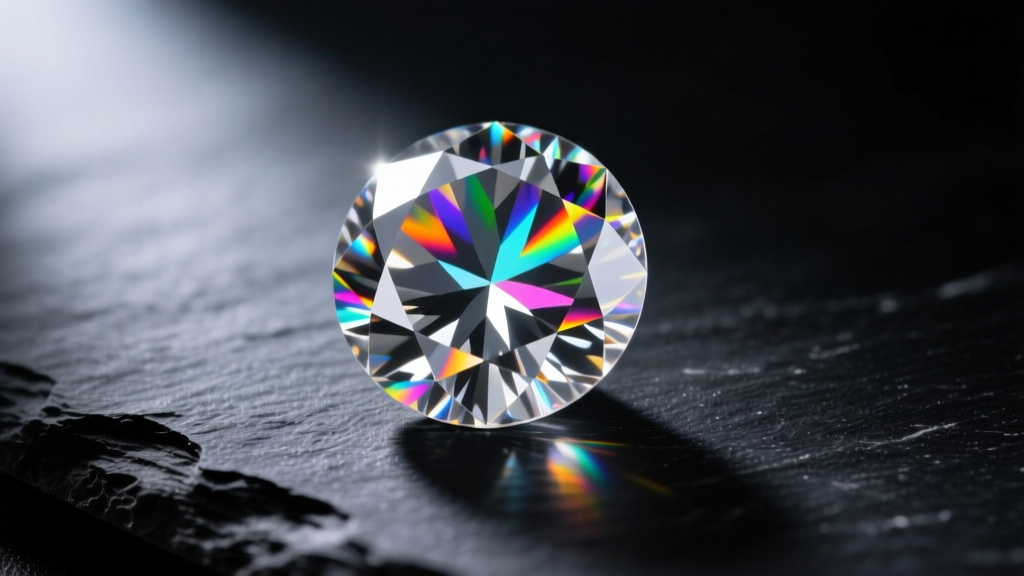
When evaluating premium colorless moissanite jewelry, one must look far beyond the basic 4Cs that govern traditional diamond grading. Silicon carbide (SiC) possesses a fundamentally different crystalline architecture and optical profile than carbon-based diamonds. In 2026, the market has matured past the early days of green-tinted novelties, offering optically flawless, structurally optimized gemstones that rival—and in some optical metrics, exceed—natural diamonds. However, maximizing the potential of SiC requires a highly specialized approach to lapidary cutting, crystal orientation, and setting geometry. This expert deep dive explores the technical physics, birefringence management, and precision cutting parameters that separate mass-market stones from elite colorless moissanite jewelry.
The Optical Physics: Refractive Index vs. Birefringence
The fundamental appeal of moissanite lies in its extreme refractive index (RI). While a natural diamond boasts an RI of 2.42, gem-grade moissanite operates between 2.65 and 2.69. This higher RI translates to superior brilliance—the return of white light to the observer's eye. However, this advantage comes with a complex optical challenge: birefringence.
Diamond is singly refractive (isotropic), meaning light entering the stone travels at a single speed regardless of its direction. Moissanite, conversely, is doubly refractive (anisotropic) with a birefringence value of 0.043. When light enters the stone, it splits into two distinct rays traveling at different velocities. If a cutter fails to account for this, the observer will see a "doubling" of the internal facet lines, resulting in a fuzzy, chaotic appearance that immediately identifies the stone as a diamond simulant.
To neutralize this effect in high-end colorless moissanite jewelry, master cutters must align the stone's table facet perfectly perpendicular to the crystal's optic axis (the c-axis of the 6H hexagonal polytype). When light travels precisely parallel to the c-axis, it does not split. Achieving this requires laser-guided orientation of the raw SiC boule before a single facet is cut. According to the Gemological Institute of America (GIA), any misalignment greater than 5 degrees from the optic axis will result in visible facet doubling under 10x magnification, and potentially to the naked eye in stones exceeding 2.0 carats.
Managing Dispersion: The "Fire" Factor
Dispersion measures a gemstone's ability to separate white light into its spectral colors (fire). Moissanite's dispersion value is 0.104, roughly 2.4 times higher than a diamond's 0.044. While this creates breathtaking flashes of color, unmanaged dispersion in larger carat weights can lead to the infamous "disco ball" effect, where the stone appears overly synthetic due to an overwhelming ratio of colored light to white light.
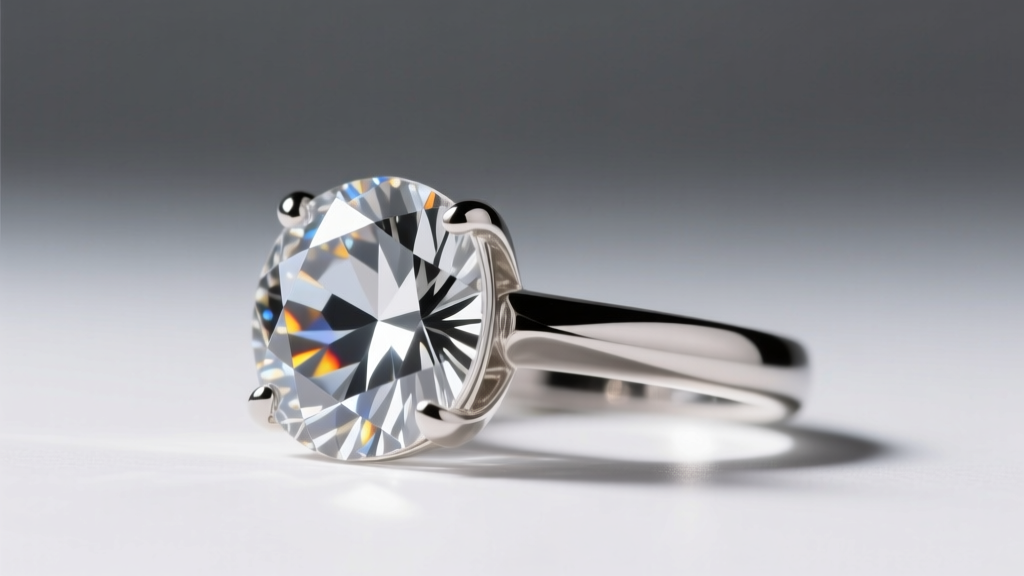
Premium manufacturers mitigate this by altering the traditional Tolkowsky brilliant cut proportions. While a standard diamond relies on a pavilion main angle of 40.75 degrees, expert cutters of colorless moissanite jewelry often steepen the pavilion angle to between 41.0 and 41.5 degrees. This subtle geometric shift forces light to undergo fewer internal bounces before exiting through the crown, effectively reducing the path length inside the stone. A shorter path length limits the degree of spectral separation, striking a mathematically perfect balance between white brilliance and colored fire that mimics the visual signature of a high-performance natural diamond.
Precision Cutting: Hearts & Arrows vs. Standard Brilliant
The cutting tolerance required for top-tier moissanite is remarkably unforgiving. Because of the high refractive index, light leakage (where light escapes through the pavilion rather than returning to the eye) becomes glaringly obvious if facet junctions do not meet with microscopic precision. The market currently segments into three primary cut grades:
| Cut Style | Symmetry Tolerance | Optical Characteristics | Best Application |
|---|---|---|---|
| Standard Brilliant | +/- 1.5 degrees | High brilliance, slight light leakage at edges, no distinct optical symmetry patterns. | Accent stones, halo settings, budget-friendly solitaires. |
| Crushed Ice | Variable (Intentional) | Fractured light return, scintillation-heavy, masks color tints but sacrifices fire. | Cushion and Radiant cuts, vintage-inspired settings. |
| Hearts & Arrows (H&A) | +/- 0.2 degrees | Perfect optical symmetry, maximum light return, crisp arrow patterns from the crown. | Premium round brilliant engagement rings, center stones over 1.5ct. |
For discerning buyers investing in colorless moissanite jewelry, the Hearts & Arrows (H&A) cut is the gold standard. The International Gemological Institute (IGI) now provides specialized cut grades for lab-grown and alternative stones, and an "Ideal" or "Excellent" cut grade on an IGI report ensures the stone's optical symmetry has been verified under strict angular tolerances. H&A cutting yields roughly 15% less rough material than standard cutting, which is why true H&A moissanite commands a 30-40% price premium over standard brilliant equivalents.
Grading the "Colorless" Spectrum: D, E, and F Grades
Achieving true colorlessness in silicon carbide is a triumph of modern materials science. Raw moissanite is synthesized via the Lely method (sublimation of SiC powder at temperatures exceeding 2000°C). During this process, trace atmospheric nitrogen or structural lattice defects often introduce yellow, green, or gray undertones.
To produce D-color (completely colorless) material, manufacturers employ a secondary thermal annealing process. The rough boules are subjected to extreme heat in an argon-rich vacuum chamber, which realigns the crystal lattice and forces nitrogen impurities out of the structure. However, not all "D-color" stones are created equal. Lower-tier manufacturers may over-anneal the stone, resulting in a D-color grade that exhibits a faint, milky gray undertone in diffuse daylight. Elite colorless moissanite jewelry brands utilize proprietary doping techniques during the initial sublimation phase, introducing trace amounts of boron to counteract nitrogen, resulting in a crisp, icy white D-color that remains stable under all lighting conditions, including UV-heavy environments.
Setting Recommendations for Maximum Light Return
The physical setting of the gemstone plays a critical role in its optical performance. Because moissanite has a slightly lower specific gravity (3.21) than diamond (3.52), it is marginally lighter for the same millimeter dimensions, allowing for slightly more robust setting architectures without compromising the wearer's comfort.
Prong vs. Bezel Tensions
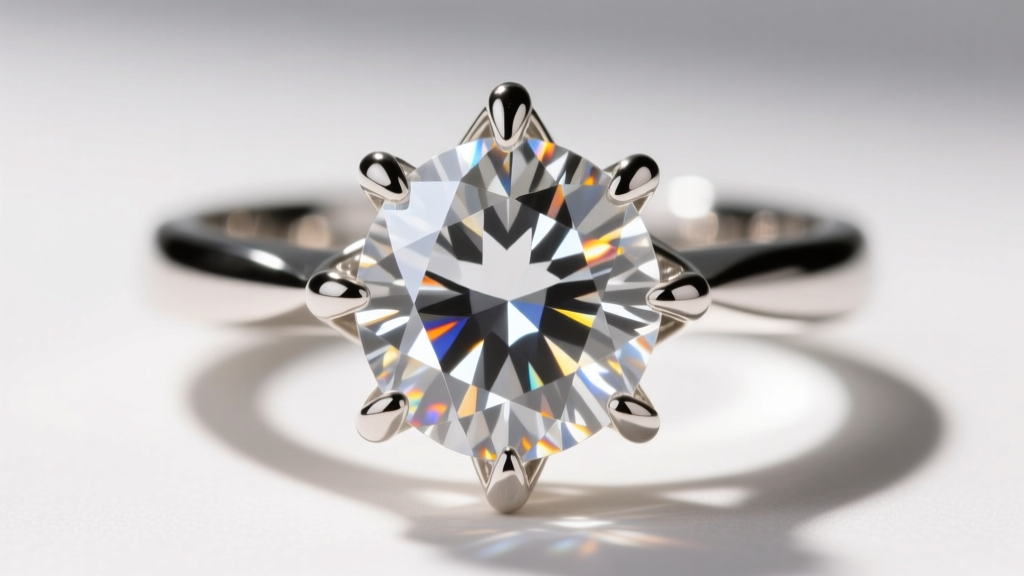
For round brilliant H&A stones, a 4-prong or 6-prong cathedral setting is highly recommended. The cathedral shoulders elevate the stone, allowing ambient light to enter the pavilion from steep lateral angles. Conversely, bezel settings—while secure—can obstruct up to 20% of lateral light entry, effectively choking the stone's brilliance and exacerbating any internal light leakage. If a bezel is desired for lifestyle durability, opt for a "half-bezel" or tension-style setting that leaves the east and west pavilion facets completely exposed.
Expert Maintenance Note: While moissanite ranks at 9.25 on the Mohs scale, making it exceptionally durable for daily wear, its doubly refractive nature means that oil and sebum buildup on the pavilion facets will scatter light much more aggressively than on a diamond. To maintain the optical precision of your colorless moissanite jewelry, ultrasonic cleaning is safe, but a weekly soak in a mild, non-detergent degreasing solution is required to keep the high-RI light return unobstructed.
Ultimately, selecting high-end colorless moissanite jewelry is an exercise in applied physics. By demanding strict c-axis alignment, precision H&A cutting tolerances, and advanced thermal annealing, buyers can secure a gemstone that offers unparalleled optical performance at a fraction of the geological and environmental cost of mined alternatives.