Queens Diamond & Jewelry: 2026 Style & Trend Analysis
Explore the 2026 Queens diamond & jewelry scene. Discover Flushing lab-grown trends, Jackson Heights bespoke styles, and expert buying tips.

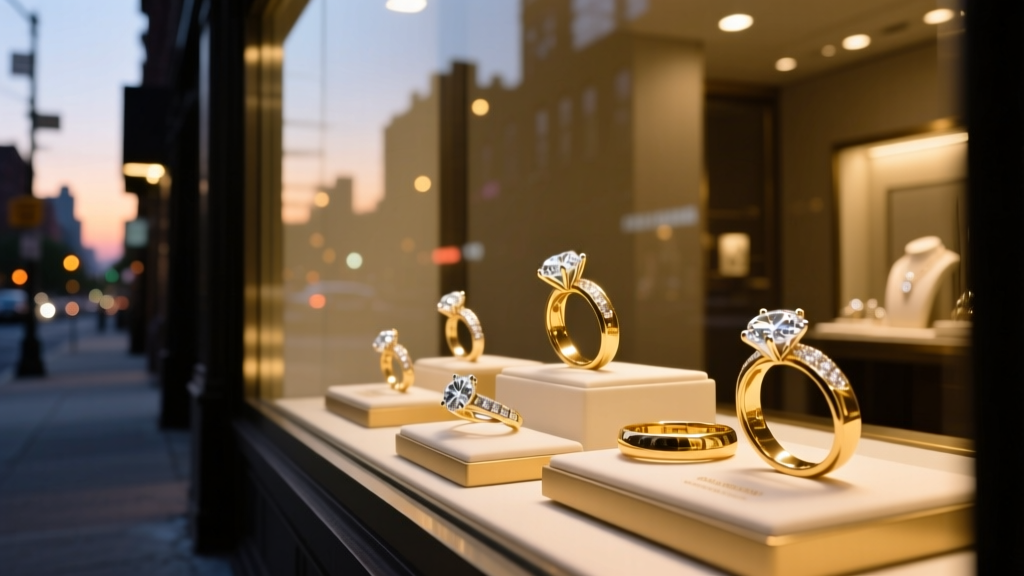
For decades, Manhattan’s 47th Street Diamond District held a monopoly on New York’s high-end gemstone commerce. However, as we navigate 2026, the epicenter of bespoke design, alternative stones, and culturally rich craftsmanship has decisively shifted across the East River. The modern Queens diamond & jewelry market is no longer just a suburban alternative; it is a highly sophisticated, trend-setting micro-economy. From the CVD lab-grown boom in Flushing to the 22-karat heritage fusion in Jackson Heights, Queens is redefining urban jewelry consumption.
This deep-dive analysis explores the exact materials, pricing structures, and aesthetic preferences driving the borough's jewelry renaissance, offering actionable insights for collectors, bespoke buyers, and industry watchers.
The Borough Shift: Why Queens is the New Diamond Epicenter
The migration of master jewelers and gemologists to Queens was accelerated by soaring Manhattan commercial rents and a post-2024 shift toward localized, community-based luxury. Today, the Queens diamond & jewelry sector is defined by its hyper-educated consumer base. Buyers here do not just ask for 'a one-carat round'; they request specific CVD growth methods, demand Type IIa purity, and expect to see GCAL light performance reports alongside standard grading.
Unlike the tourist-heavy Manhattan district, Queens jewelers cater to multi-generational families and tech-savvy millennials who prioritize ethical sourcing, aggressive pricing on lab-grown alternatives, and highly customized CAD (Computer-Aided Design) modeling. According to industry analyses from JCK Online, borough-based independent jewelers have seen a 34% year-over-year increase in custom engagement commissions, largely driven by the lab-grown sector.
Micro-Market Aesthetics: Flushing vs. Jackson Heights
Queens is not a monolith. The borough’s diverse enclaves have developed distinct jewelry signatures that reflect their cultural demographics and aesthetic priorities.
Flushing: The CVD Lab-Grown & Hidden Halo Capital
Flushing has emerged as the undisputed capital of the lab-grown diamond market in the Northeast. The prevailing aesthetic here favors high-carat weight (typically 2.0ct to 4.0ct) achieved through Chemical Vapor Deposition (CVD). The most requested cuts in 2026 are elongated cushions and radiant cuts, which maximize face-up size while masking the slight brown/green tinges that can occasionally plague lower-tier CVD rough.
Settings are overwhelmingly platinum 950 or 18k white gold, featuring 'hidden halos'—a ring of melee diamonds set beneath the center stone's gallery. Flushing buyers are notoriously strict about clarity, rarely accepting below VS1, and heavily favor DEF color grades. A 2.5ct CVD diamond with VS1 clarity and F color currently averages $2,100 in Flushing, a stark contrast to the $3,200+ you might pay for identical specs in Midtown.
Jackson Heights: 22K Heritage Meets Alternative Stones
In Jackson Heights, the jewelry narrative is deeply intertwined with South Asian heritage, where 22-karat gold (91.6% purity) is the standard for investment and bridal pieces. However, pure 22k gold is too soft to securely hold heavy diamond prongs. The 2026 innovation here is hybrid alloying: jewelers are crafting the main bangle or necklace body in rich 22k yellow gold, while utilizing 18k gold for the structural prong heads and bezels.
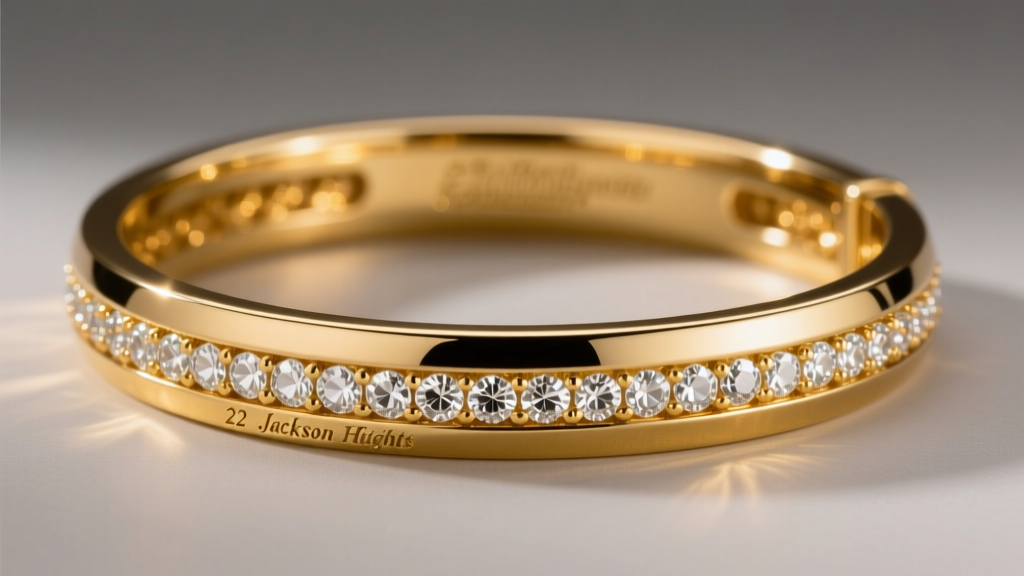
Furthermore, to keep the overall cost of heavy heritage sets accessible, many buyers are opting to substitute natural melee diamonds with DEF-color, crushed-ice cut moissanite. Because the primary draw of these pieces is the rich yellow gold and the overall 'flash' rather than individual stone clarity, high-grade moissanite offers identical dispersion (fire) at a fraction of the cost, allowing buyers to allocate more budget to the gold weight itself.
2026 Material Breakdown: What Buyers Are Actually Requesting
To understand the current Queens diamond & jewelry landscape, one must look at the hard data. The following table breaks down the average market pricing, trending cuts, and certification preferences across the four dominant stone types requested in Queens boutiques this year.
| Material | Avg Price (2.0ct) | Top Trending Cut | Primary Cert | Light Performance Focus |
|---|---|---|---|---|
| Natural Earth-Mined | $14,500 - $18,000 | Oval Brilliant | GIA | Excellent / Ideal |
| CVD Lab-Grown | $1,600 - $2,400 | Elongated Cushion | IGI / GCAL | Ideal / Hearts & Arrows |
| HPHT Lab-Grown | $1,800 - $2,600 | Round Brilliant | IGI | Ideal |
| Moissanite (Crushed Ice) | $450 - $700 | Antique Cushion | GRA / None | High Dispersion (Fire) |
Note: Pricing reflects Q1 2026 averages for VS1 clarity and F/G color equivalents in independent Queens retail settings.
Authentication Protocols: Beyond the Presidium Tester
With the influx of lab-grown diamonds and advanced simulants, authentication in the Queens market has evolved significantly. The standard thermal conductivity testers (like the classic Presidium Diamond Mate) are no longer sufficient, as moissanite and natural diamonds both pass these basic tests.
Reputable Queens jewelers now rely on electrical conductivity testing and Raman spectroscopy. Moissanite is electrically conductive, whereas natural and lab-grown diamonds are generally not (with rare exceptions like blue HPHT diamonds containing boron). For distinguishing between natural and lab-grown, top-tier Flushing and Astoria shops utilize desktop DiamondView machines or send stones out for GIA or IGI origin reports.
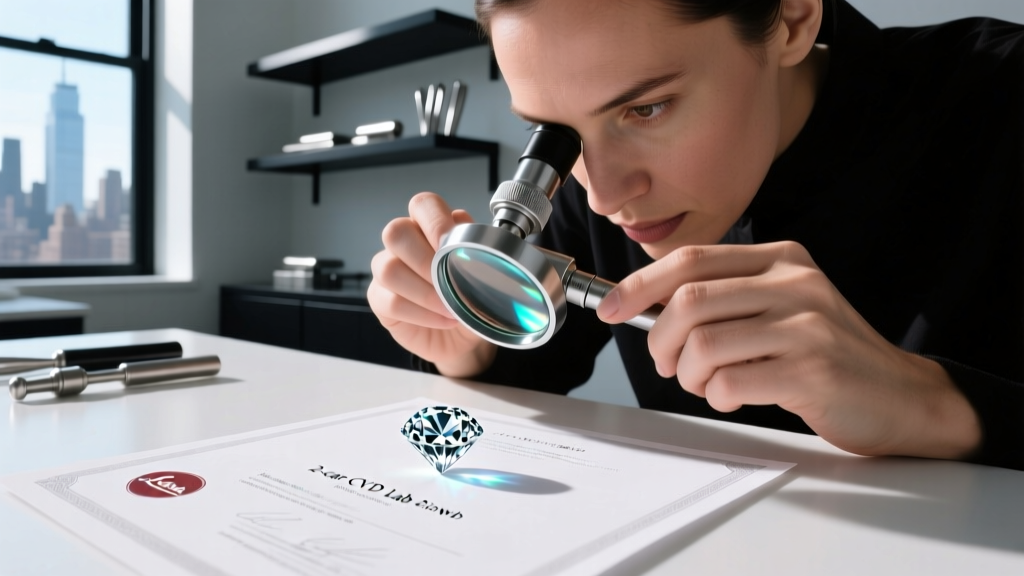
When purchasing a lab-grown diamond in Queens, always verify the laser inscription on the girdle using a 30x or higher digital loupe. Ensure the inscription matches the digital certificate exactly. Furthermore, ask the jeweler if the CVD stone has undergone post-growth HPHT treatment to improve color—a common and accepted practice, but one that should be transparently disclosed on the grading report.
Street-Level Buying Guide: Navigating Roosevelt & Main
If you are stepping into the Queens diamond & jewelry market for a bespoke commission or a major purchase, understanding the street-level dynamics is crucial for securing the best value and quality.
Location Scouting
- Main Street & Roosevelt Ave (Flushing): Best for high-carat lab-grown engagement rings, modern CAD designs, and competitive pricing on CVD stones. Look for shops with in-house CAD designers rather than those who outsource casting.
- 74th Street & Broadway (Jackson Heights): The premier destination for heavy gold heritage pieces, custom 22k bridal sets, and intricate enamel (meenakari) work paired with alternative stones.
- Steinway Street (Astoria): Known for vintage-inspired settings, European-cut diamond sourcing, and bespoke Art Deco reproductions using recycled platinum.
Negotiation Tactics for 2026
Unlike luxury mall brands, independent Queens jewelers operate on flexible margins, particularly on the metal and setting labor. While the cost of a certified lab-grown diamond is relatively fixed based on the wholesale Rapaport-style lists, you can often negotiate the setting cost.
Always ask for the 'cash or wire transfer discount.' Most independent borough jewelers will knock 5% to 8% off the total invoice to avoid the 3% to 4% processing fees associated with major credit cards. Additionally, if you are providing your own center stone (a growing trend where buyers purchase loose CVD stones online and bring them to a Queens bench jeweler for setting), expect to pay a 'setting risk fee' of $150 to $300, which covers the jeweler's liability insurance during the prong-tightening process.
Final Verdict: The Future of Borough-Based Bespoke
The Queens diamond & jewelry sector in 2026 is a masterclass in localized luxury. It offers a rare combination of Manhattan-level expertise, aggressive lab-grown pricing, and deep cultural customization that cannot be replicated in a corporate retail environment. Whether you are seeking a flawless 3-carat CVD elongated cushion in Flushing or a 60-gram 22k gold and moissanite bridal bangle in Jackson Heights, the borough provides an unparalleled, highly specialized buying experience for the modern, educated consumer.


