Disney Diamond Jewelry: Material & Authenticity Guide
Explore the material properties, diamond grades, and authenticity markers of official Disney diamond jewelry to make informed, magical purchases.

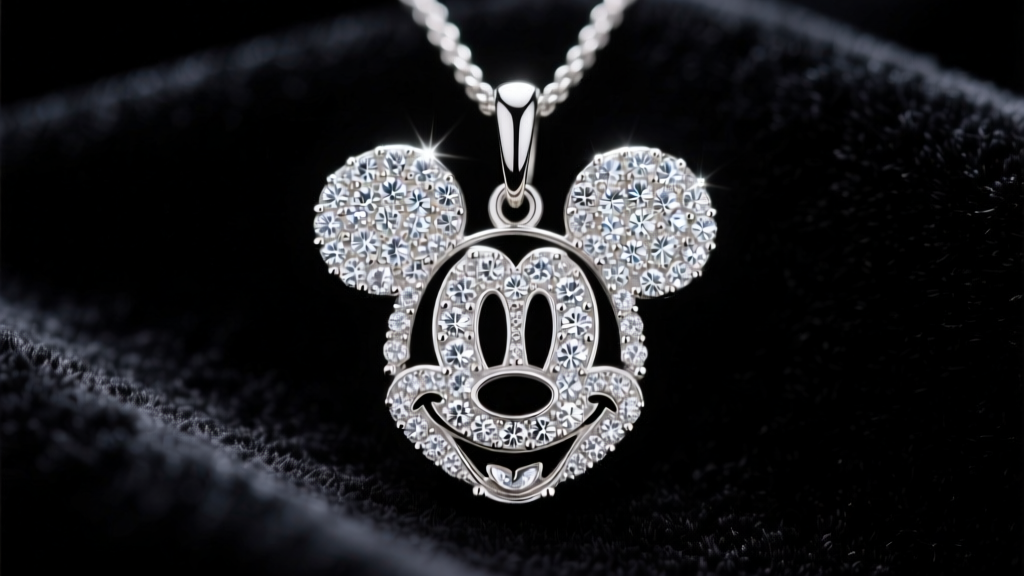
The Reality of Diamonds in Licensed Disney Jewelry
When consumers search for disney diamond jewelry, they are often met with a vast and confusing spectrum of products ranging from $50 theme park souvenirs to $10,000+ luxury engagement rings. The term 'diamond' is frequently applied loosely across different licensing tiers, making it critical for buyers to understand the exact material properties and gemological grades they are actually purchasing. Disney Consumer Products licenses its intellectual property to various manufacturers, and the materials used depend entirely on the licensee's target market and price point.
In the current 2026 market, the landscape of licensed character jewelry has shifted dramatically. While heritage fine jewelers like Enchanted Fine Jewelry and Kay Jewelers continue to utilize natural earth-mined diamonds for their premium collections, fashion-forward licensees like Pandora have fully transitioned their Disney charm lines to feature lab-grown diamonds. Meanwhile, lower-tier mall kiosks and theme park gift shops often sell cubic zirconia (CZ) or white sapphire pieces that are heavily marketed with 'diamond-like' terminology. Understanding the gemological differences between these materials is essential for evaluating durability, optical performance, and long-term value.
Natural vs. Lab-Grown vs. Simulants in Disney Collections
To navigate the market, you must first identify which tier of Disney jewelry you are examining. The optical and physical properties of the stones vary wildly across these categories. Below is a comparative breakdown of the primary materials used in official Disney-licensed pieces.
| Material | Refractive Index | Mohs Hardness | Dispersion (Fire) | Typical Disney Application |
|---|---|---|---|---|
| Natural Melee Diamond | 2.42 | 10 | 0.044 | Premium fine jewelry (Enchanted, Zales) |
| Lab-Grown Diamond | 2.42 | 10 | 0.044 | Fashion fine jewelry (Pandora Disney) |
| White Sapphire | 1.76 | 9 | 0.018 | Mid-tier alternative jewelry |
| Cubic Zirconia (CZ) | 2.15 | 8.5 | 0.060 | Theme park & budget fashion jewelry |
As noted by the Gemological Institute of America (GIA), natural and lab-grown diamonds share identical chemical, physical, and optical properties. Both will exhibit the signature brilliance and scintillation expected of high-end Disney princess or villain collections. However, simulants like CZ possess a higher dispersion (0.060), which creates an artificial 'rainbow' effect that gemologists often refer to as the 'disco ball' effect, instantly giving away its non-diamond origin.
Decoding the 4Cs in Disney Fine Jewelry
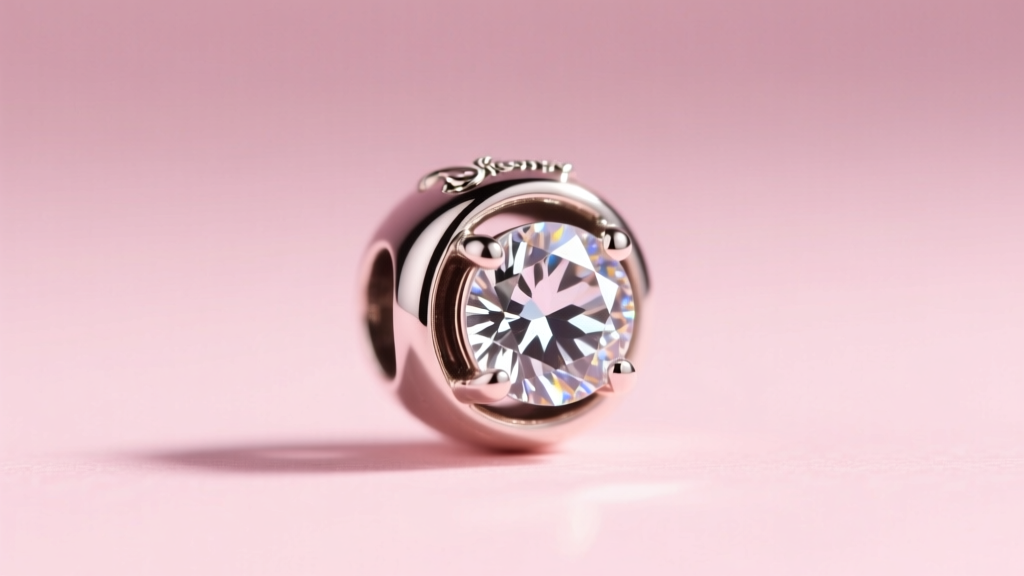
When investing in premium disney diamond jewelry, the 4Cs (Cut, Color, Clarity, and Carat) dictate both the beauty and the price. However, because the vast majority of diamonds used in character-themed jewelry are 'melee' (stones weighing less than 0.15 carats), they are rarely accompanied by individual grading reports from the GIA or AGS. Instead, they are sorted into commercial parcels by the manufacturer.
Typical Melee Grades Used by Disney Licensees
Understanding the standard commercial grades used by licensees helps manage expectations regarding the visual performance of the stones:
- Carat Weight: Most pavé settings on Mickey Mouse ears or Cinderella castle silhouettes utilize melee diamonds ranging from 0.01ct to 0.03ct each. Total carat weights (TCW) for pendants usually sit between 0.10ct and 0.25ct.
- Color: Fine licensees typically use G-H (near colorless) or I-J (slightly tinted) melee. Because the stones are so small, slight tints are masked by the reflective pavé setting.
- Clarity: I1 to I3 (Included) is the industry standard for commercial melee. Inclusions are present but generally invisible to the naked eye at this microscopic scale.
- Cut: Standard single-cut (17 or 18 facets) or full-cut (57 or 58 facets) rounds are used. Full-cut melee offers superior light return but increases the manufacturing cost of the jewelry.
According to the Federal Trade Commission (FTC) Jewelry Guides, retailers must accurately represent the quality and origin of the stones. If a piece is marketed as 'lab-grown,' it must be clearly disclosed, a rule that has become highly relevant as brands like Pandora integrate their 'Pandora Brilliance' lab-grown stones into their official Disney charm lines.
Material Durability: Mohs Hardness & Wearability
Character jewelry is often worn daily, making material durability a primary concern. The Mohs scale of mineral hardness is logarithmic, meaning a diamond (10) is not just twice as hard as white sapphire (9), but exponentially more resistant to scratching and abrasion.
Setting Styles and Prong Security
In disney diamond jewelry, the setting style is just as critical as the stone's hardness. Pavé and micro-prong settings are heavily favored for intricate character silhouettes. However, micro-prongs require precise metalwork. If the prongs are cast too thinly in 10k or 14k gold to maximize the visible diamond surface area, they become prone to snagging and breaking. For daily wear pieces, such as a Belle rose pendant or a Star Wars Rebel Alliance ring, buyers should prioritize bezel settings or shared-prong settings with reinforced gallery wires. Cubic zirconia, while reasonably hard at 8.5, is highly susceptible to micro-abrasions from environmental dust (which contains quartz, hardness 7). Over a period of two to three years of daily wear, CZ stones in theme park jewelry will inevitably develop a cloudy, scratched surface, whereas natural and lab-grown diamonds will remain pristine.
Authenticity Testing & Hallmark Verification
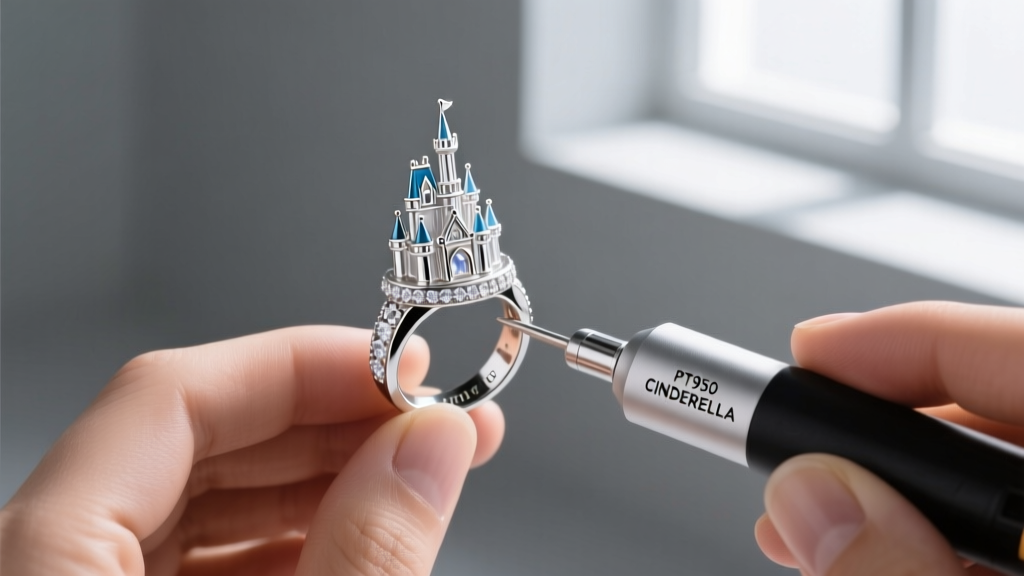
The secondary market for Disney jewelry is flooded with counterfeits, making authentication a necessary skill for collectors and resellers. Verifying the authenticity of disney diamond jewelry requires a two-pronged approach: testing the gemological material and verifying the licensing hallmarks.
Gemological Testing Methods
Standard thermal conductivity testers will easily distinguish diamonds (both natural and lab-grown) from CZ and white sapphire. However, because lab-grown diamonds and natural diamonds share identical thermal properties, a standard pen tester cannot tell them apart. To differentiate between a natural diamond Enchanted Fine Jewelry piece and a lab-grown alternative, a jeweler must use advanced spectroscopic equipment or check for microscopic laser inscriptions on the girdle, which some premium lab-grown suppliers include.
Expert Authentication Tip: Genuine Disney-licensed fine jewelry will always feature a specific set of hallmarks stamped into the metal. Look for the copyright symbol followed by Disney (©Disney), the metal purity mark (e.g., 925, 14k, 18k), and the specific maker's mark of the licensee (such as the Pandora 'O' with a crown, or the Enchanted Fine Jewelry stamp). Counterfeiters often miss the © symbol or use incorrect font weights for the metal stamps.
Final Verdict: Choosing Your Disney Piece
Ultimately, the 'best' material for your disney diamond jewelry depends entirely on your budget, wearability needs, and collecting goals. If you are purchasing a high-end engagement ring or an heirloom piece from a licensed fine jeweler, natural melee diamonds offer traditional prestige and long-term physical permanence. If you are buying fashion-forward charms for daily wear, lab-grown diamonds provide the exact same optical brilliance and Mohs 10 hardness at a more accessible price point, aligning with modern sustainability preferences. Conversely, if you are simply looking for a fun, low-cost souvenir from a theme park visit, CZ simulants are perfectly adequate, provided you understand their long-term durability limitations. By scrutinizing the material properties, understanding the 4Cs of melee stones, and rigorously checking hallmarks, you can ensure that your magical jewelry purchase remains brilliant for a lifetime.


