Beginner Guide to Buying Authentic Black Tourmaline Jewelry
Discover how to identify, buy, and care for authentic black tourmaline jewelry. Learn pricing, metal pairings, and spotting fakes in our beginner guide.

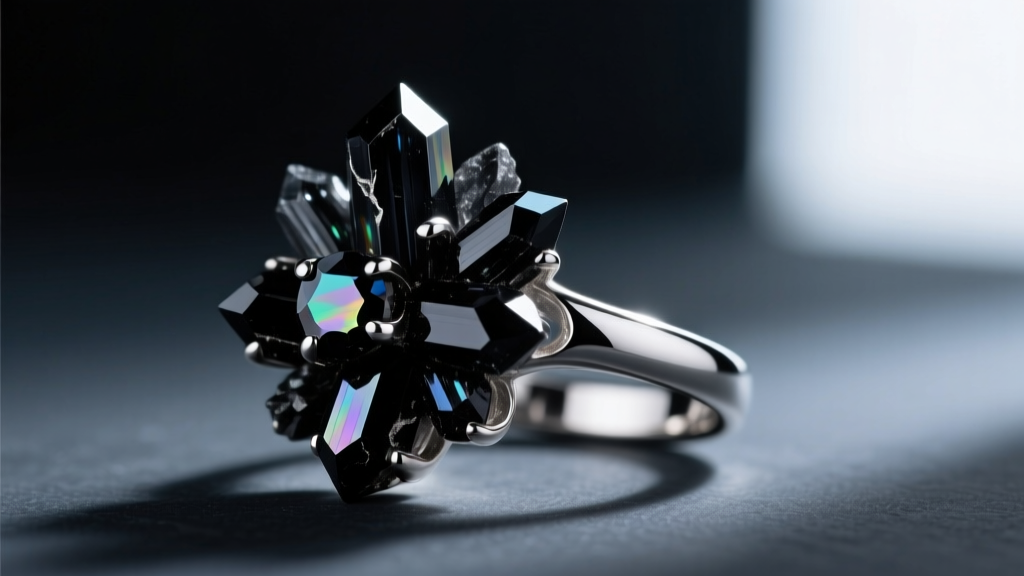
Entering the world of gemstone accessories can feel overwhelming, especially when navigating the metaphysical and aesthetic hype surrounding popular stones. If you are looking to invest in black tourmaline jewelry, you are making an excellent choice. Known mineralogically as schorl, this striking, opaque stone offers a bold, gothic elegance that pairs beautifully with almost any wardrobe. But beyond its striking appearance, how do you ensure you are buying the real deal? This beginner-friendly explainer breaks down everything you need to know about identifying, pricing, and caring for authentic black tourmaline pieces.
The Mineralogy of Schorl: What Are You Actually Wearing?
Before you purchase black tourmaline jewelry, it helps to understand the stone's physical properties. Black tourmaline is a boron silicate mineral belonging to the trigonal crystal system. According to the Gemological Institute of America (GIA), tourmaline is highly prized for its complex chemical makeup, which allows for a vast spectrum of colors. The black variety, schorl, gets its deep, inky color from high concentrations of iron and titanium.
On the Mohs scale of mineral hardness, black tourmaline ranks between 7.0 and 7.5. This makes it reasonably durable for everyday wear in rings and bracelets, though it is noticeably softer than diamonds (10) or sapphires (9). One unique characteristic of tourmaline is its pyroelectric and piezoelectric nature. When subjected to heat or pressure, the stone develops a slight electrical charge. Historically, this property was used by Dutch traders to pull ash from their meerschaum pipes! For modern jewelry wearers, this means your black tourmaline might attract dust and lint more quickly than other gems.
Real vs. Fake: How to Spot Imitations
Because genuine black tourmaline is relatively abundant, it is not the most heavily faked gemstone on the market. However, unscrupulous sellers sometimes pass off cheaper materials as schorl, especially in raw or unpolished crystal jewelry. The most common imitations are black obsidian, dyed black onyx, and simple black glass.
Here is a quick-reference comparison chart to help you identify genuine black tourmaline against common lookalikes, based on data from Mindat.org's Schorl database:
| Feature | Black Tourmaline (Schorl) | Black Obsidian | Black Glass |
|---|---|---|---|
| Mohs Hardness | 7.0 - 7.5 | 5.0 - 5.5 | ~5.5 |
| Crystal Structure | Trigonal (often shows vertical striations) | Amorphous (no crystal structure) | Amorphous |
| Fracture | Uneven to conchoidal | Conchoidal (smooth, glassy curves) | Conchoidal |
| Light Transmission | Opaque (light does not pass through edges) | Slightly translucent at very thin edges | Often translucent |
| Price Point | Moderate ($$) | Low ($) | Very Low ($) |
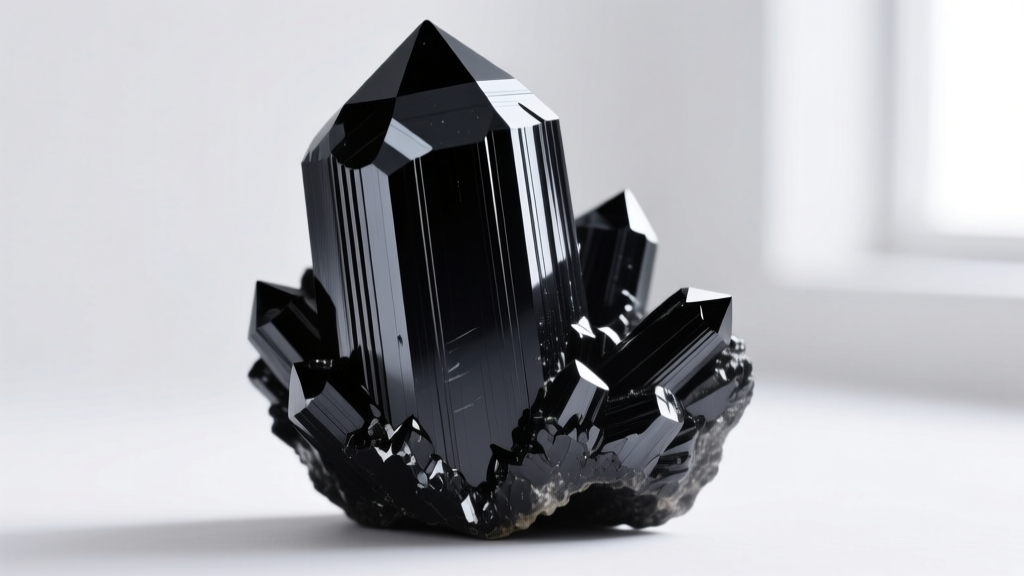
The Flashlight and Scratch Tests
If you are buying raw black tourmaline jewelry (like unpolished crystal pendants), look closely at the sides of the stone. Genuine schorl almost always features vertical striations—tiny, parallel lines or ridges running down the length of the crystal prism. Obsidian and glass will be completely smooth or feature curved, shell-like fracture marks.
For polished cabochons or faceted stones, use a strong LED flashlight. Press the light against the thinnest edge of the stone. Black tourmaline is heavily included and dense; it will remain stubbornly opaque. If you see a brownish or grayish glow transmitting through the edges, you are likely holding black glass or obsidian.
Best Metal Settings for Black Tourmaline
The deep, light-absorbing black of schorl acts as a neutral canvas, making it incredibly versatile when paired with precious metals. However, the choice of metal and setting style impacts both the aesthetics and the longevity of your black tourmaline jewelry.
- Sterling Silver (925): The most popular and affordable pairing. The high-contrast, icy white of polished silver against inky black tourmaline creates a striking, modern, or gothic aesthetic. Be aware that silver tarnishes, and because tourmaline attracts dust, you will need to clean silver-tourmaline pieces regularly.
- 14k or 18k Yellow Gold: Yellow gold warms up the stone and lends a vintage, luxurious feel to the piece. This combination is highly sought after in high-end designer collections and Art Deco-inspired reproduction pieces.
- Rose Gold: For a softer, more romantic contrast, rose gold provides a subtle blush that plays beautifully against the harshness of the black stone.
Setting Styles: Bezel vs. Prong
From a lapidary perspective, black tourmaline can be brittle. It possesses a distinct basal cleavage and often contains internal tension fractures formed during its rapid volcanic cooling process. Because of this, bezel settings (where a metal rim completely encircles the girdle of the stone) are highly recommended, especially for rings and bracelets that endure daily impact. Traditional prong settings leave the edges exposed, significantly increasing the risk of chipping if the stone is knocked against a hard surface.
Pricing Guide: What Should You Pay?
One of the most appealing aspects of black tourmaline jewelry is its accessibility. Unlike emeralds or rubies, schorl is abundant, meaning you do not need a massive budget to acquire a high-quality, natural stone. Here is a realistic pricing breakdown for the current market:
1. Raw and Rough Crystal Jewelry
Wire-wrapped raw shards or simple drilled rough beads are the most affordable entry point. Expect to pay between $15 and $45 for a finished pendant or a simple beaded stretch bracelet. The price fluctuates based on the size of the crystal points and the complexity of the wire-wrapping (e.g., copper vs. sterling silver wire).
2. Polished Cabochons and Beads
Smooth, polished cabochons set in sterling silver typically range from $40 to $120. High-quality, uniformly black beads without heavy pitting or brownish matrix inclusions will sit at the higher end of this spectrum.
3. Faceted Black Tourmaline
While rare (since faceting an opaque stone doesn't yield the brilliance seen in transparent gems), some lapidaries facet highly polished black tourmaline to create a mirror-like, geometric surface. Faceted stones set in 14k gold can command prices between $250 and $600+, driven primarily by the cost of the precious metal and the custom cutting labor rather than the gemstone itself.
Care and Maintenance: Avoiding Damage
Proper care is essential to maintain the glassy luster of polished black tourmaline and the structural integrity of raw crystals. Because of the stone's unique physical properties and internal characteristics, you must avoid standard jewelry cleaning shortcuts.
CRITICAL WARNING: Never place black tourmaline jewelry in an ultrasonic cleaner. The high-frequency vibrations can easily exploit internal stress fractures, causing the stone to shatter or crack from the inside out.
Similarly, avoid steam cleaners. Sudden temperature changes (thermal shock) can cause the stone to fracture. Furthermore, because tourmaline is pyroelectric, heat can cause it to develop an electrical charge that will aggressively attract microscopic dust particles into the setting, making it look duller over time.
The Only Safe Cleaning Method
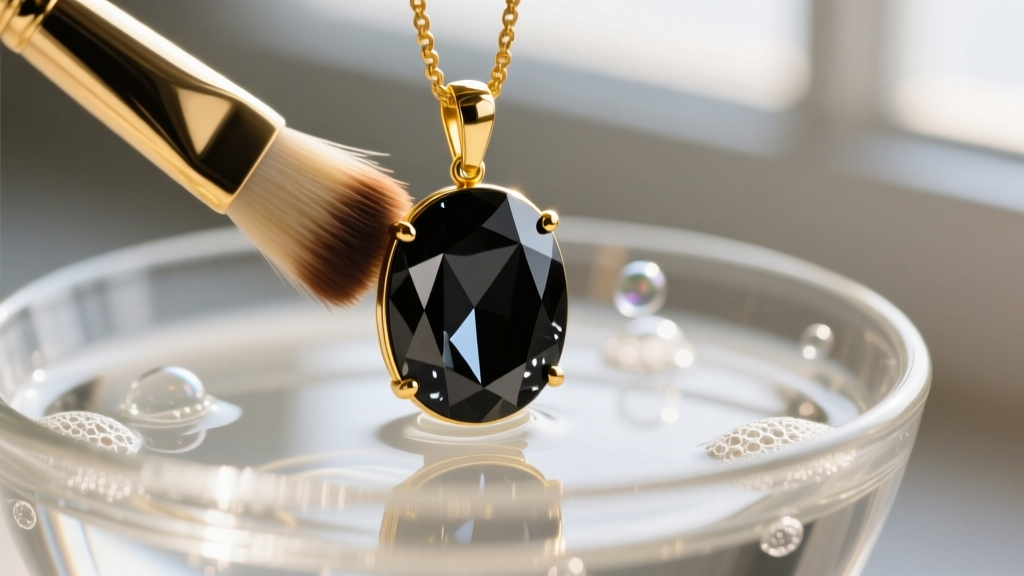
- Fill a small bowl with lukewarm (never hot) water and a few drops of mild, ammonia-free dish soap.
- Submerge your black tourmaline jewelry for 3 to 5 minutes to loosen oils and dirt.
- Using a baby-soft toothbrush or a dedicated, ultra-soft jewelry brush, gently sweep the stone and the metal setting. Do not scrub aggressively.
- Rinse thoroughly under lukewarm running water.
- Pat dry with a lint-free microfiber cloth. Allow it to air dry completely before storing.
Final Thoughts for Beginners
Black tourmaline jewelry offers an unmatched combination of durability, striking aesthetics, and affordability. Whether you are drawn to the raw, earthy energy of an unpolished crystal pendant or the sleek, modern edge of a faceted schorl ring, understanding the stone's mineralogy and care requirements ensures your piece will last a lifetime. By sticking to bezel settings, avoiding ultrasonic cleaners, and knowing how to spot the tell-tale vertical striations of genuine schorl, you can shop with absolute confidence. Welcome to the dark, elegant side of gemstone jewelry.


