Star Garnet Jewelry: The 2026 Pricing & Value Guide
Discover the true value of star garnet jewelry in 2026. Expert pricing tables, grading factors, and budget tips for Idaho vs. Indian cabochons.

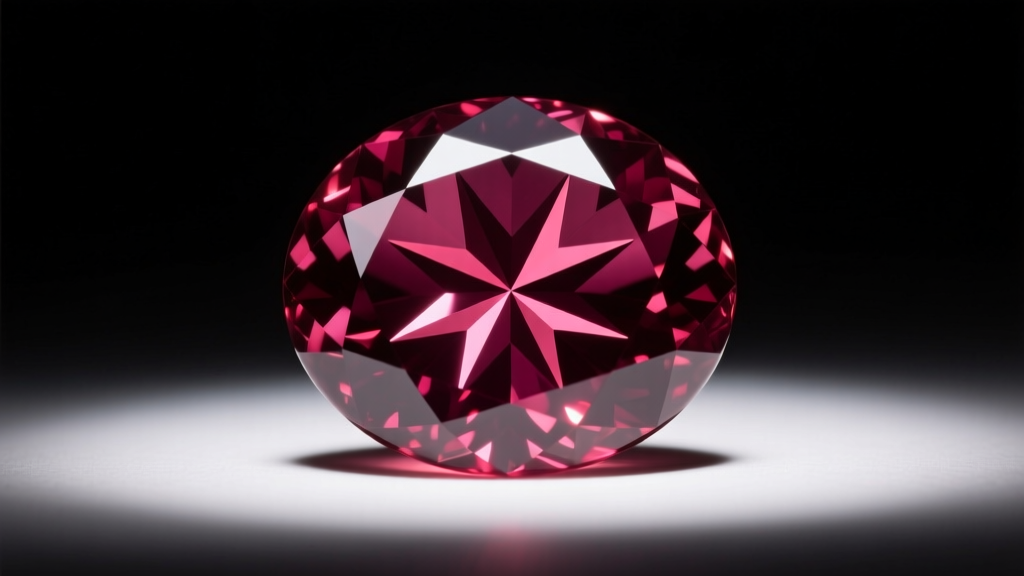
When collectors and bespoke jewelry enthusiasts discuss rare optical phenomena in gemstones, star garnet jewelry frequently emerges as a fascinating, undervalued frontier. Unlike the ubiquitous star sapphires or rubies, star garnets offer a deeply mysterious, dark plum-to-red canvas crossed by a shimmering celestial star. However, navigating the market for these unique stones requires a precise understanding of gemological grading, origin premiums, and structural vulnerabilities. In this 2026 value assessment, we break down exactly what you should pay for star garnet jewelry, how to grade the asterism, and where the hidden budget traps lie.
The Gemological Allure: What Creates the Star?
Star garnet is a rare variety of garnet—typically falling within the almandine-pyrope solid solution series—that exhibits asterism. This optical phenomenon is caused by dense, microscopic needle-like inclusions of rutile (titanium dioxide) or other fibrous minerals that align along specific crystallographic axes. When a gem cutter shapes the rough into a cabochon with a flat base parallel to these inclusions, light reflecting off the needles creates a distinct four-rayed or six-rayed star.
According to the Gemological Institute of America (GIA), while almandine garnets are common, those with the precise density and alignment of rutile needles required to produce a sharp, centered star are exceptionally rare. This inherent scarcity is the primary driver of value in the star garnet market, though prices vary wildly based on origin and translucency.
Decoding Star Garnet Pricing: 2026 Market Rates
To accurately assess the budget required for star garnet jewelry, you must understand how the market segments these stones. Unlike faceted diamonds, star garnets are priced based on the visual impact of the phenomenon rather than just carat weight. Below is the 2026 wholesale-to-retail pricing matrix for calibrated and custom-cut star garnets.
| Grade | Primary Origin | Star Quality | Body Color & Translucency | Estimated Price Per Carat (2026) |
|---|---|---|---|---|
| Commercial | India | 4-ray (faint, off-center) | Opaque, blackish-red | $5 - $15 |
| Medium | India / Mixed | 4-ray (distinct) | Semi-opaque, deep plum | $20 - $45 |
| Fine | Idaho, USA | 6-ray (sharp, centered) | Semi-transparent edges, rich red | $60 - $130 |
| Extra Fine | Idaho, USA | 6-ray (razor-sharp, gliding) | Translucent, vibrant plum-red | $150 - $350+ |
Idaho vs. Indian Star Garnets: A Value Comparison
The single most significant price multiplier in star garnet jewelry is geographic origin. India produces the vast majority of the world's commercial-grade star garnets. These stones are typically heavily included, completely opaque, and display a weak, four-rayed star that only appears under intense, direct sunlight. They are highly affordable and frequently set in mass-produced sterling silver jewelry.
Conversely, Idaho (where star garnet is the official state gem) produces stones that command a massive premium. Idaho star garnets are famous for their sharper, six-rayed stars and superior translucency. As noted by the International Colored Gemstone Association (ICA), the translucency of a high-grade Idaho stone allows light to penetrate the dome, creating a glowing, three-dimensional star that appears to float beneath the surface, rather than merely reflecting off it. Expect to pay a 300% to 500% premium for verified Idaho origin.
4 Critical Value Factors to Inspect Before Buying
When evaluating a piece of star garnet jewelry in person or via high-resolution video, do not rely solely on the carat weight. Use this four-point framework to determine if the asking price is justified.
- Asterism Sharpness and Centering: The star must be perfectly centered on the apex of the cabochon dome. If the star is off-center, the cutter misaligned the base with the rutile needles, significantly dropping the stone's value. The rays should be distinct and unbroken from edge to edge.
- Translucency vs. The 'Black Hole' Effect: Lower-quality star garnets are so packed with inclusions that they appear completely black and opaque. Hold the stone to a strong light source. A valuable stone will show deep red or plum translucency at the edges. Total opacity is a hallmark of commercial-grade material.
- Cabochon Dome Proportions: The star phenomenon requires a high, rounded dome to display properly. Flat or low-domed cabochons will compress the star, making it look like a distorted cross. A proper dome height should be roughly 30% to 40% of the stone's total width.
- Star Mobility (The 'Gliding' Effect): In premium stones, as you move the light source or the ring, the star should smoothly glide across the surface of the dome without breaking apart or snapping erratically.
Budgeting for Settings: Why Bezels Are Mandatory
A common budgeting mistake when commissioning custom star garnet jewelry is underestimating the setting requirements. Garnets generally rank between 7.0 and 7.5 on the Mohs hardness scale, which is adequate for everyday wear. However, the dense network of rutile needles that creates the star also creates internal structural weaknesses and potential cleavage planes.
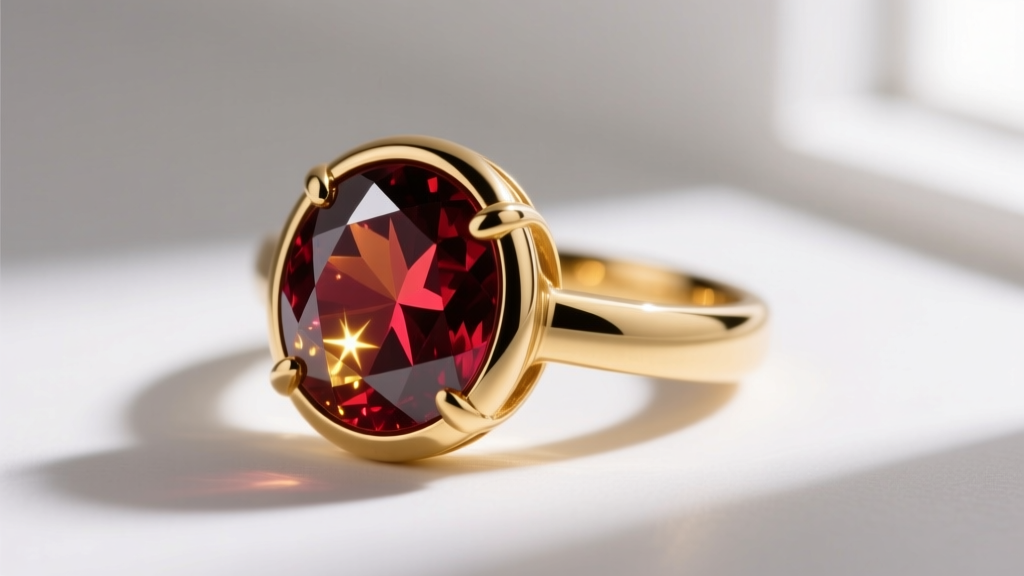
Prong settings are highly discouraged for star garnets. The pressure exerted by prongs can easily fracture the stone along an inclusion line. Furthermore, prongs can cast shadows that interrupt the visual continuity of the star's rays. A full or half-bezel setting in 14k or 18k gold is the industry standard. The bezel protects the vulnerable girdle edge and provides a clean, unobstructed frame for the asterism. When budgeting, allocate an additional $250 to $600 for a custom bezel setting, as the thick metal rim requires more gold and higher labor costs than a standard prong cast.
Red Flags: Imitations and Overpaying
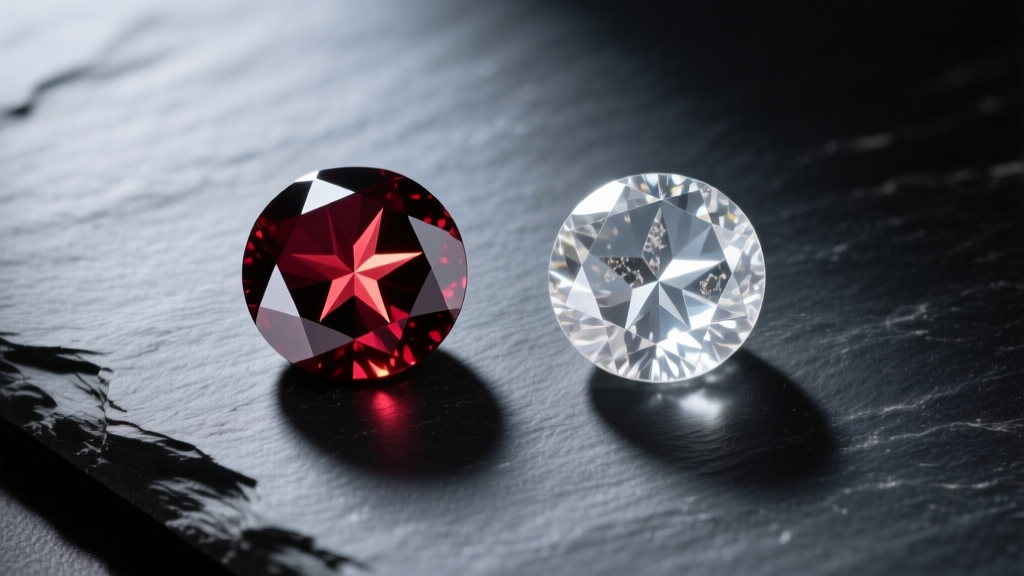
Because high-quality star garnets are rare, the market is occasionally flooded with misleading alternatives. Synthetic star corundum (sapphire/ruby) is frequently manufactured to mimic the dark red hues of garnet. While beautiful, synthetic corundum is chemically distinct and should be priced accordingly. Glass imitations with etched foil backs also exist in the ultra-low-budget tourist market.
'Always verify the specific gravity and refractive index if a 'star garnet' appears suspiciously flawless or overly bright. Natural star garnets are inherently moody and dark; a vibrant, neon-red star stone is almost certainly synthetic spinel or corundum.' — Mindat.org Gemological Database
To avoid overpaying, request a brief report from a recognized gemological lab (like GIA or AGL) for any star garnet jewelry piece priced over $1,500. The report will confirm the almandine-pyrope composition and verify the absence of synthetic flux or Verneuil growth curves.
Final Verdict: Is Star Garnet a Smart Allocation of Budget?
From a strict investment standpoint, star garnet jewelry does not possess the high liquidity of star sapphires or emeralds. However, from a value-for-money and bespoke collecting perspective, it is arguably one of the most rewarding gemstones on the 2026 market. A fine-grade, six-rayed Idaho star garnet offers a level of optical drama and rarity that would cost tens of thousands of dollars in the corundum family, yet it can be acquired for a few hundred to a couple of thousand dollars. By prioritizing translucency, demanding a high dome, and insisting on a protective bezel setting, you can secure a piece of celestial jewelry that is both financially sensible and gemologically extraordinary.


