Shell Jewelry Dish Guide: Material Properties & Gemstone Care
Discover the material properties of abalone, capiz, and mother of pearl shell jewelry dishes. Learn how to safely store and protect your gemstones.

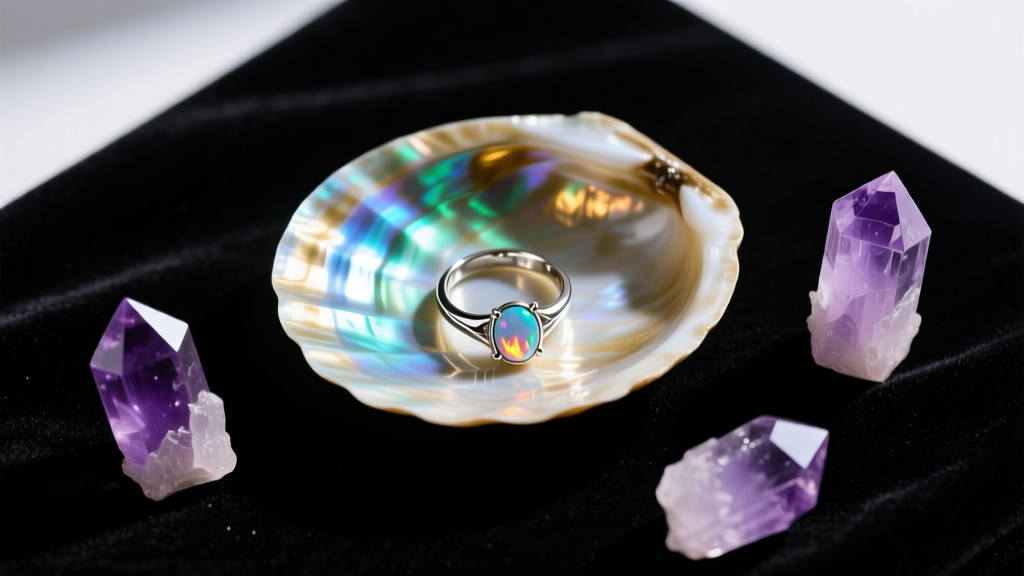
The Intersection of Shell and Gemstone Storage
When curating a collection of fine gemstone and crystal jewelry, the accessories you use to store and display your pieces are just as important as the stones themselves. A shell jewelry dish is a popular choice among crystal enthusiasts and jewelry collectors alike, prized for its organic beauty, iridescent luster, and oceanic metaphysical ties. However, from a mineralogical and gemological perspective, shell is not merely a decorative backdrop; it is a distinct biological mineral composite that interacts directly with the gemstones it holds.
Choosing the right shell jewelry dish requires an understanding of its material properties, including its Mohs hardness, porosity, and chemical vulnerabilities. Storing a delicate amber cabochon or a raw quartz cluster in a shell dish without understanding these interactions can lead to unintended micro-scratches, surface dulling, or chemical degradation. In this comprehensive guide, we will explore the mineralogy of shell materials, compare the most common varieties used in jewelry dishes, and provide a definitive framework for safely pairing your gemstones with these organic treasures.
The Mineralogy of Shell: Calcium Carbonate and Nacre
To understand how a shell jewelry dish will behave over time, we must first look at its chemical composition. Shells are primarily composed of calcium carbonate (CaCO3), secreted by mollusks in two distinct crystalline forms: calcite and aragonite. According to Mindat.org's aragonite database, aragonite is the orthorhombic polymorph of calcium carbonate and is the primary building block of nacre, commonly known as mother of pearl.
Nacre is a remarkable biomineral. It consists of microscopic hexagonal platelets of aragonite, measuring roughly 10 to 20 micrometers wide and 0.5 micrometers thick. These platelets are stacked in continuous parallel layers and bonded together by an organic matrix of biopolymers, such as chitin and silk fibroin. This 'brick-and-mortar' microstructure is what gives nacre its exceptional toughness and its signature iridescent play-of-color, caused by the interference and diffraction of light waves between the aragonite layers.
On the Mohs scale of mineral hardness, calcium carbonate registers between 2.5 and 4.0. This relatively low hardness is the most critical factor to consider when using a shell jewelry dish, as it dictates which gemstones can be safely stored within it without causing mechanical damage to the dish's polished interior.
Material Comparison: Abalone vs. Mother of Pearl vs. Capiz
Not all shell jewelry dishes are created equal. The market is dominated by three primary materials, each with distinct structural and aesthetic properties.
1. Abalone (Haliotis)
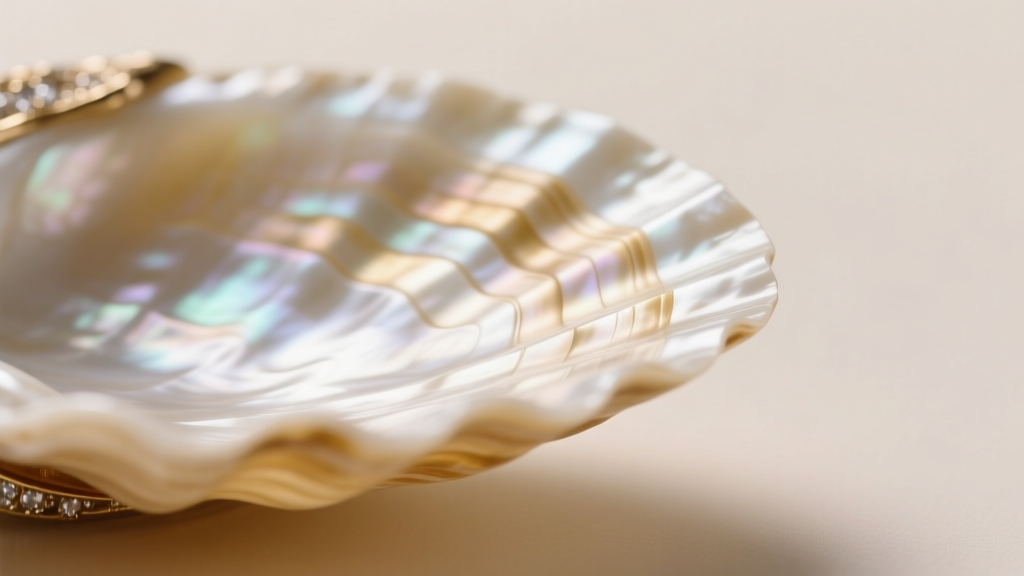
Abalone shells are renowned for their vibrant, multi-colored iridescence, featuring deep blues, greens, and purples. The shell is notably thick and dense, making abalone jewelry dishes highly durable and resistant to chipping. The interior nacre is exceptionally smooth, providing a low-friction surface that is ideal for holding polished gemstone rings and pendants. However, because abalone is often harvested from wild populations, ethical sourcing and CITES compliance are important considerations for conscious buyers.
2. Mother of Pearl (Pinctada)
Often sourced from pearl-producing oysters, Mother of Pearl (MOP) dishes typically exhibit a softer, more uniform white or cream iridescence compared to the wild patterns of abalone. MOP is slightly more brittle than thick abalone but offers a flawlessly smooth, high-gloss finish. It is the premium choice for storing delicate, high-polish gemstones like pearls, opals, and moonstones, as its fine aragonite structure minimizes the risk of micro-abrasions.
3. Capiz (Placuna placenta)
Capiz shell, often called 'windowpane oyster,' is translucent, pale, and significantly thinner than abalone or MOP. Capiz jewelry dishes are usually larger, flatter, and more affordable. While beautiful for displaying chunky crystal clusters or beaded bracelets, capiz lacks the structural density of nacre-heavy shells and is highly susceptible to cracking if subjected to point-impact from heavy gemstones like faceted garnet or topaz.
Data Table: Shell Material Properties & Gemstone Compatibility
The following table provides a quick-reference framework for matching your shell jewelry dish material with the appropriate gemstone types, based on mineral hardness and structural integrity.
| Shell Material | Mohs Hardness | Structural Density | Best Gemstone Pairings | Gemstones to Avoid |
|---|---|---|---|---|
| Abalone | 3.0 - 3.5 | High (Thick nacre) | Gold, Silver, Polished Agate, Jade, Lapis Lazuli | Raw Quartz clusters, unpolished Tourmaline |
| Mother of Pearl | 2.5 - 3.0 | Medium-High (Fine nacre) | Pearls, Opals, Amber, Moonstone, Coral | Diamond, Sapphire, faceted Topaz |
| Capiz | 2.5 - 3.0 | Low (Thin, brittle) | Wood beads, Tumbled Malachite, lightweight resin | Heavy crystal spheres, sharp raw minerals |
How Shell Dishes Interact with Your Gemstone Jewelry
The golden rule of gemstone storage is that materials of higher Mohs hardness will scratch materials of lower hardness. Because shell maxes out at roughly 3.5 to 4.0 on the Mohs scale, it occupies a precarious middle ground in the mineral kingdom.
Soft and Porous Stones (Mohs 2.0 - 5.0)
Organic and porous gemstones such as amber (2.0-2.5), pearl (2.5-3.0), and turquoise (5.0-6.0) are generally safe to store in a mother of pearl or abalone shell jewelry dish. In fact, shell is an ideal environment for pearls. According to the Gemological Institute of America (GIA), pearls require a slightly humid environment and should not be stored in airtight plastic, which can cause them to dehydrate and crack. A shell dish left open on a vanity provides the perfect ambient moisture exchange. However, be cautious with amber; if the shell dish has any unpolished, rough edges, the shell can actually scratch the soft amber surface.
Hard and Faceted Stones (Mohs 6.5 - 10.0)
Storing hard, faceted gemstones like sapphire (9.0), diamond (10.0), or even common quartz (7.0) in a shell jewelry dish presents a significant risk to the dish, not the stone. Dropping a faceted quartz pendant into an abalone dish can easily gouge the nacre, leaving permanent white scuff marks that cannot be polished out without stripping the iridescent layer entirely. If you must store hard crystals in a shell dish, ensure they are tumbled and smooth, or place a soft microfiber cloth at the base of the dish as a protective barrier.
Care, Cleaning, and Preservation of Shell Dishes
The chemical vulnerability of calcium carbonate is the most common point of failure for shell jewelry dishes. CaCO3 reacts rapidly with weak acids. Many well-meaning collectors ruin their shell dishes by wiping them down with standard household multi-surface cleaners, which often contain citric acid, vinegar, or ammonia.
- Never use acidic cleaners: Even a mild solution of water and lemon juice will cause the shell to effervesce (bubble), permanently etching the surface and destroying the nacre's light-reflecting properties.
- Avoid ultrasonic cleaners: Never place your shell dish (or your pearls and opals) in an ultrasonic jewelry cleaner. The high-frequency cavitation can delaminate the aragonite layers, causing the shell to flake and peel.
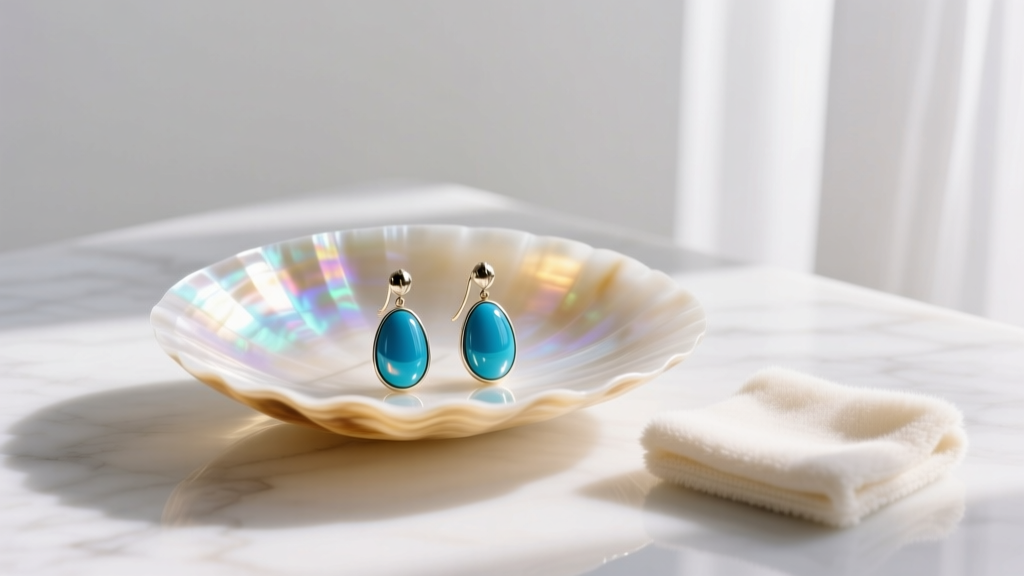
- Proper cleaning protocol: To clean a shell jewelry dish, use only a damp, lint-free microfiber cloth with a drop of pH-neutral castile soap. Buff it dry immediately with a soft cotton cloth.
- Hydration and polishing: If your abalone or MOP dish begins to look dull or chalky over time, you can restore its luster by rubbing a microscopic amount of mineral oil or pure jojoba oil into the surface. This mimics the natural hydration the shell would have received in its marine environment.
Metaphysical & Energetic Pairings
For those who utilize crystals for their metaphysical properties, a shell jewelry dish serves as more than just a physical container; it acts as an energetic amplifier. Shell is intrinsically tied to the water element, the moon, and the divine feminine. It is widely regarded as a soothing, protective material that promotes emotional balance and intuition.
Pairing a shell dish with water-aligned gemstones like aquamarine, larimar, or moonstone creates a synergistic energetic loop, enhancing the stones' calming vibrations. Furthermore, many crystal healers use abalone dishes as natural smudging bowls for sage or palo santo, believing that the oceanic energy of the shell neutralizes negative ions and grounds the cleansing smoke. (Note: If using shell for smudging, always place a bed of sand or ash inside the dish to prevent the heat from scorching and cracking the calcium carbonate).
Final Thoughts on Shell and Stone Synergy
A shell jewelry dish is a stunning, functional, and energetically rich accessory for any gemstone collector. By understanding the mineralogical reality of calcium carbonate and respecting the Mohs hardness scale, you can ensure that both your organic shell dish and your precious gemstones remain in pristine condition for decades. Whether you opt for the vibrant, heavy-duty protection of abalone, the pearlescent elegance of mother of pearl, or the delicate translucence of capiz, treating your shell dish with the same gemological care as your finest jewels will preserve its iridescent magic for a lifetime.


