Agate Stone Jewelry: A Beginner's Guide to Types, Care & Styling
Discover the magic of agate stone jewelry. Learn about popular types like moss and blue lace, how to spot fakes, and expert care tips for beginners.

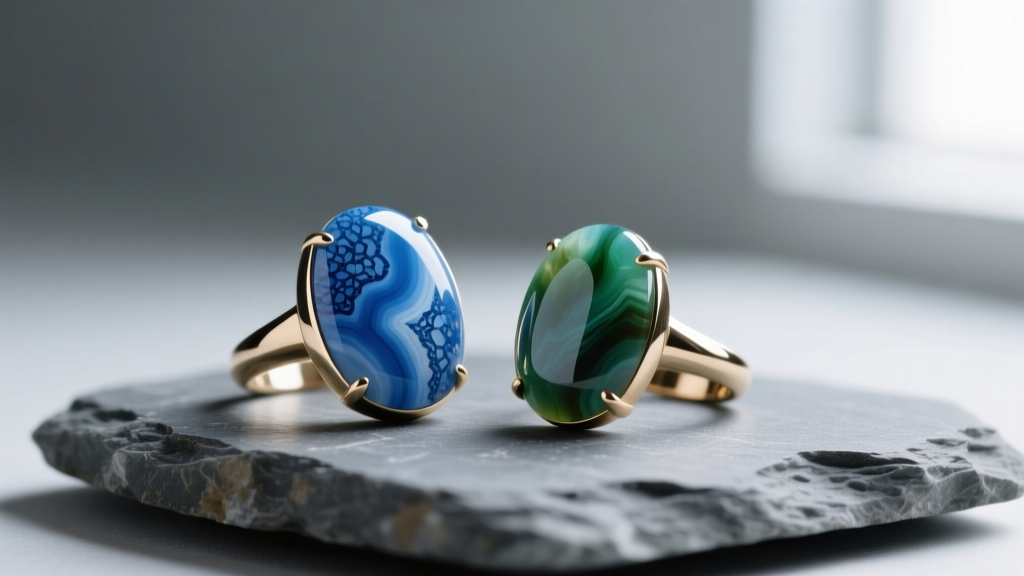
When you first enter the world of gemstone accessories, agate stone jewelry often stands out as an accessible, visually striking entry point. Known for its mesmerizing bands, earthy tones, and incredible durability, agate has been carved into cameos, beads, and cabochons for thousands of years. Yet, beneath its beginner-friendly price tag lies a complex geological history and a market flooded with artificial enhancements.
Whether you are eyeing a delicate blue lace agate pendant or a bold moss agate statement ring, understanding what you are actually buying is crucial. This comprehensive guide will walk you through the gemological properties of agate, the most popular varieties on the market, how to detect synthetic dyes, and the exact care protocols needed to keep your pieces pristine.
The Geology of Agate: What Are You Actually Wearing?
Before diving into styles, it is essential to understand the material. Agate is not a standalone mineral; it is a variety of chalcedony, which itself is a cryptocrystalline form of quartz (silicon dioxide). According to the Gemological Institute of America (GIA), agate forms in the cavities of volcanic rocks, where silica-rich groundwater slowly deposits microscopic quartz crystals over millions of years. This slow, rhythmic deposition is what creates the stone's signature concentric banding.
From a durability standpoint, agate is a powerhouse for everyday jewelry. It ranks between 6.5 and 7 on the Mohs scale of hardness, meaning it is highly resistant to scratching from everyday dust (which contains quartz particles at a 7). It also lacks cleavage planes, giving it excellent toughness against chipping and breaking compared to more fragile stones like opal or fluorite. Its specific gravity typically ranges from 2.60 to 2.65, giving it a satisfying, substantial weight in the hand.
5 Essential Agate Varieties for Your Collection
While banded agate is the most recognizable, the term encompasses a wide array of visual phenomena. Here is a breakdown of the most sought-after varieties in modern agate stone jewelry, along with current market pricing for commercial-grade cabochons.
| Variety | Visual Characteristics | Primary Sources | Avg. Price (Commercial Cab) |
|---|---|---|---|
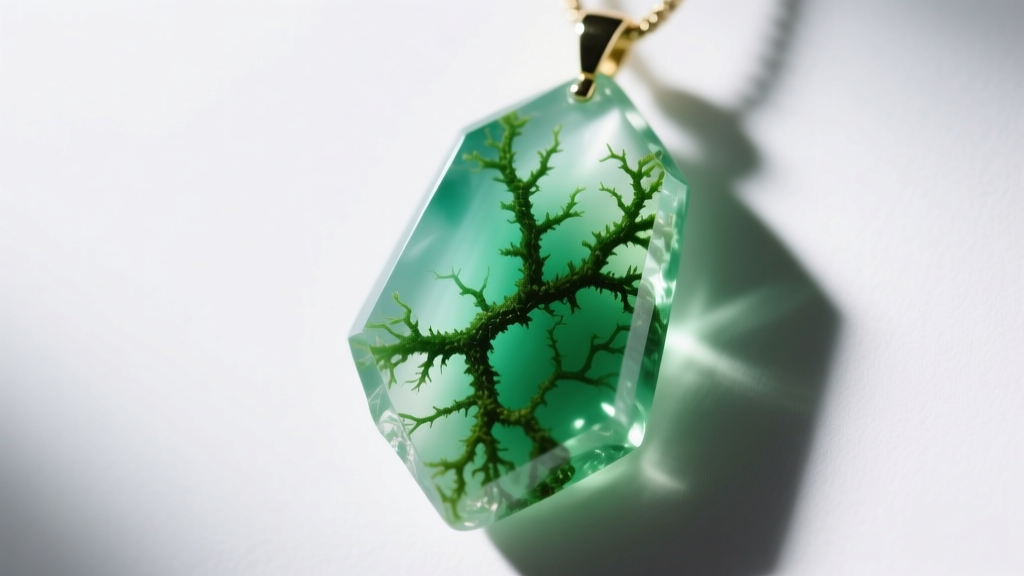
| Moss Agate | Translucent to opaque with green, horn-like dendritic inclusions resembling moss or ferns. | India, USA, Brazil | $10 - $35 |
| Blue Lace Agate | Soft, powdery blue with delicate, wavy white or light blue banding. | Namibia, South Africa | $15 - $40 |
| Fire Agate | Displays an iridescent, multi-colored play-of-light (schiller) due to iron oxide layers. | Mexico, USA (Arizona) | $50 - $150+ |
| Dendritic Agate | White or gray base with dark brown/black manganese or iron oxide tree-like inclusions. | Russia, India | $12 - $30 |
| Botswana Agate | Features fine, parallel bands of peach, white, and muted purple or gray. | Botswana | $20 - $45 |
The Dye Debate: How to Spot Treated Agate
The most critical piece of knowledge for any beginner buying agate stone jewelry is understanding the prevalence of dye treatments. Because natural agate is often grayish or pale, the gem trade has been enhancing its color since the 19th century. The International Gem Society (IGS) notes that virtually all bright pink, neon blue, deep purple, and solid black agate (often sold as 'black onyx') on the commercial market has been chemically treated.
There are two primary treatment methods:
- Sugar-Acid Treatment: The stone is soaked in a sugar solution, then plunged into hot sulfuric acid. The acid carbonizes the sugar, turning the stone permanently black.
- Aniline Dyes: Porous agate is boiled in chemical dyes to achieve vivid pinks, greens, and blues. While often stable, these can fade under prolonged UV exposure.
Practical Tests for the Consumer
While you cannot perform destructive gemological tests in a retail store, you can use these non-invasive methods to spot dyed agate:
- The Color Concentration Test: Examine the stone under a 10x jeweler's loupe. If you see color pooling heavily in the microscopic fractures or along the edges of the bands, it is almost certainly dyed. Natural color is usually evenly distributed within the micro-crystals.
- The Acetone Test: For stones you already own, rub a cotton swab dipped in pure acetone (nail polish remover) over an inconspicuous area. If the swab picks up color, the stone has been treated with surface dyes.
- The 'Neon' Rule: Nature rarely produces neon pink or electric blue agate. If the color looks synthetic or glows unnaturally under fluorescent lighting, assume it has been enhanced.
A Beginner’s Maintenance Manual
Despite its impressive Mohs hardness, agate requires specific care to maintain its polish and structural integrity, especially if it has been subjected to chemical treatments.
Do's and Don'ts of Agate Care
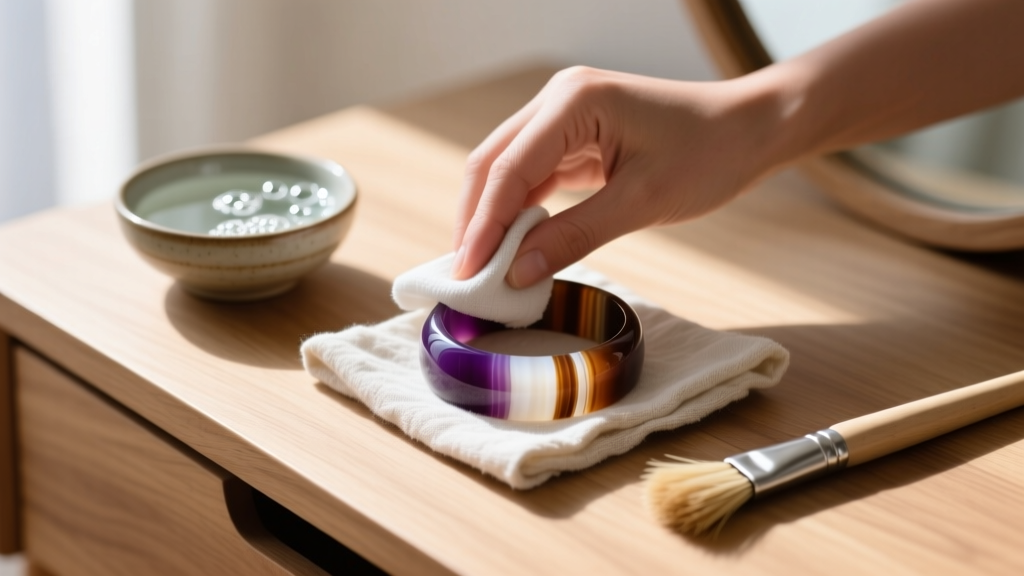
- DO clean with mild soap: The safest method is warm water, a drop of mild dish soap (like Dawn), and a soft-bristled baby toothbrush. Rinse thoroughly and pat dry with a microfiber cloth.
- DON'T use ultrasonic cleaners blindly: While solid, untreated agate can survive an ultrasonic bath, the high-frequency vibrations can shatter agate that has internal micro-fractures or cause dyed stones to leak color.
- DO store separately: Agate is a 7, meaning it can easily scratch softer materials like silver, gold, turquoise, and pearls. Store your agate stone jewelry in individual soft pouches or lined compartments.
- DON'T expose to extreme heat: Sudden thermal shock can cause agate to fracture. Never wear agate rings while washing dishes in scalding water or handling hot cookware.
Gemologist Tip: "If you own fire agate, never let a jeweler re-polish it without explicit experience. The iridescent 'fire' is caused by incredibly thin layers of iron oxide near the surface. Aggressive buffing will strip these layers away, leaving you with a dull, lifeless brown stone."
Styling Agate Stone Jewelry in 2026
Agate's versatility makes it a staple in both minimalist and bohemian wardrobes. Because of its organic banding and earthy inclusions, agate stone jewelry pairs beautifully with mixed metals. A moss agate cabochon set in oxidized sterling silver leans into a rustic, vintage aesthetic, while a sleek blue lace agate slice edged in 14k gold vermeil offers a modern, ethereal vibe.
For layering, let the agate piece act as your visual anchor. If you are wearing a bold, banded Botswana agate pendant on a 20-inch chain, flank it with simpler, smaller gold or silver chains at 16 and 18 inches to frame the stone without competing with its complex internal patterns. When styling rings, moss and dendritic agates serve as excellent conversation starters; their unique, landscape-like inclusions ensure that no two rings are ever exactly alike, giving you a truly one-of-a-kind accessory that bridges the gap between natural wonder and wearable art.


