The Ultimate Guide to Buying Real Turquoise Jewelry
Discover how to identify, grade, and buy real turquoise jewelry. Learn about mine origins, stabilization treatments, and fair market pricing.

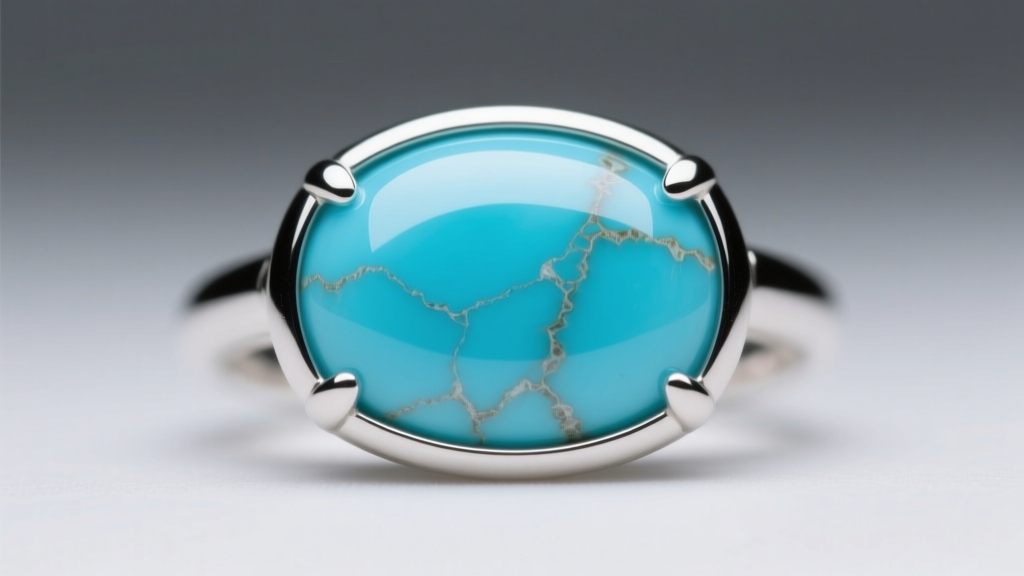
Turquoise has been prized for millennia, but the modern market is flooded with imitations, heavy treatments, and misleading terminology. When shopping for real turquoise jewelry, understanding the geological and gemological realities of the stone is your best defense against overpaying for treated or synthetic materials. As of 2026, with many historic American mines depleted or closed, natural, untreated turquoise has transitioned from an affordable bohemian staple to a highly sought-after collector's gemstone. This guide provides the exact frameworks gemologists use to evaluate turquoise, from matrix patterns to stabilization methods.
The Turquoise Grading Spectrum: Natural vs. Stabilized vs. Fake
The most critical factor in buying turquoise is understanding its porosity. Turquoise is a hydrous phosphate of copper and aluminum, scoring between 5 and 6 on the Mohs hardness scale. Because it is naturally porous, only about 3% to 10% of all mined turquoise is dense enough to be cut, polished, and worn without chemical intervention. The rest requires treatment or is discarded.
Natural, Untreated Turquoise
This is the holy grail. Natural turquoise is simply cut and polished. It retains its original porosity, meaning it can change color over time as it absorbs oils from your skin. High-grade natural stones are exceptionally rare and command premium prices per carat. According to the Gemological Institute of America (GIA), natural stones will show a uniform, unenhanced color and may exhibit natural inclusions or matrix that have not been filled with resins.
Stabilized Turquoise
Stabilization is an accepted industry practice, provided it is disclosed. Lower-grade 'chalk' turquoise is submerged in a clear epoxy or polymer resin under a vacuum. The resin penetrates the stone, hardening it and locking in the color. While stabilized turquoise is still 'real' turquoise, it lacks the investment value of natural stones and will not change color with wear.
The Zachery Treatment
Developed by electrical engineer James Zachery, this proprietary method uses a mild electrical current and a potassium-rich chemical bath to harden the stone and enhance its color without introducing polymers. It is notoriously difficult to detect without advanced EDXRF (Energy Dispersive X-Ray Fluorescence) testing. While it improves durability, it must be disclosed by ethical jewelers.
Fakes and Imitations
Dyed howlite, magnesite, and reconstituted 'block' turquoise (turquoise dust mixed with glue) are pervasive in the market. If the price seems too good to be true, or the matrix lines look artificially painted and uniform, you are likely looking at an imitation.
| Treatment Type | Process Description | Market Acceptance | Value Impact |
|---|---|---|---|
| Natural / Untreated | Cut and polished only | Highly Prized | Highest (Premium per carat) |
| Stabilized (Resin) | Epoxy infused under pressure | Widely Accepted (if disclosed) | Moderate (Accessible pricing) |
| Zachery Treated | Electrical/chemical hardening | Accepted (Hard to detect) | High (Mimics natural feel) |
| Reconstituted / Block | Dust and glue compressed | Frowned Upon | Very Low (Novelty only) |
| Dyed Howlite | Cheap white stone dyed blue | Unacceptable as 'turquoise' | Worthless (Imitation) |
Decoding the Matrix: What the Host Rock Tells You
In diamonds, inclusions are flaws. In turquoise, the matrix—the webbing of host rock trapped inside the gem—is a fingerprint of its origin and a major driver of aesthetic value. The matrix is typically composed of limonite (brown/golden), manganese (black), or sandstone (tan).
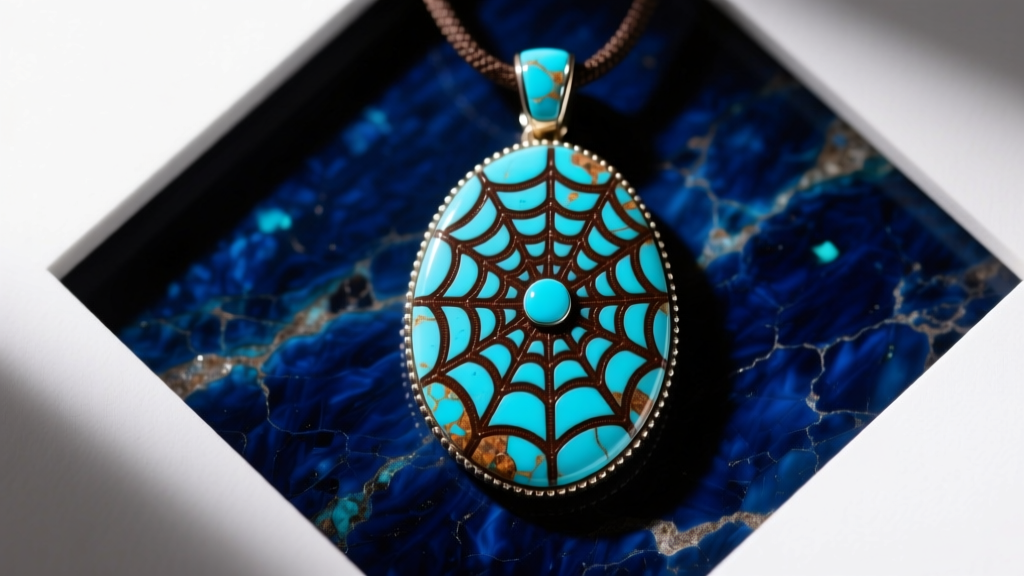
The most coveted matrix pattern is the spiderweb. This occurs when the turquoise forms in narrow seams, creating a fine, even, geometric netting across the surface of the cabochon. A tight, contrasting black or dark brown spiderweb against a vibrant blue background can increase a stone's value exponentially. Conversely, large, asymmetrical blotches of host rock (often called 'hard rock' or 'mottled' matrix) are generally less desirable unless they form a specific, artistic landscape pattern.
Provenance Matters: Top Turquoise Mines & Their Signatures
Just as wine enthusiasts track terroir, serious turquoise collectors track mine origins. The mineral composition of the local soil dictates the stone's color and matrix. According to the Mindat mineral database, copper-rich soils yield blue turquoise, while iron and zinc presence shifts the hue toward green or yellow.
Sleeping Beauty (Arizona)
Famous for its pure, robin's egg blue color with little to no matrix. The Sleeping Beauty mine closed in 2012, shifting the market dynamics entirely. Today, genuine, untreated Sleeping Beauty turquoise is incredibly scarce, and prices for vintage or verified new-old-stock stones have skyrocketed.
Bisbee (Arizona)
Bisbee turquoise is legendary for its deep, vivid blue color and striking, heavy red-to-brown spiderweb matrix. High-grade Bisbee often features tiny flecks of pyrite (fool's gold) embedded in the matrix, serving as a definitive hallmark of its origin.
Kingman (Arizona)
One of the oldest and highest-producing mines, Kingman yields everything from pale green to deep blue. It is highly prized for its classic black spiderweb matrix and remains one of the few active American mines producing high-grade natural material today.
Nishapur (Persia / Iran)
The historical standard for 'Persian Grade' turquoise. Nishapur stones are renowned for their intense, uniform sky-blue color and lack of matrix. They have been used in high jewelry and architecture for centuries and remain a benchmark for color saturation.
Pricing Framework: What Should Real Turquoise Jewelry Cost?
Unlike diamonds, turquoise is rarely sold to consumers with a standardized certificate. However, wholesale and high-end retail markets price natural turquoise by the carat (or gram), not just by the finished piece. Here is a realistic 2026 pricing framework for the raw material before jewelry markup:
- Dyed Howlite / Imitations: $0.10 - $0.50 per carat
- Stabilized Commercial Grade: $1.00 - $5.00 per carat
- Natural Kingman (Mid-Grade): $8.00 - $20.00 per carat
- Natural Bisbee (High-Grade Spiderweb): $25.00 - $60.00+ per carat
- Natural Sleeping Beauty (Gem Grade): $40.00 - $100.00+ per carat
If a vendor is selling a massive, heavy natural turquoise squash blossom necklace for $150, it is mathematically impossible for the stones to be untreated, high-grade American turquoise. Always factor the weight of the silver or gold setting into the final price, but use the per-carat metrics to judge the stone's authenticity.
The Porosity Problem: Care & Maintenance Realities
Buying real turquoise jewelry means accepting a high-maintenance relationship with your gemstone. Because natural turquoise is porous, it acts like a sponge for environmental contaminants.
Gemologist's Warning: Never wear natural turquoise in the pool, hot tub, or while applying sunscreen and lotions. Chemicals, chlorine, and heavy cosmetic oils will permanently alter the stone's color, often turning a vibrant blue into a muddy, irreversible green-brown.
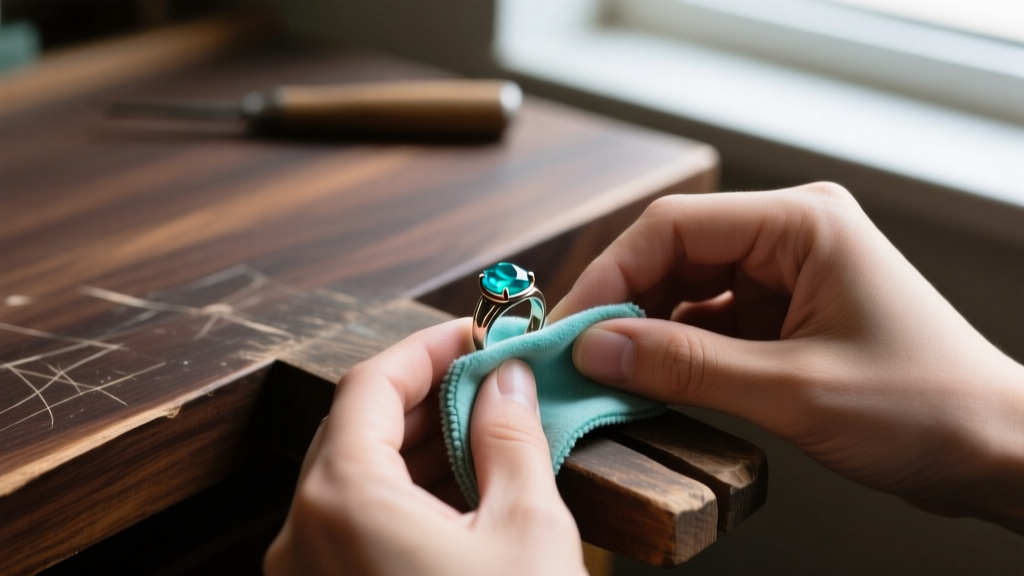
To clean turquoise, use only a soft, dry microfiber cloth. Never use ultrasonic cleaners, steamers, or commercial jewelry dips. The vibrations in an ultrasonic cleaner can shatter the stone along its natural fracture lines, and chemical dips will strip the polish and infiltrate the matrix. Furthermore, because turquoise is relatively soft (Mohs 5-6), it should be stored separately from diamonds, sapphires, and quartz to prevent severe scratching.
Final Verification Checklist Before You Buy
Before handing over your credit card for a piece of turquoise jewelry, run through this quick E-E-A-T verification checklist:
- Demand Origin Disclosure: Ask the seller, 'Which mine is this from?' Reputable dealers will know immediately (e.g., 'This is Royston' or 'This is Number 8'). If they say 'Tibetan' or 'African' turquoise, be highly skeptical; these are often trade names for dyed serpentine or jasper.
- Ask About Treatments: Specifically ask, 'Is this stone natural, stabilized, or treated?' The FTC Jewelry Guides mandate that sellers disclose treatments that significantly affect the stone's value or durability.
- Inspect the Setting: Turquoise is brittle and prone to chipping at the edges. Look for bezel settings (where metal wraps entirely around the edge of the stone) rather than prong settings, which leave the vulnerable edges exposed to impact.
- Check the Thickness: A high-quality turquoise cabochon should have a gentle, well-rounded dome and be at least 3mm to 4mm thick. Stones cut paper-thin are often low-grade material backed with epoxy or black onyx to prevent them from cracking during the setting process.
By prioritizing provenance, understanding the reality of stabilization, and respecting the stone's physical limitations, you can confidently invest in real turquoise jewelry that will retain its beauty and value for generations.


