How to Choose Authentic Citrine Stone Jewelry: A Beginner Guide
Discover how to spot real citrine stone jewelry, understand heat-treated vs. natural gems, and find the perfect piece with our beginner guide.

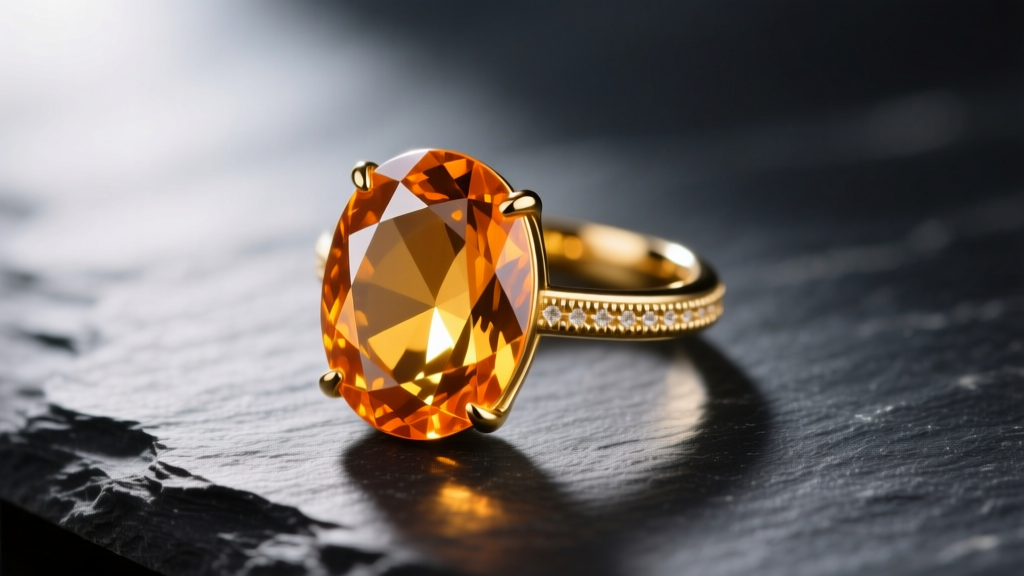
What Exactly is Citrine?
Citrine is a transparent, macrocrystalline variety of quartz (silicon dioxide) that ranges in color from pale yellow to deep, reddish-orange. As a core staple in the colored gemstone market, citrine stone jewelry offers a brilliant, sun-kissed aesthetic at a fraction of the cost of yellow sapphires or imperial topaz. According to the Gemological Institute of America (GIA), natural citrine is relatively rare in nature. It typically forms when amethyst or smoky quartz is subjected to natural geothermal heat from nearby igneous intrusions deep within the earth's crust.
From a physical standpoint, citrine shares the exact same crystallographic properties as all quartz varieties. It possesses a Mohs hardness of 7, a specific gravity of 2.65, and a refractive index of 1.544 to 1.553. However, because a Mohs 7 rating means it can be scratched by airborne dust (which contains microscopic quartz particles), understanding how to select, set, and care for this gemstone is critical for long-term wearability.
Natural vs. Heat-Treated: The Great Industry Debate
If you are shopping for citrine stone jewelry, the most important concept to master is the difference between natural and heat-treated stones. An estimated 95% of the citrine on the commercial market is actually amethyst that has been artificially heated in a kiln to temperatures between 470°C and 560°C. While this heat treatment is permanent, universally accepted in the gem trade, and does not require special disclosure in many retail settings, natural and treated stones look distinctly different under magnification.
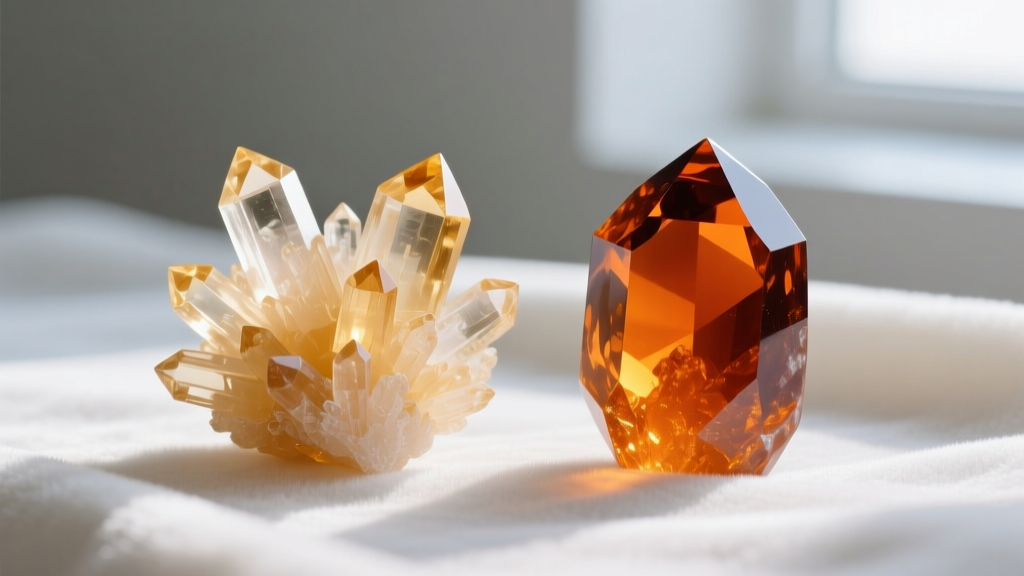
Visual Identification Matrix
Use the following comparison chart to evaluate the stones you are considering. Natural citrine rarely exhibits the deep, reddish-orange hues seen in mall-store jewelry; instead, it leans toward pale gold, champagne, or greenish-yellow.
| Feature | Natural Citrine | Heat-Treated Amethyst | Synthetic (Hydrothermal) |
|---|---|---|---|
| Color Zoning | Often uneven; parallel color bands | Usually absent; color concentrates at the crystal tip | Perfectly even, flawless distribution |
| Base Color | Pale yellow to golden champagne | Deep reddish-orange or dark amber | Vibrant, highly saturated yellow-orange |
| Inclusions | Tiger tabby, growth tubes, liquid feathers | White, opaque base (unheated amethyst remnant) | Seed plate remnants, lack of natural inclusions |
| Market Rarity | Rare (Premium priced) | Extremely Common (Budget priced) | Common in lab-grown markets |
For a deeper dive into quartz crystallography and inclusion identification, Mindat.org provides an exhaustive database of quartz varieties and their geological formations.
Grading and Pricing: What Should You Pay?
Unlike diamonds, there is no universally standardized grading system for colored gemstones, but the market prices citrine stone jewelry primarily based on color saturation and origin. The most prized variety is Madeira Citrine, named after the fortified wine from the Madeira Islands due to its deep, reddish-orange hue with flashes of red. However, as noted in our matrix, true natural Madeira is exceptionally rare; most "Madeira" on the market is heavily heated amethyst from Brazil or Uruguay.
- Pale Yellow / Champagne (Natural): $10 to $25 per carat. Often sourced from the Rio Grande do Sul region in Brazil or the Democratic Republic of Congo.
- Golden / Honey (Natural): $20 to $40 per carat. Features warm, saturated yellow tones without reddish modifiers.
- Deep Orange / "Madeira" (Heat-Treated): $15 to $35 per carat. Despite the intense color, the treatment keeps the price accessible.
- Fire Citrine (Heat-Treated): $30 to $60+ per carat. A specialized cut and heat treatment that creates a shimmering, multi-colored effect.
Beginner Tip: If a retailer is selling a flawless, 10-carat deep reddish-orange citrine ring for $150, you are looking at heat-treated amethyst or synthetic quartz, not rare natural citrine. Adjust your expectations and budget accordingly.
Durability and Daily Wear: Setting Choices
While a Mohs hardness of 7 makes citrine suitable for everyday wear, it is not invincible. Hardness measures resistance to scratching, not toughness (resistance to chipping or breaking). Citrine lacks cleavage, meaning it won't split along flat planes like a diamond or topaz, but it can still chip if struck hard against a surface.
When selecting citrine stone jewelry, particularly rings or bracelets that endure high impact, the setting style is just as important as the metal choice.
Recommended Settings for Citrine
Bezel Settings: A full or half-bezel setting wraps a rim of metal (such as 14k yellow gold or platinum) entirely around the gemstone's girdle. This is the absolute best choice for protecting the edges of a citrine cabochon or faceted stone from chipping during daily wear.
Prong Settings: If you prefer a prong setting to allow maximum light return, opt for six-prong or eight-prong designs rather than four-prong. V-prongs are highly recommended for protecting the sharp corners of pear, marquise, or princess-cut citrines.
Avoid Tension Settings: The immense pressure required to hold a gemstone in a tension setting can cause internal stress fractures in quartz, leading to catastrophic failure over time.
Care and Maintenance: Avoiding the Fade
Prolonged exposure to ultraviolet (UV) light and extreme heat can cause some citrine stones to fade or alter in color over time. This is particularly true for stones that have been irradiated or improperly heat-treated. To ensure your jewelry retains its vibrant luster, follow these strict maintenance protocols:
Expert Cleaning Protocol: Never use steam cleaners on citrine. The sudden thermal shock can cause internal fractures. Instead, use a bowl of lukewarm water, a drop of mild dish soap, and a soft-bristled baby toothbrush to gently remove lotion and sebum buildup from the pavilion (back) of the stone. Dry with a lint-free microfiber cloth.
Furthermore, while ultrasonic cleaners are generally safe for untreated, unfractured citrine, they are highly risky if the stone has liquid inclusions or surface-reaching fractures. When in doubt, stick to manual cleaning. Always store your citrine pieces in a fabric-lined jewelry box away from direct sunlight to prevent UV-induced fading.
The Final Buying Checklist
Before you finalize your purchase, run through this quick checklist to ensure you are getting exactly what you pay for:
- Ask for Disclosure: Explicitly ask the jeweler, "Is this citrine natural, or is it heat-treated amethyst?" A reputable dealer will know the answer and provide it transparently.
- Inspect the Girdle: Look for a white, opaque band near the girdle or base of the stone. This is a dead giveaway of heat-treated amethyst.
- Check the Metal Stamp: Ensure the setting is stamped (e.g., 14K, 18K, 925). Citrine is frequently paired with sterling silver or yellow gold to enhance its warm tones; avoid cheap, unmarked base metals that may cause skin reactions.
- Request a Return Policy: Buy only from retailers who offer a minimum 14-day return window, allowing you to take the piece to an independent, certified gemologist for verification if you are investing in high-ticket "natural" specimens.
By understanding the geological realities and market treatments of this beautiful quartz variety, you can confidently navigate the market and select citrine stone jewelry that offers both stunning aesthetics and lasting value.


