Chandelier Crystal Jewelry: 2026 Buying & Style Guide
Discover what to look for when buying chandelier crystal jewelry. Our 2026 guide covers metal grades, crystal types, weight limits, and styling tips.

The Anatomy of Chandelier Crystal Jewelry
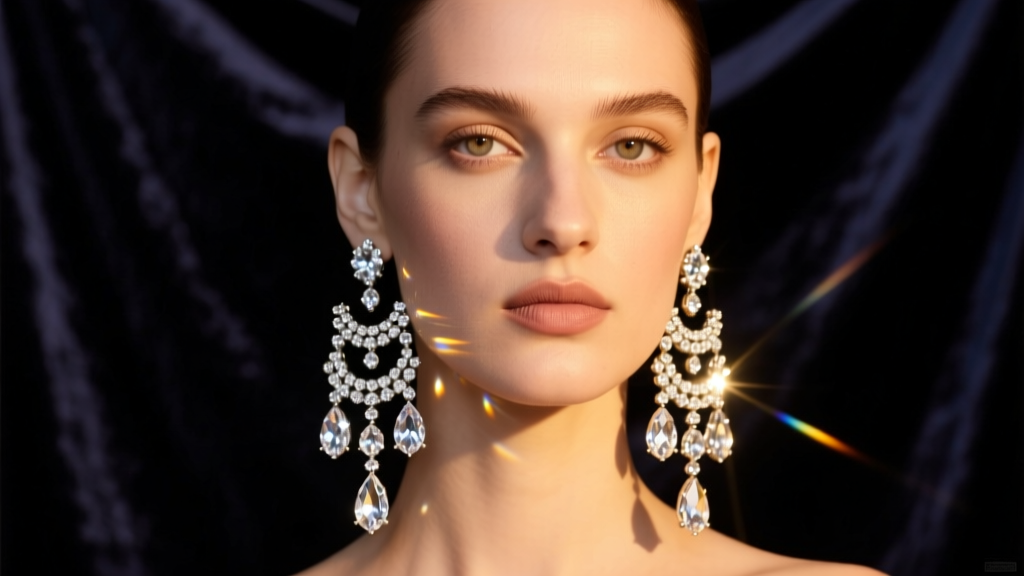
Chandelier crystal jewelry represents the pinnacle of kinetic adornment. Unlike simple studs or solitaire pendants, chandelier pieces are engineered with a multi-tiered architecture designed to capture, refract, and disperse light with every subtle movement of the wearer. While the term is most frequently applied to elaborate, cascading earrings, it also encompasses complex pendant necklaces and articulated bracelets that mimic the structural grandeur of a traditional lighting chandelier.
When evaluating these pieces in 2026, it is crucial to understand their three-part anatomy: the crown (the primary anchor point or stud), the cascade (the articulated middle tiers connected by jump rings or micro-chains), and the terminus (the final, usually largest, crystal drop). The quality of the articulation in the cascade section dictates whether the piece moves with fluid, liquid grace or clunks together rigidly. Premium designs utilize micro-hinges or seamlessly soldered oval jump rings that allow 360-degree rotation without pinching the skin or snagging hair.
Metal Foundations: What Holds the Crystals?
The brilliance of a crystal is only as enduring as the metal framework securing it. Because chandelier designs carry significant kinetic stress, the base metal must possess high tensile strength. According to the FTC Jewelry Guides, consumers must pay close attention to metal plating disclosures, especially for heavy statement pieces.
- Solid 925 Sterling Silver: The industry standard for mid-tier luxury. It offers excellent hypoallergenic properties and sufficient rigidity for multi-tiered frameworks. However, silver is prone to sulfide tarnishing, requiring regular maintenance.
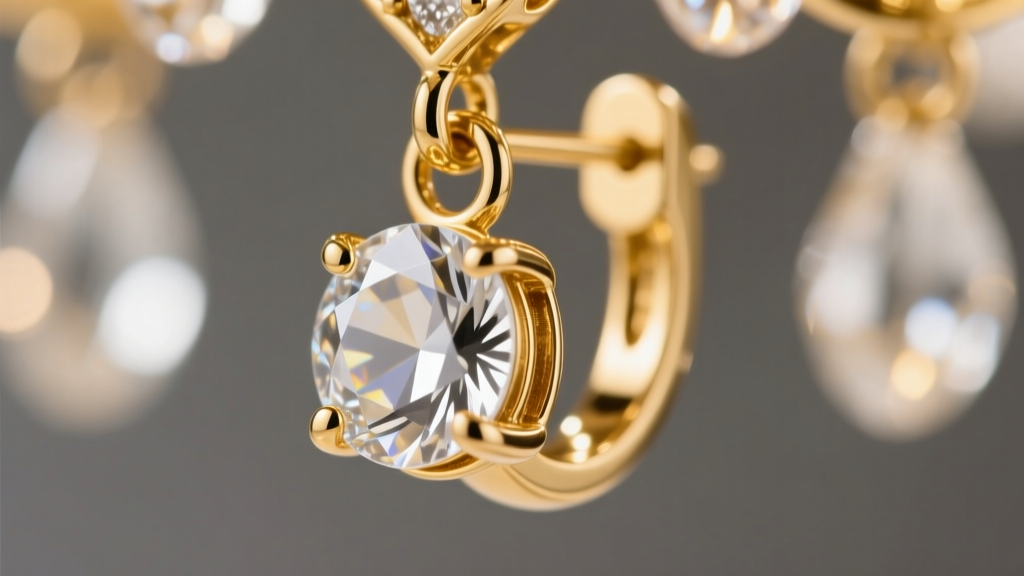
- Gold Vermeil (Pronounced Ver-May): Unlike standard gold plating (which can be a mere 0.5 microns thick over brass), true vermeil requires a sterling silver base plated with at least 2.5 microns of gold. For heavy chandelier earrings that experience friction against the neck and hair, seek out 2026 artisan standards that push for 3.0 to 4.0 microns to prevent premature wear-through.
- Surgical Stainless Steel (316L): Often used in budget-friendly or alternative-market chandelier pieces. It is highly resistant to tarnish and exceptionally strong, making it ideal for supporting heavy crystal drops without bending the post.
Evaluating the Crystals: Glass vs. Natural Quartz
The term 'crystal' in jewelry is a notorious double-entendre. It can refer to naturally occurring quartz crystals or to manufactured lead-free crystal glass (often associated with heritage brands like Swarovski). Understanding the optical and physical differences is vital for making an informed purchase.
Natural quartz, as detailed by the GIA Gem Encyclopedia, possesses a Mohs hardness of 7 and a refractive index (RI) of roughly 1.54. While it offers beautiful, organic inclusions and metaphysical piezoelectric properties, it does not naturally exhibit the intense 'rainbow fire' (dispersion) of manufactured glass. Conversely, precision-cut manufactured crystals utilize barium or zinc oxide to push the RI above 1.70, maximizing light return and creating the blinding sparkle expected from high-end chandelier earrings.
| Material Type | Refractive Index (RI) | Mohs Hardness | Best Application | Price Tier |
|---|---|---|---|---|
| Natural Clear Quartz | 1.54 - 1.55 | 7.0 | Metaphysical, organic bohemian styles | Mid-Range |
| Precision-Cut K9 Glass | 1.51 - 1.52 | 5.5 - 6.0 | Budget statement pieces, theatrical wear | Budget |
| Advanced Lead-Free Crystal | 1.70+ | 6.0 - 7.0 | High-end bridal, luxury evening wear | Premium |
| Acrylic / Resin | 1.49 | 2.0 - 3.0 | Fashion trends, lightweight festival wear | Ultra-Budget |
Ergonomics and Weight: Avoiding Earlobe Fatigue
The most common failure mode of chandelier crystal earrings is not the loss of a stone, but the physical toll they take on the wearer's earlobes. The 'pendulum effect' means that a 10-gram earring exerts exponentially more downward and lateral force on the piercing when the wearer walks or dances.
The 7-Gram Rule and Post Gauge
For all-day wear, jewelry ergonomists recommend keeping the weight of a single dangling earring under 7 grams. If you are purchasing a massive, multi-tiered bridal chandelier piece that weighs 15 grams or more, it is strictly for seated or short-duration wear unless you utilize support accessories.
Furthermore, examine the earring post gauge. Standard fashion earrings use a 20-gauge (0.81mm) wire. However, a heavy chandelier design requires an 18-gauge (1.02mm) or even 16-gauge (1.29mm) post to prevent the metal from bending under the kinetic torque. Pairing heavy posts with silicone friction backs or specialized 'la pousette' locking clutches ensures the piece remains secure without slowly sliding down the earlobe.
Pricing Tiers: What Should You Pay in 2026?
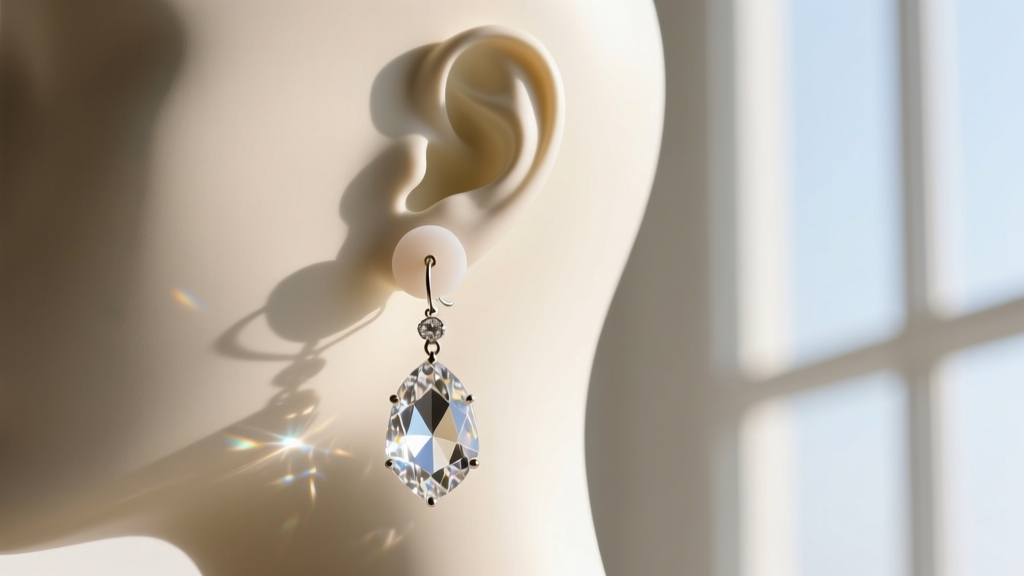
Navigating the market requires an understanding of how materials dictate pricing. Here is a realistic breakdown of what to expect when shopping for chandelier crystal jewelry this year:
- Budget ($25 - $60): Expect brass or alloy bases with flash plating (less than 0.5 microns). The crystals will likely be K9 glass or acrylic, secured with basic glued cup-settings rather than prongs. Suitable for occasional, low-impact wear.
- Mid-Range ($75 - $180): The sweet spot for quality. Pieces in this tier feature solid 925 sterling silver or thick gold vermeil. Crystals are precision-cut with sharp, faceted edges (often laser-inspected for clarity), and stones are secured via hand-pushed metal prongs.
- Luxury & Designer ($250 - $800+): Solid 14k or 18k gold frameworks, often incorporating micro-pavé natural diamond accents alongside high-grade branded crystals or natural gem-grade quartz. Articulation is flawless, and the pieces come with lifetime structural warranties.
Care and Maintenance for Multi-Tiered Designs
Chandelier jewelry requires specialized care due to its intricate topography. The crevices between the cascade tiers easily trap skin oils, hairspray, and environmental dust, which form a film that drastically reduces the crystal's refractive index.
Expert Warning: Never place chandelier crystal jewelry in an ultrasonic cleaner. The high-frequency vibrations will shatter manufactured glass crystals, loosen adhesive-backed settings, and cause micro-fractures in natural quartz that contains internal liquid inclusions.
Instead, adopt a manual cleaning protocol. Fill a bowl with lukewarm water and a few drops of pH-neutral dish soap. Submerge the piece for no more than three minutes. Using a soft-bristled baby toothbrush, gently agitate the area behind the crystal settings where light-blocking grime accumulates. Rinse thoroughly with distilled water to prevent hard water spotting, and dry immediately using a microfiber cloth, ensuring you do not snag the delicate jump rings of the cascade.
Final Verdict
Chandelier crystal jewelry remains an unmatched statement of elegance and movement. By prioritizing structural integrity—such as verifying gold vermeil thickness, demanding 18-gauge posts for heavy drops, and understanding the optical differences between natural quartz and precision-cut glass—you can invest in pieces that not only dazzle under the light but withstand the physical demands of real-world wear.


