How to Clean and Maintain Lavender Jade Jewelry Safely
Discover expert cleaning and maintenance tips for lavender jade jewelry. Learn how to safely wash, store, and protect your delicate purple jadeite.

The Mineral Reality: Understanding Your Lavender Jade
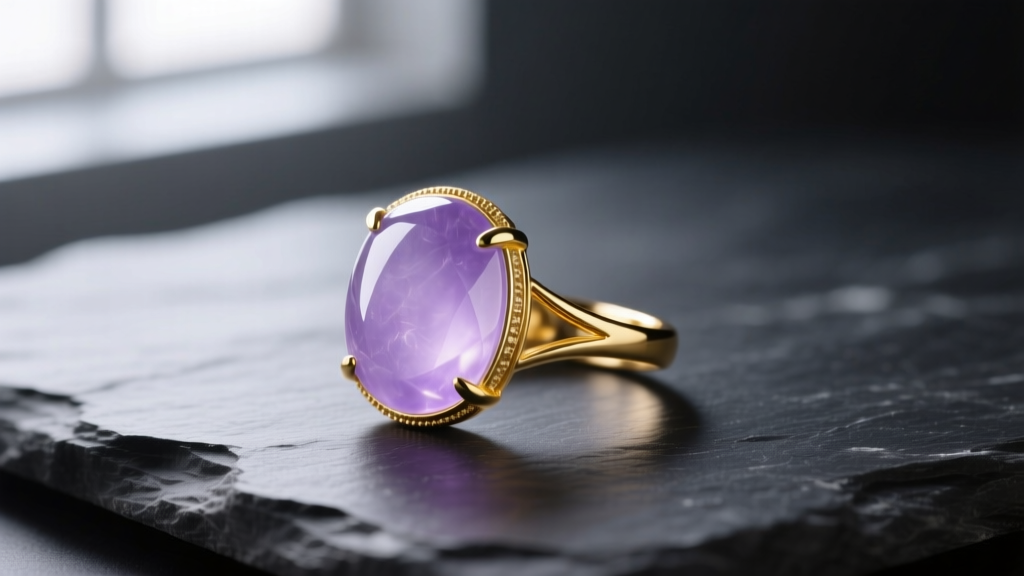
Lavender jade jewelry is among the most coveted and visually striking categories in the gemological world. Unlike the deep emerald greens or icy whites typically associated with jade, the soft purple hues of lavender jade are caused by trace amounts of manganese and titanium within the crystalline structure. True lavender jade is almost exclusively jadeite (a pyroxene mineral), primarily sourced from the Hpakan region of Myanmar. It is crucial to distinguish jadeite from nephrite (an amphibole mineral); while both are sold as "jade," jadeite possesses a slightly higher Mohs hardness (6.5 to 7) and a denser, more granular interlocking crystalline structure that gives it superior toughness but distinct chemical vulnerabilities.
As gemological labs in 2026 continue to refine spectroscopic analysis for detecting nano-resins in treated stones, the physical care of lavender jade remains rooted in traditional chemistry and structural awareness. Because jadeite is a polycrystalline aggregate, it lacks distinct cleavage planes, making it highly resistant to shattering from blunt force. However, its moderate hardness means it is highly susceptible to surface abrasion from everyday dust (which contains quartz, Mohs 7) and chemical degradation from improper cleaning agents.
Identifying Your Jade Treatment Level
Before applying any cleaning protocol to your lavender jade jewelry, you must identify its treatment grade. The gemological industry categorizes jade into three primary treatment types, and using the wrong cleaning method can permanently ruin a treated stone. According to the Gemological Institute of America (GIA), understanding these categories is the first step in gemstone preservation.
| Treatment Grade | Process Description | Cleaning Vulnerability |
|---|---|---|
| Type A | 100% natural, untreated jadeite. May have a traditional, light surface wax coating applied after polishing. | Low. Vulnerable only to harsh acids and extreme heat which can melt the natural wax. |
| Type B | Acid-bleached to remove brown/yellow impurities, then impregnated with polymer resin under a vacuum to improve translucency. | High. Ultrasonic cleaners and heat will degrade the polymer resin, causing clouding and structural crumbling. |
| Type C | Dyed to enhance color. (Lavender is rarely dyed, but B+C combinations exist). | Extreme. Solvents, ammonia, and alcohol will strip the dye and cause rapid color fading. |
If you are unsure of your lavender jade's treatment status, assume it is Type B and stick strictly to the gentlest cleaning methods outlined below. For definitive verification, consult a certified gemologist who can perform an infrared spectroscopy test to detect polymer resins.
The Golden Rules of Washing Lavender Jadeite
Washing jadeite requires a delicate balance of removing sebum, cosmetic buildup, and environmental dust without compromising the stone's surface polish or structural integrity. The ideal cleaning solution relies on physics (gentle agitation) rather than harsh chemistry.
Step-by-Step Gentle Cleaning Protocol
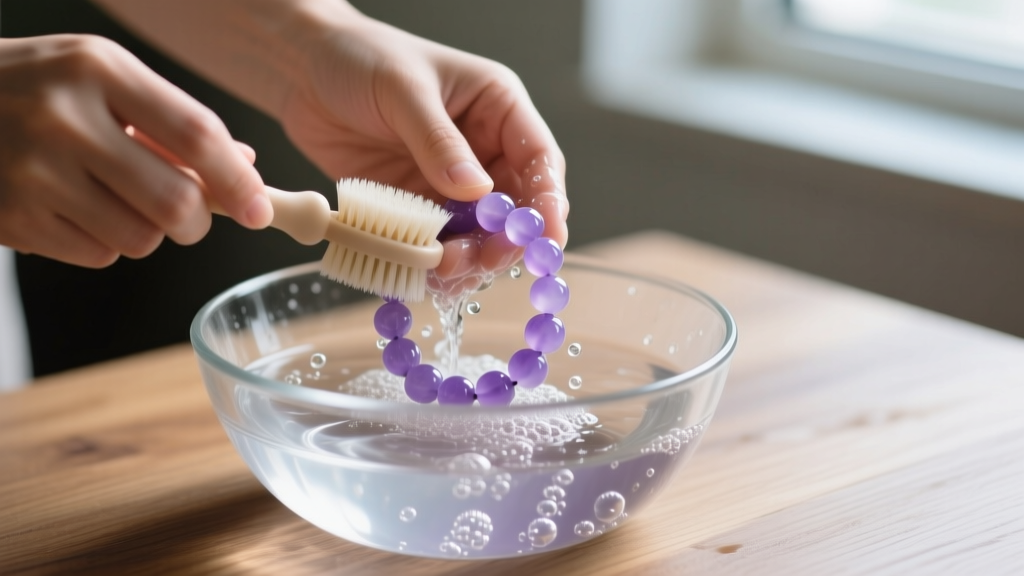
- Prepare the Solution: Fill a glass or ceramic bowl with distilled water. Tap water contains calcium and magnesium ions that can leave hard water spots on the jade's surface. Heat the water to exactly 85°F (29°C). Water that is too hot can cause thermal shock, while cold water fails to dissolve skin oils.
- Add a Surfactant: Add a single drop of pH-neutral dish detergent (pH 7.0 to 8.0, such as original Dawn or Seventh Generation). Avoid soaps with added moisturizers, citrus extracts, or micro-beads.
- Soak Briefly: Submerge the lavender jade jewelry for no more than 3 to 5 minutes. Prolonged soaking can weaken the silk threads used in bead necklaces or degrade the adhesives in certain earring settings.
- Agitate Gently: Using an extra-soft baby toothbrush or a clean, soft-bristled makeup brush, gently sweep the bristles over the surface of the jade and the metal settings. Never apply heavy pressure; let the bristles do the work of lifting the debris.
- Rinse and Dry: Rinse the piece under a gentle stream of lukewarm distilled water. Pat dry immediately with a clean, lint-free microfiber cloth. Never use paper towels, as the wood pulp fibers can leave micro-scratches on the jade's polished surface.
What to Avoid: The Chemistry of Jade Damage
The most common way collectors and casual wearers destroy lavender jade jewelry is by treating it like a diamond or sapphire. Jadeite's chemical composition (NaAlSi2O6) and its physical treatments make it highly reactive to modern jewelry cleaning technologies. Data from mineralogical databases like Mindat.org highlights the sensitivity of pyroxene minerals to acidic and alkaline extremes.
| Cleaning Method | Effect on Type A Jade | Effect on Type B/C Jade |
|---|---|---|
| Ultrasonic Cleaners | Risky. High-frequency vibrations (35-45 kHz) can exploit natural micro-fractures, causing the stone to split. | Destructive. Shatters the polymer resin bonds, turning the jade opaque and brittle. |
| Steam Cleaners | Dangerous. Rapid thermal expansion can cause "crazing" (internal spiderweb fracturing). | Destructive. Melts the injected resins and boils trapped moisture, leading to explosive cracking. |
| Ammonia / Bleach | Damaging. Strips the natural protective wax coating, leaving the stone dull and porous. | Catastrophic. Dissolves polymer fillers and permanently strips artificial dyes. |
| Alcohol / Acetone | Mildly damaging. Can dry out the stone and remove surface wax. | Destructive. Acts as a solvent for the epoxy resins used in Type B treatments. |
Storage and Environmental Maintenance
Proper storage is just as critical as the cleaning process. Lavender jade jewelry requires specific environmental conditions to maintain its luster and structural stability over decades of wear.
Humidity and Thermal Shock
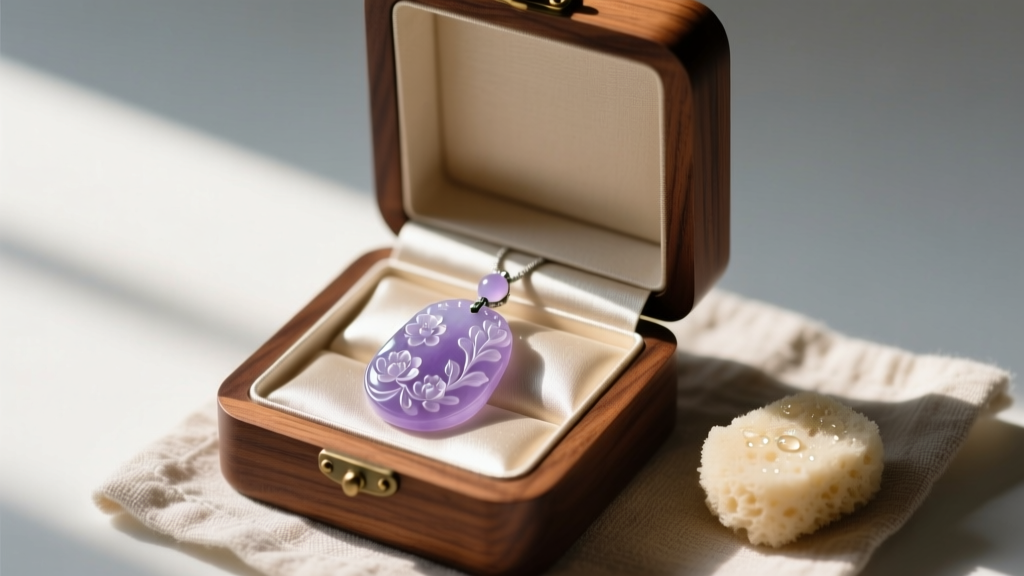
Jadeite contains a small amount of structural water within its crystalline lattice. When exposed to extremely dry environments (such as a safety deposit box or a room with aggressive central heating), the stone can slowly lose this moisture, leading to surface dullness and internal micro-cracking known as crazing. To prevent this, store your lavender jade in a fabric-lined jewelry box. If you live in an arid climate or store the piece long-term, place a slightly damp (not wet) sponge or a commercial jewelry humidifier tab in the drawer to maintain an ambient humidity level of around 40-50%.
Furthermore, avoid thermal shock. Never wear lavender jade rings or bracelets while cooking over high heat, using a hairdryer, or entering a sauna. The rapid expansion and contraction of the polycrystalline structure can cause catastrophic failure, especially in pieces with pre-existing natural fault lines.
Protecting Against Abrasion
While jade is incredibly tough (resistant to breaking), it is only moderately hard (resistant to scratching). Always store lavender jade jewelry in a separate soft pouch or individual compartment. If stored loosely in a jewelry box alongside diamonds (Mohs 10), sapphires (Mohs 9), or even quartz (Mohs 7), the jade will inevitably accumulate surface scratches, dulling its polished finish and muting its delicate lavender color.
Professional Maintenance and Re-waxing
Even with meticulous at-home care, the natural wax coating on Type A lavender jade will eventually wear away from friction against clothing and skin oils. When your jewelry begins to look slightly matte or dry, it is time for professional maintenance.
Expert Insight: "Traditional jade finishing involves a process called 'plum juice waxing,' where the stone is gently heated and coated with a specialized natural beeswax or paraffin blend. This fills microscopic surface pores and restores the optical brilliance of the lavender hue. Never attempt to wax jade at home using furniture polish or candle wax, as these contain chemicals that will yellow and degrade the stone."
Take your piece to a lapidary professional who specializes in jadeite. They can safely clean the piece, inspect the prongs or bezels (jadeite settings often require tightening as the metal wears down while the tough jade remains intact), and apply a professional-grade micro-crystalline wax to restore its factory-level luster. By adhering to these rigorous, science-backed care protocols, your lavender jade jewelry will retain its ethereal beauty and structural integrity for generations.


