Imperial Jade Jewelry Value: Pricing & Grading Guide
Discover how to assess imperial jade jewelry value. Learn pricing tiers, Type A vs B/C treatments, and expert grading tips to avoid overpaying.

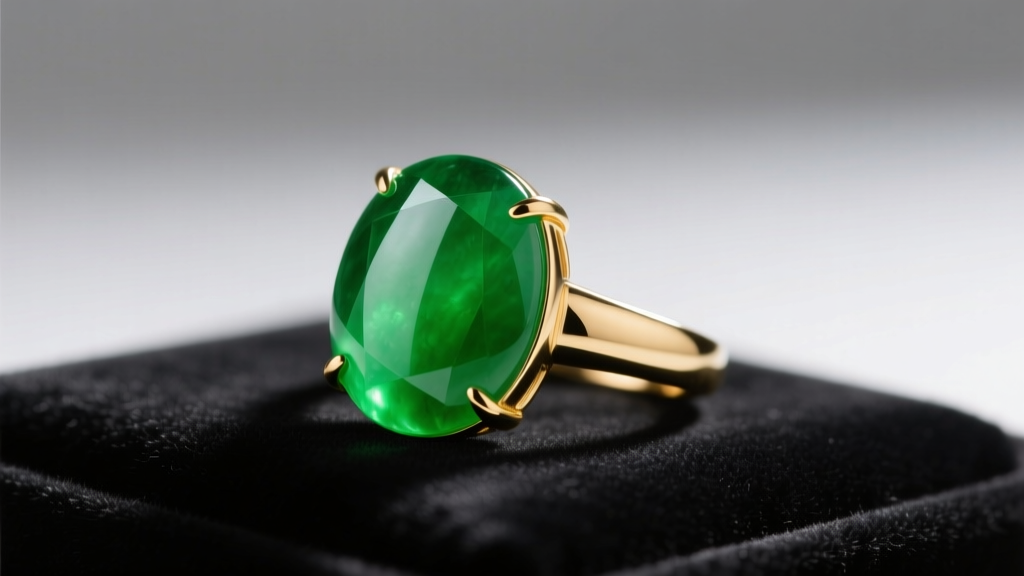
The Allure and Economics of Imperial Jadeite
When collectors and connoisseurs discuss the pinnacle of gemstone investments, imperial jade jewelry invariably enters the conversation. True imperial jade is not merely green; it is a specific, highly saturated, semi-transparent to transparent variety of Burmese jadeite that commands prices rivaling fine emeralds and diamonds. As we navigate the 2026 gemstone market, the scarcity of untreated, top-tier jadeite from Myanmar has pushed auction prices to record highs, making value assessment both critical and complex.
Unlike diamonds, which are graded on a rigid, globally standardized scale, jadeite valuation requires a nuanced understanding of optical properties, geological treatments, and market psychology. For buyers looking to acquire imperial jade jewelry, the line between a generational investment and an overpriced, treated stone is often hidden beneath a polished surface. This guide provides a comprehensive framework for assessing value, decoding treatments, and allocating your budget effectively.
Decoding the Treatments: Type A, B, and C Jade
The single most important factor in determining the value of imperial jade jewelry is its treatment status. The gemological community categorizes jadeite into three distinct types. Only one holds any intrinsic investment value.
- Type A (Natural): Completely untreated jadeite, except for a traditional, harmless surface waxing applied after polishing to enhance luster. This is the only type of jade that appreciates in value.
- Type B (Bleached and Polymer-Impregnated): Lower-quality, stained jadeite is soaked in strong acids to dissolve brown and yellow impurities. This process destroys the stone's internal crystalline structure, leaving it porous. It is then vacuum-impregnated with a polymer resin to restore transparency and structural integrity. Over 5 to 10 years, the resin yellows and degrades, leaving the stone brittle and cloudy.
- Type C (Dyed): Jadeite that has been artificially colored using organic or inorganic dyes. The color often fades when exposed to prolonged sunlight or heat.
According to the Gemological Institute of America (GIA), distinguishing Type A from Type B requires advanced spectroscopic analysis to detect the polymer absorption bands in the infrared spectrum. A visually flawless, highly transparent green jadeite ring priced at $800 is almost certainly Type B or C. True Type A imperial jade with those same visual characteristics would easily exceed $20,000.
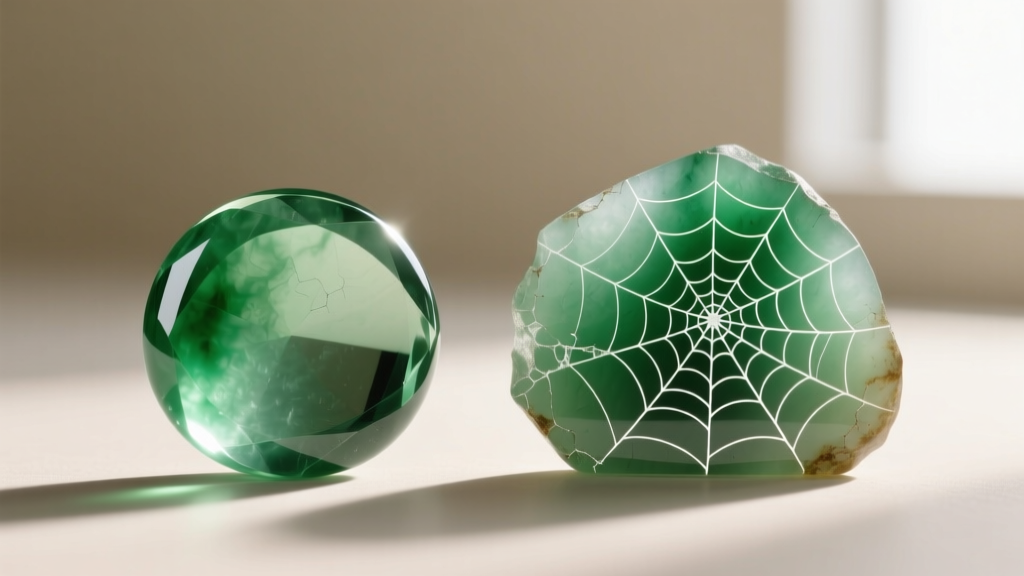
The Grading Matrix: Color, Transparency, and Texture
Assuming you are looking at certified Type A jadeite, the value is then dictated by a triad of visual characteristics. In the jade trade, these are often referred to as color, water (transparency), and texture.
1. Color (The Imperial Standard)
Imperial green is defined by a specific hue, tone, and saturation. The ideal hue is a pure, vivid emerald-green with no secondary brown or gray modifiers. The tone should be medium to medium-dark, allowing light to penetrate the stone. If the tone is too dark, the stone appears blackish and loses its vibrancy; if too light, it lacks the 'imperial' intensity.
2. Transparency (The 'Water' Grade)
Transparency is the greatest price multiplier in jadeite. The trade uses specific terms to describe the degree of light transmission:
- Glassy (Glass Species): Fully transparent, resembling a green glass bead. The rarest and most expensive.
- Icy (Ice Species): Semi-transparent, resembling a block of ice. Highly desirable and commands premium pricing.
- Sticky Rice / Glutinous: Translucent, with a soft, glowing internal light.
- Bean: Opaque to slightly translucent, with visible granular texture. The most common and least valuable.
3. Texture (Crystal Size)
Texture refers to the size and interlocking nature of the jadeite crystals. Fine texture results in a smooth, highly polishable surface that enhances the stone's luster. Coarse texture (often seen in 'Bean' grade) results in a pitted or dimpled surface known as 'orange peel' effect, which severely limits value.
Real-World Pricing Tiers for Imperial Jade Jewelry
Pricing imperial jade jewelry is notoriously difficult because stones are rarely sold by the carat in retail settings; they are priced by the piece based on overall dimensions, color distribution, and craftsmanship. However, understanding the per-carat equivalent helps in assessing fair market value.
| Quality Tier | Transparency Grade | Color Saturation | Est. Price Range (Per Carat Equiv.) | Investment Viability |
|---|---|---|---|---|
| Commercial | Opaque (Bean) | Low / Patchy Green | $20 - $150 | Poor (Decorative only) |
| Fine | Translucent (Sticky Rice) | Medium Vivid Green | $500 - $2,500 | Moderate (Wearable luxury) |
| Extra Fine | Semi-Transparent (Icy) | High Vivid Imperial | $5,000 - $15,000 | High (Strong appreciation) |
| Investment | Transparent (Glassy) | Intense Pure Imperial | $30,000 - $100,000+ | Exceptional (Museum/Auction grade) |
Note: Prices reflect the 2026 market for certified Type A Burmese jadeite. Exceptional auction pieces, such as those sold at Sotheby's or Christie's, frequently exceed these baselines due to provenance and historical significance.
Red Flags: How to Spot Overpriced or Deceptive Settings
When evaluating high-end imperial jade jewelry, the metal setting is just as important as the stone. Unscrupulous dealers use specific jewelry design techniques to mask flaws and artificially enhance the appearance of lower-grade jadeite.
The Closed-Back Trap: Never purchase a high-value jadeite cabochon or ring if the back of the bezel is completely sealed with metal. Dealers often use closed-back settings lined with a small mirror, silver foil, or even green-tinted resin to bounce light back through the stone. This trick artificially inflates the perceived transparency ('water') and makes the green color appear more saturated than it actually is. Always demand an open-back setting or a removable bezel for stones priced above $5,000.
Another critical failure mode is accepting certificates from unrecognized, local 'gem labs.' For imperial jade jewelry, you must insist on documentation from top-tier international laboratories such as the National Gemstone Testing Center (NGTC), GIA, SSEF, or Gübelin. These labs possess the specialized infrared spectrometers required to definitively rule out polymer impregnation.
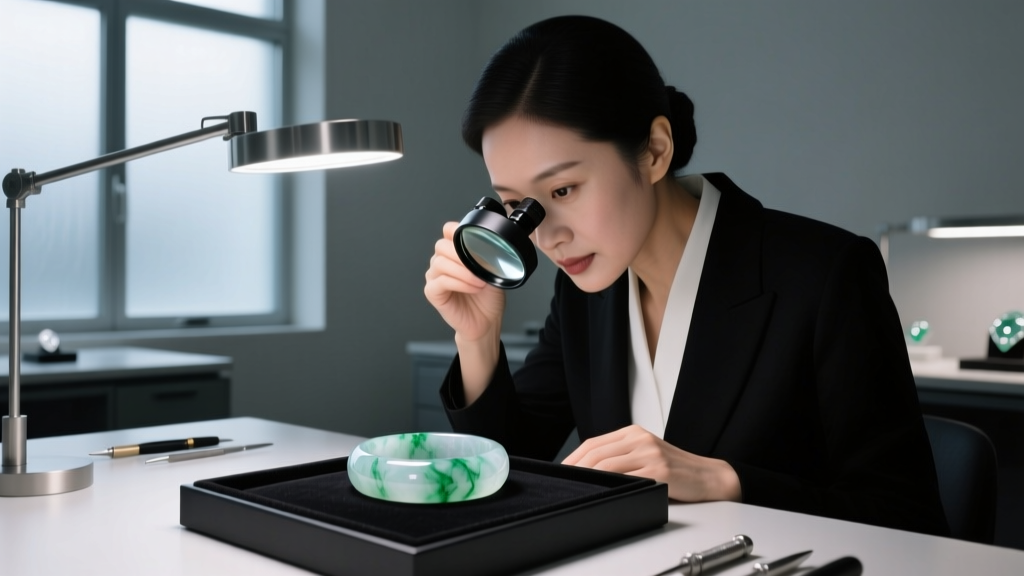
Smart Budgeting: Where to Compromise and Where to Invest
If your budget does not stretch to the $50,000+ required for a glassy, pure imperial green cabochon, you can still acquire beautiful, value-retaining Type A jadeite by making strategic compromises.
1. Prioritize Transparency Over Pure Color
In the current market, a highly transparent, 'icy' jadeite with a slightly lighter or yellowish-green tint often holds its value better than a darker, opaque stone with a 'perfect' imperial hue. The structural beauty and light play of an icy stone are highly prized by modern collectors and offer a unique, ethereal aesthetic that opaque stones lack.
2. Consider Carved Artistry
Cabochons and bangles require flawless, unblemished rough material, commanding the highest premiums. Carved pendants, dragons, or floral motifs, however, allow lapidaries to carve around natural inclusions and color veins. A masterfully carved Type A jadeite pendant with vivid imperial green veins running through a white icy background can offer incredible visual impact and cultural value at a fraction of the cost of a uniform cabochon.
3. Size vs. Quality
It is always better to buy a smaller, 5mm x 7mm glassy imperial jade cabochon set in a delicate 18k gold pendant than a massive, 20mm opaque, bean-grade stone. The optical brilliance of top-tier material is what draws the eye and retains the financial value.
Final Verdict on Imperial Jade Investments
Navigating the market for imperial jade jewelry requires a disciplined, educated approach. The romance of the stone must be balanced with rigorous gemological scrutiny. By strictly limiting your purchases to certified Type A jadeite, understanding the profound impact of transparency on pricing, and avoiding deceptive closed-back settings, you can confidently acquire pieces that are not only breathtakingly beautiful but also financially sound. Whether you are investing in a glassy cabochon ring or an icy carved pendant, true imperial jade remains one of the most enduring and culturally rich gemstone assets in the world.


