The Gemologist's Guide to Buying Amethyst Crystal Jewelry
Explore the technical grading, synthetic detection, and setting mechanics of amethyst crystal jewelry in this expert gemological deep dive.

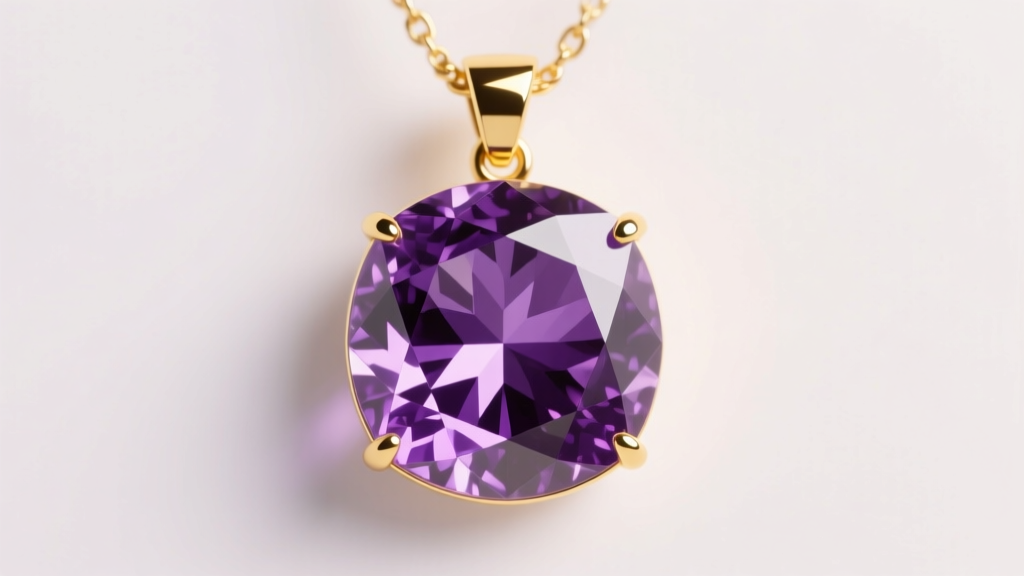
Amethyst is frequently dismissed by casual shoppers as an affordable, entry-level gemstone. However, within the upper echelons of high jewelry and professional gemology, top-tier amethyst crystal jewelry demands rigorous technical scrutiny. The difference between a commercial-grade, muddy-purple stone and a master-cut, highly saturated gem is vast, both in optical performance and structural integrity. This expert deep dive bypasses the superficial metaphysical lore to examine the precise mineralogy, grading frameworks, synthetic detection protocols, and metallurgical setting requirements that define exceptional amethyst pieces in today's market.
The Mineralogy of Amethyst: Iron Impurities and Color Zoning
Amethyst is the purple variety of macrocrystalline quartz (SiO2). According to Mindat.org, its specific gravity sits at a consistent 2.65, and its refractive index (RI) ranges from 1.544 to 1.553, yielding a modest but pleasant vitreous luster. The defining purple coloration is not inherent to the quartz lattice itself; rather, it is the result of trace iron impurities (Fe3+) substituting for silicon, combined with natural gamma irradiation from surrounding radioactive minerals in the host rock.
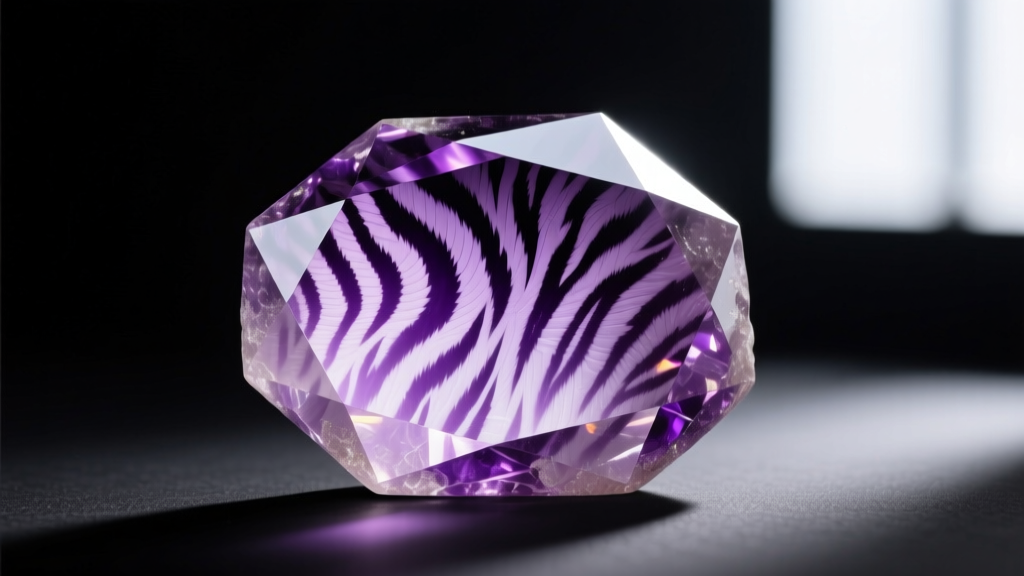
When evaluating amethyst crystal jewelry, a gemologist immediately looks for color zoning. Natural amethyst rarely exhibits uniform color distribution. Instead, it forms in angular, hexagonal zones parallel to the crystal's c-axis. In lower-grade stones, this zoning appears as stark, unappealing bands of clear and purple quartz. In premium specimens, the cutter must orient the table facet precisely to mask this zoning, creating the illusion of uniform saturation through the path of light reflection. The presence of 'tiger stripe' or 'zebra' inclusions—fine, parallel growth tubes—is a definitive fingerprint of natural geological formation, highly prized by forensic gemologists.
Grading Framework: From Siberian Deep to Rose de France
The commercial gem trade lacks a universally standardized, GIA-backed grading scale for amethyst comparable to the 4Cs of diamonds. Instead, the market relies on geographic and descriptive trade names. Understanding these classifications is critical when appraising or investing in fine amethyst crystal jewelry.
| Trade Name | Color Profile & Saturation | Secondary Hues | Estimated Market Value (Per Carat) |
|---|---|---|---|
| Siberian | Deep, highly saturated purple (75-80%) | 15-20% red/blue flashes under incandescent light | $40 - $70+ (Rare, mostly antique or legacy stock) |
| Uruguayan | Rich, dark purple with high clarity | Minimal secondary hues, occasional blue undertones | $15 - $35 |
| Zambian | Vivid, medium-dark purple | Slight grayish or reddish modifiers | $10 - $25 |
| Rose de France | Pale, pastel lilac or lavender | Highly transparent, minimal secondary hues | $3 - $8 |
| Prasiolite | Golden-green to olive (Heat-treated amethyst) | Yellowish-green modifiers | $5 - $15 (Must be disclosed as treated) |
The 'Siberian' designation is the holy grail of amethyst. True Siberian amethyst exhibits a mesmerizing optical phenomenon where the stone appears deep purple in daylight but flashes vibrant raspberry-red and cobalt-blue under incandescent or LED lighting. Due to the depletion of the original Russian Ural Mountain mines, genuine Siberian material is exceedingly rare, and the term is now frequently (and often deceptively) applied to top-color Uruguayan or Zambian stones by opportunistic dealers.
Synthetic Detection and Heat Treatment Protocols
Because quartz is abundant, the primary threat to the high-end amethyst crystal jewelry market is not glass imitation, but rather hydrothermal synthetic quartz and undisclosed thermal enhancement. The Gemological Institute of America (GIA) notes that hydrothermal synthesis, pioneered in Russia for industrial oscillators, easily produces massive, flawless amethyst crystals.
Identifying Hydrothermal Synthetics
- Seed Plates: Synthetics are grown on a thin slice of natural quartz. Under crossed polarizers, a synthetic stone will reveal a perfectly flat, unnatural seed plate boundary.
- 'Breadcrumb' Inclusions: Unlike the sharp, angular 'tiger stripes' of natural stones, hydrothermal amethyst often contains microscopic, rounded liquid inclusions that resemble scattered breadcrumbs.
- Spicule Inclusions: Long, needle-like tubes that run parallel to the c-axis are common in synthetics but rare in natural geological formations.
Thermal Enhancement
Heating amethyst to temperatures between 400°C and 500°C permanently alters its crystal lattice, oxidizing the iron impurities and turning the stone yellow (citrine) or green (prasiolite). While heating is an accepted industry practice for citrine, it must be strictly disclosed when selling green prasiolite. Unfortunately, standard gemological refractometers cannot easily distinguish between naturally occurring citrine and heat-treated amethyst, requiring advanced FTIR (Fourier Transform Infrared) spectroscopy for definitive proof.
Metallurgical Setting Considerations for Quartz
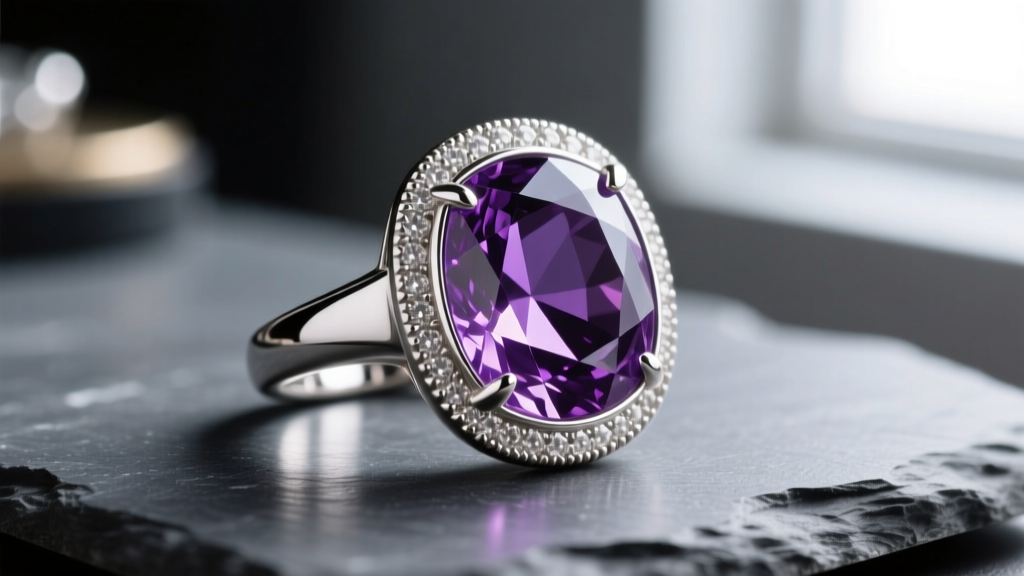
Designing and setting amethyst crystal jewelry requires a deep understanding of quartz's physical limitations. Amethyst registers a 7 on the Mohs hardness scale. While this sounds durable, it is a critical threshold: atmospheric dust contains microscopic quartz particles. Therefore, an amethyst ring worn daily will inevitably accumulate micro-scratches over time, dulling its polish. Furthermore, amethyst lacks true cleavage but exhibits a conchoidal fracture, meaning a sharp impact to the girdle (the stone's widest edge) can easily chip or shatter the crystal.
For rings and bracelets—jewelry types subjected to high impact—tension settings and delicate four-prong mounts are technical failures waiting to happen. Expert jewelers mandate the following setting architectures:
'When setting premium amethyst for daily-wear rings, a full bezel or a heavy V-prong configuration at the corners of pear and marquise cuts is non-negotiable. The metal must absorb the kinetic energy of impact before it transfers to the quartz lattice, preventing catastrophic conchoidal fracturing.' — Master Bench Jeweler Guidelines
Additionally, jewelers must exercise extreme caution regarding thermal shock. Amethyst is highly sensitive to sudden temperature changes. If a ring requires sizing, the stone must be removed or protected with a heat-absorbing gel; the localized heat from a jeweler's soldering torch can cause internal stress fractures or permanently bleach the purple color centers, turning the stone an unappealing muddy brown.
Care, Maintenance, and Ultrasonic Vulnerabilities
The maintenance of amethyst crystal jewelry is frequently misunderstood. Many commercial jewelry stores routinely clean quartz gems in ultrasonic cleaners. For highly included natural amethyst, this is a destructive practice. High-frequency acoustic cavitation can cause the liquid inside natural two-phase inclusions to expand rapidly, generating internal pressure that fractures the stone from the inside out.
Furthermore, prolonged exposure to intense UV radiation (direct sunlight) can cause the color centers in some amethyst specimens to degrade, leading to irreversible fading. The International Gem Society recommends storing amethyst pieces in opaque, fabric-lined jewelry boxes when not in use. For routine cleaning, abandon the ultrasonic machines and harsh chemical dips. Instead, utilize a soft-bristled brush, lukewarm water, and a mild, pH-neutral dish detergent, ensuring the stone is dried thoroughly with a microfiber cloth to prevent water-spotting on the table facet.
By understanding the intricate mineralogy, demanding precise grading, and respecting the structural boundaries of quartz, collectors and jewelers can elevate amethyst from a common semi-precious stone to a centerpiece of serious, high-end gemological art.