Troubleshooting Black Opal Jewelry: Cracks, Clouding & Care
Is your black opal jewelry cracking or turning cloudy? Learn expert troubleshooting for crazing, triplet delamination, and daily wear damage.

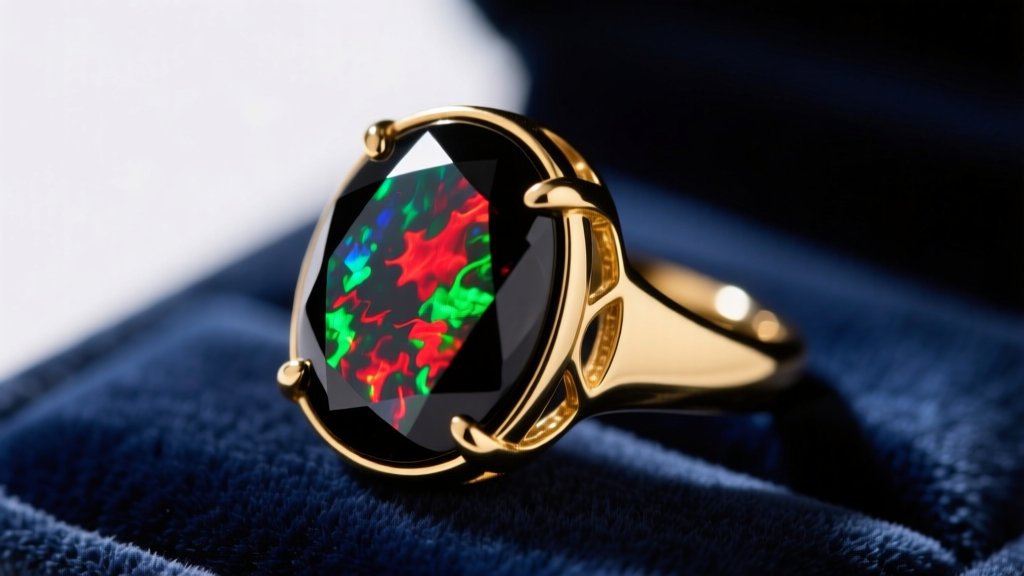
The Fragile Majesty of Lightning Ridge Opals
Black opals, primarily sourced from the legendary Lightning Ridge mines in Australia, represent the absolute pinnacle of the opal world. In the current 2026 market, gem-grade solid black opals with strong red-on-black play-of-color can command anywhere from $1,500 to over $50,000 per carat. However, unlike diamonds or sapphires, opals are non-crystalline and contain between 3% and 10% water. This unique mineralogical makeup makes your black opal jewelry exceptionally vulnerable to environmental shifts, physical impact, and chemical exposure.
When a prized opal ring suddenly develops a cloudy haze or a spiderweb fracture, panic often sets in. As a gemological consultant, I see these issues daily. The good news? Many of these problems can be diagnosed, mitigated, or professionally repaired if you understand the exact mechanics of the failure. Below is a comprehensive troubleshooting guide to saving your black opal jewelry.
Diagnosing the 'Cloudy' Effect: Solid vs. Composite Stones
If your black opal jewelry has suddenly developed a milky, cloudy, or foggy appearance, the first step is identifying the stone's structure. True solid black opals rarely 'cloud' internally unless they are suffering from severe, microscopic crazing (which we will cover next). In 90% of clouding cases, the jewelry features a composite stone—specifically an opal doublet or triplet.
The Triplet Delamination Problem
An opal triplet consists of three layers: a clear quartz or glass cap, a razor-thin slice of precious opal, and a dark potch (common opal) or black glass backing. These layers are bonded using optical epoxy. Over time, exposure to prolonged moisture, harsh soaps, or extreme UV light can cause this epoxy to degrade, break down, or allow water to seep between the layers. This results in a permanent 'fog' that ruins the play-of-color.
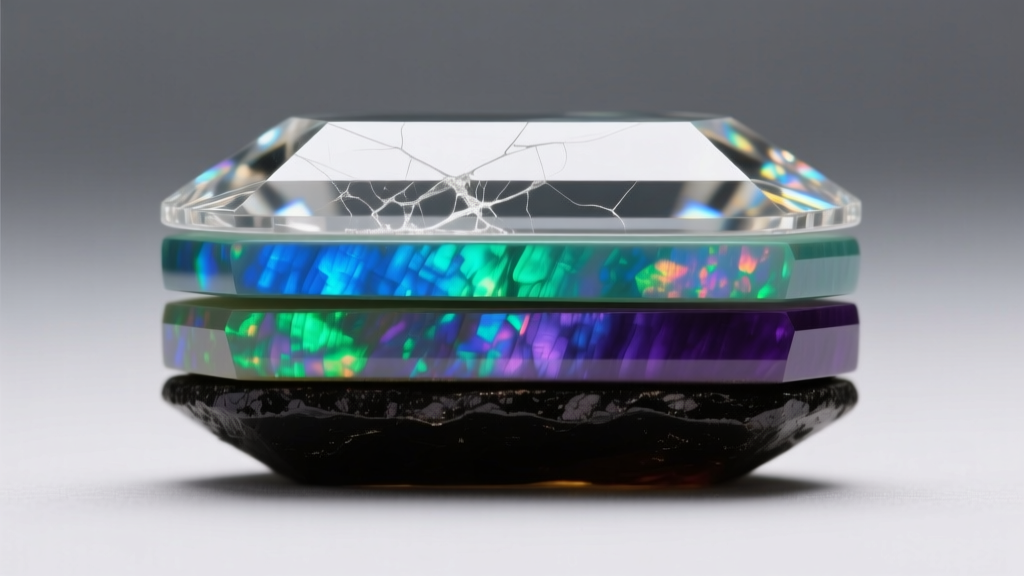
| Opal Type | Structure | Clouding Risk | Troubleshooting Solution |
|---|---|---|---|
| Solid Black Opal | 100% natural opal | Extremely Low | Professional repolishing if surface is etched. |
| Doublet | Opal slice + dark backing | Moderate | Requires lapidary to carefully separate and re-glue. |
| Triplet | Quartz cap + opal + backing | High | Often irreversible; cap must be replaced by a specialist. |
Action Plan: If you have a cloudy triplet, stop wearing it immediately. Do not attempt to bake it or use a hair dryer to evaporate the moisture, as thermal shock will crack the quartz cap or the opal slice. Take it to a master lapidary who specializes in Australian opals to assess if the cap can be safely removed and re-bonded.
Crazing and Cracking: Why Your Black Opal is Fracturing
Crazing is the appearance of a fine, spiderweb-like network of internal fractures. According to the Gemological Institute of America (GIA), crazing occurs when an opal loses its internal water content too rapidly, or when it is subjected to sudden, extreme temperature fluctuations.
Environmental Triggers for Crazing
- Low Humidity: Storing your black opal jewelry in a safety deposit box or a dry, climate-controlled vault for years without a moisture source.
- Thermal Shock: Washing hands in scalding hot water while wearing the ring, or leaving the jewelry on a dashboard in direct sunlight.
- Ultrasonic Cleaners: The high-frequency vibrations and localized heat generated by ultrasonic jewelry cleaners will almost guarantee a fractured opal.
Can a Crazed Opal Be Fixed?
You cannot 'heal' a cracked opal. However, a skilled lapidary can stabilize the stone using a vacuum-chamber process with Opticon (a specialized jewelry epoxy resin) or a similar refractive-index-matched stabilizer. This prevents the cracks from spreading and restores some structural integrity, though it will permanently alter the stone's natural state and impact its resale value. For minor surface crazing, the stone may need to be re-cut and re-polished, which will result in a loss of carat weight and dome height.
Surface Abrasion and the Mohs 5.5-6.5 Reality
Opals rank between 5.5 and 6.5 on the Mohs hardness scale. To put this in perspective, the dust in your home contains microscopic quartz particles, which rank at a 7. Simply wiping your black opal jewelry with a dry, dusty cloth will cause micro-scratches over time, eventually dulling the stone's polish and muting its vibrant flashes of color.
Troubleshooting Scratched Opals
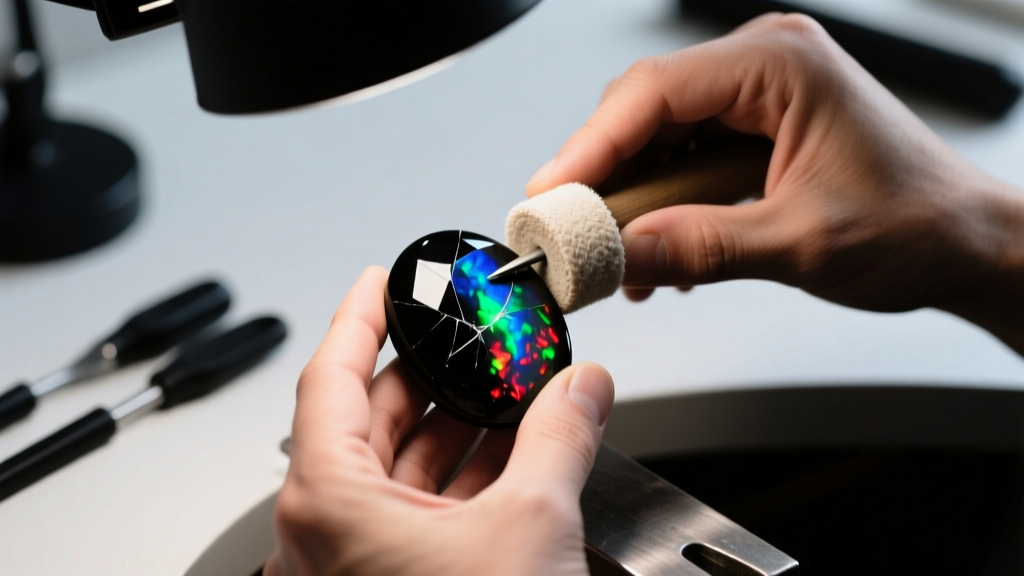
If your solid black opal has lost its luster due to surface abrasion, it can be re-polished. However, this requires specific expertise. Standard bench jewelers often use aggressive polishing compounds like rouge or tripoli, which are too harsh and can cause 'burn' marks on the opal's surface.
A proper lapidary will use a soft muslin or felt buffing wheel with a mild slurry of cerium oxide or specialized diamond paste (down to 50,000 grit) to restore the mirror finish. Warning: Every time an opal is polished, a microscopic layer of the gem is removed. Over-polishing will flatten the cabochon's dome, fundamentally changing its optical geometry and reducing the intensity of its play-of-color.
Setting Failures: Prongs vs. Bezels
A massive, often overlooked cause of black opal damage is the jewelry setting itself. Because opals are brittle and lack cleavage planes, they do not handle uneven pressure well.
"Never allow a standard bench jeweler to resize a prong-set opal ring without first removing the stone. The torque applied to the shank during sizing will warp the gallery, transferring immense pressure to the opal and causing it to snap."
The Bezel Alternative: For daily-wear black opal jewelry, a bezel setting is highly recommended. A well-crafted bezel protects the vulnerable girdle (edge) of the opal from chipping against doorframes and desks. If your prong-set opal is loose, do not attempt to push the prongs down yourself with pliers; the localized stress point will shatter the gem.
The Chemical Damage Matrix
While opals are relatively stable against mild acids compared to pearls or coral, they are highly porous. According to mineralogical data from Mindat.org, the amorphous silica structure can trap chemicals that lead to permanent staining or surface etching.
- Perfumes and Hairsprays: Alcohol-heavy cosmetics can dry out the stone's surface, leading to a chalky appearance.
- Chlorine and Saltwater: Swimming pools and oceans can degrade the metal setting and infiltrate composite stones, destroying the adhesive.
- Silver Dip Cleaners: Never use chemical silver dips to clean the metal around your opal. These harsh acids will permanently etch the surface of the gemstone.
Summary: Your Black Opal Rescue Checklist
Owning black opal jewelry requires a shift in mindset from 'indestructible gem' to 'organic treasure.' If your piece is damaged, follow this triage protocol:
- Identify the Stone Type: Solid, doublet, or triplet. This dictates the repair method.
- Stop the Exposure: Remove the jewelry from water, chemicals, or extreme heat immediately.
- Consult a Specialist: Bypass general mall jewelers. Seek out a lapidary who specifically advertises experience with Australian Lightning Ridge opals.
- Re-evaluate the Setting: If the stone survives a repair, consider having it reset into a protective bezel to prevent future mechanical failure.
By understanding the specific vulnerabilities of black opals, you can ensure that your jewelry retains its mesmerizing play-of-color for generations to come.


