Hawaiian Sunrise Shell Jewelry: 2026 Style & Trend Guide
Explore the 2026 trends in Hawaiian sunrise shell jewelry. Discover grading, ethical sourcing, setting techniques, and care for these rare organic gems.

The Resurgence of Organic Gemstones in 2026
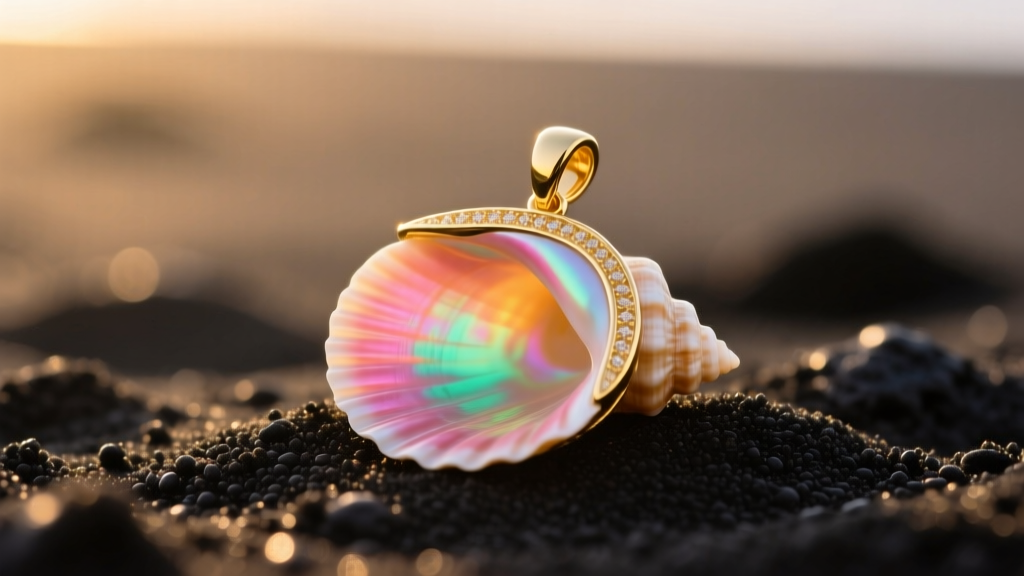
In the landscape of contemporary fine jewelry, 2026 has cemented the shift toward organic, narrative-driven materials. Among the most coveted of these is Hawaiian sunrise shell jewelry. Prized for their breathtaking gradients of peach, coral, and deep crimson, sunrise shells (primarily from the Volutidae family) are no longer confined to traditional leis or souvenir shops. Today, high-end jewelers and independent artisans are elevating these rare organic gems into minimalist, architectural, and haute couture pieces. But working with calcium carbonate structures requires a profound understanding of gemology, structural integrity, and ethical sourcing.
Gemological Profile: Understanding the Sunrise Shell
Unlike crystalline gemstones such as sapphires or emeralds, sunrise shells are biogenic. They are composed primarily of calcium carbonate in the form of aragonite and calcite, layered in a microscopic brick-and-mortar structure known as nacre or crossed-lamellar aragonite. This structure is what gives high-quality shells their subtle, chatoyant luster.
- Hardness: 3.0 to 4.0 on the Mohs scale. This makes them highly susceptible to scratching from everyday dust (which contains quartz at 7.0).
- Specific Gravity: 2.60 to 2.85, making them remarkably lightweight compared to silicate gems.
- Refractive Index: 1.53 to 1.68, contributing to their soft, glowing light return rather than sharp brilliance.
Because of their low hardness and perfect cleavage planes, traditional prong settings are a catastrophic failure mode. The localized pressure of a metal prong will inevitably cause stress fractures, leading to the shell splitting along its natural growth lines.
2026 Grading Standards and Color Spectrum
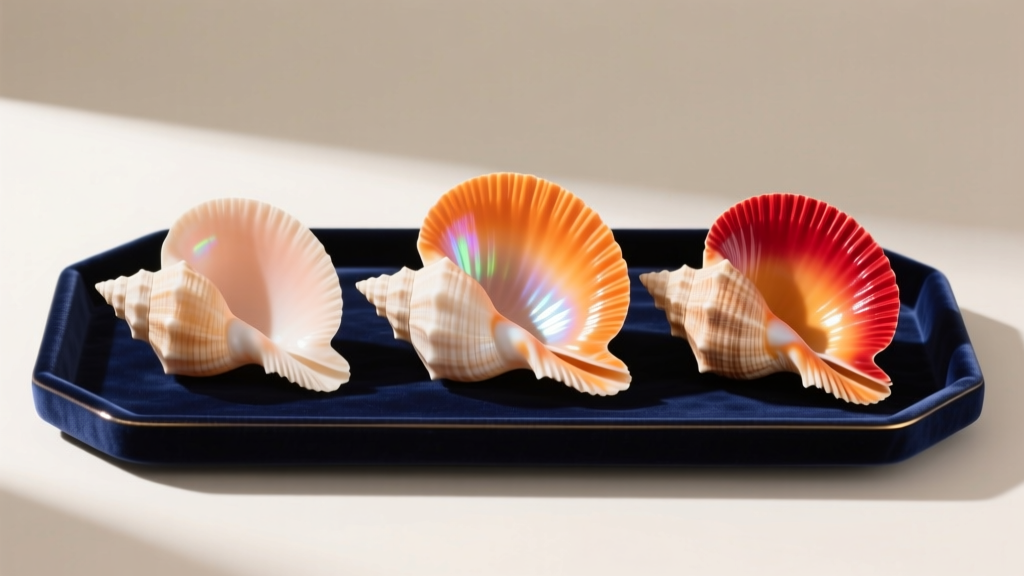
As demand for Hawaiian sunrise shell jewelry has surged, the market has standardized grading to protect consumers from dyed imitations and low-grade chalky specimens. The value is dictated by color saturation, gradient smoothness, and structural integrity.
The AAA to A Grading Scale
| Grade | Color & Luster | Structural Integrity | 2026 Market Value (Loose, 20mm) |
|---|---|---|---|
| AAA (Gem) | Vibrant sunset orange to deep crimson; seamless gradient; high chatoyancy. | Flawless surface; no pitting or chalky spots; thick lip. | $350 - $600 |
| AA (Fine) | Pastel peach to soft coral; good luster; minor color banding. | Microscopic surface pitting; structurally sound for bezel setting. | $120 - $250 |
| A (Commercial) | Opaque, chalky white with faint pink hints; dull luster. | Visible pitting; brittle edges; often stabilized with resin. | $20 - $60 |
Design Trends: How Jewelers Are Setting the Shell
The 2026 design ethos for organic gems prioritizes preservation and contrast. Jewelers are pairing the soft, warm tones of the sunrise shell with cool, matte metals and protective settings.
1. The Flush Bezel and Matte Platinum
Matte platinum or oxidized sterling silver provides a striking visual contrast to the warm coral hues of the shell. Flush bezel settings encase the fragile edges of the shell in a protective metal halo, eliminating the risk of edge chipping. The shell is seated on a bed of inert silicone rather than hard epoxy, allowing for slight thermal expansion without cracking.
2. Bio-Resin Encapsulation
For highly pitted AA or A-grade shells, artisans are using UV-stable, optically clear bio-resins. By casting the shell in a geometric resin block and then faceting the resin itself, designers protect the fragile organic material while creating a modern, brutalist aesthetic. This technique has become a staple in avant-garde Hawaiian sunrise shell jewelry collections this year.
3. Asymmetric Ear Cuffs
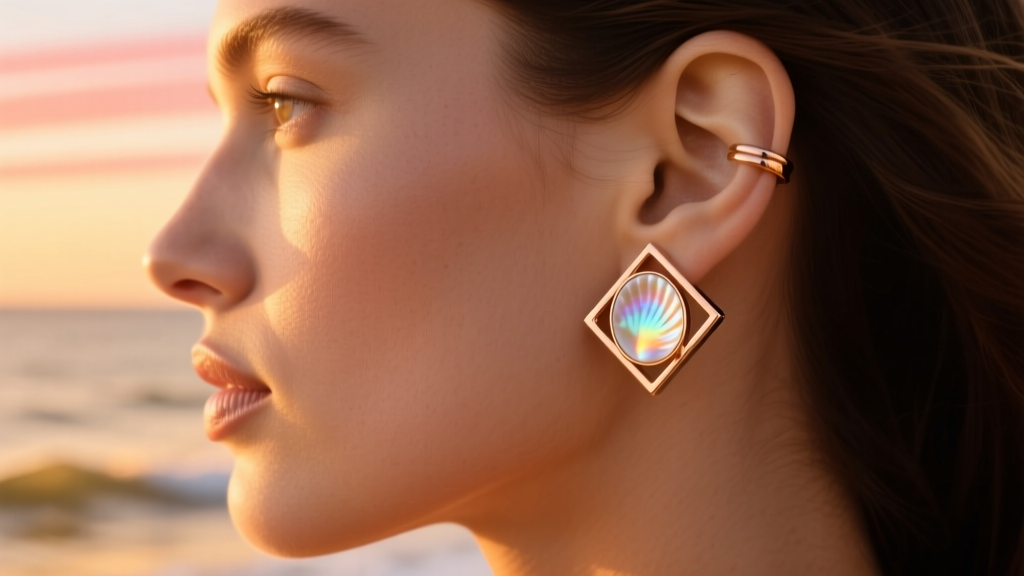
Moving away from heavy pendants, 2026 trends favor micro-shells (under 10mm) set into tension-free ear cuffs and helix climbers. These pieces require minimal metal and rely on the natural curvature of the ear for support, reducing the kinetic impact that damages larger shell pendants.
The Ethics of Sourcing: Dredging vs. Beachcombing
The most critical conversation in the organic gemstone sector today is sustainability. Historically, sunrise shells were harvested via deep-water dredging, a practice that devastates benthic marine ecosystems. In response to strict environmental regulations and consumer demand for transparency, the industry has pivoted.
"The modern collector demands a provenance story that respects the ocean. We are seeing a complete phase-out of dredged shells in high-end markets, replaced by vintage recycling and strictly regulated, shallow-water beachcombing after winter swells."
— 2026 Organic Gemstone Market Report
According to the Hawaii Division of Aquatic Resources (DAR), strict limits are placed on the harvesting of marine life, and responsible jewelers now exclusively source from licensed beachcombers who collect only empty shells washed ashore, or from estate liquidations. When purchasing, always request a certificate of ethical sourcing that guarantees the shell was not dredged from live reefs.
Care and Maintenance: Preventing Calcification Loss
The greatest threat to Hawaiian sunrise shell jewelry is not physical impact, but chemical erosion. Because they are composed of calcium carbonate, shells are highly reactive to acids. The Gemological Institute of America (GIA) notes that organic gems require specialized care routines to prevent the dissolution of their polished surfaces.
Critical Failure Modes to Avoid
- Lactic Acid and Sweat: Human sweat is mildly acidic. Prolonged skin contact during exercise or hot weather will etch the surface of the shell, turning a high-gloss AAA finish into a dull, chalky matte within months.
- Ultrasonic and Steam Cleaners: Never use these. The high-frequency vibrations will shatter the aragonite layers, and the heat will cause irreversible thermal shock.
- Cosmetics and Perfumes: Alcohol and chemical solvents in perfumes and hairsprays can degrade the natural proteins binding the calcium carbonate crystals.
The Proper Cleaning Protocol
To clean your shell jewelry, use a dry, ultra-soft microfiber cloth. If deeper cleaning is required, lightly dampen the cloth with distilled water (never tap water, which contains chlorine and fluorides) and gently wipe the surface. Immediately dry the piece and store it in a humidity-controlled environment, separate from harder gemstones to prevent Mohs-scale scratching.
Investment Value and Market Outlook
As ethical sourcing restrictions tighten and natural beachcombing yields fluctuate with changing ocean currents and storm patterns, the supply of gem-grade AAA sunrise shells is contracting. Consequently, Hawaiian sunrise shell jewelry is transitioning from a niche regional souvenir to a recognized alternative asset class in the organic gem market. Collectors are increasingly viewing flawless, large-format (30mm+) sunrise shells set in archival-quality gold bezels as heirloom investments, with appreciation rates outpacing traditional cultured pearls in the 2026 luxury sector.


