How to Authenticate, Grade, and Clean Blue Jade Jewelry
Learn how to authenticate, grade, and properly clean blue jade jewelry with our step-by-step gemological guide for collectors and buyers.

The Rarity of Blue Jade: What You Are Actually Buying
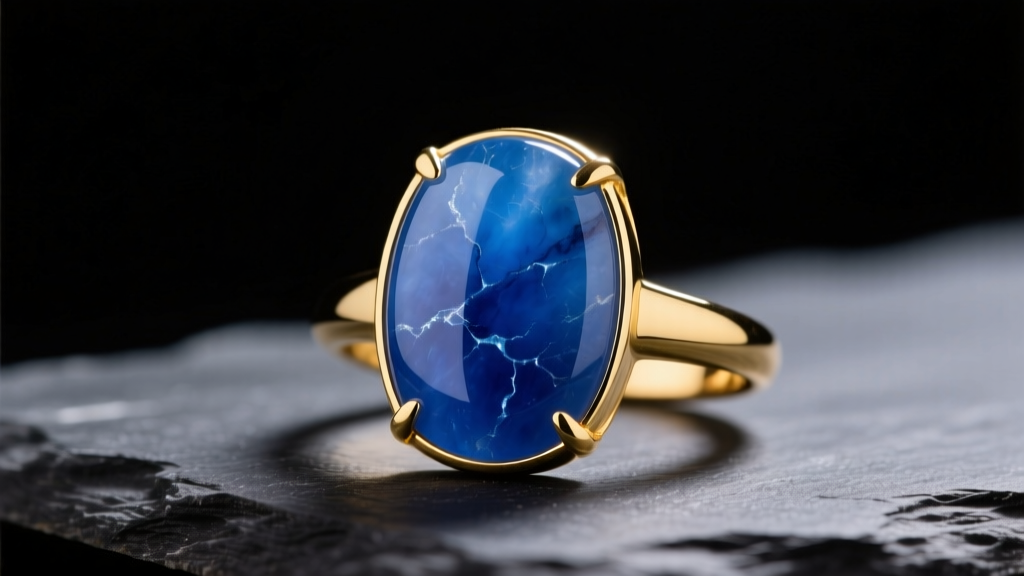
True blue jade is one of the most misunderstood and frequently misrepresented gemstones in the global market. When shopping for blue jade jewelry, collectors are often met with a labyrinth of dyed nephrite, blue serpentine, and polymer-impregnated jadeite. Genuine blue jadeite—most notably the legendary 'Olmec Blue' sourced from Guatemala—derives its color from trace amounts of titanium and iron, rather than the chromium that colors imperial green jade. Because high-quality, untreated blue jadeite cabochons can command prices between $800 and $2,500 for a standard 10x14mm stone, knowing how to authenticate your purchase is not just a matter of pride; it is a financial necessity.
This step-by-step guide will walk you through the gemological verification process, the universal jade grading scale, and the precise maintenance protocols required to preserve the structural integrity of your blue jade jewelry.
Step 1: Authenticating Blue Jade Jewelry (The 4-Point Check)
Before you finalize any acquisition, put the stone through this non-destructive gemological checklist. According to the Gemological Institute of America (GIA), visual and optical testing can eliminate 90% of common simulants on the spot.
1. The Loupe Inspection for Dye Concentration
Using a 10x triplet loupe, examine the surface and crevices of the stone. Dyed blue jade (often low-grade nephrite or quartz) will show unnatural color concentration in the micro-fractures and crystal boundaries. Genuine blue jadeite exhibits a more uniform color distribution or natural, subtle color zoning that does not strictly follow the crack lines.
2. The Refractive Index (RI) and Specific Gravity (SG) Test
If you are buying loose stones or high-end estate blue jade jewelry, request the RI and SG data. Jadeite has a specific point refractometer reading of 1.66 and a specific gravity of 3.30 to 3.38. Common blue simulants fail this test immediately: blue serpentine (often sold as 'new jade') has an SG of roughly 2.57, while dyed blue chalcedony sits at 2.60. If the stone feels unusually light for its size, it is not jadeite.
3. The UV Fluorescence Test
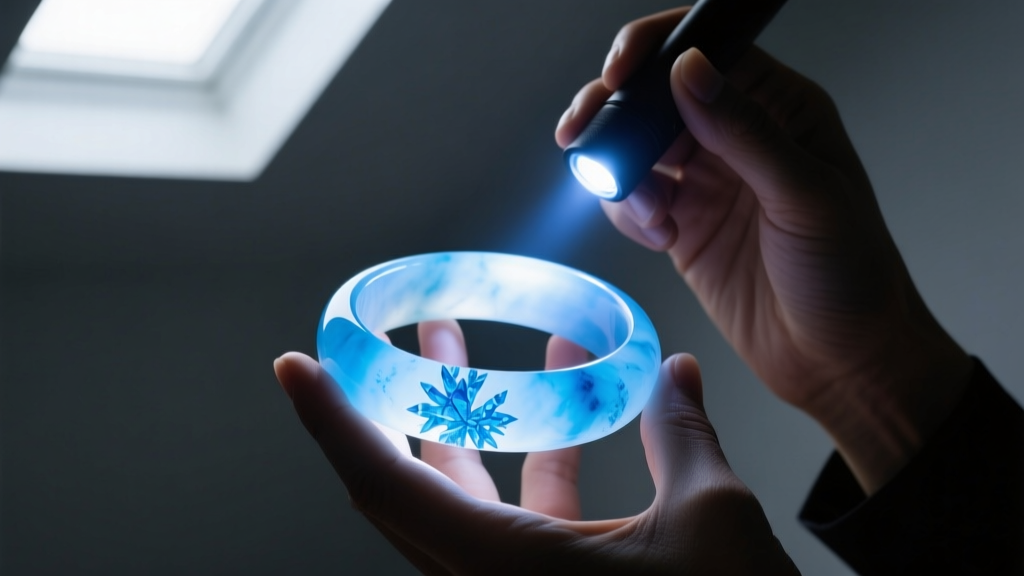
Shine a long-wave (365nm) UV flashlight on the stone in a dark room. Untreated, natural blue jadeite (Type A) is generally inert and will show no reaction. If the stone emits a chalky, bluish-white, or greenish glow, it indicates the presence of polymer resins used to fill fractures—a hallmark of Type B treated jade.
Step 2: Understanding the Jade Treatment Grading Scale
The international jade market relies on a strict three-tier classification system to determine value. When evaluating blue jade jewelry, you must know which category the stone falls into. Mason-Kay Fine Jade Jewelry outlines these categories as the gold standard for transparency in jade trading.
| Grade | Treatment Type | Market Value Impact | Durability Notes |
|---|---|---|---|
| Type A | 100% Natural (Only cut and polished, sometimes with traditional plum wax) | Highest (Investment grade) | Extremely durable; Mohs 6.5-7 |
| Type B | Bleached with acid to remove brown/yellow impurities, then polymer-impregnated | Low to Moderate | Structurally compromised; resin yellows and degrades over 10-15 years |
| Type C | Chemically dyed to enhance or alter color (often dyed blue or green) | Lowest (Novelty grade) | Color fades under UV/sunlight exposure; brittle |
Always demand a laboratory report from a reputable gemological lab (such as GIA or SSEF) for any blue jade jewelry piece priced over $500 to guarantee Type A status.
Step 3: Sourcing Ethical Guatemalan vs. Burmese Blue Jade
While Myanmar (Burma) produces the vast majority of the world's commercial jadeite, Guatemala is the premier source for true blue jadeite. The Motagua Valley fault line in Guatemala yields the highly prized 'Olmec Blue' and 'Rainbow Jade' varieties. When sourcing, look for sellers who provide mine-to-market traceability. Guatemalan blue jade often features a slightly higher translucency and a more complex, watery blue tone compared to the opaque, chalky blue of dyed Asian nephrite.
Pro-Tip: Beware of the term 'Blue Jade' used without the suffix 'ite'. In many tourist markets, 'Blue Jade' is a commercial misnomer for blue serpentine, bowenite, or dyed howlite. Always specify 'blue jadeite' when communicating with dealers.
Step 4: The Proper Cleaning and Storage Protocol
Jadeite is remarkably tough due to its interlocking fibrous crystal structure, making it highly resistant to chipping. However, the surface polish and any traditional wax coatings require specific care to maintain their luster.
Daily Cleaning Routine
Never use ultrasonic cleaners, steam cleaners, or harsh chemical degreasers on blue jade jewelry. Ultrasonic vibrations can shatter jade that has unseen internal stress fractures, and chemicals will strip the natural wax polish.
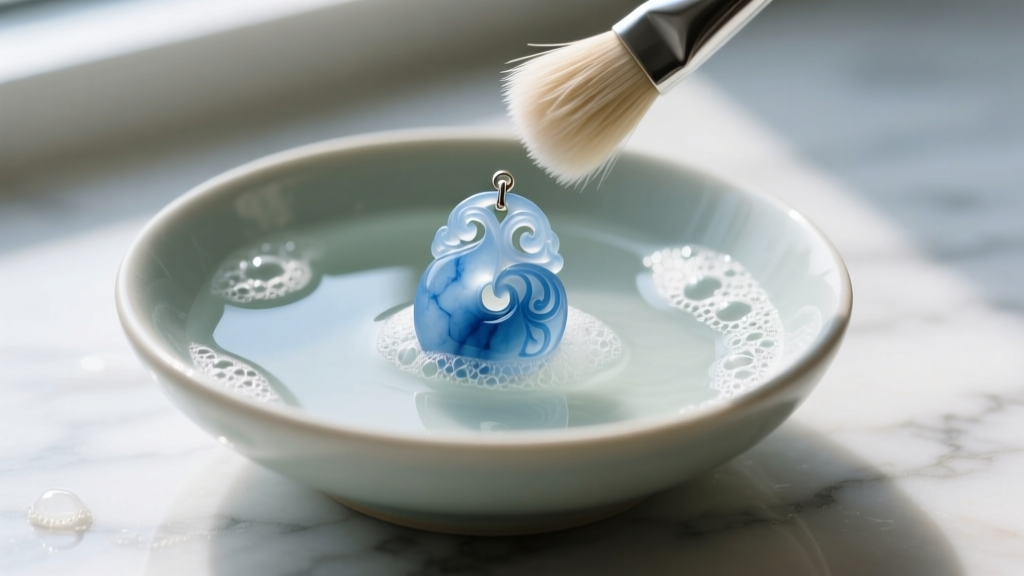
- Mix a solution of lukewarm distilled water and a single drop of pH-neutral baby shampoo.
- Submerge the jewelry for no more than 3 minutes.
- Gently agitate the stone using a soft, natural baby-hair brush, paying special attention to the back of the cabochon where skin oils accumulate.
- Rinse under a slow stream of distilled water and pat dry with a lint-free microfiber cloth.
Long-Term Storage Metrics
Jadeite contains a small amount of structural water. While Type A jade is highly stable, storing it in excessively dry environments (like a safety deposit box with silica gel packets) for years can lead to microscopic surface dehydration, dulling the polish. Store your blue jade jewelry in a soft, breathable velvet pouch in a room with standard ambient humidity (40-50%). Furthermore, keep it separated from diamonds or sapphires, which sit higher on the Mohs scale and can easily scratch the jade's polished surface during transit.
Final Thoughts on Building a Blue Jade Collection
Acquiring authentic blue jade jewelry is a rewarding pursuit that bridges ancient Mesoamerican history with modern gemological science. By strictly adhering to the specific gravity tests, demanding Type A certification, and following meticulous cleaning protocols, you ensure that your collection retains both its spiritual resonance and its financial value. For further reading on mineral properties, the Mindat.org Jadeite Mineral Data database remains an invaluable, free resource for verifying the chemical composition of trace elements that give blue jade its breathtaking, oceanic hues.


