How to Clean Opal Jewelry: Safe Troubleshooting Guide
Learn how to clean opal jewelry safely. Troubleshoot cloudiness, avoid cracking solid stones, and protect doublets with our expert gemological guide.

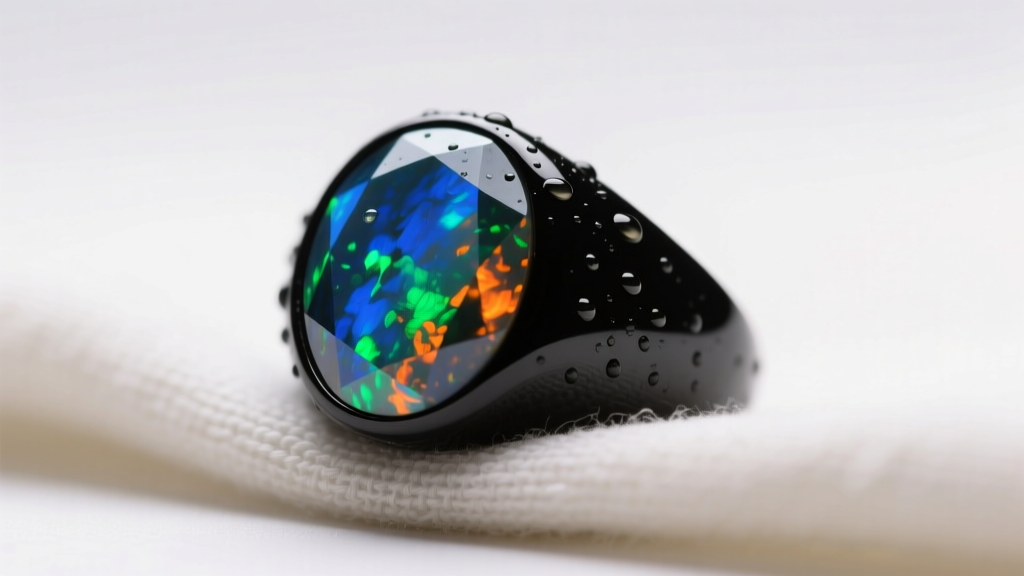
The Unique Vulnerability of Opals
Opals are among the most mesmerizing gemstones on earth, celebrated for their phenomenal play-of-color. However, from a gemological perspective, they are also one of the most fragile materials you can wear. Understanding how to clean opal jewelry requires a foundational knowledge of its mineralogy. Unlike crystalline gems such as diamonds or sapphires, opal is a non-crystalline form of silica (SiO2·nH2O) that contains anywhere from 3% to 21% water within its microscopic structure, according to the Mindat mineral database.
This internal water content makes opals highly susceptible to thermal shock and rapid dehydration. Furthermore, opal ranks between 5.5 and 6.5 on the Mohs scale of hardness, meaning it can be easily scratched by everyday dust (which contains quartz particles at a 7). When dirt, skin oils, and lotions accumulate on the surface, they fill the microscopic gaps between the silica spheres, disrupting the diffraction of light and dulling the stone's famous fire. Cleaning them is necessary, but doing so incorrectly can lead to irreversible 'crazing'—a network of fine, spiderweb-like fractures caused by sudden temperature changes or moisture loss.
Identify Your Opal Type Before Cleaning
Before you introduce any moisture to your jewelry, you must determine whether your stone is a solid opal or an assembled stone (doublet/triplet). This single step dictates your entire cleaning protocol.
- Solid Opals: Cut from a single piece of rough opal. They are safe for brief, gentle exposure to lukewarm water.
- Opal Doublets: A thin slice of precious opal glued to a dark backing material (often ironstone or black glass) to enhance color contrast.
- Opal Triplets: A thin opal slice sandwiched between a dark backing and a clear, domed cap made of quartz or glass.
Crucial Warning: Doublets and triplets are held together by optical adhesives. Submerging assembled opals in water will degrade the glue, causing the layers to delaminate, fog, and permanently ruin the stone.
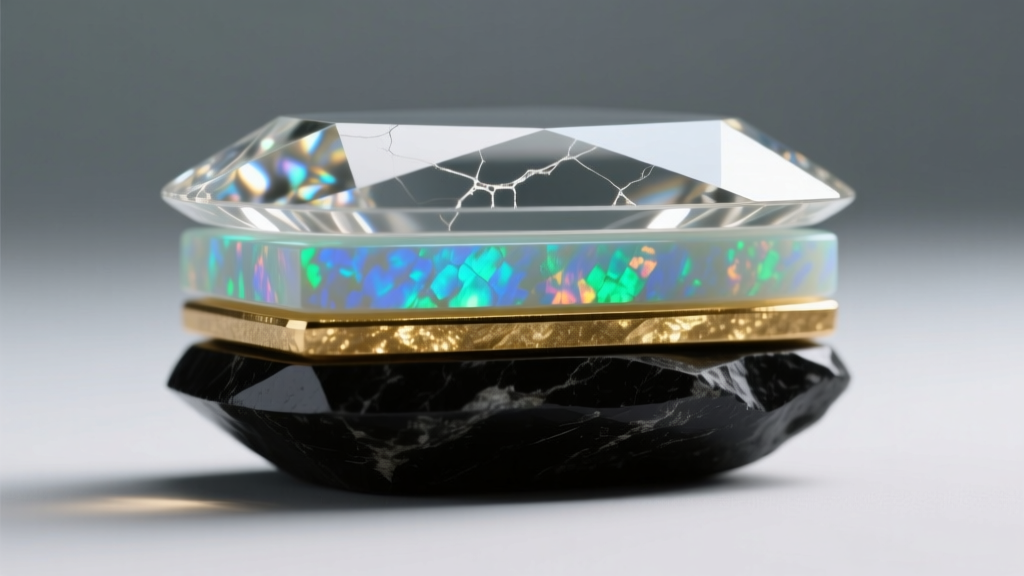
How to Tell the Difference
Examine the side profile of the stone under a jeweler's loupe or strong magnifying glass. If you see a perfectly straight, distinct glue line where the opal meets the backing, or a clear glass-like dome on top, you have an assembled stone. Solid opals will have a continuous, natural stone profile wrapping around the girdle.
Step-by-Step: How to Clean Solid Opal Jewelry
If you have confirmed your jewelry features a solid opal, follow this meticulous, low-risk cleaning process endorsed by gemological professionals.
What You Need
- Distilled or filtered lukewarm water (68°F to 72°F / 20°C to 22°C)
- pH-neutral, phosphate-free liquid dish soap (e.g., Dawn Free & Clear)
- An extra-soft baby toothbrush (adult toothbrushes are too stiff and will cause micro-scratches)
- A clean, lint-free microfiber cloth
- A small ceramic or glass bowl (avoid metal bowls that can scratch the stone if dropped)
The Cleaning Process
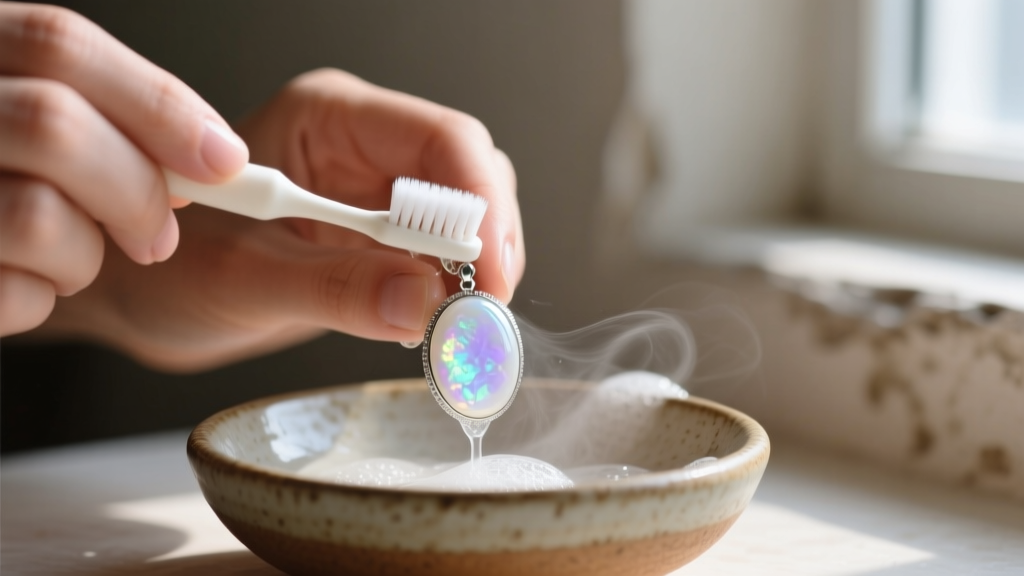
- Prepare the Solution: Fill the bowl with lukewarm water and add a single drop of the mild soap. Swirl gently to create mild suds.
- Brief Soak: Place the solid opal jewelry into the water. Let it sit for no more than 3 to 5 minutes. This loosens body oils and cosmetics without risking waterlogging.
- Gentle Agitation: Using the extra-soft baby toothbrush, gently sweep across the surface of the opal. Do not apply downward pressure. Pay special attention to the back of the setting and the prongs where grime accumulates.
- Rinse: Rinse the piece under a slow stream of lukewarm tap water. Ensure the drain is securely plugged.
- Dry: Pat the jewelry dry immediately with a microfiber cloth. Allow it to air-dry completely at room temperature before storing. Never use a hairdryer or place it near a heat source.
Cleaning Doublets and Triplets Safely
Assembled opals require a strictly 'dry' or 'damp' cleaning method. Never submerge them. Instead, mix a tiny amount of mild soap with water, dip a soft microfiber cloth into the suds, and wring it out until it is barely damp. Gently wipe the surface of the triplet cap or doublet face. Immediately follow up with a dry section of the cloth to remove any residual moisture. Avoid getting the edges of the stone wet, as capillary action can draw water into the glue layer.
Troubleshooting Common Opal Problems
When dealing with opal maintenance, you may encounter specific issues that require targeted solutions. Refer to the troubleshooting matrix below to diagnose and address your gemstone's condition.
| Issue | Root Cause | Actionable Solution |
|---|---|---|
| Cloudy or Hazy Surface | Buildup of lotions, dead skin, or hard water spots; or scratching on a triplet's quartz cap. | Wash with the mild soap method above. If cloudiness persists on a triplet, the quartz cap is scratched and requires professional repolishing by a lapidary. |
| Loss of Fire/Color | Surface oils masking the silica spheres, or severe dehydration of the stone. | Clean thoroughly. If color does not return, consult a gemologist. Do not attempt to 'rehydrate' by soaking, as this can cause structural shock. |
| Crazing (Spiderweb Cracks) | Thermal shock, rapid drying, or exposure to extreme heat/dryness. | Unfortunately, crazing is irreversible. The structural integrity is compromised. Prevent future crazing by strictly controlling temperature and humidity. |
| Surface Scratches | Contact with harder materials (quartz dust, diamonds, sapphires) during wear or storage. | Solid opals can be professionally repolished by a skilled lapidary. Assembled stones usually cannot be polished without risking the glue layers. |
| Stone Rattling in Setting | Prong wear or adhesive failure in doublets/triplets. | Stop wearing immediately. Take to a professional jeweler for prong tightening or re-gluing. Do not attempt DIY jewelry glue repairs. |
Crucial Warnings: What to Avoid at All Costs
Never use ultrasonic or steam cleaners on opal jewelry. The high-frequency vibrations of an ultrasonic cleaner can easily shatter the delicate internal silica structure of an opal, while the intense, localized heat of a steam cleaner will cause instant thermal shock and melt the adhesives in assembled stones.
Avoid harsh chemicals, including bleach, ammonia, and abrasive commercial jewelry dips. These substances can strip the natural moisture from the stone and corrode the metal settings, particularly if your opal is set in sterling silver or low-karat gold. Furthermore, never use baking soda or toothpaste as a DIY cleaning paste; the particulate matter is highly abrasive and will leave a matte, scratched finish on the opal's polish.
Long-Term Storage and Preventative Care
According to the Gemological Institute of America (GIA), proper storage is just as critical as proper cleaning. Opals should never be stored in airtight plastic bags or bank safety deposit boxes for long periods, as the extremely dry environments can draw out their natural moisture, leading to crazing.
Store your opal jewelry in a soft fabric pouch, completely separate from diamonds, rubies, and sapphires to prevent contact scratching. If you live in an exceptionally arid climate or keep your jewelry in a room with aggressive dehumidification, you can place the soft pouch inside a sealed glass jar with a slightly damp (not wet) cotton ball to maintain ambient humidity. Always put your opal jewelry on after applying cosmetics, perfumes, and hairspray, and remove it before swimming in chlorinated pools or engaging in household cleaning.
Conclusion
Learning how to clean opal jewelry safely is an exercise in patience and precision. By identifying your stone type, utilizing room-temperature solutions, and strictly avoiding mechanical cleaners, you can preserve the breathtaking play-of-color for generations. When in doubt, defer to a professional gemologist rather than risking irreversible damage with aggressive home remedies.


