How to Clean, Care for, and Style Peruvian Opal Jewelry
Learn how to properly clean, store, and style Peruvian opal jewelry. Discover step-by-step care tips for blue and pink opaque opals.

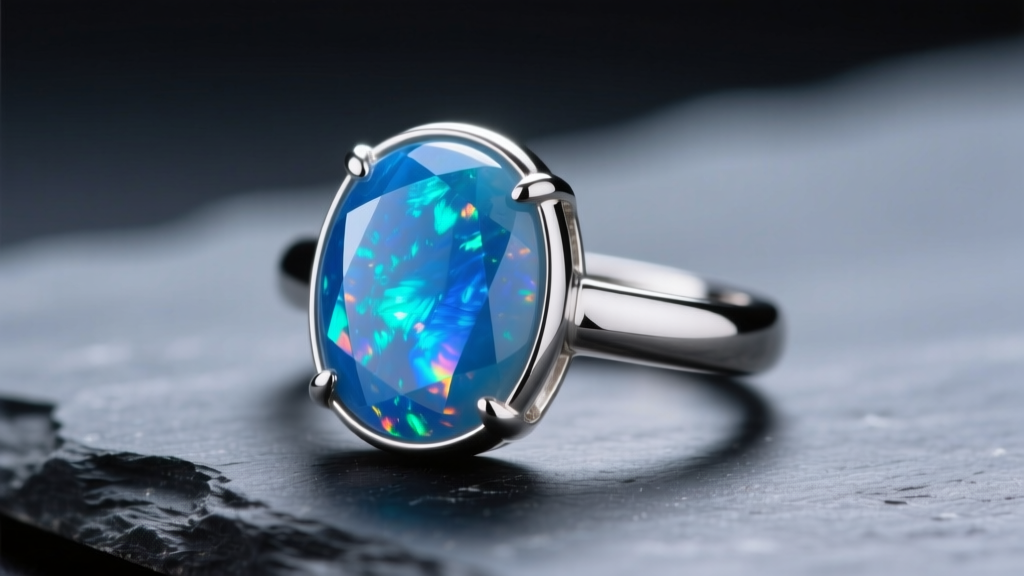
Understanding the Unique Composition of Peruvian Opals
When building a curated gemstone collection, peruvian opal jewelry stands out for its breathtaking, opaque pastel hues. Unlike the fiery, translucent precious opals mined in Australia or Ethiopia, Peruvian opals are classified as 'common opals' (specifically opal-CT). Sourced primarily from the high-altitude Andes mountains, these stones are celebrated for their soothing blue and soft pink varieties.
To properly care for these gems, you must first understand their mineralogy. According to Mindat.org's mineralogy database, Peruvian opal possesses a Mohs hardness of 5.5 to 6.5. While it lacks the high water content (3-21%) found in precious opals—making it less susceptible to 'crazing' or sudden cracking from dehydration—it remains a relatively soft, brittle gemstone. This means it requires a highly specific, gentle approach to cleaning, storing, and daily wear to maintain its polished luster.
Step-by-Step Cleaning Guide for Peruvian Opal Jewelry
Routine maintenance is critical, but aggressive cleaning methods will permanently damage the stone's polish. Follow this exact protocol to safely remove oils, lotions, and environmental dust from your pieces.
- Dry Dusting: Before introducing any moisture, use a clean, lint-free microfiber cloth to gently wipe away surface dust. Dust often contains microscopic quartz particles (Mohs 7), which can scratch your opal (Mohs 5.5) if rubbed aggressively while dry.
- Prepare a Mild Bath: Fill a small glass bowl with lukewarm water. Add a single drop of pH-neutral dish soap (such as original Dawn or a mild Castile soap). Avoid hot water, as sudden thermal shock can cause internal stress fractures.
- Soft Agitation: Submerge the jewelry for no more than 3 to 5 minutes. Use a brand-new, extra-soft baby toothbrush to gently sweep the crevices where the metal setting meets the stone.
- Rinse and Dry: Rinse the piece under a gentle stream of lukewarm tap water. Pat it dry with a microfiber cloth and allow it to air-dry completely in a well-ventilated area before storing.
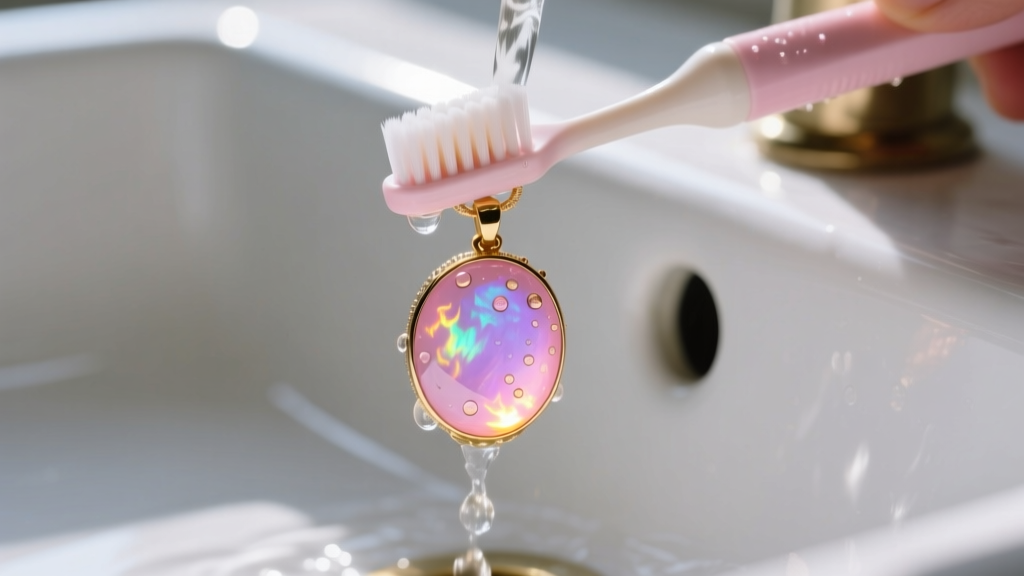
Critical Warning: Never place peruvian opal jewelry in an ultrasonic cleaner or use a steam cleaner. The high-frequency vibrations of ultrasonic machines can easily shatter the stone along invisible internal matrix lines, while steam can strip the stone's natural polish.
Choosing the Right Setting for Long-Term Durability
The longevity of your jewelry heavily depends on how the stone is secured by the jeweler. Because Peruvian opal is brittle and lacks cleavage planes, it chips easily upon hard impact.
Bezel vs. Prong Settings
For rings and bracelets—pieces most prone to knocking against tables and doorframes—a full bezel setting is non-negotiable. A bezel wraps a continuous rim of metal entirely around the gemstone's girdle, protecting the vulnerable edges from chipping. Prong settings, while allowing more light to enter the stone, leave the edges exposed and are only recommended for low-impact pieces like pendants or stud earrings.
Proper Storage Techniques to Prevent Scratching
How you store your gemstones is just as important as how you clean them. A common mistake in 2026 is tossing all jewelry into a single communal box. When a Peruvian opal rubs against a diamond (Mohs 10), sapphire (Mohs 9), or even a quartz-based amethyst (Mohs 7), the opal will inevitably lose its polish and develop micro-scratches.
- Individual Pouches: Store each piece in a separate, soft anti-tarnish flannel pouch or a silk-lined compartment.
- Humidity Control: While Peruvian opal is less prone to water-loss cracking than Australian opal, extreme, prolonged dryness (such as leaving it near a heating vent or in a desert climate without climate control) can still cause structural stress. Storing a small silica gel packet or a humidifier in your jewelry safe helps maintain an optimal environment.
- Lay Flat: Heavy opal pendants should be laid flat rather than hung, preventing the chain from tangling and pulling on the bail, which can loosen the adhesive or setting over time.
A 2026 Styling Framework: Pairing Metals and Wardrobes
Styling opaque gemstones requires a different approach than faceted, reflective stones. Peruvian opals offer a matte, earthy elegance that acts as a sophisticated neutral. Below is a decision matrix to help you pair your jewelry with the right metals and wardrobe palettes.
| Opal Variety | Best Metal Pairings | Ideal Skin Undertone | Wardrobe Color Palette |
|---|---|---|---|
| Blue Peruvian Opal | Sterling Silver, Platinum, White Gold | Cool, Olive | Navy, Charcoal, Crisp White, Emerald |
| Pink Peruvian Opal | Rose Gold, Yellow Gold, Copper | Warm, Neutral | Cream, Sage Green, Terracotta, Denim |
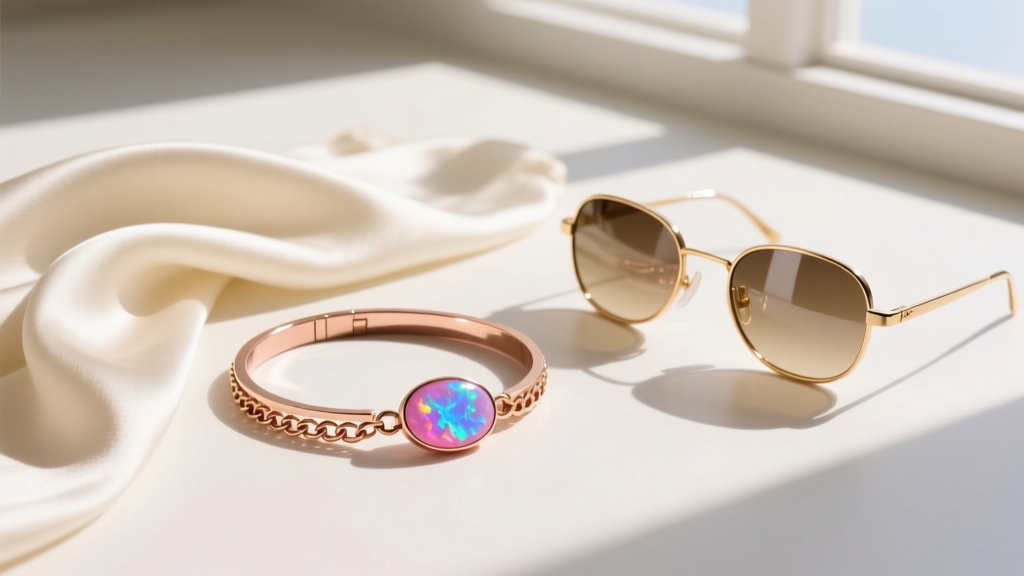
According to the Gemological Institute of America (GIA), the visual appeal of common opals relies heavily on their uniform body color. To make the pastel tones of pink and blue Peruvian opals pop, contrast is key. Pairing a soft pink opal with deep sage green or terracotta fabrics enhances its warm, rosy hues, while blue opals look strikingly vibrant against stark white or deep charcoal backgrounds.
How to Authenticate Genuine Peruvian Opal vs. Imitations
As the demand for earthy, bohemian gemstones has surged, the market has been flooded with imitations. Knowing how to authenticate your pieces protects your investment.
Spotting Dyed Howlite and Magnesite
The most common imitation for pink and blue Peruvian opal is dyed howlite or magnesite. These porous stones absorb dye easily, mimicking the opaque pastel colors of genuine opal. To spot the fake, use a 10x jeweler's loupe. Dyed howlite will reveal concentrated, web-like dye pooling in the natural gray veining of the stone. Genuine Peruvian opal has a uniform, waxy luster without this artificial webbing.
Looking for Dendritic Inclusions
Blue Peruvian opal frequently contains natural black dendritic inclusions (manganese oxides) that look like tiny ferns, moss, or tree branches trapped inside the stone. These inclusions are highly prized by collectors and are virtually impossible for manufacturers to replicate convincingly in glass or resin fakes. If your blue opal features these natural 'fingerprints,' you can be highly confident in its authenticity.
The Scratch Test (Proceed with Caution)
If you are testing an unmounted cabochon or a discreet area of the stone, a copper coin (Mohs ~3.5) should not scratch genuine Peruvian opal. However, a steel needle (Mohs ~6.5) will easily scratch it. Never perform destructive tests on finished, set jewelry; instead, rely on visual loupe inspection or consult a certified gemologist for advanced spectroscopic verification.


