Opihi Shell Jewelry: Material Properties & Gem Comparisons
Discover the unique material properties of opihi shell jewelry. Compare its durability, Mohs hardness, and value against abalone, coral, and turquoise.

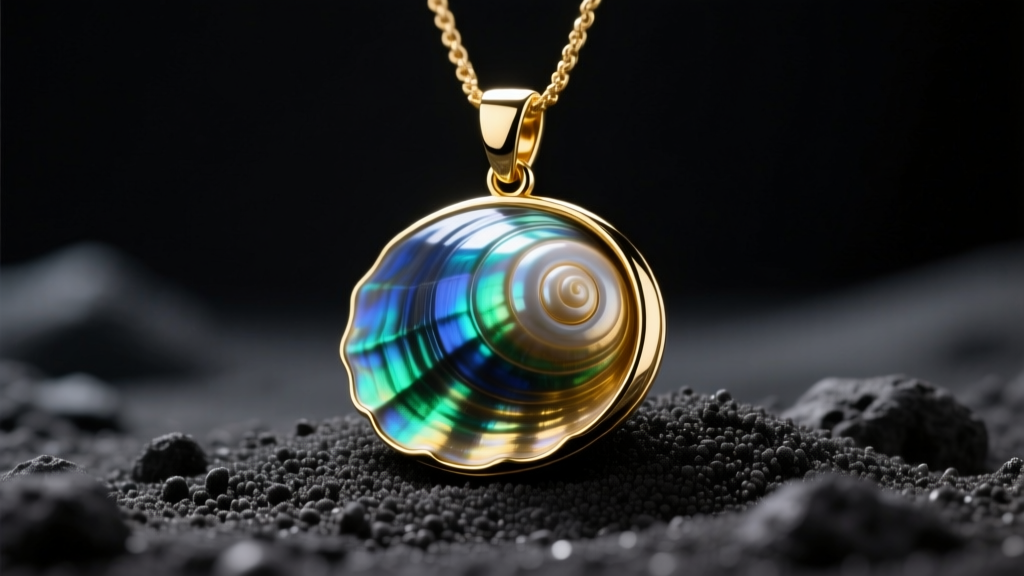
When collectors and jewelry enthusiasts think of organic gemstones, pearls, amber, and coral typically dominate the conversation. However, opihi shell jewelry represents a highly specialized, culturally rich, and materially distinct category within organic gemology. Native to the rocky coastlines of Hawaii, the opihi (a type of limpet) yields a shell that is prized not for brilliant iridescence, but for its earthy tones, deep cultural resonance, and unique structural properties. For jewelers and collectors in 2026, understanding the exact material science behind opihi is critical for proper lapidary work, setting selection, and long-term preservation.
The Organic Gemstone: Understanding Opihi Shell Composition
Opihi shells are primarily harvested from two species in Hawaii: the blackfoot opihi (Cellana exarata) and the yellowfoot opihi (Cellana sandwicensis). Unlike the nacreous interiors of oysters or abalone, the opihi shell is composed of a complex biomineralized matrix. According to GIA's research on organic gems, marine shells are predominantly calcium carbonate (CaCO3) bound together by an organic protein called conchiolin.
In opihi, the calcium carbonate crystallizes primarily in the aragonite and calcite forms, arranged in prismatic layers rather than the flat, light-reflecting nacreous tablets found in mother-of-pearl. This structural difference is exactly what gives opihi shell jewelry its signature matte, earthy finish and distinct growth-ring striations. The conchiolin protein matrix acts as a biological shock absorber, giving the shell a degree of toughness that belies its relatively low surface hardness.
Material Properties and Durability Metrics
To properly evaluate opihi shell jewelry, we must compare its gemological metrics against other popular organic and inorganic alternatives. Because it is an organic composite, opihi does not behave like a crystalline mineral such as quartz or sapphire. It lacks true cleavage but is highly susceptible to thermal shock and chemical degradation.
| Material | Mohs Hardness | Specific Gravity | Toughness | Primary Composition |
|---|---|---|---|---|
| Opihi Shell | 2.5 - 3.0 | 2.60 - 2.75 | Fair to Good | Calcium Carbonate / Conchiolin |
| Abalone Shell | 2.5 - 3.5 | 2.70 - 2.78 | Good | Nacreous Calcium Carbonate |
| Mother-of-Pearl | 2.5 - 3.0 | 2.60 - 2.70 | Fair | Nacreous Calcium Carbonate |
| Turquoise (Stabilized) | 5.0 - 6.0 | 2.60 - 2.90 | Good | Hydrated Copper Aluminum Phosphate |
| Bamboo Coral (Dyed) | 3.5 - 4.0 | 2.60 - 2.70 | Poor to Fair | Calcite / Organic Matrix |
As the data illustrates, opihi sits on the softer end of the jewelry spectrum. A Mohs hardness of 2.5 to 3.0 means it can be easily scratched by a copper coin or a steel knife. However, its specific gravity (density) is remarkably consistent with stabilized turquoise, making it a familiar weight for jewelers accustomed to working with Southwestern inlay pieces.
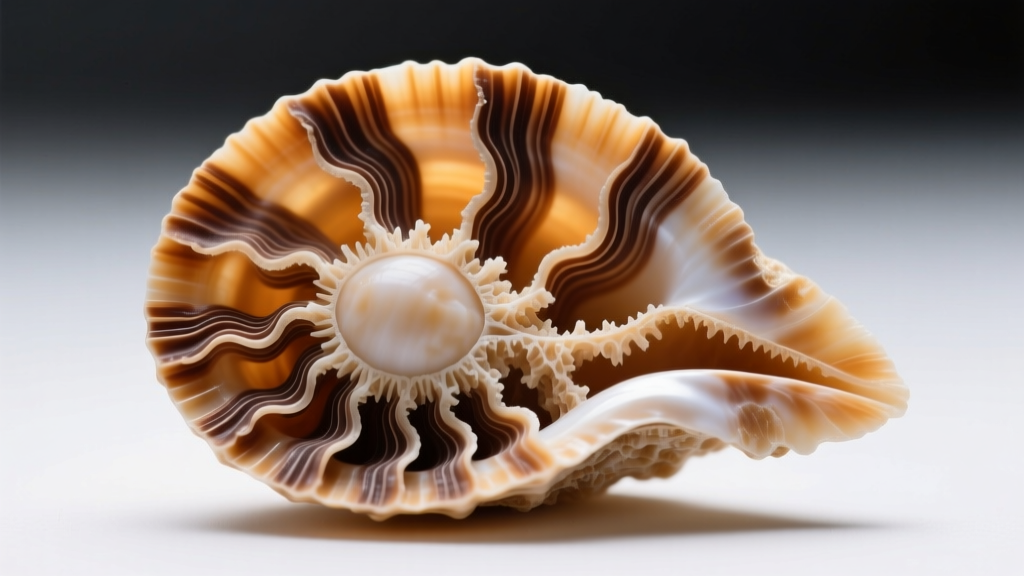
Opihi vs. Abalone and Mother-of-Pearl: A Visual and Structural Comparison
The most common point of confusion for buyers is distinguishing opihi from other marine shells used in jewelry, specifically abalone and mother-of-pearl (MOP). The distinction lies in the micro-structure of the shell layers.
- Abalone: Valued for its thick, highly iridescent nacreous layer. When light hits the microscopic aragonite platelets in abalone, it creates a vibrant play-of-color (orient). Abalone is almost exclusively used for its interior flash.
- Mother-of-Pearl: Also nacreous, but typically flatter, whiter, and less colorful than abalone. It is highly reflective and often used for watch dials and button inlays.
- Opihi: Lacks a prominent nacreous layer. The exterior and interior of the opihi shell are utilized for their natural, unpolished, or semi-polished earthy tones—ranging from deep charcoal and olive green to warm amber and bone white. The visual appeal of opihi shell jewelry lies in its organic growth rings and matte texture, offering a grounded, rustic aesthetic that iridescent shells cannot replicate.
Sourcing, Ethics, and Market Valuation
Sourcing authentic opihi is inextricably linked to Hawaiian environmental law and indigenous cultural practices. The Bernice Pauahi Bishop Museum extensively documents the historical and ongoing significance of the opihi to Native Hawaiians, both as a vital food source and a material for tools and adornment.
Today, the Hawaii Department of Land and Natural Resources (DLNR) enforces strict harvesting limits to prevent overfishing. Harvesters must adhere to minimum size restrictions (typically a shell width of 1.25 inches or greater, depending on the exact species and island) and seasonal limits. Because of these stringent ecological protections, ethically sourced, jewelry-grade opihi shells command a premium.
"When purchasing opihi shell jewelry, always request documentation of ethical harvesting. Supporting local Hawaiian artisans who adhere to DLNR regulations ensures the preservation of both the marine ecosystem and the cultural heritage tied to the limpet."
Pricing Framework (2026 Estimates):
- Raw, Jewelry-Grade Shells: $15 to $45 per piece, depending on size, color uniformity, and lack of bio-fouling (barnacles/worm tubes).
- Finished Cabochons (Calibrated): $30 to $80 per stone.
- Finished Pendants (Set in 14k Gold): $350 to $900+, heavily dependent on the gold weight and the artisan's reputation.
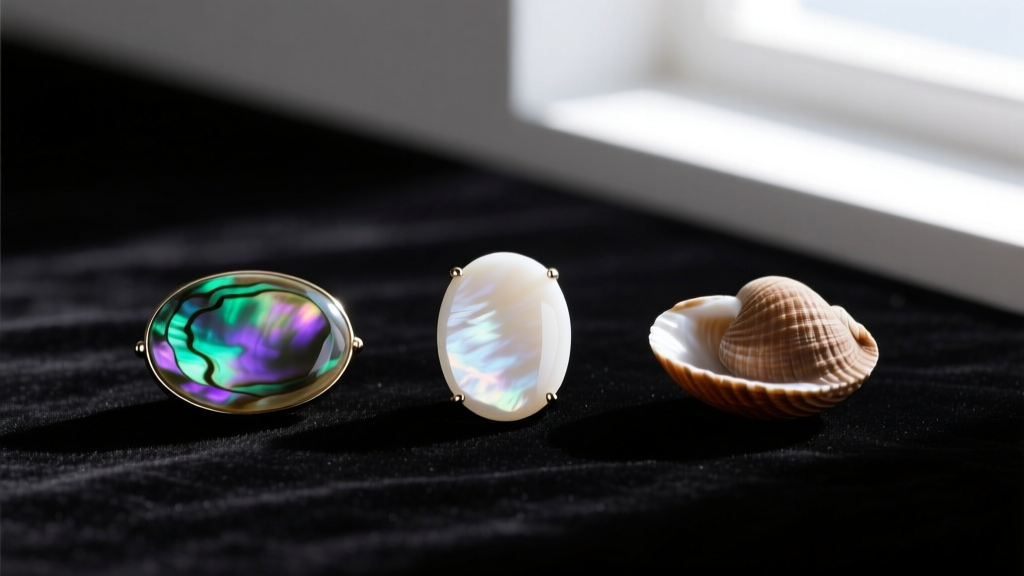
Lapidary Workability and Setting Recommendations
Cutting and polishing opihi requires specific lapidary techniques that differ from standard mineral gemstones. Because the conchiolin protein matrix is sensitive to heat, friction from grinding wheels can easily 'burn' the shell, causing it to delaminate, crack, or emit a foul odor. Lapidaries must use continuous water-cooling systems and diamond-grit wheels with a light touch.
When it comes to setting opihi shell jewelry, the material's low toughness and sensitivity to pressure dictate the design:
- Bezel Settings (Highly Recommended): A full metal bezel (in gold, silver, or platinum) provides 360-degree protection for the shell's edges, which are the most vulnerable to chipping.
- Prong Settings (Avoid): The localized pressure of prong tips can easily fracture the calcium carbonate layers. If prongs must be used for a multi-stone design, they should be wide, flat 'V-prongs' placed only over heavily reinforced areas.
- Inlay Work: Opihi is excellent for channel inlay, provided the channel walls are perfectly flush and the adhesive used is a flexible, jewelry-grade epoxy that can accommodate slight thermal expansion differences between the metal and the shell.
Identifying Authentic Opihi vs. Imitations
As the demand for organic, earth-toned jewelry rises, the market has seen an influx of imitations. Unscrupulous vendors sometimes pass off dyed freshwater mussel shell, dyed howlite, or even plastic resins as opihi. To verify authenticity, use a 10x jeweler's loupe to examine the surface. Genuine opihi will display natural, asymmetric growth rings and microscopic pitting from its marine environment. Dyed imitations will show dye concentrations in surface fissures, and plastic will lack the cold-to-the-touch thermal conductivity and specific gravity of real calcium carbonate.
Care, Maintenance, and Long-Term Preservation
The longevity of opihi shell jewelry depends entirely on proper care protocols. The calcium carbonate composition makes it highly reactive to acids and harsh chemicals.
- Cleaning: Never use ultrasonic or steam cleaners. The vibrations will shatter the internal crystalline structure, and the heat will destroy the conchiolin. Clean only with a soft, damp cloth and mild, non-detergent soap.
- Chemical Exposure: Remove opihi jewelry before swimming in chlorinated pools, entering hot tubs, or applying cosmetics, perfumes, and hairsprays. Even mild skin acids can dull the polish over years of continuous wear.
- Storage: Store opihi pieces in a soft pouch separate from harder gemstones like diamonds, sapphires, or quartz to prevent severe scratching. Maintain a stable humidity environment; extreme dryness can cause the organic matrix to desiccate and crack over decades.
By respecting the unique material properties and cultural origins of the opihi, collectors can appreciate these organic gems not just as beautiful accessories, but as enduring pieces of natural and human history.