Spinel Gemstone Jewelry: Properties, Value & Ruby Comparison
Discover why spinel gemstone jewelry is a top choice for daily wear. Compare its hardness, optical properties, and value against ruby and sapphire.

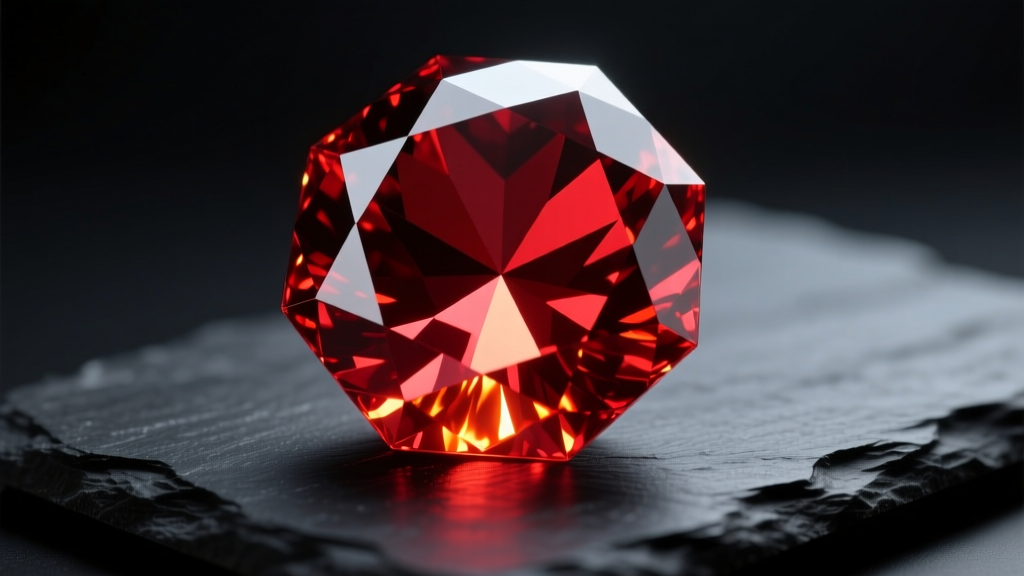
For centuries, spinel was the gemstone world's most famous imposter. The legendary "Black Prince's Ruby," set prominently in the British Imperial State Crown, is actually a massive red spinel. Today, however, spinel gemstone jewelry is no longer viewed merely as a ruby substitute. Gemologists and bespoke jewelry designers now prize spinel for its exceptional brilliance, single refraction, and remarkable durability. As consumers become more educated about gemstone origins and optical physics, spinel has carved out a prestigious niche in the fine jewelry market.
This comprehensive guide breaks down the material properties of spinel, comparing it directly to corundum (ruby and sapphire) and garnet. We will explore its crystal chemistry, market valuation, and practical considerations for setting and caring for spinel jewelry.
The Great Impostor: Understanding Spinel's Optical Properties
To truly appreciate spinel gemstone jewelry, one must understand its optical physics. Spinel belongs to the isometric crystal system, meaning it is singly refractive. Light entering the stone bends uniformly, resulting in a pure, unadulterated color return. This stands in stark contrast to ruby and sapphire (corundum), which are doubly refractive and exhibit pleochroism—showing different colors when viewed from different crystallographic angles.
Because spinel lacks pleochroism, lapidaries do not have to compromise on the cutting angle to maximize color. They can cut the stone purely for optimal light return and brilliance. According to the Gemological Institute of America (GIA), spinel's refractive index (RI) ranges from 1.712 to 1.747, which is slightly lower than ruby's 1.762-1.770, but its lack of double refraction often makes a well-cut red spinel appear more vivid and "glowing" than a similarly graded ruby.
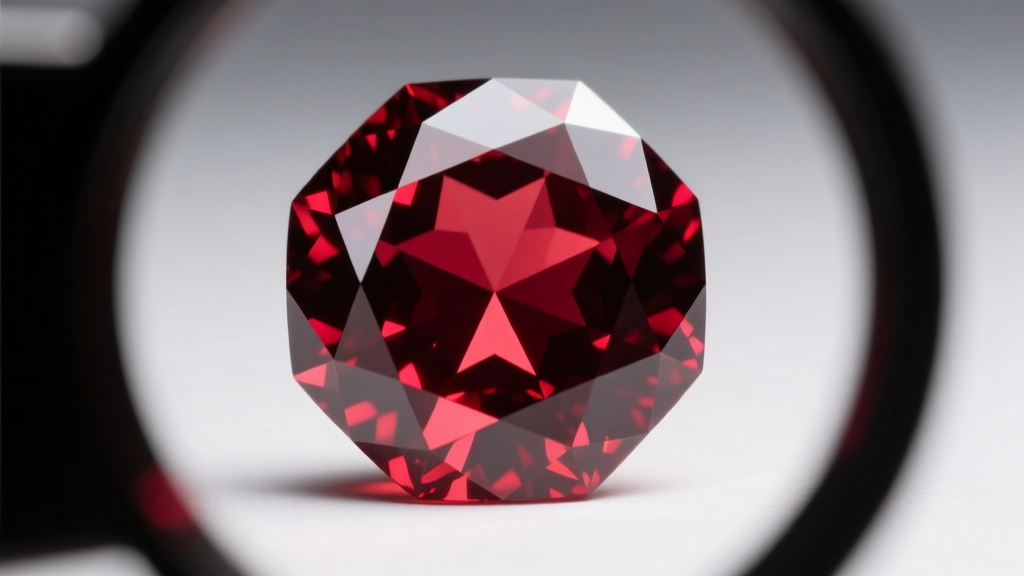
Spinel vs. Corundum & Garnet: A Hardness & Durability Breakdown
When designing custom jewelry, particularly engagement rings or daily-wear pieces, durability is paramount. Durability is a combination of hardness (resistance to scratching) and toughness (resistance to chipping and breaking).
Spinel scores an 8 on the Mohs scale of mineral hardness. While this is one step below corundum (9), it is crucial to remember that the Mohs scale is relative, not linear. The absolute hardness gap between 8 and 9 is significant, but an 8 is still exceptionally hard—more than sufficient to resist scratching from everyday dust and debris (which contains quartz, Mohs 7). Furthermore, spinel has no true cleavage planes, giving it excellent toughness.
| Property | Spinel | Ruby / Sapphire | Tsavorite Garnet |
|---|---|---|---|
| Mineral Family | Oxide (MgAl2O4) | Corundum (Al2O3) | Grossular Garnet |
| Mohs Hardness | 8.0 | 9.0 | 7.0 - 7.5 |
| Crystal System | Isometric (Singly Refractive) | Trigonal (Doubly Refractive) | Isometric (Singly Refractive) |
| Specific Gravity | 3.60 | 4.00 | 3.65 - 3.75 |
| Cleavage | None (Excellent Toughness) | None (Good Toughness) | None (Good Toughness) |
As noted by mineralogical databases like Mindat.org, spinel's specific gravity (3.60) makes it noticeably lighter than corundum. A 2-carat spinel will appear physically larger in millimeter dimensions than a 2-carat ruby of the same cut, offering better visual spread for the carat weight.
Trace Element Chemistry and Color Variations
Spinel is a magnesium aluminum oxide. In its pure state, it is completely colorless. The spectacular array of colors found in spinel gemstone jewelry is the result of trace elemental impurities replacing magnesium or aluminum in the crystal lattice.
- Red & Pink Spinel: Colored by chromium (Cr3+). The highly coveted "Jedi" spinels from Myanmar's Man Sin region contain high chromium and low iron, resulting in a neon, fluorescent red that glows under UV light.
- Blue Spinel: Colored by cobalt (Co2+) or iron (Fe2+). Cobalt-blue spinels from Luc Yen, Vietnam, and Sri Lanka are among the rarest and most expensive gemstones on earth.
- Black Spinel: An opaque, deeply saturated variety often used as a premium alternative to black onyx or black diamonds in men's jewelry and gothic aesthetic pieces.
- Mahenge Spinel: Hailing from Tanzania, these stones exhibit a vibrant, electric pink-to-orange hue (often described as "hot pink") due to a precise balance of chromium and iron.
Expert Note on Synthetics: Synthetic spinel has been produced since the 1920s via the Verneuil (flame fusion) process. Unlike natural spinel, Verneuil synthetic spinel often exhibits curved striae and anomalous double refraction (cross-hatch patterns) under a polariscope due to internal strain. Always request a report from a reputable lab like GIA or AGL for high-value spinel purchases.
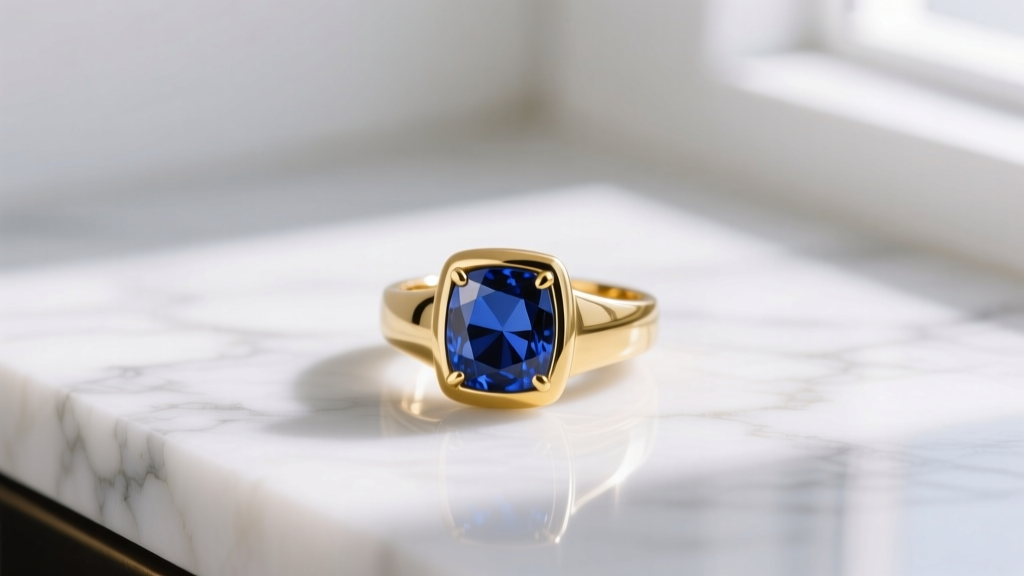
Pricing Tiers and Market Value
Unlike diamonds, which are heavily controlled by supply-chain monopolies, spinel pricing is driven purely by free-market rarity, color saturation, and origin. The market for spinel gemstone jewelry is highly segmented based on these factors.
Commercial Grade ($50 - $300 per carat)
These are typically lighter pink, purplish, or grayish stones with visible inclusions. They are frequently found in mass-market sterling silver jewelry or fashion-forward, lower-priced gold collections. Black spinel also falls into this tier, as it is relatively abundant.
Gem Grade ($500 - $2,500 per carat)
Stones in this tier boast rich, saturated colors (deep reds, vivid pinks) with eye-clean clarity. Mahenge pinks and well-cut Burmese reds under 2 carats typically occupy this space. They are ideal for custom engagement rings and high-end cocktail rings.
Investment / Collector Grade ($5,000 - $30,000+ per carat)
This rarefied tier is reserved for unheated, top-tier cobalt blues and "Jedi" reds over 2 carats with proven origins (e.g., Mogok, Myanmar or Luc Yen, Vietnam). These stones appreciate in value and are usually set into bespoke, heirloom-quality platinum or 18k gold jewelry.
Practical Care and Setting Recommendations
Because of its excellent toughness and lack of cleavage, spinel is highly versatile for jewelry settings. However, lapidaries and jewelers must respect its specific physical properties during the mounting process.
Optimal Settings for Spinel
- Prong Settings: Ideal for brilliant-cut and oval spinels. Because spinel is slightly less hard than sapphire, a 4-prong or 6-prong setting in 18k gold or platinum protects the girdle while allowing maximum light entry.
- Bezel Settings: Highly recommended for step-cuts (emerald cuts) or cabochons, particularly if the stone has internal tension or silk inclusions. A full bezel protects the vulnerable corners of step-cut stones from chipping upon impact.
- Tension Settings: Not recommended. While spinel is tough, the extreme pressure required for a true tension setting can cause internal fracturing, especially if the stone has microscopic negative crystal inclusions.
Cleaning and Maintenance
Spinel is generally safe for ultrasonic cleaners, provided the stone is not heavily fractured or filled. However, the safest and most effective method for maintaining the brilliance of your spinel gemstone jewelry is to use warm water, a mild dish soap, and a soft-bristled brush. Avoid harsh chemicals like bleach or hydrofluoric acid, which can damage the metal settings and dull the polish of the stone over time.
Expert Verdict: Is Spinel Right for an Engagement Ring?
Absolutely. For couples seeking a unique, ethically transparent, and optically superior alternative to traditional rubies, red or pink spinel is a phenomenal choice. Its Mohs 8 hardness ensures it will survive decades of daily wear, while its single refraction guarantees a brilliance that rivals any precious gemstone on the market.


